
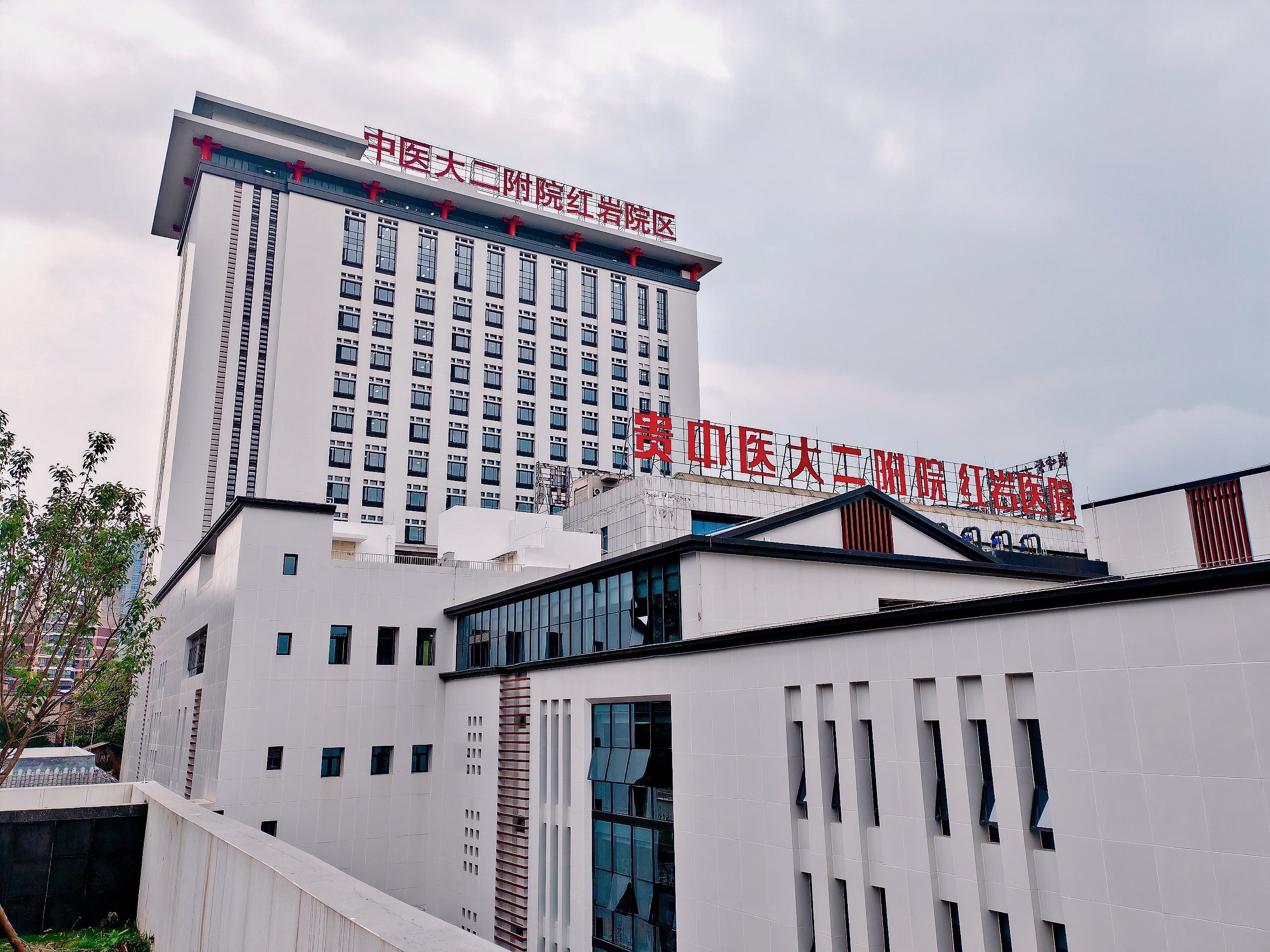
In the morning of September 6th, the South China Department of Public Security said:At about 9 a.m. on September 4, a criminal case occurred in the Red Rock Hospital district of the second affiliated hospital of China Medical University of Guizhou, which injured one person.The police said that the public security organs quickly appeared to police, and the crime suspect Hu Mou was controlled on the spot; the injured has been sent to medical care, the injury is stable, and there is no danger to life; Hu Mou has been detained in accordance with the law, and the case is under further investigation.
The report confirms the minimum of criminal case facts: time, location, number of victims, suspect being controlled and detention status. But it does not specify the incident, the suspect’s relationship with the hospital or doctor, how the crime tool entered the hospital, whether there were vulnerabilities in the hospital security, nor details of the victim’s doctor’s injury and the hospital’s follow-up protection measures.
Several media translations of modern news reports and netizens reflect thatThe suspect is suspected of being a patient with intestinal cancer due to dissatisfaction with the results of treatment.Bringing the knives hidden in the flag to the hospitalAccording to the report, the wounded are anal hospital doctors, because of the discomfort of the leg, faced with an emergency attack could not escape in time, once in the ICU rescued. The above details are currently mainly from media interviews, hospital insiders and netizens clues, still need to be further publicly confirmed by the police, hospital or health department.

If these details are true, this case is not just an isolated violent injury medical incident, but exposes multiple vulnerabilities in hospital security, risk early warning, patient dispute handling and public information disclosure. If a person can hide knives under the flag into a medical facility, the hospital must be questioned about the mechanisms for identifying special items, visits processes and key risk persons. If a doctor is subjected to indiscriminate attacks at work, the public has the right to know whether hospitals and regulators have taken adequate protection measures.
However, under the CCP’s governance system, similar incidents are often compressed into “criminal cases are being investigated.”The shorter the official notification, the more it appears to be to set the boundaries of public discussion under the logic of stability: only acknowledging what happened, not explaining why it happened; only emphasizing the suspects have been controlled, not responding to where the system is missing; only asking the public opinion to wait for the investigation, but not providing sufficiently transparent information for the social supervision of the investigation itself.
This is not the normal information disclosure in a free press society. genuinely responsible public notification, should continue to announce the progress of cases, the situation of the injured, security reconsideration, hospital rectification and supervision responsibilities, rather than when social anger has just formed, with a phrase "cases are further investigated" to block all inquiries.
Violent injuries are, of course, first and foremost crimes.No one can put the knife at the medical staff because of the outcome of treatment, economic pressure or personal resentment.Doctors are not the guilty sheep of the contradictions of the medical system, nor should they be the exit of the despair of the patient. The perpetrators, the judicial organs must be prosecuted according to the law, and can not dilute the nature of violent crimes with the so-called "doctors and patients contradictions."
But condemning the perpetrators alone is still not enough. The Chinese medical system has long been subject to administrative control, uneven distribution of resources, medical insurance pressure, grassroots communication gaps and collapse of trust. Patient dissatisfaction is often pushed to first-line doctors, hospital management responsibilities are covered, and regulatory department institutional failures are less publicly discussed. The Chinese regime treats medical as a maintenance project and performance project, but lacks independent media, independent trade unions, independent justice and public accountability to deal with real contradictions, the result is that first-line doctors and ordinary patients are trapped in the imbalance system at the same time.
In particular, the case requires four questions. First, what is the specific pathway for the suspect to enter the hospital with the tool, whether the hospital security inspection and visitor management failed. Second, whether there was a medical dispute, complaint record or risk early warning before the incident, whether the hospital has assessed the potential danger. Third, what is the real injury of the victim doctor, how the relief progress and occupational security, whether the hospital provides psychological support and legal assistance to the medical staff. Fourth, whether health, public security and hospital management will be publicly reviewed, rather than just let the grassroots bear the consequences.
In an environment where there is no freedom of the press, the public is often only able to compile the truth from the internet, the media, and late short reports. This is part of the problem itself. A doctor is stabbed in a hospital, society should not be only informed by a few lines of alarm; the public should not only be asked for details on social media; health care workers should not be silent and wait for the next tragedy to happen.
"Focus China" believes that the doctor attack in Guizhou really afflicts society, not only the tool itself, but the public information under the Chinese Communist Party system is compromised, the chain of responsibility is covered, the risk of the medical system is delayed for a long time. A reality that does not allow media freedom to investigate, does not allow the public full accountability, does not want to let hospitals and regulatory authorities accept the regime of transparent review, can not really protect doctors, nor can really protect patients.
Next, the Guiyang police, Guizhou provincial health department and the hospitals concerned should at least disclose more facts: the case process, security inspection breaches, wound relief, hospital rectification, relevant responsible person treatment and medical security program. Without this information, so-called "legal disposal" is just a void word; without public accountability, the next violence incident may still repeat in another hospital, another clinic, another unprotected doctor.
Article discussion
Verified members can discuss this report publicly and manage their own content.
Checking member sign-in status…