A video, marked “Historical Precious Image”, was re-dispatched on October 30th on social platform X overseas. The female newser in the picture is speaking with the subtitle “Preventing the New Crown Virus, which is not an option”, and the bottom yellow titlebar says “Specific: the need for a new crown vaccine”.
The video was published by the X account “World Change”. Although the current footage is only about 25 seconds away from the original television programme and the full context, it rekindles a major public controversy during the new Chinese crown epidemic: When the Government declared that vaccination was voluntary, why can some places still restrict access to hospitals, schools, shops and even link vaccination status to income from work?

This issue does not come from web-based rumours. In 2021, the National Health and Safety Commission of China publicly acknowledged that some local governments had made it possible to promote new crown vaccinations by requiring compulsory vaccinations and limiting access to public places, and by demanding corrective measures.
More notably, the voluntary principles issued by the central authorities did not immediately prevent the continuation of these measures from being repeated, from the first public correction in April 2021 to the large-scale notification of restrictions by local governments in July and the re-acknowledged by the National Commission on Health and Human Rights in September.
A vaccination campaign aimed at protecting public health has evolved in some parts of the country into a public controversy over the Government ' s executive power to interfere with individual medical decisions. Today, the re-transmission of the propaganda footage of the year has also brought the history of the disease-prevention policy back to the public eye.
Official commitment to “voluntary vaccination” why local coercive measures cannot be resisted
On 11 April 2021, the State Council ' s Joint Defence and Control Mechanism held a press conference. The Press spokesman of the National Health Commission, Misser, made it clear at that time that there were simplistic and “one size fits all” cases in some places in which new crown vaccinations were being carried out, and that even the mandatory requirement for full-time vaccinations needed to be corrected.
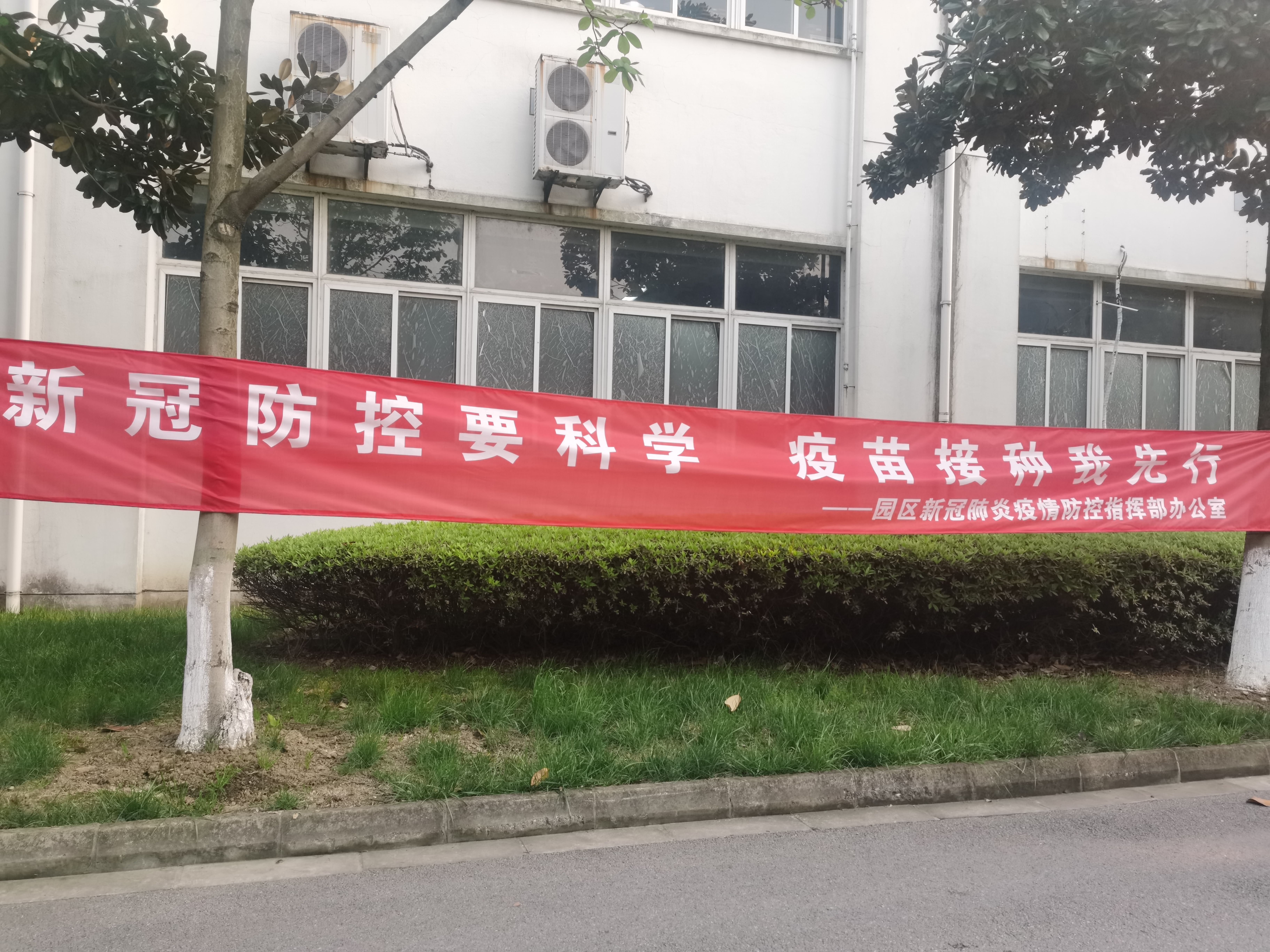
This indicates that, as early as April 2021, the central health authorities of China had already mastered the issue of local compulsory vaccinations.
However, only three months later, restrictive policies by local governments continued to emerge.
原始来源 · nhc.gov.cn国家卫健委2021年4月11日发布会实录:纠正强制全员接种nhc.gov.cn ↗On 11 July, the Ninghai District Office for the Prevention of Epidemics, Ningbo city, Zhejiang province, issued a circular requiring residents aged 18 years and not inoculated with the taboo to be vaccinated against the new crown, and stipulated that, as of 25 July, uninoculated persons should not be allowed access to public places such as hospital departments, nursing homes, schools, libraries and museums.
原始来源 · chinanews.com中国新闻网视频:国家卫健委要求纠正强制接种chinanews.com ↗The circular also covers rural market stallors. Operators who have not completed vaccinations may lose their eligibility for normal cash-in-show. Some of the individuals who are in the process of conducting a home health observation are also required to be vaccinated against family members who live with them.

For the general population, these restrictions are not just a slogan in the campaign.
An additional restriction on access to the hospital hospital to visit family members, a storekeeper who relies on the farm market for income maintenance, or a parent who needs to enter school to deal with children may be due to the lack of vaccination.
On 12 July, the office of the Pantian Preventive Command of Fujian Province also issued a circular requiring adults eligible for vaccination to complete their vaccinations by the required date and, from 22 July, to present their vaccination records to persons entering institutions, hospital and hospital departments, stations, view areas, schools, hotels, shops and agricultural markets.
Policy advice on restricting access to public places for unvaccinated persons has also been issued in Jiangxi, Zhejiang, Fujian, Sichuan and Shaanxi.
According to Financial News, on 14 July 2021, there are places where family members of students are even required to complete vaccinations, otherwise the new term of school attendance may be affected.
Local governments have in fact converted the vaccination from an individual medical decision to an administrative condition affecting public services, business activities and family life.
The so-called voluntary principle has faced serious challenges when an adult is informed that he is free to decide whether to immunize and is faced with real pressure to travel, visit a doctor or work without proper means.
Three requests for correction from the centre, while restrictions still appear
原始来源 · caixin.com财新2021年7月14日调查:多地限制未接种者出行caixin.com ↗On 16 July 2021, the CDS again responded publicly to the relevant measures of local governments through the media.
The CNDH then made it clear that the new coronal vaccinations must be based on the basic principles of “informed, consensual and voluntary” and indicated that some local restrictions on access to public places by those not vaccinated had been noted.
This statement is clearly at odds with the restraining notices that have been issued in various locations.
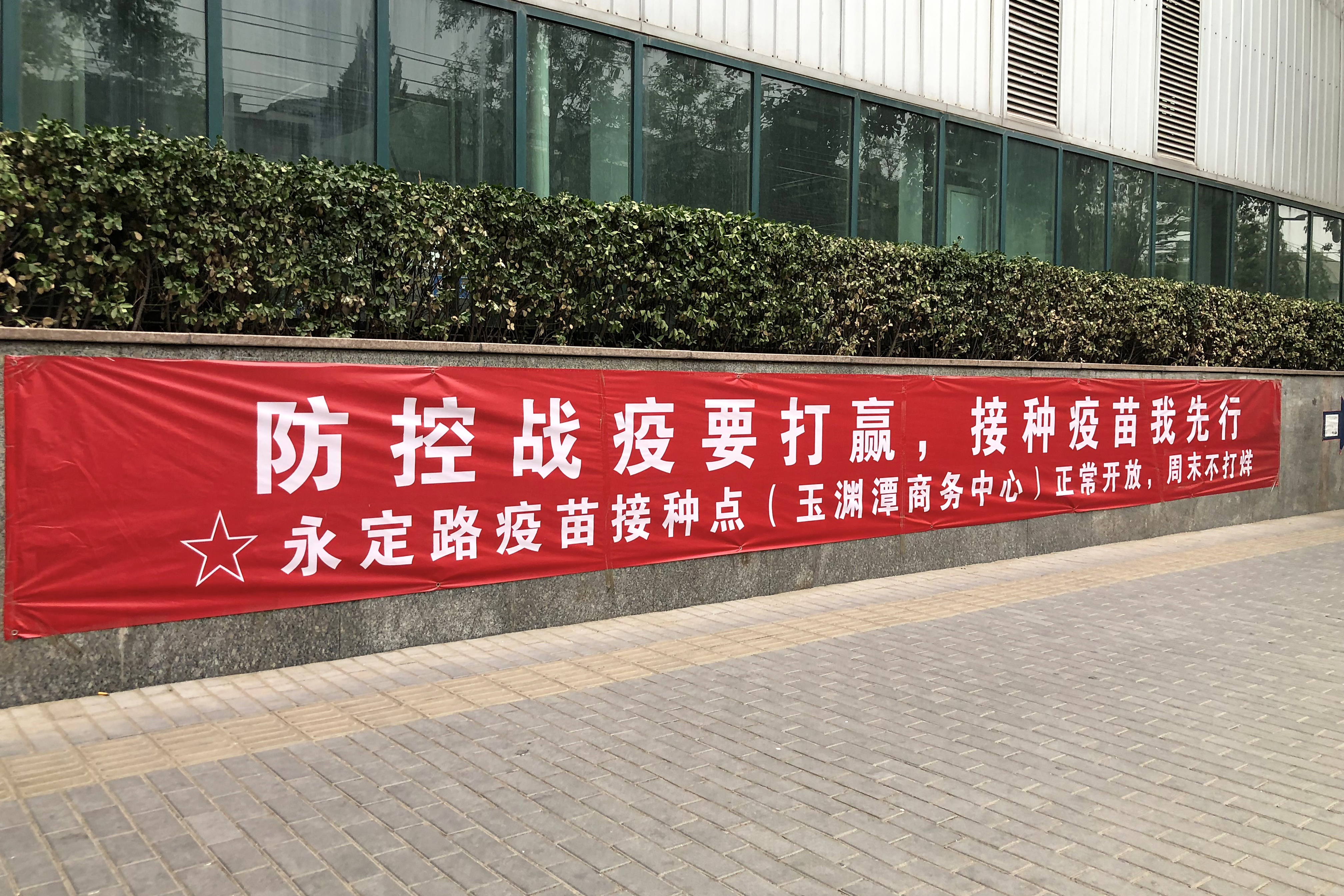
The vaccination of a person is a medical health decision, involving the risk of vaccination, the physical condition of the person and informed consent. Local restrictions have further affected the access of citizens to hospitals, schools and other public places.
Of even greater concern is that, on 7 September 2021, the press conference of the State Council's Joint Defence and Control Mechanism (JCNM) again openly discussed the coercive measures of local governments.
原始来源 · ccdi.gov.cn央视新闻经中央纪委网站转载:新冠疫苗接种遵循自愿原则ccdi.gov.cn ↗At the same day ' s launch, the daily newspaper newspaper newspaper newspaper reported that there were places where vaccinations were linked to personal integrity records, pensions and minimum subsistence security.
In response, U Lian, Deputy Director of the CDS, acknowledged that in some regions, unvaccinated persons had been banned from entering supermarkets, hospitals and bus stops, and that there had been instances where students had been denied admission to school.
He further states that these measures are contrary to the principle of vaccination and that the State Council's JCNM has requested that the area concerned be corrected.
In the same month, the health authorities again stressed that the joint health code and vaccination code should not be used as a means of compulsory vaccination.
原始来源 · nhc.gov.cn国家卫健委2021年9月7日发布会实录:不得强制接种nhc.gov.cn ↗This led to a clear policy timeline:
(a) In April 2021, for the first time, the National Commission for Health and Welfare made a public request for correction of the compulsory vaccination; In July, restrictive notices were still in place in many places, and the Commission re-emphasized the principle of voluntarism; In September, the Commission again acknowledged that uninoccupied persons were restricted access to hospitals, stations and schools.
This history has revealed a question of government responsibility that deserves to be held accountable.
If the central health authority has repeatedly confirmed that certain local measures are contrary to the principle of vaccination, why can they continue to be published and implemented? Who is authorized to link vaccination to public services? Which local officials have thus assumed specific responsibilities?
Available public information can prove that the Central Authority has requested redress, but does not provide a complete national list of responsibilities, indicating where restrictions have been lifted, how many residents have been denied access to health care, education or business, and whether remedies have been obtained.
The public recognition of the problem by the executive is only the starting point for correcting the error. For those specifically affected, the restoration of rights, access to interpretation and remedies are the key to the real implementation of responsibilities.
How the goal of vaccination coverage has overridden citizens ' right to medical choices
The New Crown Vaccination Campaign has a clear public health context.
Between 2020 and 2021, the global impact of the new coronary epidemic continued. Vaccines are widely used to reduce the risk of serious disease and death after infection, and expanded vaccine coverage has been a focus of public health efforts in many countries.
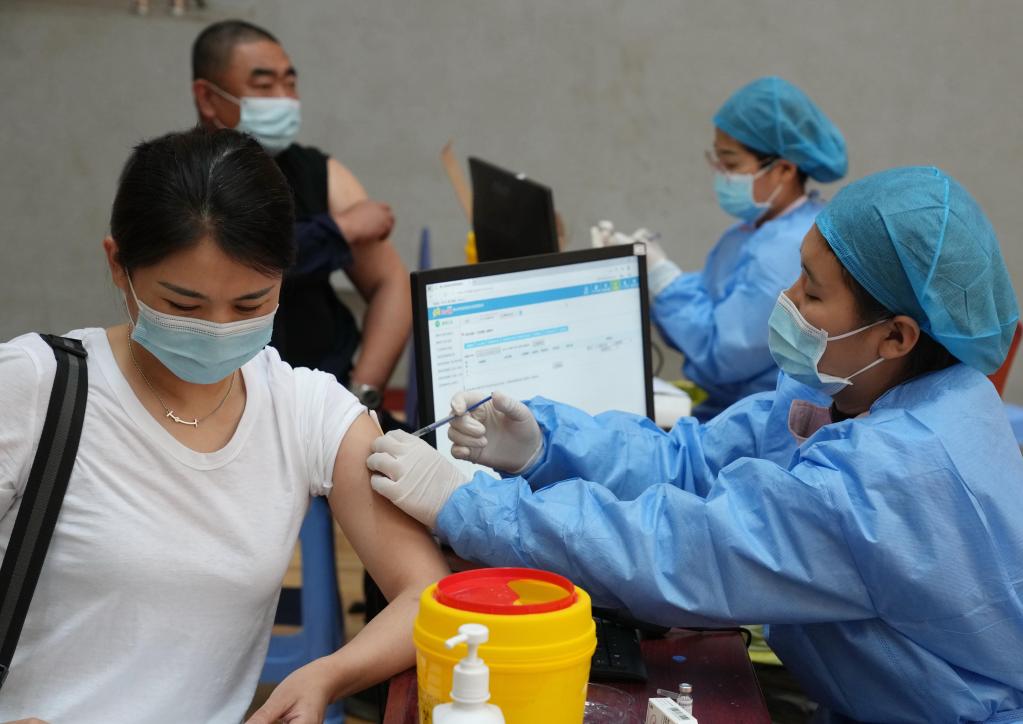
However, the public health goal of increasing vaccination rates does not mean that the Government can use administrative powers without legal restrictions.
The special problem in China in 2021 is that the vaccination rate is highly valued, that local governments assume organizational and mobilization responsibilities, and that the specific practitioners face the number, coverage and time-span of vaccinations.
In such an administrative environment, local governments may choose to increase the vaccination rate through more quantifiable restrictions.
(b) Requires the population to go to the vaccination site voluntarily, with full information on the benefits, risks and taboos; Restrictions on access to certain public places by unvaccinated persons may rapidly increase the pressure on vaccinations.
The two approaches differ in administrative efficiency, but their impact on civil rights is quite different.
原始来源 · xinhuanet.com新华社2021年6月3日:中国疫苗接种工作现场与政策背景xinhuanet.com ↗In particular, when restrictions relate to hospitals, schools, basic livelihood security or income from work, the Government has in practice transformed public services into means of promoting medical behaviour.
The Law of the People ' s Republic of China on Vaccine Management, promulgated in 2019, explicitly requires that health personnel inform the recipient of the effects of the vaccine, taboos, adverse reactions and ask about the state of health before being vaccinated.
The Act also provides for different legal regimes for immunization and non-immuno-planning vaccines. For the new crown vaccination in 2021, the NHS has clearly declared the principle of informed consent and voluntariness.
The basic requirement embodied in these provisions is that vaccination decisions be based on medical information and legal procedures.
If local governments do not have a clear legal mandate, they link denial of vaccination to restrictions on public services, and they have to face the legal basis for administrative conduct, the principles of necessity and proportionality.
While the prevention and control of the epidemic is a public and important responsibility of Governments, the protection of public health and the protection of citizens ' rights should not be seen as policy options that can be readily substituted for one another.
Old video re-transmitted, and what really needs to be kept is a record of responsibility for the year
原始来源 · samr.gov.cn《中华人民共和国疫苗管理法》完整法律条文samr.gov.cn ↗On 30 October 2026, this short video, with the words “observation”, was re-presented on platform X. The current video does not provide complete television broadcast dates, programme names and original recorded material, nor does the promotional subtitles in the video alone prove that all of its content is in the original version, which was officially aired on television during the year.
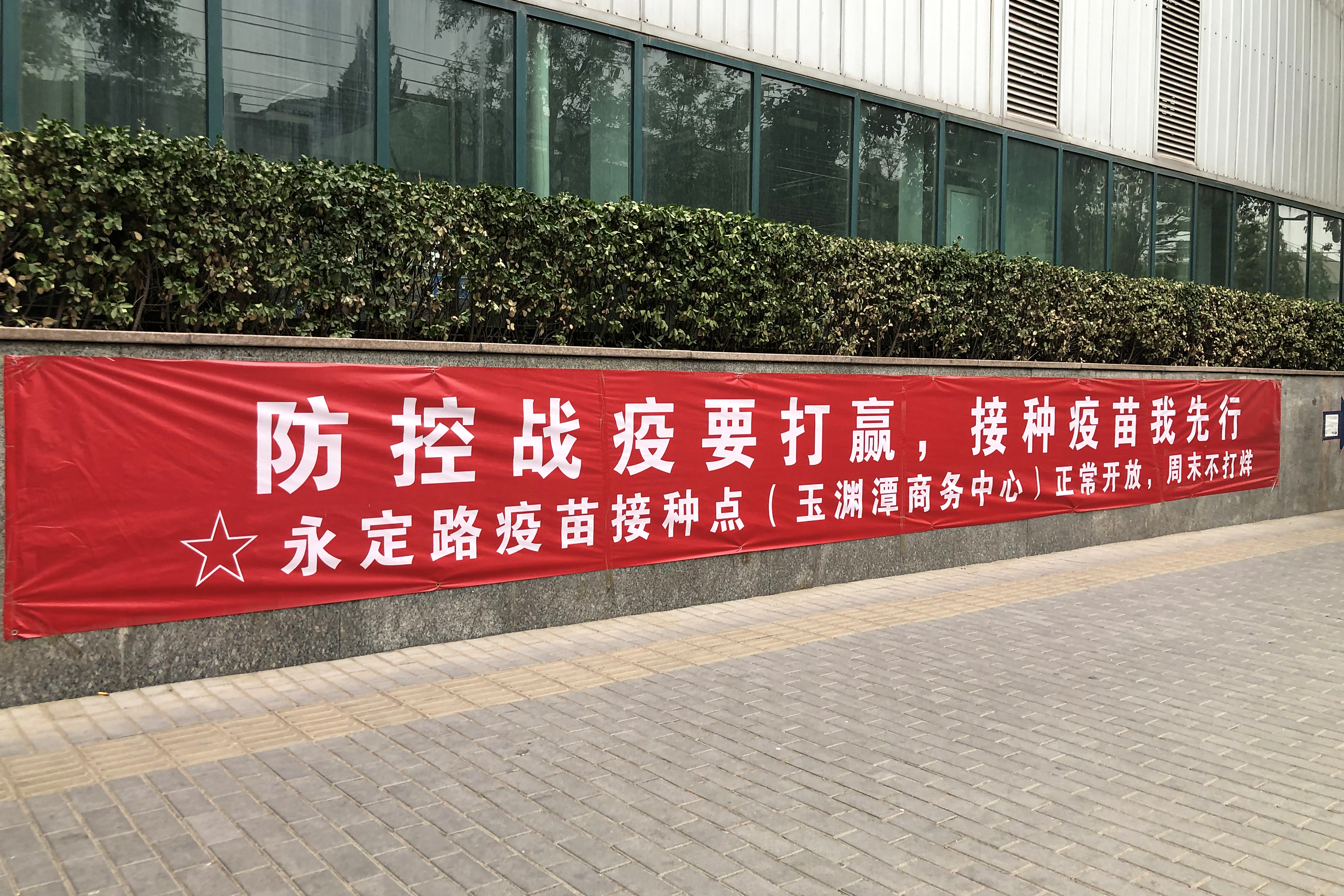
However, whether or not the video eventually leads to a full source, local governments in China had implemented restrictive vaccination measures in 2021, as evidenced by local announcements, press surveys and public responses from the central government in that year.
What is truly worth re-examining is the real impact of those measures and their attribution.
Are there avenues for pursuing administrative decisions when access to hospitals was restricted for lack of vaccinations? Have the relevant education departments provided any official information on children whose access to education is restricted by their parents ' vaccination status? Are there publicly accessible records of specific policy formulation and implementation chains for local governments that conduct administrative examinations based on vaccination rates?
At the same time, adverse reactions after vaccinations must be addressed through normative monitoring, medical assessment and statutory relief procedures. Anyone who has health problems after the vaccination has been given has the right to a serious investigation, but the time chain does not in itself directly prove that the damage was caused by the vaccine.
On 23 July 2022, the National Commission for Health and Welfare released monitoring data on the incidence of New Crown Vaccinations nationwide. As of 30 May of that year, the total number of cases of inoculations nationwide had exceeded 3.38 billion, and a cumulative number of cases of post-inoculation malfeasances had been reported, 23,815. This is the number of monitoring reports, which includes events of a different nature, and does not amount to all the vaccine causality established.

The data also remind the public that, in promoting mass vaccinations, in addition to emphasizing public health benefits, the Government has an obligation to maintain transparent information, improve medical monitoring and provide damage relief.
The mass vaccinations now in 2021 have been in place for five years. Policy documents, implementation records, complaints and redress notices from residents resulting from the restrictions of that year should be historical information that is open to public scrutiny.
A public health crisis can explain why the Government has taken urgent preventive action, but it cannot automatically relieve the Government of its obligations to administer the law, let alone allow the right to limit the possibility of prosecution as the outbreak ends.
The short video, which was retransmitted in 2026, again showed strong policy advocacy language for the year. What really constitutes historical evidence is a note, a transcript and a correct statement from the Chinese Government itself.
These records still reveal the same contradiction: the central Government declared the principle of voluntarism, while local governments applied administrative restrictions to the population in order to apply inoculation pressure.
Whether this history is fully explained and whether citizens whose rights have been affected have been provided with the remedies they deserve remains a public issue worth continuing investigation in China’s history of epidemic management.
原始来源 · nhc.gov.cn国家卫健委2022年7月23日疫苗安全监测资料:238215例事件nhc.gov.cn ↗Excerpt from original policy record
The National Commission for Health and Welfare responded publicly on 7 September 2021: “These practices violate the principle of vaccination and create inconvenience for the population. The blogger adds:
Specific issues worth tracking on an ongoing basis
Central decision-making: Voluntary vaccinations in April, July and September 2021 and correction of errors, have produced concrete results. - Local implementation: Who approved the restrictions in Ninghai, Jinjiang and others and whether they were abolished in time.
- Citizens ' Rights: Access to health care, school or operator restricted for lack of vaccination, and any publicly accessible relief records.
- Medical security: How adverse events after vaccination are reported, investigated and identified, and how the rights and interests are protected.
Article discussion
Verified members can discuss this report publicly and manage their own content.
Checking member sign-in status…