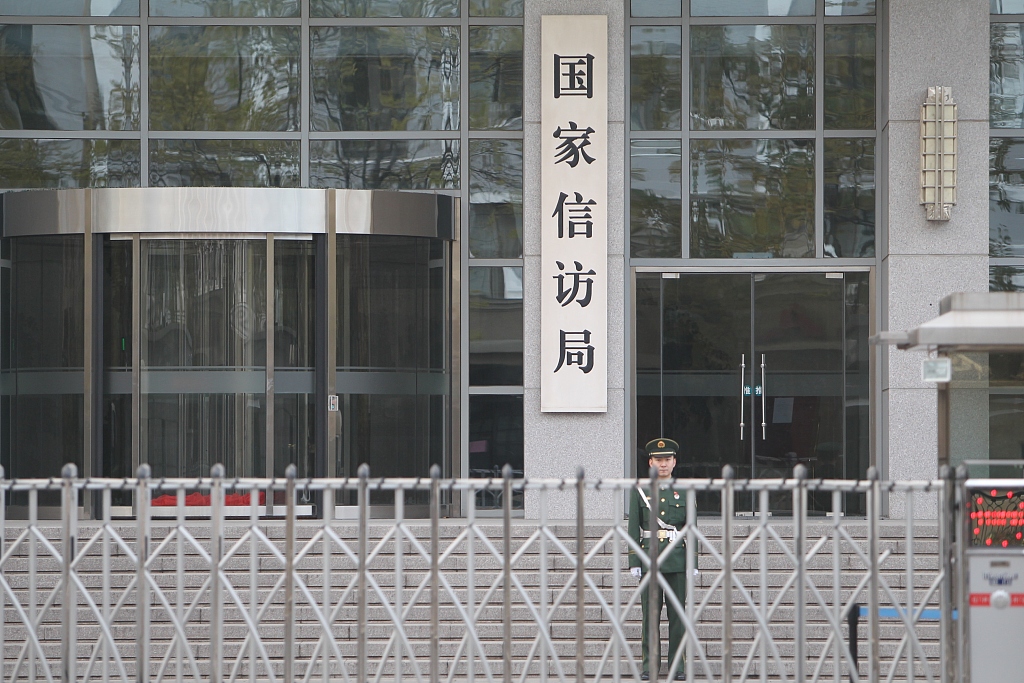
A farmer worker was sentenced by the court to four years ' imprisonment for transmitting information on his salary on Twitter; (a) A new letter-and-visit provision to make it difficult for visitors who cannot obtain provincial processing instruments to register complaints in Beijing; A citizen journalist who had independently reported the Wuhan outbreak was arrested and sentenced again after serving four years in prison.
These events, which have occurred in different parts of China, involve different figures, claims and legal proceedings, but point together to a serious and real question: How much space can ordinary citizens have to express themselves publicly, seek judicial protection and hold the authorities accountable when faced with unpaid wages, administrative abuses, judicial disputes or public events?
The line between citizen speech, social oversight and advocacy is becoming increasingly sensitive in the context of the continued strengthening of political control by the Communist Party of China. Disputes that originally involved remuneration for work, administrative responsibility and public interest could further evolve into criminal cases involving the intervention of public security organs. For the general population, who lack the social resources, an open appeal may mean a lengthy judicial process and even a loss of personal liberty.
Four years for a farmer worker
On 11 September 2026, the People ' s Court of Lan City, Gansu Province, handed down its first judgement against seven people, including the Jia-jin. A 50-year-old farmer, Jiang Zheng Zheng, was found guilty of sedition and sentenced to four years ' imprisonment.
Sage-jin and non-traditional professional journalist. He has long been concerned with the wage, social disputes and public affairs of migrant workers and has transmitted information from other defenders on the Internet. In 2024, he was taken to criminal enforcement measures by the police in connection with a case involving Zhou Luboro et al., and was subsequently held in prolonged detention.
According to the judgement disclosed in Financial News on 24 September 2026, the nine convictions of the crime of sedition by the Kage-jin concerned the transmission of information on the collection and payment of outstanding claims for work performed by Zhou Lobo. Of the seven co-accused, he was the only one who had not received money.
原始来源 · china.caixin.com财新:景树仁转发讨薪微博获刑四年china.caixin.com ↗This does not mean that there is no other legal dispute in the case. The court of first instance held that Zhou Lokbao and others had disturbed public order by publishing information that was not in conformity with the facts, creating cyber-pressive pressure, and that some of the defendants had also acted in a manner involving extortion. The court also found that the Sage was involved in disseminating relevant information and introducing the person to Zhou Lobo.
But the Kage-jin denied knowing that the information was false. He explained during the trial that he had suffered from salary arrears and was therefore willing to help other rural workers speak out; The information was verified with the original publisher prior to its transmittal and the individual was unable to identify the authenticity of all the messages.
All seven defendants denied guilt and appealed in court.
原始来源 · chinahrc.org维权网:景树仁一审判刑及上诉情况chinahrc.org ↗This case is of concern in the borderline between criminal responsibility and citizen participation in public affairs.
The judicial authorities have the power to investigate any alleged use of the Internet for extortion, threats or the deliberate dissemination of false information. However, when the conduct involved in the dissemination of opinion in the pay-raised process is included in the evaluation of the offence of sedition, the court must give a specific answer as to which information constitutes a false fact, how the perpetrator knows that the information is false, how the act in question caused public order damage and to what extent the individual should be held criminally liable.
These issues are directly related to the legal risks of citizen participation in public affairs.
The Seng-in case has a further detail worth pursuing. The investigation of the case, which had involved serious charges of organizing, leading, and participating in a gang-based organization, was followed by the Prosecution ' s re-engineering of the indictment, which eventually led to the withdrawal of the criminal charges against the group concerned, and the role of the Kage-in was adjusted from the former principal ' s charge to that of an accessory.
The change in the role of the accused and the charges, from the serious organizational offence charge to the final trial for the offence of sedition, reflects the significant adjustments that have been made in the criminal prosecution process.
How did the labour dispute that initially triggered the online wage-raising process get into the judicial process?
Financial News reports reveal that the co-accused ordered San Ming to seek a solution through labour inspection and mail channels for long-term unpaid work. After more than a year without results, he turned to the Internet. After the release of the relevant information, the $1.8 million in works recovered by Zhou Locbao was paid, and a $10,000 in appreciation was paid to Zhou Locbao. This sum and the related acts later became important elements of the case.
This experience reveals a deeper question: why would the recovery of arrears, which would have been the case, have eventually evolved into a case of criminal liability for defenders, when normal avenues of redress such as labour inspections, mail visits and so forth have been long-standing failures to resolve the wage dispute and when the public has chosen to expand its influence through the Internet?
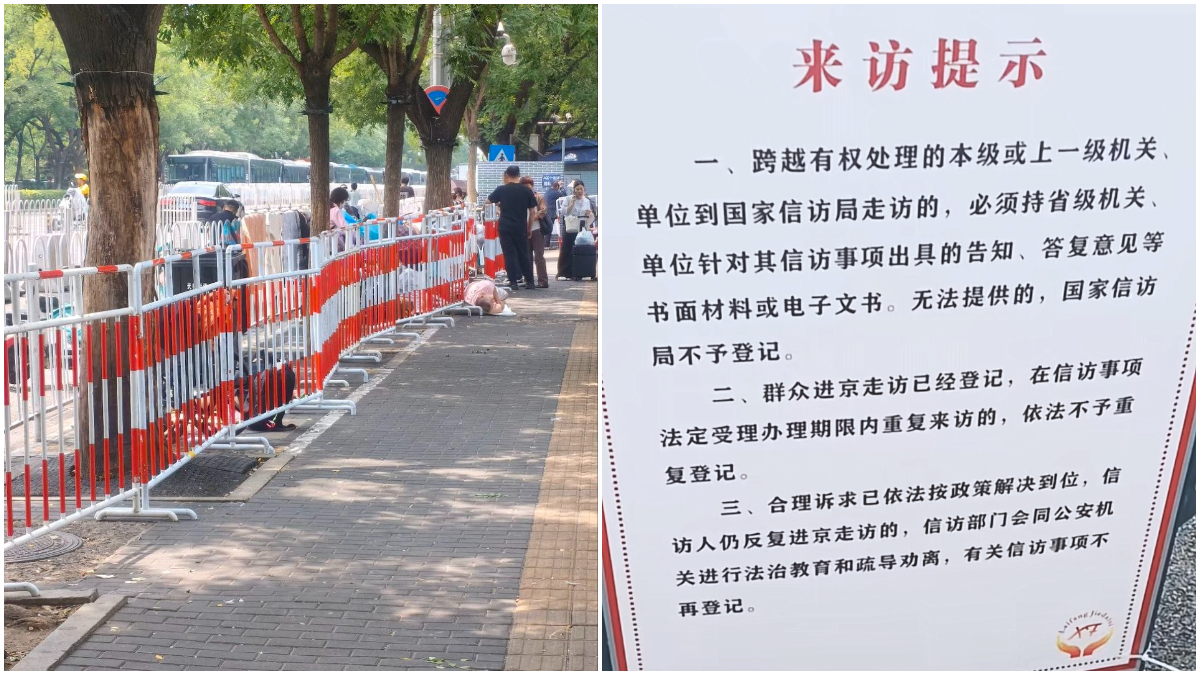
The registration threshold for letters of communication has been raised and new restrictions on citizens ' complaints have been imposed
The case of Sage-in reveals the criminal risk of cyber-promoting. At the same time, the Chinese Government further adjusted its rules for registering letters of enquiry in 2026, thus placing some complainants under stricter procedural restrictions on their access to the Kyoto Islands to seek solutions.
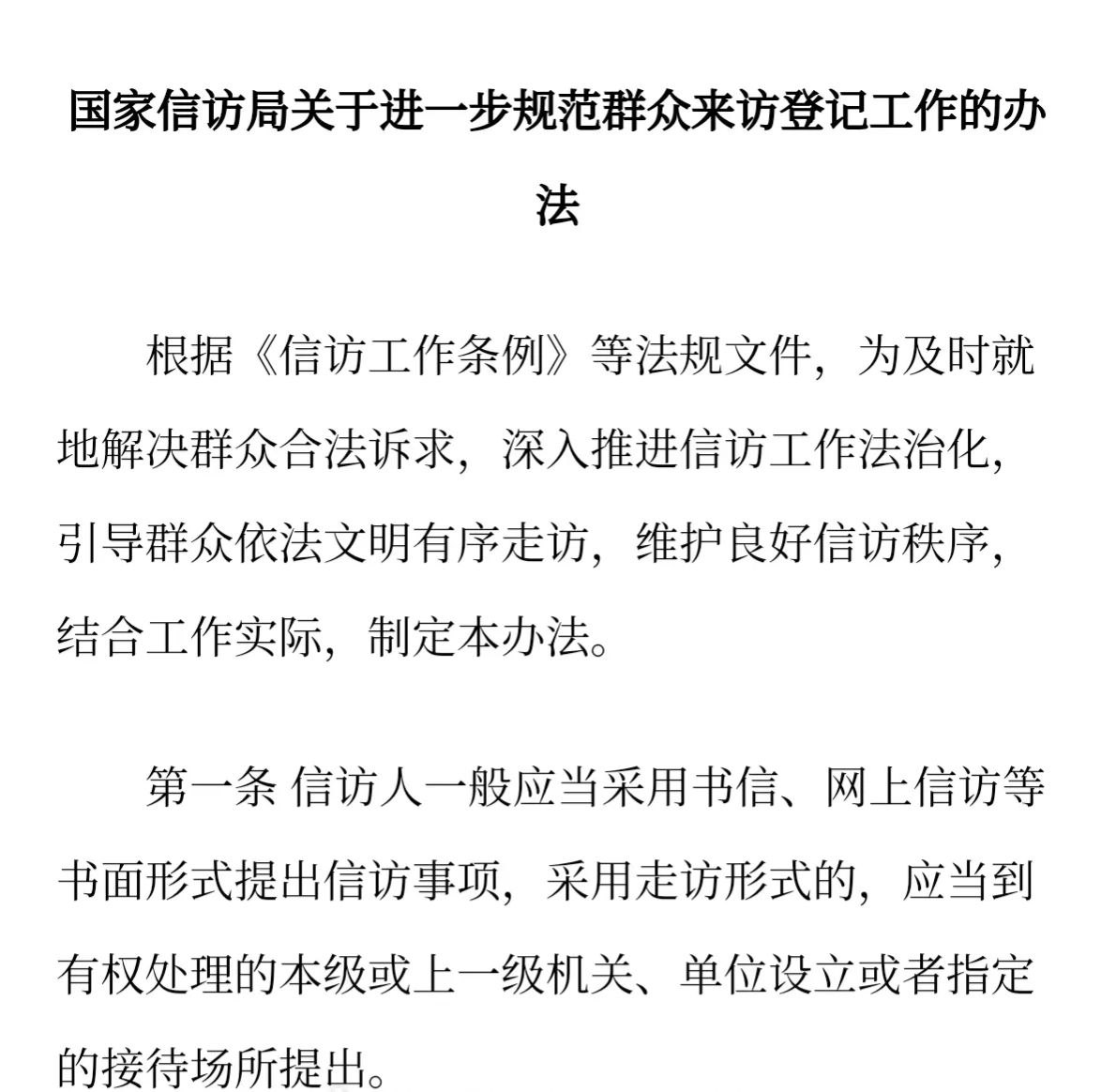
On 25 June 2026, the State Department of Letters and Visits published the " Approach to Further Regulating the Registration of Mass Visits ", which was implemented as of 1 July.
原始来源 · xfj.hlj.gov.cn国家信访局:2026年进京来访登记办法xfj.hlj.gov.cn ↗Article 4 of the scheme makes it clear that the public must travel to the Kyoto Islands across the authorities of the same or higher level, and must have information, responses and other information from the provincial authorities on the matter of their correspondence. If no relevant evidence is provided, the National Board of Letters and Visits and the central authorities do not register and are directed to return to their territories to reflect the problem.
Article 6 further provides that there will be no duplication of registration of the matter of repeated visits to Kyoto within the statutory processing period; The Department of Letters and Visits may, in conjunction with the public security organs, educate and advise on the rule of law for those whose legitimate claims have been resolved in accordance with the law and who are still visiting the country repeatedly. The public security organs shall deal with any offence.
The Chinese Government interprets this policy to promote local resolution of conflicts, reduce duplication of complaints and clarify the responsibilities of the various organs at all levels. The regulations also require the authorities to supervise the inadmissibility, non-action, non-responsibility and non-responsibility of the case.

But the real effect of the system depends on a key premise: whether local authorities are genuinely willing to deal with complaints from the population.
If the subject of the complaint is itself a local government, public security organ or other authority with executive power, and the public must obtain a document from the local or provincial authorities to continue to report the problem to the central authorities, the authorities in fact have the important conditions for citizens to have access to a higher level of recourse.
On 6 October 2026, the international human rights organization Safeguard Defenders published its investigation report, which interviewed a number of Chinese human rights lawyers. According to the counsel interviewed, the new letter registration requirements may increase the pressure on visitors and increase the actual space for public security organs to deal with repeated complaints in Kyoto.
原始来源 · safeguarddefenders.com保护卫士:进京信访新规调查safeguarddefenders.com ↗The problem thus extends to the fundamental function of the letter-and-call system.
The Chinese mail system has long been charged with the responsibility of handling administrative complaints, reports of misconduct by officials and other social conflicts. For ordinary citizens who lack the legal resources to file long-term complaints, the letter visits are also a way for them to try to gain the attention of their superiors.
However, as the threshold for complaints rises, the focus of the correspondence work may increasingly be in favour of process management and territorial control. The question of whether the public has been treated fairly and whether the public has been registered and continues to enter the country is two different issues.
The conclusion of the communications procedure does not necessarily mean that the dispute of rights has been genuinely resolved if the local government is able to conclude the case through a procedural response and the complainant lacks an independent and effective review channel.
This is of particular concern, since article 41 of the Chinese Constitution clearly states that citizens have the right to criticize, advise, complain, complain and report against State organs and their staff, and prohibits repression and reprisals against such acts.
The Constitution grants citizens the right to monitor, while specific administrative provisions establish procedural conditions for the exercise of the right to appeal. How to ensure that the administration of the procedure does not evolve into a restriction on complaints is precisely the legal issue that the current Chinese mail system must face.

From the outbreak of Wuhan to re-incarceration in prison, the trial reflected the plight of freedom of expression
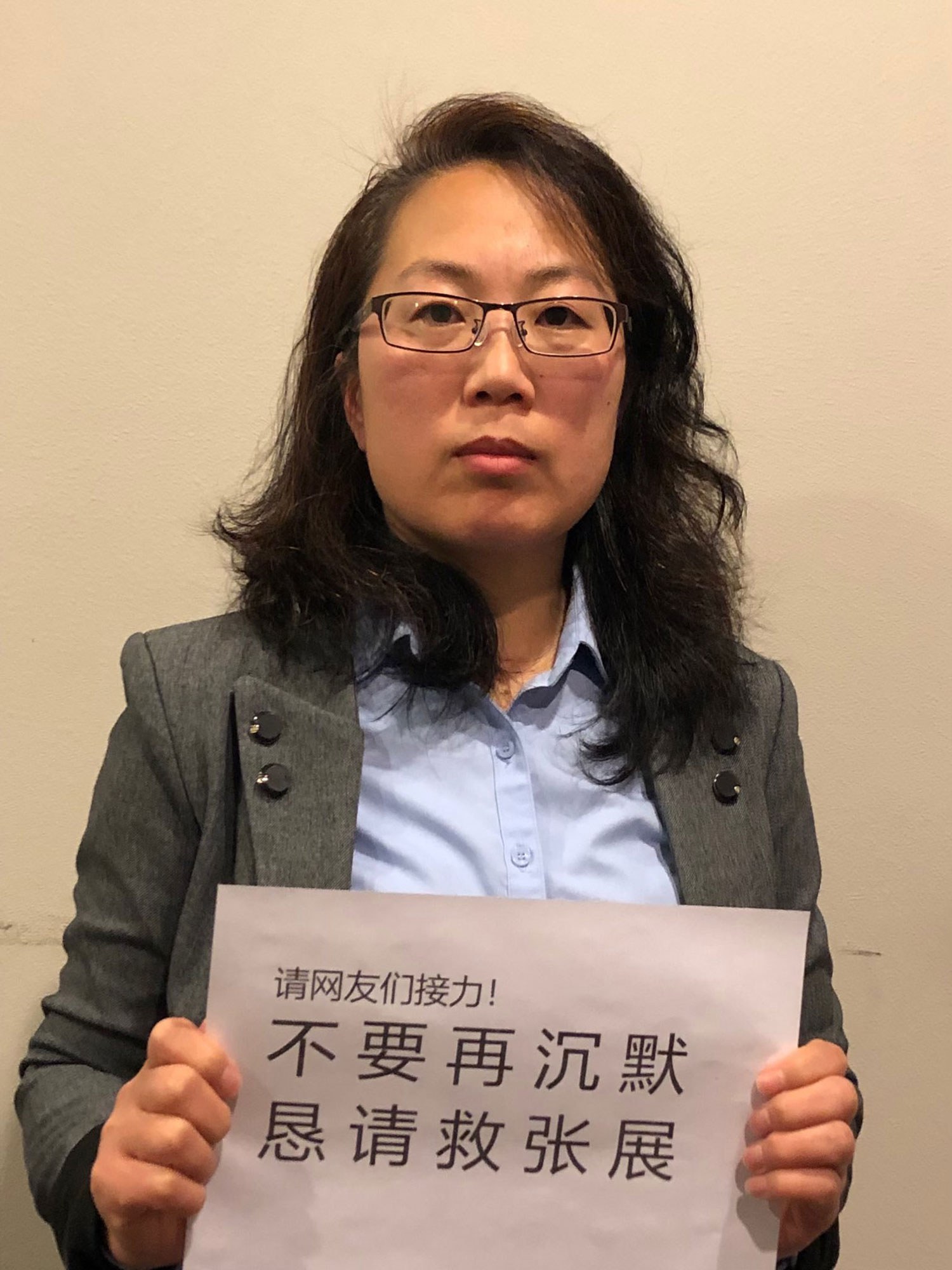
The experience of citizen journalists in Zhang has pushed the issue of freedom of expression in China to another level.
In early 2020, after the outbreak of the new epidemic, Chang went to the area to try to spread the true situation to the outside world through the Internet. She records social life, public administration and government responses via video and social platforms.
In May 2020, Zhang Shao was detained by the police. In December of the same year, the People ' s Court of Putu Ninang District of Shanghai sentenced him to four years ' imprisonment for the offence of stalking.
On 13 May 2024, Zhang was released after completing his sentence. She then continued to focus on social issues and to express her solidarity with other defenders. Just over three months later, on 28 August 2024, she was again detained.
On 19 September 2025, the People ' s Court of Putu Ningang District of Shanghai again sentenced Chang to four years ' imprisonment for the offence of placarding.
Amnesty International, in its urgent action document issued on 15 May 2026, stated that the physical health of the show had deteriorated significantly and that her ability to seek judicial redress was affected by her difficulty in having regular access to a lawyer of her choice.
原始来源 · amnesty.org国际特赦组织:2026年5月张展紧急行动文件amnesty.org ↗Zhang Chang was sentenced twice to the same criminal offence. Her initial public activities were to document the Wuhan epidemic and her continued participation in the expression of civil solidarity with human rights until the second prosecution.
Amnesty International, the Committee for the Protection of Journalists and others have all made serious criticisms of the case, and have found that the criminal measures taken by the Chinese Government against Zhang Shao constitute a serious violation of freedom of expression.
The Chinese Government has a statutory duty to maintain public order, but public order cannot be judged solely by the presence of a voice critical of the Government. Independent reporting, political expression and solidarity with the victims of persecution are themselves public activities that are protected by law.
The social impact of such cases goes beyond the accused himself when a citizen journalist is held in prolonged detention for reporting on public events and when she is held criminally responsible for her repeated statements.
It sends a realistic signal to more ordinary people that even after serving their sentences, they may continue to participate in sensitive public affairs, and may face new criminal risks.
The resulting self-censorship also weakens society's ability to discuss issues openly. Labour disputes, administrative offences, judicial disputes and public security incidents may be denied timely exposure because of personal risks that the parties, those who know and those who record the news fear.
The law has civil rights and the operation of powers determines whether rights are realized
Article 35 of the Chinese Constitution clearly stipulates that citizens shall enjoy freedom of expression, publication, assembly, association, procession and demonstration; Article 33 provides that the State shall respect and guarantee human rights; Article 41 provides for the rights of citizens to monitor, in accordance with the law, the State organs and their staff.
However, in the operationalization of the system, how citizens exercise these rights is often influenced by the combined effects of administration, public security enforcement, criminal prosecution and political control.
In particular, the offence of stalking involves a wide range of acts, and the judicial authorities ' subjective and intentional determination of the dissemination of information on the Internet, public order damage and the perpetrator has a decisive impact on the outcome of the case.
For ordinary citizens, the legal provisions do not automatically provide effective protection. They also need independent lawyers, courts that examine evidence impartially, channels of appeal without interference from local interests and media that can investigate public authority behaviour.
If these conditions are not fully realized, the legal defence of citizens may become a disproportionate contest.
The administrative resources are available to the authorities to organize investigations, access materials and decide whether to initiate enforcement proceedings; The average population needs to invest time, money and personal energy to tell its own story over and over again. Some may also face detention, prosecution or other pressure after they have publicly defended their rights.
The 2026 Sage Hoon case and the new rules for mail visits provide a concrete entry point for observing this power relationship.
The former reflects the criminal risks that citizens may incur by participating in the defence of their rights through online public opinion, while the latter reflects procedural limitations on citizens ' access to higher-level channels of appeal. The case further illustrates that when independent reporting of public events and social monitoring touch politically sensitive areas, the expression itself can have serious consequences.
The three areas, which are not simple and equal in legal relationships, are all linked to the question of whether citizens can effectively control public power.
Political power may continue to face obstacles created by the same power structure when it is sought to hold citizens accountable for their political power, which affects both the receipt of complaints, the investigation of cases, judicial remedies and the dissemination of information.
The Chinese Government has consistently emphasized the rule of law in recent years, the rule of law in the country, the rule of law in the mail and the protection of workers ' rights and interests. However, the true measure of the rule of law is whether citizens can be treated fairly in disputes with government authorities, in addition to the number of laws enacted, the speed of cases processed and the completion of proceedings.
The fact that a worker has not recovered his or her salary, that a visitor has not been impartial in addressing the issue itself and that a journalist is able to report on public events independently is more indicative of how civil rights are guaranteed than is the case for abstract policy advocacy.
For Seng-jin, the case is now at the appeal stage, and its criminal liability and the relevant findings of the first instance judgement are still pending in a follow-up judicial process. For citizens who have sought redress for long periods of time, the actual impact of the new provisions after their implementation also needs to be observed on an ongoing basis. The situation of Zhang Chang continues to raise concerns among international human rights bodies about the situation of freedom of expression and access to justice in China.
As these events continue to be seen in the public eye, the problems facing Chinese society are quite clear: when citizens ' normal claims are not effectively answered and public expression may pose criminal risks, social tensions cannot be resolved through transparent, peaceful and fair procedures.
The meaning of civil rights ultimately depends on whether ordinary people can actually use them when they face public power.
If it is necessary to take an unpredictable personal risk to pay, to complain, to publicly criticize and to record public events, then the so-called legal defence of citizens ' rights must be subjected to a more rigorous reality test.
China Focus will continue to follow up on the judicial progress of the Shang Si Jin case, the practical implementation of the 2026 letter-and-visit registration new regulations, and the situation of Chinese citizen journalists and human rights defenders.
Article discussion
Verified members can discuss this report publicly and manage their own content.
Checking member sign-in status…