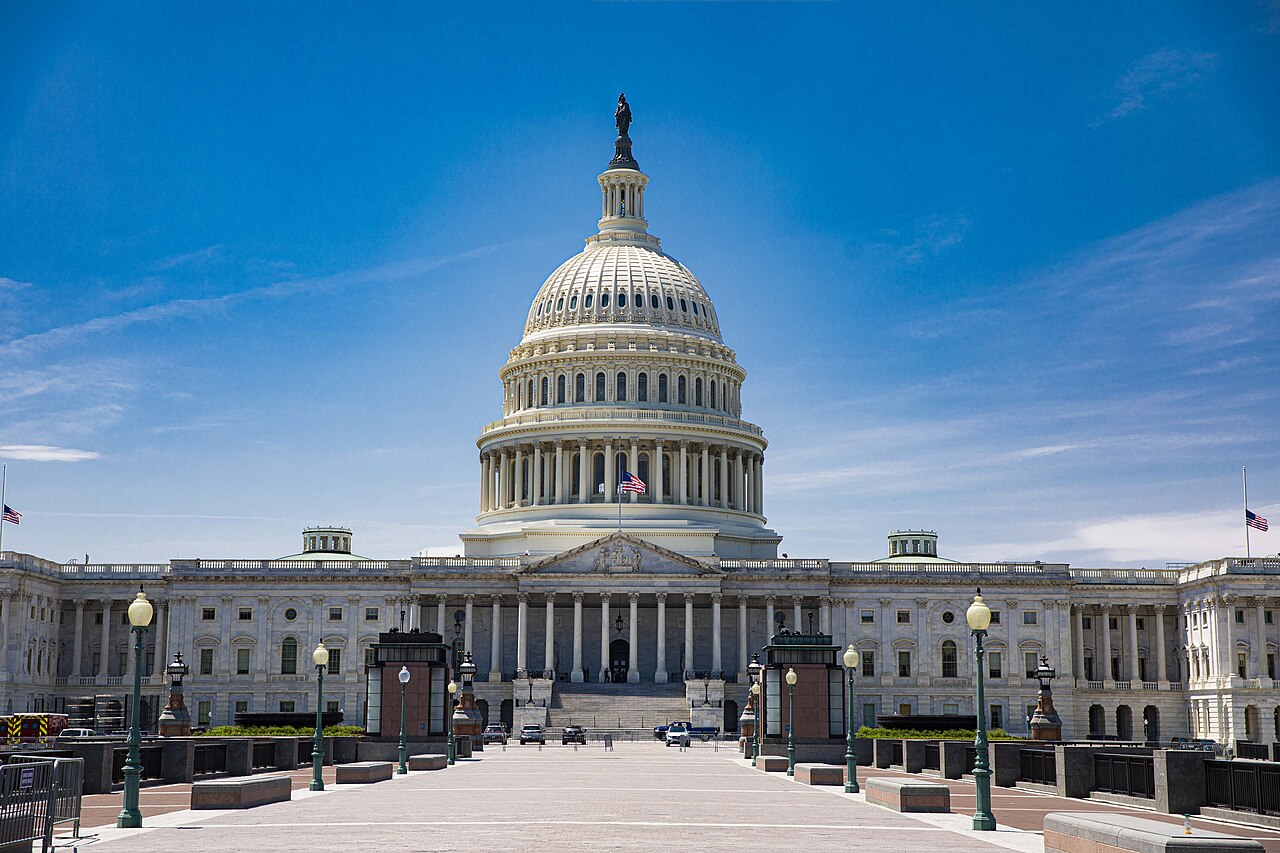
A United States Congress resolution against the Communist Party of China and Xi Jinping has recently re-enlared the attention of the Chinese-speaking social media abroad. In a formal resolution, the United States Senate described the Communist Party of China as a “criminal organization” that posed a serious threat to global stability and peace, and condemned, in rare and harsh political terms, human rights violations, political persecution and acts against international security during Xi's administration.
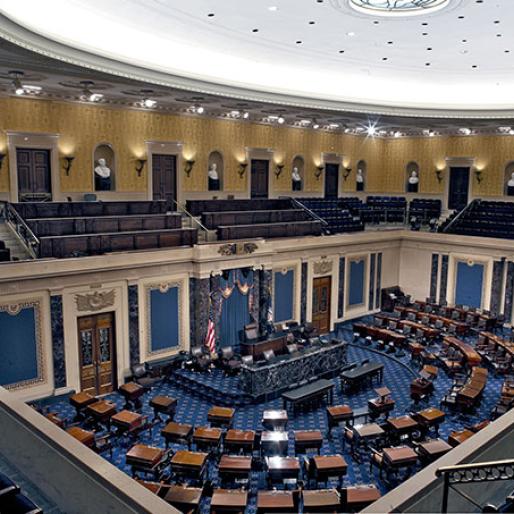
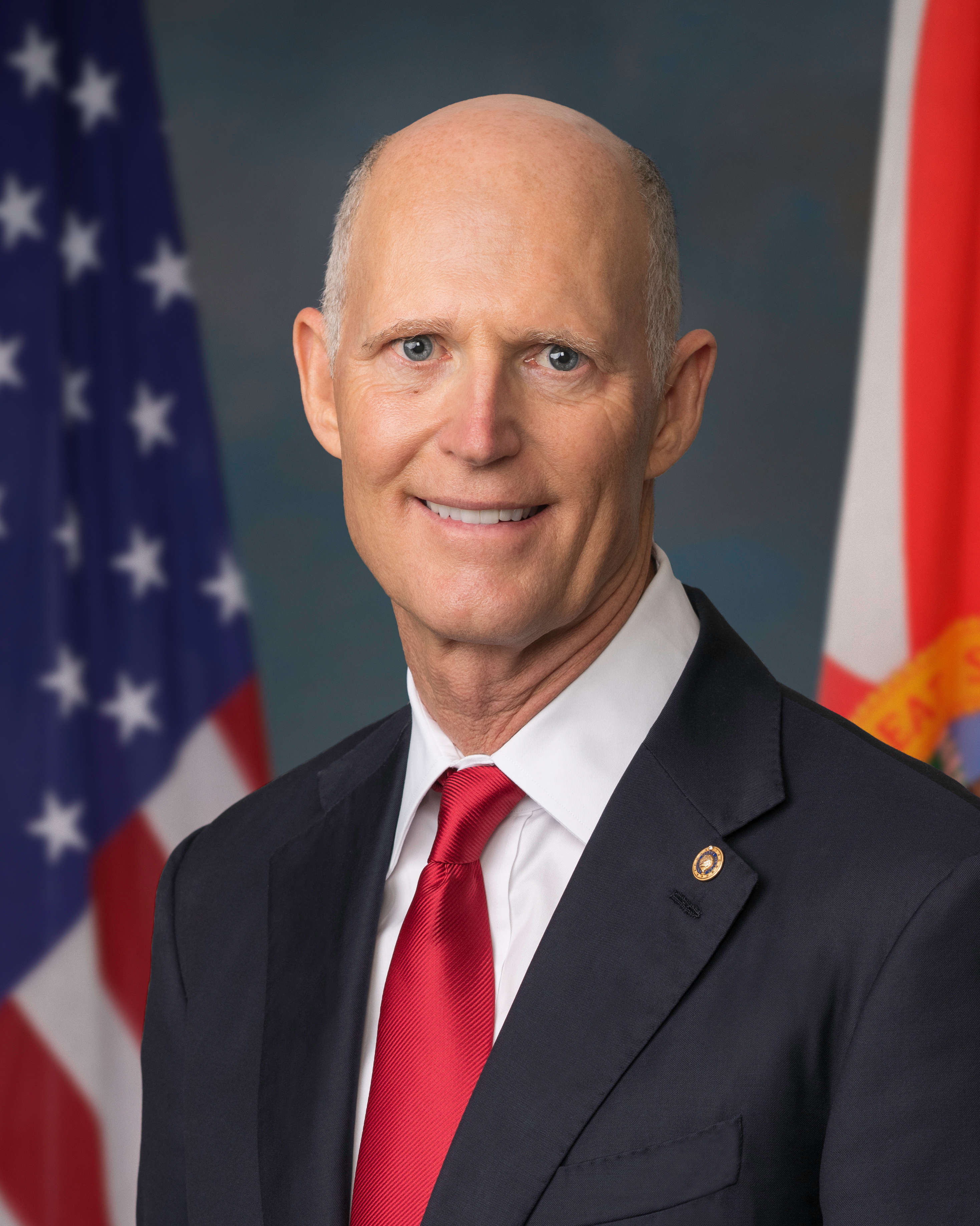
The original document of the United States Congress was consulted in Focus China, and the resolution, S. Res.444 was introduced by Republican Senator Rick Scott of Florida on 9 October 2025 and adopted by the Senate on 16 June
- The latest news, which was re-dispatched by the network, concerned the resolution that had been adopted by the Senate, not the recent vote in October.
However, the political significance of the resolution has not diminished. The United States Senate has included in its official resolution the harsh accusations of the Communist Party's rule and has clearly expressed its support for the Chinese people who have been subjected to the Communist Party's rule and for the victims around the world, bringing criticism of Xi's regime into the official political record of the United States Congress.
The Senate directly named Xi Jinping and the Communist Party of China
Resolution S.Res.444 is officially entitled " Resolution condemning the dictatorship of the People ' s Republic of China, Xi Jinping, for deceptiveness, for undermining the prospects for peace and security and for planning crimes against humanity ".
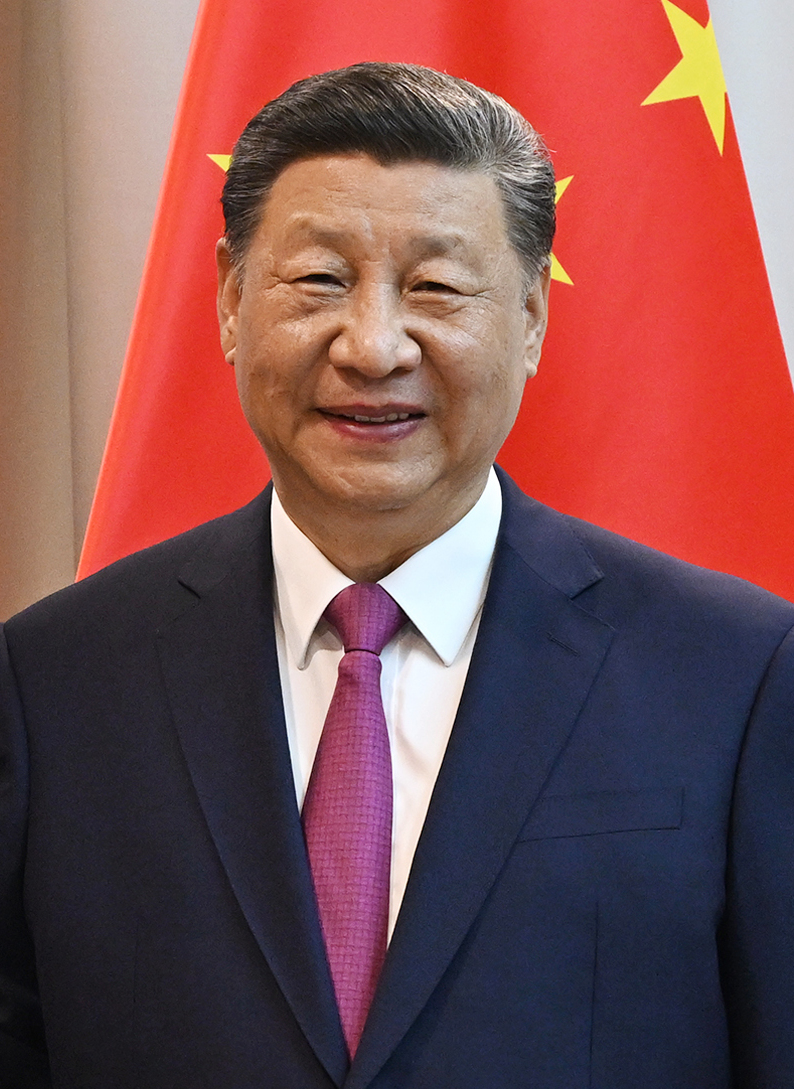
原始来源 · govinfo.govS.Res.444参议院正式通过文本govinfo.gov ↗At the beginning of the resolution, Xi was defined as the leader of the Communist Party of China, while at the same time describing the Communist Party of China as a criminal organization that poses a serious threat to global stability and peace. This political characterization is clearly directed at the United States Senate’s concern not only with a policy of the Communist Party, but also with the responsibility of Xi’s individual political leadership and the way in which the Communist Party of China has long exercised its power.
Whereas Xi Jinping is the lead of the Chinese Community Party, a criminal organization holding a place to global stability and peace; * The present document was not edited before being sent to the United Nations translation services.
Scott delivered a strong speech at the Senate meeting on 16 June
- He accused the Communist Party regime led by Xi of fraud, theft, slavery, genocide and crimes against humanity, and regarded them as a major threat to the national security of the United States and to international peace.
Scott stressed in his statement that the Communist Party of China had a direct link to its international military, economic and political actions in the face of the oppression of its own people. He accused the Beijing authorities of gaining access to resources through international trade and financial markets while expanding military power, strengthening political control and threatening security in the surrounding areas.
This political judgement is noteworthy. The long-standing United States policy debate over China has been focused on areas such as trade deficits, market access, technology competition and military balance. The fact that resolution S.Res.444, which simultaneously targeted human rights persecution, political systems, national security and the international order, showed that the proponents had sought to redefine the political threats facing the United States, in the light of the ruling nature of the Communist Party.
From Xinjiang, Hong Kong to religious persecution: the CCP's rule has become a major focus of condemnation
The resolution lists human rights violations and political oppression in various regions, including mass detentions, forced labour and religious persecution of Uighurs and other Muslim communities in Xinjiang.
These issues have long gone beyond the political debate between the two parties in the United States. On 31 August 2022, the Office of the United Nations High Commissioner for Human Rights published an assessment of the human rights situation in Xinjiang, noting that mass arbitrary detention and discriminatory deprivation of liberty on the ground against Uighurs and other predominantly Muslim groups could constitute international crimes, in particular crimes against humanity.
S.Res.444 further included in its official resolution religious and cultural repression in Tibet, forced labour, political detention and the erosion of Hong Kong ' s right to liberty. The document explicitly refers to the issue of political detention following the implementation of the National Security Act in Hong Kong and refers to Le Chiying, founder of the Apple Daily.
In mainland China, the interference of political power in religious activities has also been criticized. The resolution accused the Communist Party of persecuting Christians who were not members of officially recognized religious organizations and involved serious allegations of persecution of Falun Gong practitioners and forced organ removal.
It is noteworthy that the resolution also included the evaluation of the history of the Communist Party rule in 1989 in the context of the six-four-year repression. More than three decades after the events, the Chinese Government has so far restricted public discussion of this historic event, and the commemoration and accountability activities have been politically suppressed for a long time.
From Beijing in 1989, to Xinjiang, Hong Kong and all over mainland China under Xi Jinping, political control has continued in different legal and administrative forms. Criticism of the CCP regime thus has a historical continuity. Whether the authorities interpret the measures as maintaining stability, combating terrorism, national security or combating crime, whether or not they exercise their powers under independent judicial supervision, whether ordinary citizens freely express their rights and uphold them in accordance with the law, remains an important basis for judging the nature of these policies.

Economic, military and cross-border activities are included in the same resolution
Resolution S.Res.444 is not limited to the question of human rights in China.
In the economic sphere, the paper criticized the long-standing failure of the Chinese Government to fully implement the commitments made upon accession to the World Trade Organization, which related to market opening, intellectual property protection, unfair trade and State-led economic behaviour.
The resolution also accused the Communist Party of using the “one-way street” initiative to expand international influence and exert political and economic pressure on some developing countries through loans, infrastructure development and economic dependence.
In the area of United States national security, reference was made to the Equifax massive data leak in 2017, as well as to cases involving Chinese intelligence activities, cyberattacks and illegal overseas policing in the United States.
On military and regional security issues, the Senate included Beijing military pressure on Taiwan, actions taken in the South China Sea and the maritime areas surrounding the Philippines, and relations between the Chinese Government and countries such as Russia, Iran and the Democratic People ' s Republic of Korea, among others, in its political judgement that posed a threat to global stability.
Taken together, these issues show the relationship of responsibility that S.Res.444 seeks to establish: the Communist Party maintains its rule internally by relying on a highly centralized political power, while the foreign side defends the interests of this ruling group by means of economic power, military expansion and diplomatic influence.
This judgement is no longer limited to a single diplomatic friction, but rather links the power structure of the Communist Party of China and its international behaviour.
At the same time, allegations in resolutions concerning the origin of the outbreak, specific criminal responsibility and some transnational acts remain of different evidentiary and legal character. The acceptance of these political charges by the United States Senate does not mean that criminal decisions on the matter have been handed down by the judiciary.
Distance between the political characterization of “criminal organization” and legal accountability
The most interesting expression of this resolution is the direct reference to the Communist Party of China as a “criminal organization”.
At the political level, this means that the Senate has formally adopted the document containing this harsh description. It is no longer just personal statements made by a member of Parliament during an interview, but is the text of a political resolution endorsed by the United States Senate.
However, in the United States legal system, S.Res.444 is a simple Senate resolution and does not have the effect of directly creating criminal offences, automatically imposing sanctions or placing an organization on a statutory list of criminal organizations.
In fact, the United States House of Representatives has another more legal-operational proposal.
On 12 May 2026, Scott Perry, Republican Representative of Pennsylvania, introduced Bill H.R. 8760, entitled " The designation of the Communist Party of China as a Transnational Organized Crime Group Act ".
原始来源 · govinfo.govH.R.8760法案原文govinfo.gov ↗The bill proposes that, if formally enacted, the United States Attorney General designate the Communist Party of China as a transnational organized criminal group and requires the FBI to make it a priority international criminal organization, while promoting the application of the relevant organized crime law to hold it accountable.
As of this search, the Congress ' s public record shows that the bill is still in the process of being introduced and referred to the House of Representatives ' Judicial Committee for consideration, and that it is not an American law in force.
The difference between the two congressional documents is precisely a reflection of the distance between the political rhetoric of the United States and the actual legal action.
The Senate has adopted a resolution expressing its condemnation, but further promotion of legally binding measures, official sanctions and criminal accountability remains dependent on subsequent legislative and administrative action.
S.Res.444 itself, in its final clauses, suggests that the use of existing applicable sanctions powers, including the Global Magnifictski Human Rights Accountability Act, should be supported to impose sanctions on relevant officials of the Communist Party.
This makes the resolution more political in purpose: the condemnation of the CCP ' s rule should be directed further towards the sanctions against the officials responsible.
The real test behind the United States Senate political statement
Another element that deserves attention is the express expression of support for the Chinese people.
The paper distinguished the Communist Party of China and its leaders from the Chinese people who had been affected by its ruling practices. This expression is concerned with a question that has long been deliberately confused by Beijing political propaganda: whether criticism of the Communist Party regime is tantamount to opposition to the Chinese people.
In the relationship between political rights and State sovereignty, a ruling party cannot be naturally representative of the political will of all citizens, let alone be free from external criticism of its domination by virtue of its long-standing monopoly of State power.
The restrictions on expression, judicial injustice, political detention and religious persecution faced by the Chinese population should not be treated as a negligible internal matter in international political relations. The investigation, documentation and disclosure of these acts are directly related to the enjoyment of fundamental freedoms and the protection of the law by ordinary people.
However, the adoption of a strong-worded resolution by the United States Senate did not mean that long-standing political persecution would end.
What is really relevant for detained dissidents, political prisoners, independent journalists, religious believers and their families is whether international political pressure can be translated into targeted accountability, whether it can restrict access to the international financial and travel system for officials involved in persecution, and whether it can protect ordinary Chinese who still live under political pressure.
Scott, speaking before the Senate, had made extremely harsh political criticism of the CPC. However, extensive trade and economic relations and complex national interest relations between the United States and China still exist. This reality determines the possible long-standing and marked gap between Congress political statements and the actual United States policy.
The adoption of S.Res.444 was therefore a clear political signal and exposed even deeper international political difficulties. When human rights responsibilities and economic interests clash, the extent to which democratic Governments are willing to take practical action determines how these political condemnations can ultimately affect.
The United States Senate had placed Xi and the Communist Party of China on a formal political agenda and had adopted resolutions strongly condemning them.
This resolution will not immediately change China’s political realities, but it leaves a clear congressional record: Human rights abuses, political repression and international security disputes that accompany the long-term administration of the Communist Party have become the subject of public criticism and accountability by the United States Senate.
For the Chinese people who have been politically persecuted, it is the international community ' s ability to move from political rhetoric to concrete action that is the most important element of the resolution that deserves sustained attention.
Based on: Official text of resolution S.Res.444 published by the United States Government Publishing Service, United States Congress Records, 16 June 2026, S2813, Senator Scott's Office Statement, United States House of Representatives Bill H.R. 8760, and Human Rights Assessment of Xinjiang, Office of the United Nations High Commissioner for Human Rights.
Copyright: Focus on China Independent News
Raw documents and news videos
- I'm sorry.The text of the resolution S.Res.444 of the United States Government Publishing Service
- I'm sorry.United States Senate on 16 June 2026, live voting records
- I'm sorry.Video of statements and speeches by Senator Scott's office
- I'm sorry.Full text of the United States House of Representatives H.R. 8760 Bill
- I'm sorry.Senator Scott's Senate Speech Video
Article discussion
Verified members can discuss this report publicly and manage their own content.
Checking member sign-in status…