
China ' s pension system is facing the real test of an ageing population, unequal distribution of benefits and a sustained increase in financial subsidies. While a large number of young workers are concerned about future pension security and rural elderly people are living on a meagre pension, the Chinese Communist Party Central Organ, the Daily People ' s Journal, publicly criticizes the discussion on the sustainability of pensions and accuses some of the questioners of provoking social confrontation and anxiety.
On the evening of October 29, the People's Daily published “Paymen’s Pensions Are Falling” under the banner of “People’s Daily”? Crossing the cognitive fog with a “three books” was reproduced the following day by the People's Network. The article criticized recent discussions on the financial pressure on pensions, the burden of contributions by young people and unfair retirement treatment, stressed the multiple financial guarantees of China ' s basic pension insurance, and described some of the questioning as creating social anxiety.
This statement quickly provoked controversy in the Chinese network. On October 30, the Foreign Platform X account number “The Gentleman of the Peace (JJ)” transmitted the video, questioning the way the Daily People's newspaper responded to public anxiety about old age, arguing that it should make public the use of social security funds and the basis for their distribution, in opposition to its accusations against the population.
The controversy has exceeded the forecast of whether a pension will be financially crisis.
What is really in need of public scrutiny is why the system of old-age pension protection under the Communist Party of China has long been marked by a wide disparity of treatment, how workers ' pensions are managed, how much of the public financial subsidy is responsible, and why ordinary citizens are not fully involved in the major policies that determine their own security in later years.

Pension disputes continue to rise, official first warning public statements
The review of the People ' s Daily is focused on the sources of funding, equity of treatment and long-term sustainability of the pension system.
原始来源 · peopleapp.com人民锐评:养老金“三本账”评论全文peopleapp.com ↗The article explains that China ' s basic pension insurance is based on a combination of social integration and personal accounts, and that part of the current workers ' contributions is used to pay for the treatment of retirees, along with financial subsidies, State-owned capital transfers and the return on investment in the Fund.
These interpretations are not entirely unfounded in terms of the rationale of the system. Modern public pension insurance is generally intergenerational in nature and is risk-sharing, and it cannot simply be assumed that a pension system is about to go bankrupt on the basis of population decline.
However, the existence of a multi-source pension system does not automatically prove that future income is sufficient to cover long-term expenditure, much less explain the existing disparities of treatment between different social groups.
Of particular note is the fact that the Daily People ' s Journal, in refuting the pessimistic judgment about the future of pensions, described part of the discussion as provoking confrontation and creating anxiety.
原始来源 · zaobao.com.sg联合早报:人民日报批评养老金崩盘论zaobao.com.sg ↗Such politicized public opinion statements can easily translate into an assessment of the motivation of speakers into public discussions that would otherwise involve economic predictability, social equity and fiscal responsibility.
“The statements that provoke confrontation and create anxiety are a cause for alarm. “The People's Daily Review”, 29 October 2026.
The risk of presenting a pension does not mean that the relevant projections are necessarily correct; Similarly, Governments cannot deny their legitimacy to open discussions simply because one view may cause public concern.
For workers who have paid pension insurance for many years, it is reasonable to ask how much pension is available in the future, whether the fund is sufficient to sustain payments and whether the Government is able to fulfil its commitments.
Official comments can counter false predictions by data, and can explain the advantages of the current system, but failure to respond adequately to the distribution of retirement benefits and long-term financial responsibility and to criticize social anxiety alone does not restore public confidence.
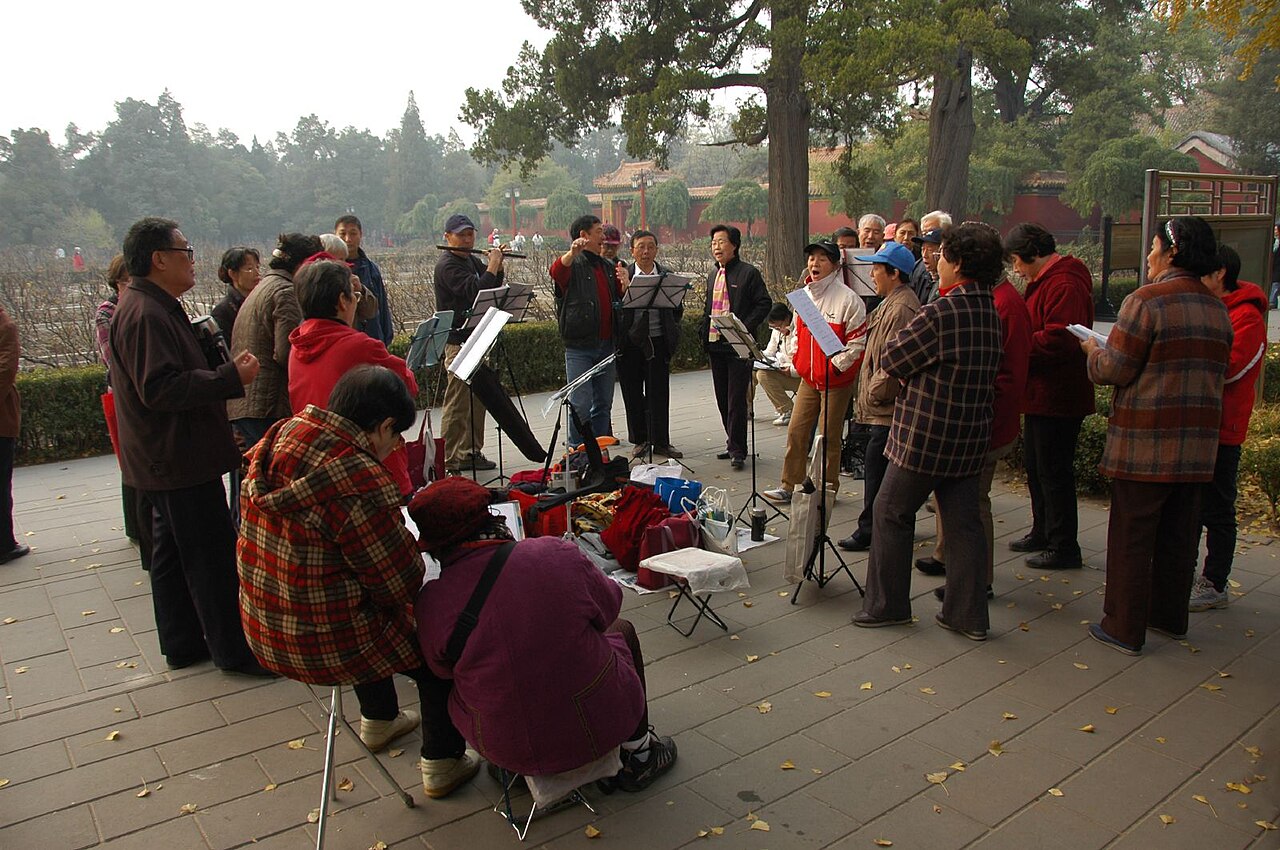
Behind 300 million old people, population pressure is in front of the government
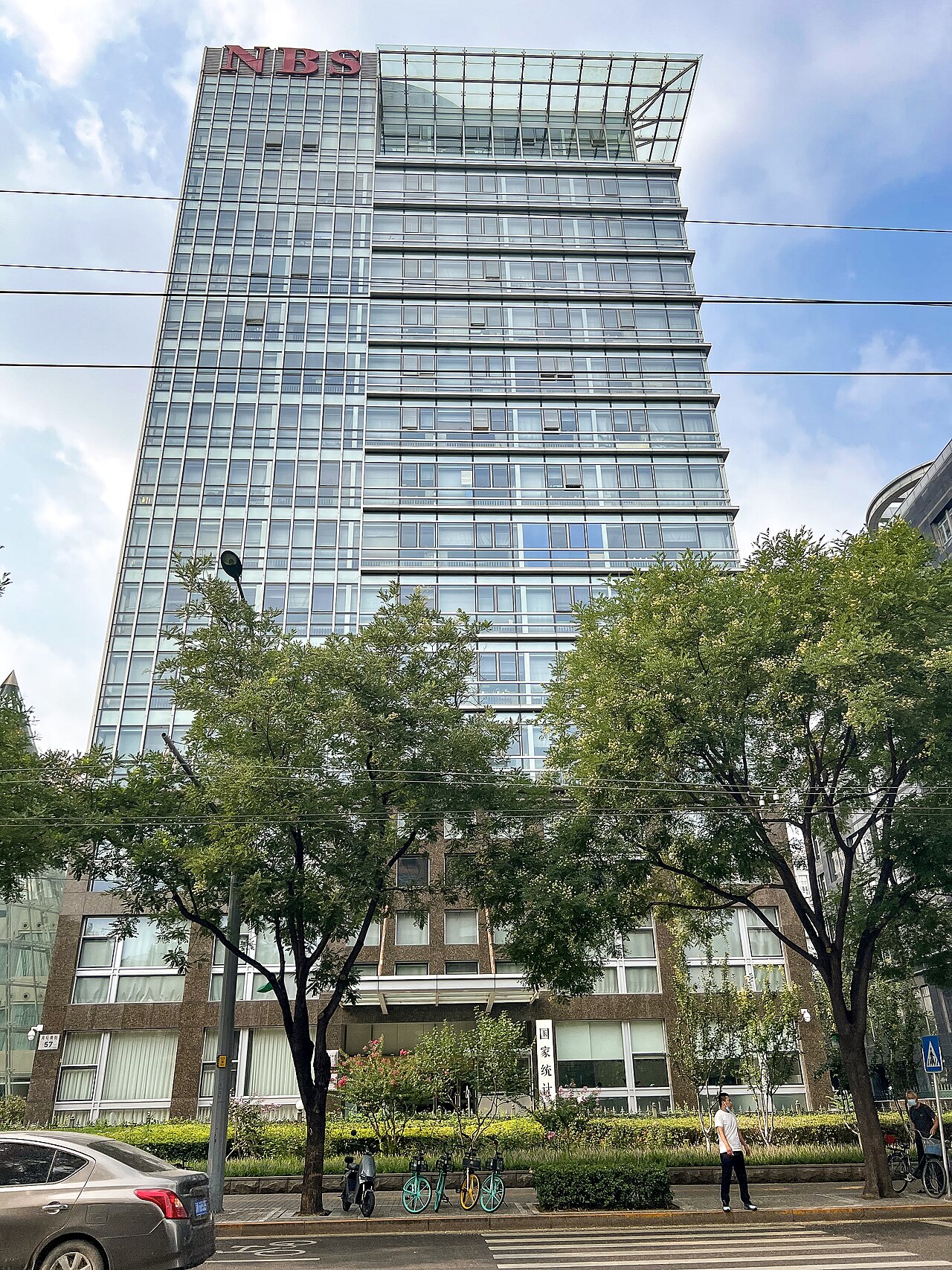
Data published by the National Statistical Office of China in 2026 show that by the end of 2025, the population aged 60 years and over had reached 323.38 million, or 23 per cent of the population; Of this total, 223.5 million are aged 65 years and over.
Concurrent with population ageing is the steady decline in the birth population.
In 2025, China had a population of only 7.92 million births and 11.31 million deaths, and a natural decline of 3.3.9 million people throughout the year. The population aged 60 and over is approximately 1.3.7 million more than in 2024.
These data together reveal the long-term demographic changes facing the Chinese pension system: the number of people entering the ageing age is increasing, while the size of the population that may enter the labour market and pay pension insurance in the future is being affected by the low birth rate.
Demographic changes do not directly determine the bankruptcy of pension funds, as productivity, wage growth, fiscal subsidies and investment earnings affect capacity to pay. However, the change in the ratio of the working to retired population does change the long-term financial balance of social security.
This issue has become a reality that the Chinese Government itself must address.
In September 2024, the Standing Committee of the National People ' s Congress adopted a decision to postpone retirement in a gradual manner, which was implemented as of 1 January 2025.
Under the relevant arrangements, the mandatory retirement age for male workers in China will be raised gradually from 60 to 63 years of age within 15 years, while the classification of female workers will be delayed according to the old retirement age. At the same time, starting in 2030, the minimum contributory period required to receive the basic pension of an employee will be raised from 15 to 20 years.
Delays in retirement involve multiple factors such as labour supply, the health of the population and the operation of pension funds, which cannot be considered as the basis for a mere payment crisis.
It does mean, however, that workers are facing new institutional arrangements: some of them need to work longer and some of the future participants need to reach a longer minimum contributory period in order to receive a basic monthly pension.
The costs and benefits of these reforms should be fully discussed in the public domain.
If a young worker retires later than the previous generation and contributes longer, there is a natural reason to ask the Government to publish the corresponding financial calculations, future treatment projections and risk-sharing schemes.
The so-called social anxiety that has been incorporated into such doubts clearly fails to resolve the distribution of benefits in the reform of the system.
The pension gap is alarming, why farmers' pension coverage is so small
More specific than the pressure on future fund payments that may occur is the existing disparities of treatment between different pension insurance groups in China.
In March 2025, the Economic Watch quoted an analysis by Liu Shijin, former Deputy Director of the State Council Development Research Centre, at the China Development High-Level Forum, which indicated that rural residents were the majority of recipients of old-age pension in urban and rural areas, and that the average monthly pension for this group was significantly lower than that for retired employees in enterprises and for employees in institutional establishments.
According to the data quoted by Liu Sec-Chong at the time, the rural population pension is approximately 220 yuan per month, the urban retired workers about 3,000 yuan and the institutional employees about 6,000 yuan.

The specific amounts between years, statistical calibres and insurance systems change, but this differential treatment structure persists.
The national minimum basic pension for urban and rural residents was 143 yuan per month in 2025, and the minimum standard set by the central Government in 2026 was further increased by 20 yuan to 163 yuan.
It should be noted that 163 yuan is the national minimum basic pension and not all rural elderly persons actually receive the total pension. The personal account pension, local benefits and local basic pension standards may make the actual treatment different.
However, this figure still reveals a low level of central basic safeguards.
According to data on ageing published by the Ministry of Civil Affairs and the National Office for Ageing in 2026, the number of people actually receiving basic old-age insurance for urban and rural residents had reached 188.2 million by the end of 2025.
For rural older persons who lack sufficient savings, are incapacitated for work or suffer from chronic diseases, pensions often cannot cover the basic living expenses of food, housing, medical care and care alone.
The agricultural population of China has long been responsible for the economic responsibilities of agricultural production, food supply and rural infrastructure development. A large number of rural older persons are young and do not participate in contributory old-age insurance as do urban workers, both because of the employment structure at the time and because of the historical dual-system arrangements between urban and rural areas.
Thus, the overall difference in pension entitlements cannot be explained simply by the contributions recorded today by different groups of people.
There is also the question of public responsibility that Governments must assume: should rural workers who have historically not been adequately covered by old-age pension security be provided with more equitable old-age security through financial redistribution?
The Daily People ' s newspaper emphasizes that the employee ' s pension is subject to the rules of calculation, such as the length of contributions and the level of contributions. However, the historical conditions for the establishment of pension rights by different groups are different, and the existing rules of measurement alone explain the differences in treatment and do not provide a complete answer to the question of equity arising from differences in the historical system.
When a proportion of retirees receive thousands of yuan per month, while a large number of urban and rural residents receive only hundreds of dollars, the concern is not only whether the pension is rich or not, but also who is able to share in the benefits of the national economic development.
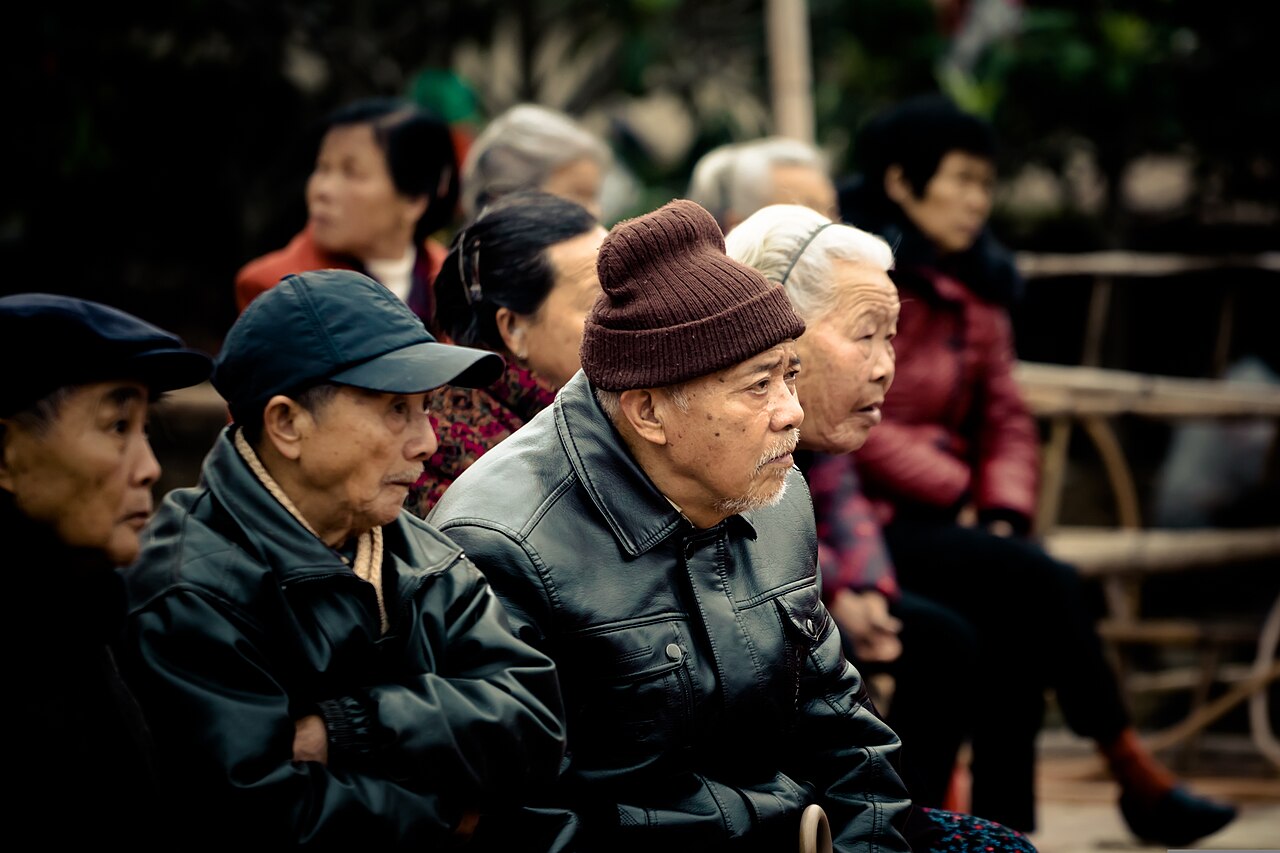
Fiscal subsidies are close to $3 trillion, where the money comes from and where it goes.
The Government of China has not not not not yet published data on social security funds.
The National Budget Report published by the Ministry of Finance in March 2026 shows that the budget of the National Social Insurance Fund (NSF) in 2025 was 12.603 trillion yuan, with expenditure of 11.14 trillion yuan, leaving a balance of approximately 1,462 trillion yuan in the year and a cumulative balance of about 15.956 trillion yuan at the end of the year.
原始来源 · mof.gov.cn财政部:2025社保收支和2026预算原始报告mof.gov.cn ↗From this set of data, it cannot be claimed that the entire social security fund in China has collapsed.
It must be noted, however, that these figures cover the budget of the National Social Insurance Fund and are not alone equal to the financial position of the Basic Pension Fund.
The same financial report also shows that the revenue from the financial subsidies in the budget of the National Social Insurance Fund in 2025 amounted to 291.1 trillion yuan, an increase of 10.8 per cent over the previous year.
The budget revenue of the National Social Insurance Fund is expected to increase by 3.9 per cent in 2026, and the expenditure is expected to increase by 6 per cent.
In the budgetary arrangements for 2026, the Social Insurance Fund is still expected to maintain its annual balance, but the change in the rate of increase in expenditure above the rate of increase in income deserves continued attention.
This suggests that China ' s social security system remains large in terms of overall funding, on the one hand, and on the other hand, it relies on sustained financial investment and adjustment of income expenditure arrangements on the other.
Fiscal subsidies are not generated in a vacuum, but are also derived from taxes, State capital gains and public financial resources that can be allocated by the Government in accordance with the law.
The shift from pension fund expenditure to financial subsidies does not mean that the associated costs disappear. Financial resources need to compete with budgetary resources for education, health, public health, housing security and other public expenditures.
This is also part of the popular daily discussion on the diversification of the sources of funding for pensions, which needs further explanation.
State-owned capital transfers can increase resources for old-age security, but State-owned assets are public resources, with clear and continuous oversight of the scale of their returns, actual transfer progress, return on investment and end-use.
National integration can alleviate the imbalance in inter-regional funds, but it does not automatically eliminate the long-term payment pressures of population ageing at the national level.
Investment returns can increase the Fund ' s income, but they are also associated with market risk and cannot be considered a source of funding for sustained and stable growth.
Therefore, it is important to keep the discussion on the long-term sustainability of pensions open, not only about the fund balance of a given year, but also about income, expenditure, financial subsidies, population projections, pay growth and long-term actuarial results of different pension insurance systems.
Without such information, it is difficult for the population to judge whether a policy improves the security of old-age pensions or transfers some of the costs to future workers and taxpayers.
Who decides the rights of workers in old age, from late retirement to financial expenditure?
Pensions are not only a social insurance arrangement, but also a long-term public commitment.
Workers continue to pay pension insurance during their working lives, and the Government has established conditions for access to it through law and the public system, and has adjusted its retirement policy in the light of economic and demographic changes.
This relationship requires that the system ' s designers have corresponding responsibilities of interpretation and supervision.
However, in the Chinese political system under Xi Jinping, major policies relating to the length of contributions to old-age insurance, the mandatory retirement age, fiscal allocation and reform of the social security system are developed and promoted primarily by the party political bodies under the Communist Party.
While policies are subject to legal procedures and public opinion may be expressed through consultations and recommendations by the People ' s Congress, Chinese citizens are unable to directly determine the change of the ruling party through free and competitive national elections, and lack a fully independent political oversight mechanism.
Independent press monitoring and the participation of social organizations are also restricted in the context of government fiscal policy.
The problems posed by this power structure are particularly evident in pension disputes.
(b) The costs of the system adjustment are borne by the general workforce, but it is difficult to determine the priority of the pension allocation directly; The Government can change its retirement policy and can evaluate different social views through the official media.
Once the policy challenge is incorporated into the logic of political opinion management, it may become more difficult for ordinary citizens to discuss in public major issues of interest to them.
Pension reform should have been based on full public financial information, cross-generational interest consultation and independent policy assessment.
But when the Government demands that workers continue to pay their contributions and to extend their working life, and when public opinion is critical of the people ' s concerns about future security, policy implementation is becoming a one-way requirement: the Government sets rules and workers are held accountable, and the public is called upon to believe that the system will continue to function.
This approach to governance may sustain policy implementation in the short term, but it is not conducive to building long-term social trust.
The public accepts that the pension system needs to be reformed, but has the right to ask the Government to explain how the costs of the reform are distributed and whether the authorities themselves are held accountable.
People's daily newspapers can criticize forecasts but not public accountability for government
This review of the People ' s Daily has chosen to respond to pension disputes with a financial structure, treatment and prospects for economic development.
These factors are indeed an important part of the analysis of the sustainability of pension security and it is necessary to refute the exaggerated and even unfounded predictions of a collapse.
However, the core concerns of the Chinese people were not answered in full.
What is really needed for the rural elderly is to know why their pensions are at a low level for the long term and whether they will be guaranteed in the future enough to support their basic lives.
For young urban workers, it is important to have a fair and stable relationship between the burden of contributions, employment income, retirement age and future entitlements.
For middle-aged workers who have long-term insurance coverage, the greatest concern is how the rights and benefits accumulated in old age are protected and whether future policy adjustments will change the expectations.
The claims of these groups are not natural rivalries.
What is really likely to create social contradictions are the lack of sufficient transparency in the allocation of old-age resources, the persistence of disparities in treatment and the difficulty of public participation in policy formulation through effective mechanisms.
The official ability of China to publish economic aggregates, the accumulated fund balance and financial subsidies also places a responsibility on further explaining the distribution structure and long-term policy risks.
A Government cannot prove that every older person can be guaranteed a fair and dignified old-age pension by simply expanding the total national economy.
Even less, the right to ask questions cannot be ignored because of the potential for errors in the judgement of some people.
The controversy that erupted on 30 October over the daily newspaper newspaper newspaper newspaper, ostensibly the economic discussion of the social security system, reflected in the long-standing power relations of the Xi Jinping regime in public governance: the Government is accustomed to determining policy from the top down, then to explaining its legitimacy through official propaganda, while public inquiries about the distribution of equity and government responsibilities often have little access to an equally adequate space for response.
(a) Whether the pension will be seriously difficult to pay in a given year and will require a rigorous financial calculation; The existing gap in the treatment of old-age between urban and rural areas today is tested by realistic data.
The Chinese people are not obliged to abandon their public finances and their commitment to old age because of the advantages of the official media system.
The credibility of the social security system ultimately depends on the fair treatment of workers, the transparent management of funds, the reasonable accountability of public finances and the Government ' s permission to monitor its policies adequately.
For the Communist Party regime, which has enormous financial resources and has long monopolized the political power of the State, what is really needed to prove is not why the people should not be anxious, but how the people in power are living up to their old-age commitments.
When 188 million old-age pensioners in urban and rural areas face different old-age problems with hundreds of millions of young workers, the Xi Jinping Government should be subject to constant questioning of public resource allocation and governance responsibilities.
The public is accused of creating anxiety and cannot increase the pension by one dollar or substitute for independent oversight.
People have the right to know where their pensions come from and go, and more so to ask why, after years of economic development, such disparities in the security of old age still exist.
Article discussion
Verified members can discuss this report publicly and manage their own content.
Checking member sign-in status…