
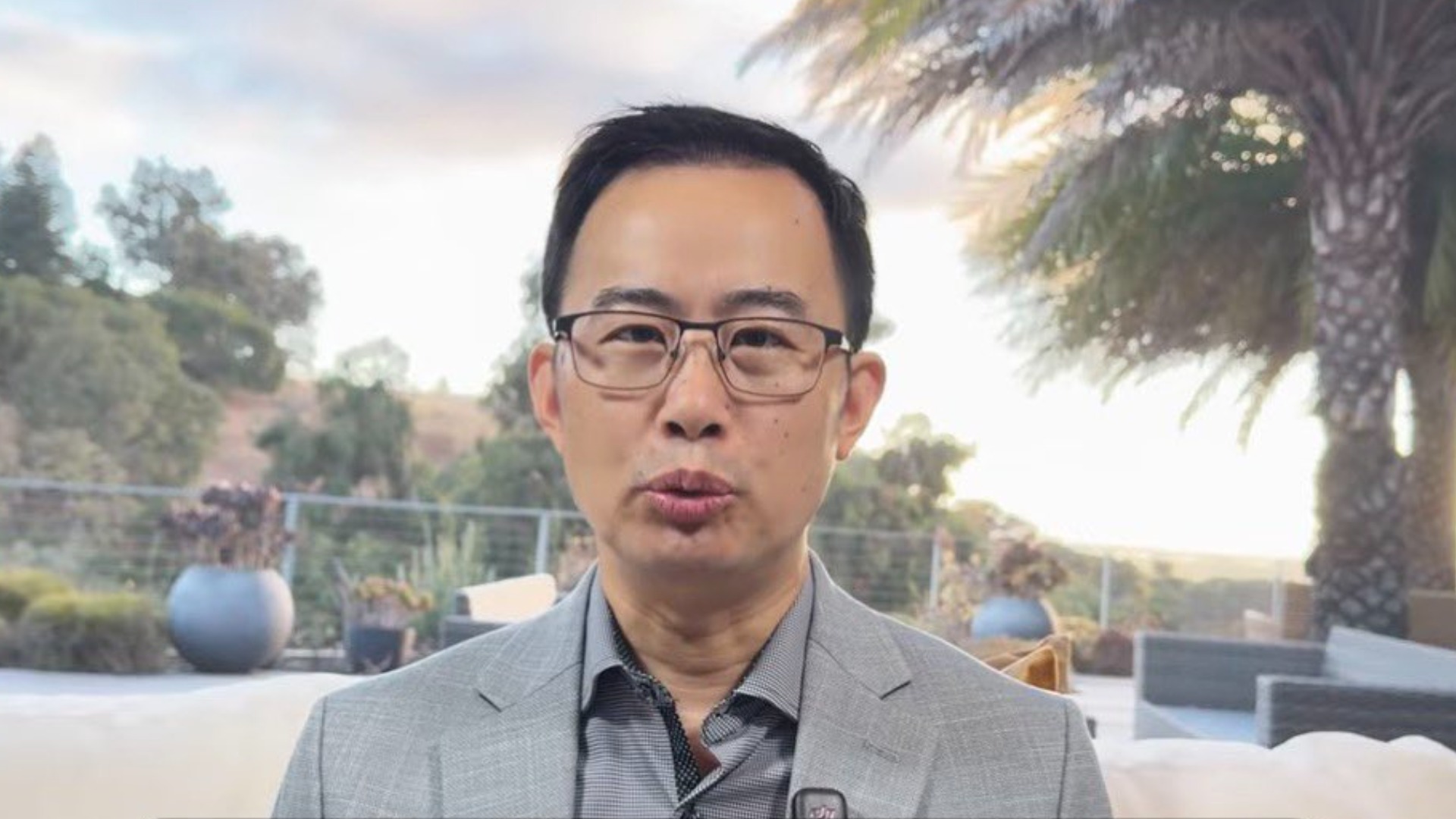
In 2020, he stood on the side of the U.S. Federal Court, arguing that the government could not deprive millions of WeChat users of the expression and communication rights by a paper executive order; six years later, in August 2026, the Chinese lawyer who helped WeChat continue to stay in the United States, but found himself forever rejected by WeChat.
Silicon Valley Chinese lawyer Keliang “Clay” Zhu recently publicly disclosed that he has been restricted using his WeChat account for years. The WeChat penalty page it displays shows “limited login, can not be unlocked” only because of “claims and confirmed multiple violations”. so far, the public information has not seen Tencent stating what content was actually published, which specific rule was violated, and why direct irreversible permanent restriction measures were taken.
The seal has raised concern not only because Zhu Cooley is a lawyer, but also because he was one of the key legal actors in preventing the U.S. government from blocking WeChat completely six years ago.
Six years ago, he sued the U.S. government in a federal court.
On August 6, 2020, then-President Trump signed Executive Order No. 13943 to restrict transactions related to WeChat and Tencent for reasons of national security. Subsequently, the U.S. Department of Commerce announced specific measures, including banning app stores from providing WeChat, as well as restricting Internet hosting, content distribution and related network services. According to the implementation program at the time, WeChat may not actually continue to operate properly in the United States.
After the executive order was issued, Zhou Ying and several Chinese lawyers joined the U.S. WeChat Users Alliance (USWUA) and quickly organized a team of lawyers to file a lawsuit.
正在读取来源 · docs.justia.comdocs.justia.com正在读取新闻标题与预览大图…In a complaint filed by the Northern California Federal District Court on August 21, 2020, Zhu was officially listed as the plaintiff's agent lawyer. The lawsuit argued that the government's comprehensive restrictive measures involved issues such as the First Amendment to the U.S. Constitution, legitimate procedures and equal protection, and asked the court to block the implementation of the executive order against ordinary WeChat users.
WeChat is not only a tool for a large number of U.S.-Chinese relatives to connect with China, but also an important channel for business, community organizations and public discussion.The U.S. WeChat User Federation stressed that it has no affiliation with Tencent, the Chinese government and any political party, and its lawsuit is aimed at the U.S. government to restrict the legality of ordinary users to use the communication platform.
正在读取来源 · docs.justia.comdocs.justia.com正在读取新闻标题与预览大图…On September 19, 2020, U.S. Federal District Judge Laurel Beeler issued a nationwide provisional ban.
The court did not make a final judgment as "WeChat does not present a national security risk", but found that the plaintiff raised sufficiently serious legal doubts on the first amendment issue, while the ban could cause damage to users that could not be compensated through money, thus meeting the conditions for issuing a preliminary ban. The U.S. government's attempt to suspend the ban has since failed.
At the time, the team of lawyers at Zhu Couling viewed the outcome as a protection for the First Amendment and the interests of millions of Chinese Americans who expressed their interests. Lawyers also confirmed that Zhu Couling was involved in the formation and coordination of the USWUA legal team.
The U.S. government finally paid $900,000 in court costs
In June 2021, the Biden administration revoked the Trump-era administrative order against WeChat and TikTok, which lost the basis for continuing to enforce the original ban.
正在读取来源 · img1.wsimg.comimg1.wsimg.com正在读取新闻标题与预览大图…The U.S. WeChat User Federation subsequently reached an agreement with the U.S. Department of Justice on the costs of litigation.The USWUA’s final documents show that the U.S. government agreed to pay $900,000 for lawyer fees, litigation costs and other related costs.
In accordance with the distribution plan announced by USWUA, Zhu Couling's Dengue law firm should be divided by $ 124,151.97 according to the time of work, and Zhu Couling will then donate the entire amount back to USWUA.
There is a very contradictory scene today:
Six years ago, Zhu Xiaobo took advantage of the U.S. judicial system to ask the government to explain why we can deprive users of WeChat; six years later, deciding whether he can continue to use WeChat himself, was a "unresolvable" notice without a public specific facts.
What are the “multiple violations”?
What really needs to be asked at the moment is not to simplify this incident into a “farmer and serpent” on the web.
The key issue is procedural transparency.
At present, WeChat has disclosed the information to Zhukova, which can only explain that the platform believes that there are "multiple violations". but what exactly is the number of times? what contents are involved? which rules are violated? what is the basis for auditing? has the permanent blockade been artificially reviewed? can users obtain specific evidence of punishment and file an effective complaint?
As of August 23, 2026, public reports still showed that Tencent did not give a specific explanation for the case.
Zhu Qing himselfly suspected that the punishment may be related to his past epidemiological prevention and control, nucleic acid detection and comments in the circle of friends, but this judgment is currently only the claims of the parties, and there is no Tencent punishment record or other independent evidence that can prove the specific cause of the seal, so it can not be directly identified as "because of the criticism of the policy of the epidemic is sealed."
This fact boundary is important.
The questioning of a platform censorship system does not need to rely on unproven inferences; the mere “permanent restriction of accounts without disclosure of specific violations” itself is sufficient to constitute a question of public debate.
Two powers cannot simply be equal, but transparency contradictions cannot be avoided.
Legally speaking, the US government and Tencent are not the same entity.
The First Amendment to the U.S. Constitution is first binding on government actions, and WeChat, as a private platform, does not, of course, have the same constitutional obligations because Zhukova has prevented the U.S. government from blocking WeChat with the First Amendment.
Therefore, simply putting the two incidents as "the United States protects freedom of speech, and WeChat violates First Amendment" is not legally accurate.
But precisely after the recognition of this distinction, another question emerges: how much transparency should a private communications platform be limited when it actually holds social relationships, business connections, public discussions, and even political expression of hundreds of millions of users?
In 2020, the U.S. government, even with the flag of “national security,” will still have to go to courts, submit evidence, accept lawyer claims, and face federal judges’ review of the legitimacy of executive power.
In 2026, Zhu Yuan faced a “limited login and unlockable” platform.
The former has public cases, complaints, trials, government evidence, court judgments and appeal procedures; the latter has only a few core reasons to be seen so far — “multiple violations.”
This is the event that really deserves attention.
From a WeChat account, see overseas Chinese information space
WeChat has long been not just an ordinary chat software.
For a large number of first-generation Chinese overseas, it connects families, friends, customers, communities and information sources in China at the same time.Once an account is permanently blocked, a user may lose not just a software, but a network of social relationships that has been formed over the years.
That’s why the 2020 U.S. federal court lawsuit is important: it’s not whether Tencent has a “natural right” to operate in the U.S., but whether the government can completely block the platform and cut off the expression and contact channels of millions of ordinary users.
Six years later, Zhukova illuminated his own experience, but took the question from "whether the government can block WeChat" to another direction:
When WeChat itself decides to block a user, who will ask WeChat to explain?
A person who once could ask for a presidential executive order to be reviewed by the court can now not obtain a public and specific penalty from the communications platform he once sought to protect.
This is not a simple personal complaint, nor is it just an internet story full of irony.
It raises a more realistic question: when China’s large Internet platforms have become an information infrastructure that overseas Chinese can not easily replace, what transparency and procedural constraints should the platform’s content censorship, permanent sealing and complaint mechanisms accept?
Six years ago, Zhukova helped WeChat get the chance to stay in the United States.
Six years later, could WeChat explain clearly to the user: why did he not be allowed to stay on WeChat?
Article discussion
Verified members can discuss this report publicly and manage their own content.
Checking member sign-in status…