
Reuters on September 7 thatChina is rapidly advancing the military application research of humanoid robots, and is trying to transform the advantages of the commercial robotics industry into the future battlefield capabilities.Based on more than 100 documents, procurement information, military papers and public materials, reports show that the Liberation Army's relevant agencies are exploring the use of humanoid robots around scenarios such as reconnaissance, logistics, dangerous environmental operations and urban operations.
The investigation did not find that China has deployed armed humanoid robots to the Liberation Army's operational forces. Reuters noted that there are currently problems such as high energy consumption, insufficient reliability, limited adaptability to complex environments, and there is still a technical threshold from really entering the battlefield. but relevant documents show that the Chinese military has incorporated such platforms into future intelligence operations.
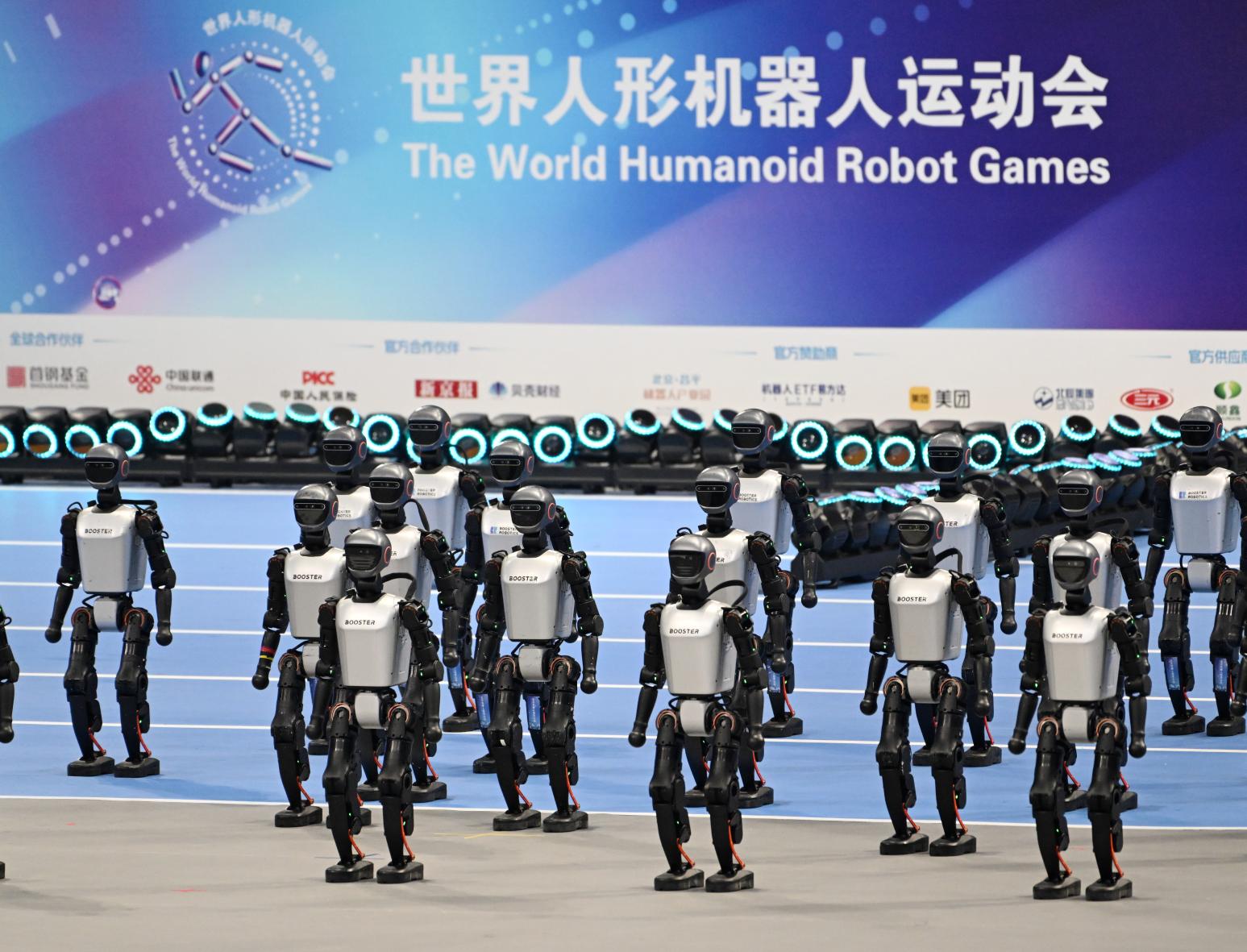
According to the report, at the World Human Robot Games held in Beijing last month, robots exhibited running, boxing, football and dance. Some robots showed fast movement ability, and a lot of equipment fell or failed in the field. Two days after the event, the Liberation Army newspaper called for accelerating the transformation of laboratory technology into military training fields, serving the development of future "robot fighters".

The Liberation Army and related research institutions have proposed a variety of applications, including advance reconnaissance in urban operations, entry into hazardous areas, transportation of goods, target detection and synergy with drones and unmanned vehicles.The report also mentions that the relevant research at the Defense Technology University has intended to incorporate human-like robots into the city assault squads for fire support, reconnaissance and coordinated combat in the next five to 10 years.

Procurement and research documents show that the Liberation Army system in recent years began to focus on "physical intelligence", clever operation, complex terrain perception and training data collection. Reuters that in May 2025, the Liberation Army issued tenders for the procurement of humanoid robots and installation training; there was subsequent procurement information involving projects such as "physical robot intelligence perception and clever operation system".
The commercial scale of China's humanoid robot industry is an important background for the military to quickly access samples and trial platforms. Reuters reports that Chinese manufacturers will account for about 95% of the world's human robot shipments in 2025.With national subsidies, local industrial parks, capital investment and supply chain consolidation, cosmetic technology, euthanasia, intelligent robots and other enterprises have become key companies in the industry.
But the core of the problem is not whether Chinese robotics enterprises have mastered a single-point technology, but the CCP system has consistently bundled the civil industry, scientific research colleges, capital subsidies and military needs into the same set of national machinery. The so-called "military civil integration" is packaged in the official discourse as a technology power path, but essentially allows commercial enterprises and university laboratories to be continuously inhaled into the military expansion system. For the outside society, this means that when cooperating with Chinese enterprises, investing or supplying parts, it is difficult to evaluate the risk only according to the common business logic.
However, commercial demonstration capabilities are not equivalent to battlefield capabilities.Previous Reuters investigation into China’s man-made robotics industry showsThese robots still have problems in real business environments such as factories, lack of ingenuity, limited level of intelligence, excessive reliance on pre-set movements, etc. Military scenarios are more complex than factory environments, and the terrain, weather, communication interference, enemy firepower and sudden changes can significantly increase the risk of robot failure.
Because technology is not yet mature, it is more likely that such robots will be used first in scenes with low thresholds, high advertising value and high control properties, such as border patrol, urban security, hazardous regional reconnaissance, training targets and psychological deterrence. They don’t have to become “robot warriors” immediately, but are likely to be the mobile sensors for authoritarian governance and military trials. A regime that is not bound by independent justice and public supervision controls such platforms, their risks are not only in the battlefield but also social control.
Militarization of this type of technology will also bring legal and ethical issues. If human-like robots are used in the future for fire support or self-identification targets, it will involve battlefield responsibility assignment, risk of mistake and international humanitarian law constraints. Chinese officials often emphasize artificial intelligence and unmanned systems to serve national security and technological development, but its civilian integration system has blurred the boundaries of commercial robotics technology being absorbed by the military.
According to Focus China, the Reuters investigation does not really reveal a novel robot story, but rather the Chinese government’s transformation of technological advances into military coercion and social control capabilities. This regime has long put national security above personal rights, business transparency and international rules; when it acquires stronger artificial intelligence, sensors, robots and data systems, the first oppressed is often not external enemies, but the people of the country, border areas, dissidents and ordinary people included in the surveillance system.
For the outside world, what is really alarming is not how fast robots run on the pitch, but a technological ecosystem being formed, driven by state subsidies, commercial companies, military procurement, research colleges and publicity systems. Even if these human-like robots are difficult to carry out real combat missions in the short term, they may first enter low-threshold scenarios such as reconnaissance, patrol, training, logistics and psychological deterrence, and gradually accumulate data and use experience.
Currently ,The United States, Russia and other countries are also working on different types of military robot systems.But China’s advantages lie in manufacturing scale, supply chain speed and commercial application scenarios. The difference is that the Chinese industrial system lacks genuinely independent media supervision, judicial constraints and citizen accountability mechanisms. The more advanced the technology, the more unbalanced the power, the greater the risk. For the Indo-Pacific region and Western countries, China’s robotics industry is no longer just a question of manufacturing competition, but export control, supply chain review, university research cooperation and democratic national security policy must face together.
Article discussion
Verified members can discuss this report publicly and manage their own content.
Checking member sign-in status…