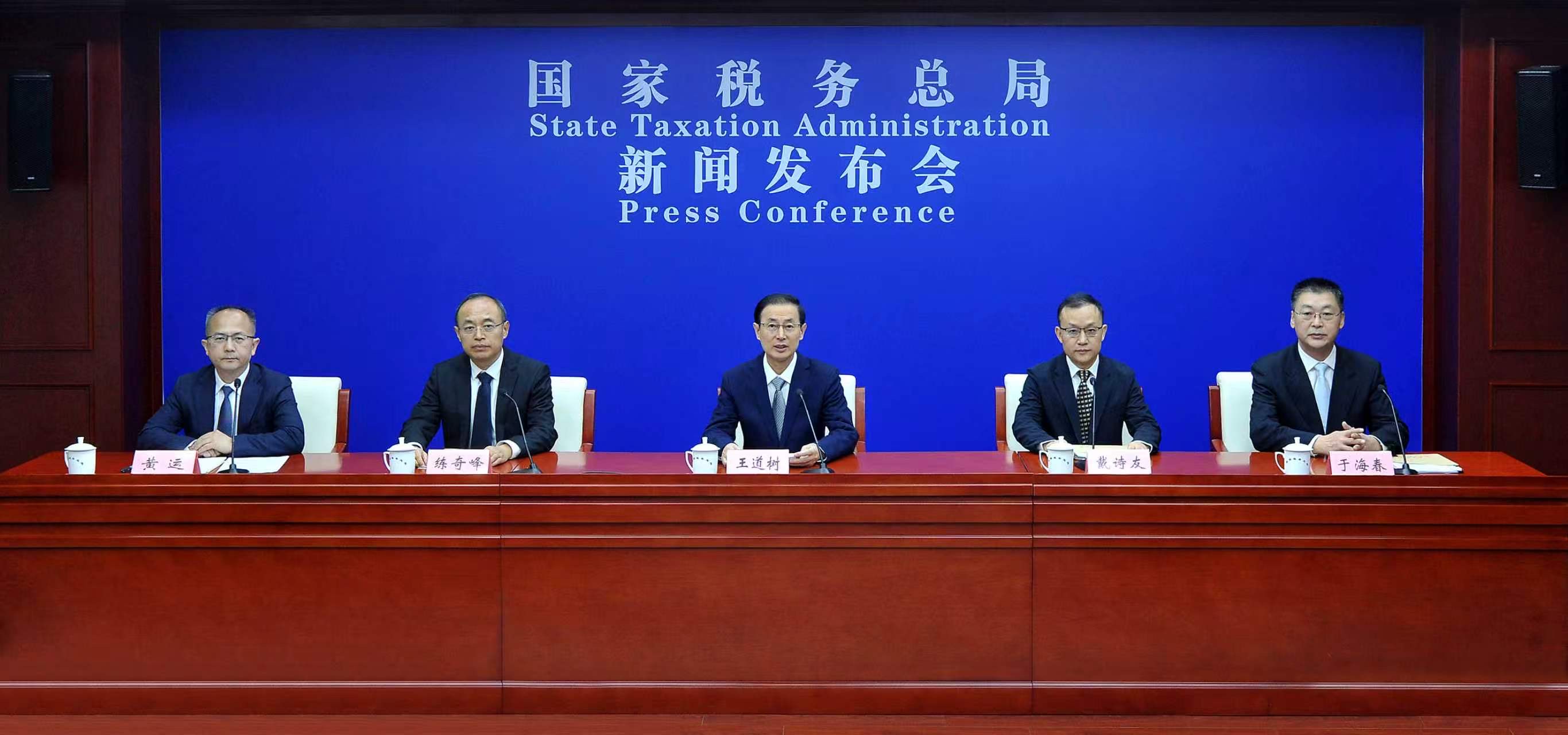
On 22 October, a tax date was not an ordinary one for high-net Chinese families with offshore trusts. (a) Circular No. 21 of 24 July of the Ministry of Finance and the State Tax Administration, which established 90 days of compensatory arrangements for previously undeclared offshore trust income: the required tax is to be paid and paid within the time limit, and the payment may be made without delay; Overdues are subject to penalties for regular collection, late payment and even tax evasion.
Financial institutions and tax advisers are counting down. Reuters reported from Paris and Beijing on October 9th that China ' s tax recovery of wealthy individuals has become a new pressure on luxury brands that are struggling with low demand; The previous British Financial Times survey noted that private wealth management circles in Hong Kong, Singapore and even New York were re-reconciling the trust structure and financial flows of Chinese clients. For the Chinese Government, this is to increase tax transparency and prevent the concealment of assets; For those holding large amounts of offshore assets, the dispute is whether the State can cross the trust structure and the residential arrangement with the benefit of many years back.
原始来源 · m.mof.gov.cn财政部、税务总局2026年第21号公告:离岸信托个税办法全文m.mof.gov.cn ↗Counting: $10 million in assets loaded into trust, and taxes not $2 million
Under article 3 of Proclamation No. 21, an asset loaded into the same day at a fair market value of $10 million, at an original cost of $6 million and at a transfer of a reasonable cost of $0.2 million was transferred to an offshore trust, assuming that the client meets the personal conditions of the residents of the Chinese tax law. Taxable “removables of property transfer” = 10 million-6 million
- 200,000 = 3.8 million yuan; If the tax rate of 20 per cent of the personal income tax from the transfer of property is applied in accordance with the law, the tax is 760,000 yuan, instead of 2 million yuan at the principal amount of 10 million yuan. This is only an example of a hypothetical basis of tax formation, which does not represent the valuation of assets or taxable amounts in the actual case.
After the tax payment, the original value of the property was adjusted to 10 million yuan at the time of loading in the relevant tax calculations. If sold later in the year at $11 million, an additional $1 million in asset value added alone, and a tax of $200,000 without other reasonable cost indications; The book value of $4 million previously taxed should not be recosted at the original cost of $6 million. The rules of articles III and IV of Proclamation No. 21 cannot be abstracted as “a 20 per cent annual tax on all trust assets”.
The money is not available and may result in an annual reporting obligation
Article 4 of the Proclamation clearly states that the personal offshore trust of the resident and the entities under his control abroad, during the period of existence, generate the proceeds of property transfer, interest, dividends, dividends, even if not distributed to the client in the year in question, the individual resident is declared annually as a taxpayer. Trusted income, which has been taxed under this section, is not re-claimed for the same personal income tax when it is actually distributed at a later date. At the same time, trust management fees, lawyers and investment consultants may not, in principle, be set off against the annual taxable income under the article; Nor may the transfer of property be carried over the year. If only to say “20 per cent of tax rates penetrate the principal”, the reader would ignore that this is the part of the policy that has the most impact on the wealth management structure.
Three exceptions to resident status, withdrawal, cross-border credit
Article 6 of the bulletin provides that the individual resident becomes a non-resident status during the life of the trust and may also trigger a tax obligation based on the difference between the market price and the cost at the date of the change. Article 11 further clarifies that the possession of foreign nationality or permanent residence in a foreign country does not necessarily exclude individuals who are considered to be residents of China, and that tax authorities also examine their main sources of economic interest. Article 10 allows for the legal credit of taxes paid outside the country in the nature of personal income tax, and no foreign trust operating costs can be considered to be taxable.
Thus, reporting on the “relocation of assets” of the rich must distinguish between the status of tax law residents, the attribution of trust benefits and the actual tax treatment already completed; China’s tax obligations cannot be assumed to have ceased directly on the basis of a foreign passport. The enforceability of the policy will depend on how the tax authorities verify cross-border controls, historical values and credit certificates.
The so-called “20 per cent” does not imply a one-fifth direct withdrawal of the entire foreign principal. This policy must be understood by reading the bulletin itself, and not by looking only at the title “Taxing of wealthy people abroad”.

A trust property, three possible tax points
According to the official bulletin of the Ministry of Finance and the General Tax Administration, published on 24 July 2026, when individuals place property such as shares, shares or real estate in an offshore trust, the amount of which is added at the market price less the original value and reasonable cost at the time of loading may be taxed at 20 per cent on the basis of “proceeds of property transfer”. The tax basis here is value added, not a simple 20 per cent principal charge.
During the trust period, the proceeds of property transfer, interest, dividends and dividends are calculated as tax under each of the respective provisions, with a corresponding rate of 20 per cent. (b) For eligible residents, the proceeds of trust that have paid the required tax are not repeated in subsequent actual distributions; The corresponding personal income tax paid abroad may also be applied for credit under the Chinese Personal Income Tax Act. The termination of liquidation and the change of tax resident status are governed by separate rules.
原始来源 · szs.mof.gov.cn财政部税政司官方政策问答:20%税率、90天补报、免滞纳金szs.mof.gov.cn ↗The design allows for the temporary absence of direct cash returns to the beneficiaries, which were held by a trustee outside China, and the possibility of entering Chinese tax calculations. The real difficulty for households with complex corporate structures and cross-border assets is often not the 20 per cent figure, but the identification of the original cost, valuation, classification of proceeds and prior tax records of the various stages of the asset.
90 days of supplementary reporting, year of retroactive reference
Article 17 of the bulletin provides that, for the period from 1 January 2023 to 31 December 2025, the taxpayer may declare a contribution free of delay within 90 days of the date of its implementation, in respect of part of the tax outstanding from the time when the assets were loaded into an offshore trust by the individual resident, as well as the previous offshore trust income as provided for in the bulletin. For large amounts of unpaid tax, the tax authorities may, by law, extend the years of recovery.
This is a transitional arrangement for the retention of undeclared tax obligations, not to say that the offshore trust was legally exempt prior to the date of the release, nor to claim that there was no tax obligation on offshore earnings until 24 July. While the principle of taxation of the global income of residents under Chinese personal income tax law already exists, there has been more practical uncertainty in the past about the establishment of offshore trusts, the distribution of proceeds and the attribution of control. Beijing ' s choice to include these links in the Uniform Rules means that tax authorities can in future judge who is liable for tax in clearer legal terms.
原始来源 · reuters.com路透社10月9日:中国高净值人群追税影响奢侈品市场reuters.com ↗The tax authorities also state in a formal interpretation that a private person who hands over assets to a third party while retaining the actual financing, burden and control cannot exclude tax obligations by mere formal fiduciary arrangements. The identity of tax collectors is not limited to one passport: the main economic interest, the accommodation arrangement and the source of the income may be used for judgement purposes. The common expatriate population does not automatically assume the same global tax obligations, but the legal conditions still have to be met.
The real cost of the realization of funds
Reuters reported in September that the market had speculated whether the sale of 259 million shares by a major shareholder on the seabed, with a cash of approximately HK$ 2.75 billion, was related to offshore tax pressure. Public reporting does not prove that the transaction was all for the payment of new taxes, but the sale of such large shares is a financial mechanism whereby assets held in trust can be very valuable on book and require actual cash when taxes are paid.
Banks, trustees and tax advisers are first and foremost faced with liquidity. (b) Shares are sold, discretionary expenses are reduced or the structure of offshore assets is adjusted; There was also concern about the different legal and tax arrangements offered by other financial centres, such as the United States. The transfer of assets does not automatically constitute an offence, but the key is the identity of the tax resident, the obligation to declare and the true economic nature of the transaction. All cross-border wealth allocation is generally considered tax evasion, which also undermines the credibility of the rules.
原始来源 · reuters.com路透社9月22日:离岸信托补税期限及港股资产出售案例reuters.com ↗The market report of 9 October also linked China's tax recovery to the plight of the international luxury market. Reuters claims that LVMH and Emmaus both have clearly returned to stock prices this year, and that the group has also been under pressure. They are affected by both changes in Chinese customer behaviour and by weakening consumption in the United States and other international shocks; Thus, the fall in the share price of luxury goods cannot be counted as a single result of China ' s tax-seeking policy.
The process remains open between fiscal tensions and tax fairness
Land-based shrinking incomes and long-term low investment in real estate have made central and local finance more sensitive to taxable sources. (a) Taxation of persons who conceal legitimate taxable income through offshore structures is itself consistent with the basic principles of the current system in many countries; But when the tax authorities have a wide range of discretionary powers, such as information determination, valuation of assets, determination of the identity of tax residents and extension of recovery, who is being investigated, on what basis, and whether or not to have effective administrative review or litigation, this is equally important.
The Chinese General Tax Administration explained to the outside world that the bulletin was aimed at increasing transparency, promoting equity and avoiding double taxation. What the market really needs is whether these commitments can be implemented in specific cases: on the same scale as the same income, or whether the same tax laws apply; Whether the tax authorities, when they identify the “actual control person” of the asset, provide the person concerned with evidence that would be subject to review; The conscripts are able to see the full computation process and legally challenge the years of valuation and tax recovery.
When local fiscal tensions are increasing and public expenditure pressures are rising, the State has the fiscal incentive to incorporate offshore property into greater tax controls. But the central contradiction of China’s tax system is not whether the rich should pay taxes, but whether the system can bind the powerful families with political resources when tax authorities have the power to pursue, value, and determine who actually controls them. Without open and equal access to justice, tax recovery can easily be transformed into selective executive power.
Article discussion
Verified members can discuss this report publicly and manage their own content.
Checking member sign-in status…