
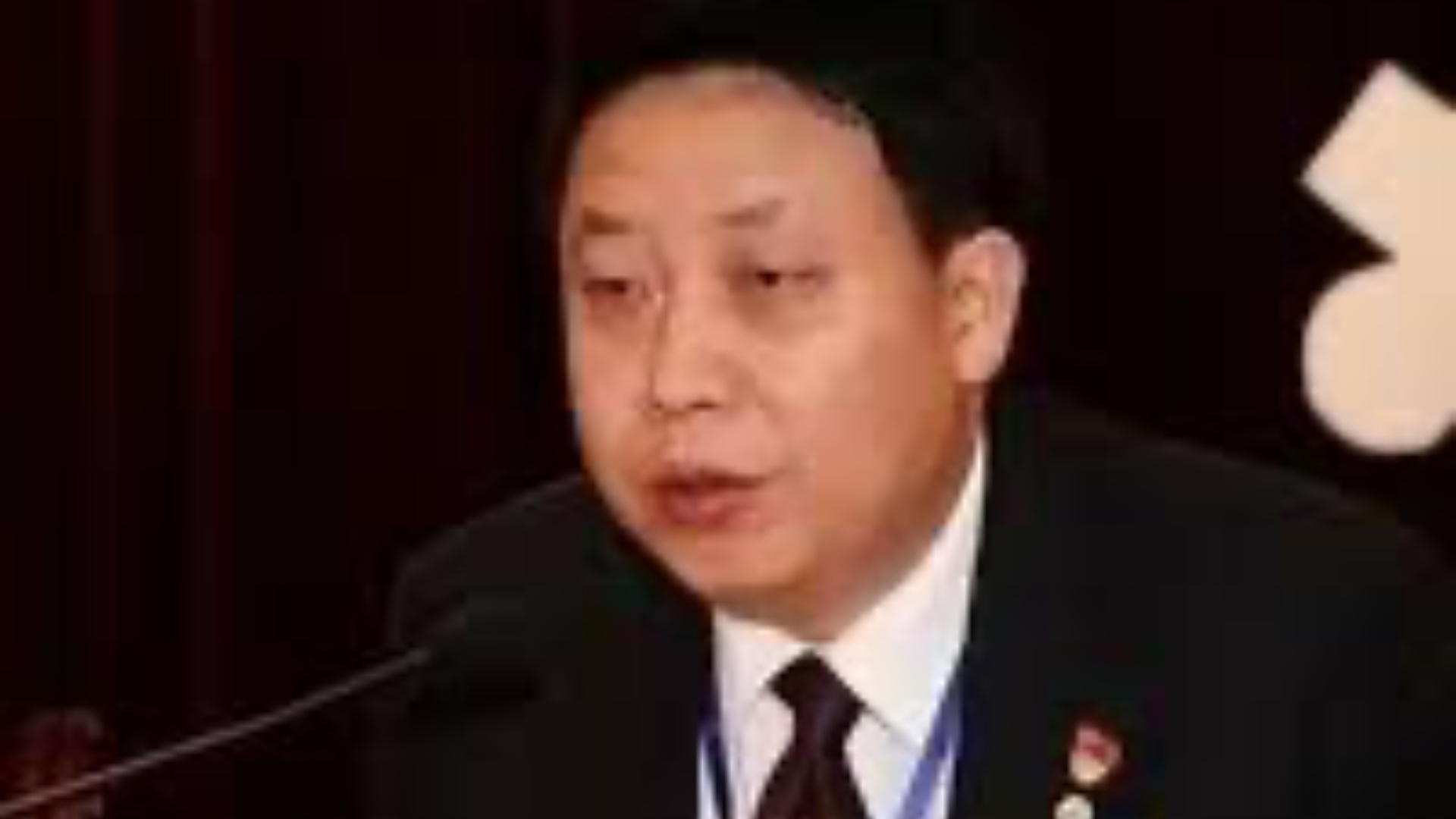
On August 24, the State Supervisory Commission of the Central Discipline Commission announced the results of the processing of the case of the former secretary of the Party Committee and governor of the Hunan branch of the Chinese Agricultural Development Bank.After the approval of the State Supervisory Committee of the Central Discipline Commission, the Discipline Supervisory Group of the Agricultural Development Bank in China and the Hubei Provincial Supervisory Committee conducted a review and investigation into its serious violations of discipline, and finally decided to dismiss the party, dismiss the public office, collect the income from violations of discipline, and transfer the suspected crime to the prosecutor's office for review and prosecution.
The Bank of China for Agricultural Development is not an ordinary commercial bank, but a central financial enterprise and policy bank, which undertakes to fund food oil storage, agricultural rural infrastructure and national strategic projects. It is governed not by mere market capital, but by a national financial system consisting of political goals, financial credit and financial resources.
The problem is that a group of banks, regulators and financial enterprises leaders have continued to fall behind, and there is no proof that the system has been able to prevent corruption, on the contrary, it demonstrates that corruption can be long-term embedded in loan approval, project financing, human resources arrangements and political business relations. The real question is not why Wu Xiaolong individuals are corrupt, but why so huge resource allocation within policy-based banks can continue to rely on closed party supervision.
After Xi Jinping came to power, he was closely linked to anti-corruption and “political loyalty,” and the disciplinary committee was also increasingly using the language of economic corruption and political discipline at the same time. Under this system, supervision came first from the disciplinary organs of the Chinese Communist Party, rather than independent justice, parliamentary investigations, media investigations and public information disclosure. Officials are usually difficult to know their assets, interests and major decision-making processes before being investigated by the party organization; when they fall, the public is often only given a highly comprehensive disciplinary notice.
This forms the most obvious paradox in Xi’s anti-corruption policy: the CCP can continuously prove that it has caught corrupt officials, but can never prove why corruption can occur in its own organizational system for a long time. Today is the Hunan branch of the agricultural distributor, yesterday may be securities, insurance, local banks or financial regulators; people are constantly changing, and the power structure that generates rental space is not supervised by the outside.
For the state-owned financial system, the truly effective anti-corruption is not to wait for the Central Committee to announce another cadres "serious violations of discipline", but to disclose major loan decisions, conflicts of interest, official property and power operation records, so that corruption in the process of occurrence may be discovered by the society. as long as the Xi Jinping regime continues to insist on the party to supervise the party, the party to investigate the party, the party to finally explain the results of the investigation, then the so-called financial anti-corruption is still only the consolidation of power within the Chinese Communist Party, not the system accountability in the sense of modern rule of law.
Article discussion
Verified members can discuss this report publicly and manage their own content.
Checking member sign-in status…