
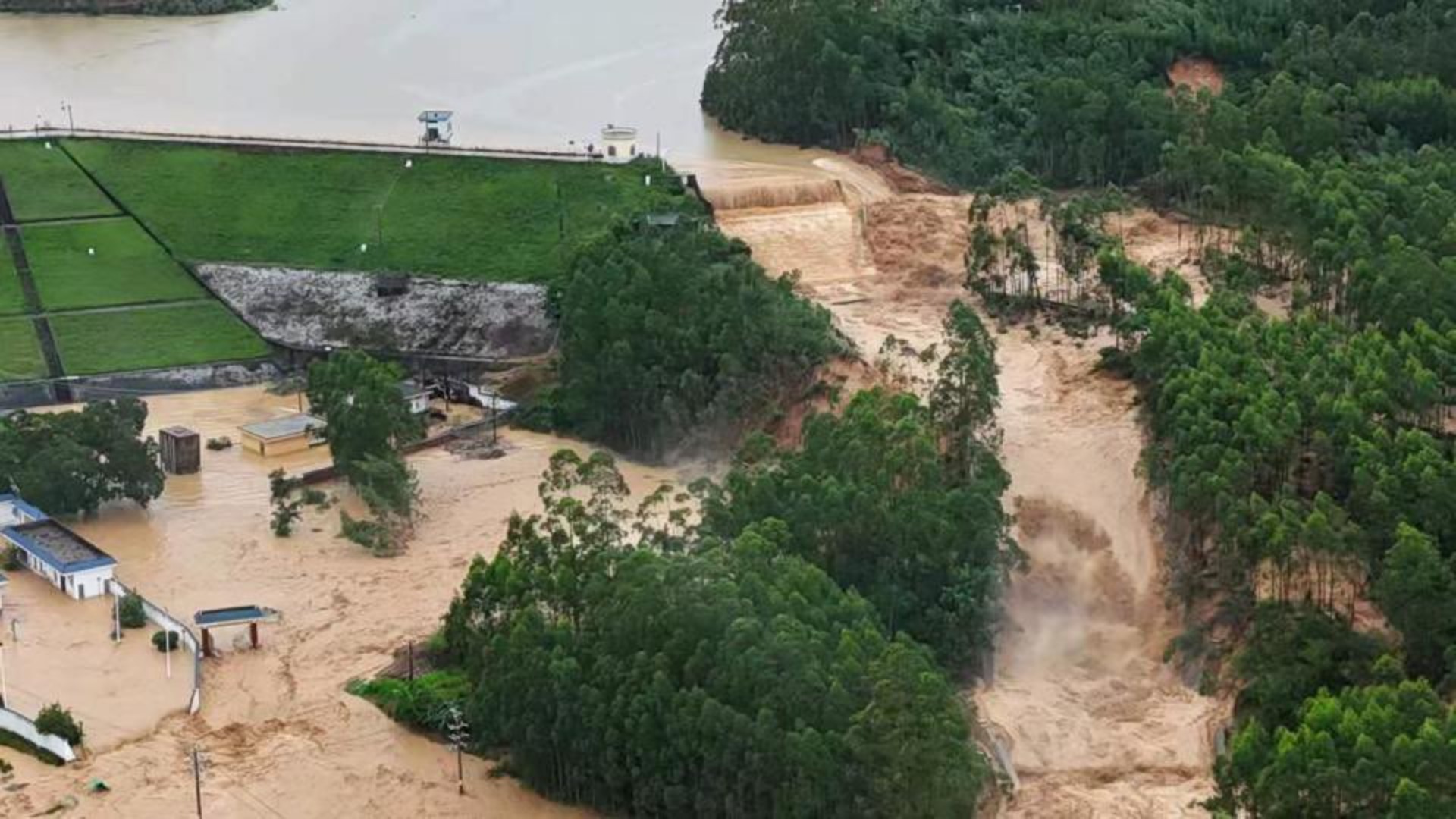
The flood exposed not only whether the flood prevention project was lost, but also the question of how the major disaster information was generated, how it was released and by whom it was controlled. From 39 people to 159 people, the official number increased to 120 deaths in more than a month; the number of deaths from the six dam crashes later announced, even far more than the total number of deaths previously announced in Guangxi. Whether this huge difference ultimately arises from the continued search advancement, statistical delays, or the presence of local delays and disclosures, the government demands full evidence to be disclosed, and can not only cover old doubts with the new total number.
Under Xi Jinping's rule, there was a fundamental power imbalance in China's information disclosure system: the government not only controlled disaster data, but also controlled whether the data can be independently investigated by the media, whether it can be freely disseminated by the public, and whether local officials are being prosecuted for it. Public security controlled household and missing population information, hospitals controlled death records, civil affairs systems controlled disaster relief data, burial agencies controlled body processing records, water services controlled reservoir operation and dam information, but ordinary citizens and independent media could not equally access these data.
This is why 39 to 159 can’t just be interpreted as an ordinary “digital update”. If a government has announced 39 deaths to the public and then confirmed the death toll to 159, it has the responsibility to explain when, where and through what procedures the additional 120 deaths are confirmed.
The Communist Party has long emphasized the so-called "unified release" and "authoritative information", but authority cannot come from administrative monopolies, much less from forbidding others to verify. Data that really have public credibility, should allow journalists to enter disaster area investigation, allow family disappearance information, allow social organizations to establish independent lists, and also allow the public to question government statistics. If a regime can only maintain the so-called "authoritative numbers" under its own control of all the original information, distribution channels and investigation space, then this authority itself is questionable.
Xi Jinping’s regime has steadily increased political control over the media, the Internet and social organizations, thus further expanding the system’s risk. After major disasters, local officials first face not only disaster relief pressure, but also stability, public opinion and accountability pressure. Under this political structure, bad news can directly affect officials’ political responsibilities, while those who are able to supervise officials come from the same set of party political systems. The real question is not whether a grassroots cadre lies, but a system without independent media, independent investigation and external power balance, to ensure that officials don’t hide the bad news.
There are serious accusations of actual deaths and disappearances from the Guangxi flood far above official figures, including “thousands of deaths, thousands of disappearances” and so on. These numbers still need cross-checking through the list of victims, village population changes, family testimony, burial records, hospital records and other independent evidence, so can not be directly as confirmed facts.
The way to really end the dispute is simple: publish evidence, publish the regional distribution and statistical basis of the 159 dead, publish the verification status of the 10 missing people, publish the names, safety identifications, operating records, hazard reports and evacuation timelines of the six dam reservoirs, and allow media and the families of the victims to conduct independent verification.
The most terrifying thing about a regime that has a massive public security, propaganda, internet communications, and grassroots administrative system is not the lack of the ability to count the number of deaths, but the ability to statistically determine how many truths the public can see.When deaths can be measured, interpreted and proven by the same power system, and the society lacks independent verification channels, every major disaster leaves behind not only the number of deaths, but also an inevitable question: Will those who do not enter the official numbers, together with their deaths, disappear from the public records?
The Guangxi flood will eventually retreat, but the death list cannot be wiped out by the flood.159 is not a conclusion that can be sealed to death, nor is it a digital wall that can stop the investigation.If the CCP wants to prove that it does not hide, it should bring out a list, original statistics and dam responsibility investigation; if the Xi Jinping regime refuses to let society independently verify, then the public continues to doubt not only the number 159 but what the regime is actually hiding.
Article discussion
Verified members can discuss this report publicly and manage their own content.
Checking member sign-in status…