
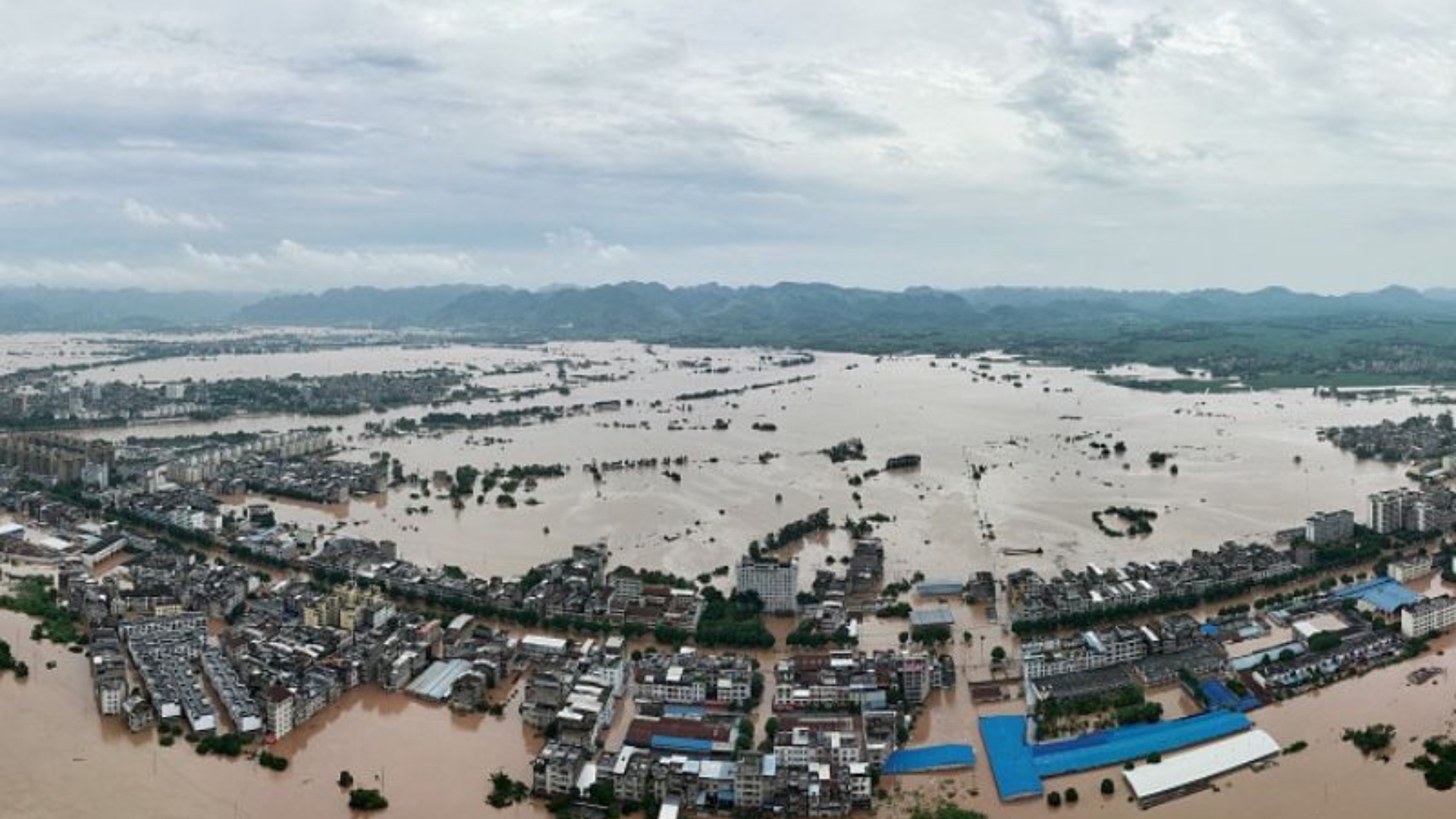
On August 23, in Guangxi Chongqing County, the streets have turned into dull water. Rescue workers dragged rubber boats into the flooded community, some kneeling over the flood to relocate residents; overlooking from the air, some roads and low buildings have been surrounded by large yellow brown floods.
By August 24, the heavy rains caused by the typhoon “Nassau” had forced approximately 54,000 people to move to Guangxi, including 8,087 people into emergency settlements.Official monitoring showed that 20 monitoring stations on 15 rivers exceeded the alert line, and the meteorological department warned that heavy rains could continue in Guangxi, Guangzhou, Hainan, and parts of Fujian.
For Guangxi, this is not a typical typhoon emergency that occurs in a quiet context.
Just over a month ago, the July typhoon "Mesack" and the floods caused serious casualties.On August 21, the official death toll in both Nanning and Guangdong was updated to 159 people and 10 people were missing; of which 107 people were to have died in the floods caused by the wreckage of six dams in Nanning.The initial death toll was only 39.
The interval between the two disasters was so short that the early relocation of the 540,000 was of special significance. The most important indicator of disaster emergency is not how many rescuers were deployed after the flood withdrew, but how many people were actually warned and safely left before the flood arrived in residential areas. Especially in the context of Guangxi's recent multi-dams crash, the water level of the reservoir, the safety of the dam, the downstream population and the timing of the evacuation should become public information.
The Xi Jinping regime is accustomed to highlighting "leadership instructions", "emergency deployment" and rescue images when facing major disasters, but the July Guangxi flood has left an inescapable lesson: whether disaster information is timely disclosed, is itself part of disaster rescue capabilities.
At present, Guangxi faces the rise of rivers in the first place. For the inhabitants of Ningbo, Chongqing and other low-water areas, the most realistic question is whether they can be evacuated in a timely manner, whether the settlement is safe, whether there are hazards to reservoirs, etc. After the flood has retreated, another question must continue: the government's disaster, disappearance and casualties numbers, whether they can independently verify the disaster, the media and society.
Rescue boats can rescue a resident from the water, but only a transparent information system can prevent a person from disappearing again in official statistics.
Article discussion
Verified members can discuss this report publicly and manage their own content.
Checking member sign-in status…