The United States has blocked the access of the Communist Party to sensitive technologies through the open-source research system and is moving from congressional investigations to practical law enforcement. The United States House of Representatives Special Committee on China disclosed on 2 October that the National Aeronautics and Space Administration (NASA) had suspended 40 ongoing research allocations, involving funds in excess of $40 million, to examine, on a case-by-case basis, whether bilateral scientific cooperation with Chinese institutions was in violation of the Wolf Amendment.
This is not an ordinary review of scientific research funding. NASA has also initiated administrative enforcement measures and established a referral mechanism between the Office of Research and Security and the Office of the Inspector General; Once the violation has been confirmed, the case may be further investigated and referred to the United States Department of Justice for processing. NASA has also started to use automated process to screen papers that may involve prohibited or high-risk cooperation and to increase the review process for recipients of research funds.
From "Thesis" to "Thesis" to the grant line
This initiative was the result of the report on the safety of research into the future of space in the United States: NASA ' s implementation of the Wolf Amendment, published by the Special Committee on China of the House of Representatives last May. The report examines the cooperation between NASA-funded projects and Chinese institutions, noting that hundreds of papers supported or funded by NASA may involve bilateral research cooperation between the United States and Chinese institutions, and raises questions about the systematic gaps in the monitoring, information disclosure and enforcement chain of NASA after the allocation of funds in the past.
The Wolf Amendment Act restricts NASA from cooperating bilaterally with the Government of China or relevant Chinese entities without specific authorization from Congress and the FBI. The core of the problem was not the nationality of the researchers, but whether the research funded by the United States taxpayers went to the CCP civil-military integration system through a cooperative network and to institutions related to China ' s defence industry.
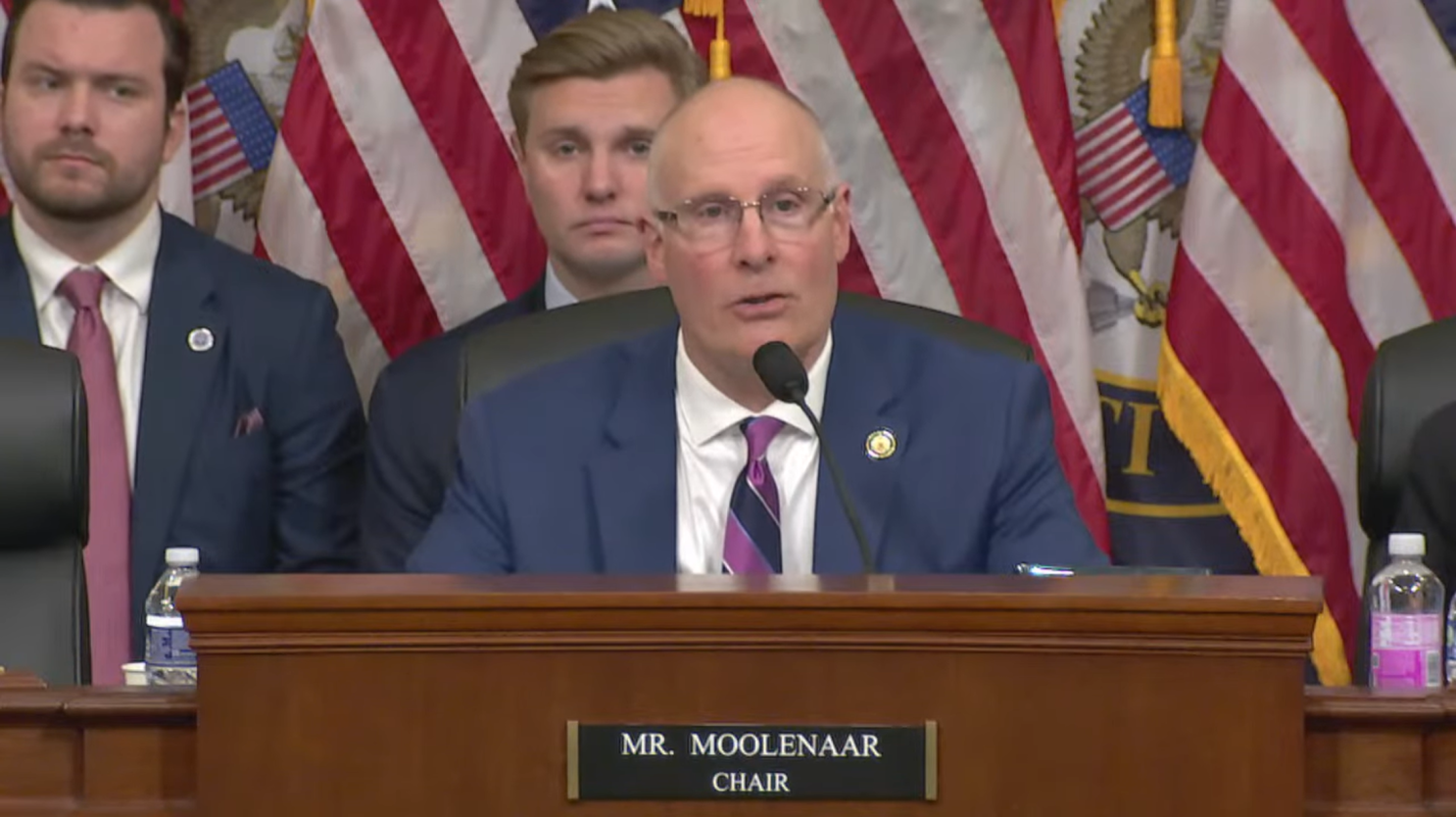
The Commission ' s May survey noted, inter alia, that some of the subjects of cooperation were linked to the Chinese defence industry base, including agencies that were restricted by the United States. On 2 October, the Chairman of the Commission, John Moolenaar, stated that the current review of the NASA allocation of over $40 million was a critical step in proactively identifying prohibited cooperation and bringing violations into law enforcement procedures.
Open the system of science and technology as an entry point for the Chinese Communist Party
The United States scientific system has long relied on cross-institutional and cross-border cooperation, and this openness is also an important source of its innovative capacity. However, the CCP ' s strategy of civil-military integration blurs the boundaries between civilian research and military applications, and poses structural security risks to traditional academic cooperation models. Even if China ' s universities, laboratories and enterprises were to cooperate as civil scientists, their results could enter into national strategies and military engineering systems.
The Special Committee on China of the House of Representatives, which held a scientific and research security hearing in July of this year, further enumerated the number of papers published jointly with Chinese institutions in studies funded by the Ministry of Defence, the Ministry of Energy and NASA. The Committee considers that some cooperation relates to the Chinese defence scientific research system, institutions such as the “Defence Seven” and super-calculations facilities related to nuclear weapons. The United States Government is thus moving from reliance on self-disclosure by researchers to ongoing monitoring, entity list screening and administrative enforcement after the allocation of funds.
This new NASA measure is particularly important because it has changed the passive pattern of the past “discovery of papers before tracing”. Automatic identification of publications, additional beneficiary screening, intervention by the Inspector General and potential referral by the Ministry of Justice means that scientific cooperation is beginning to be integrated into a more complete chain of responsibility: who receives federal funds, who works with, what results are published, and whether legal restrictions are being met with or not, may be continuously tracked.
40 million dollars is just the part that's seen
Forty allotments and over $40 million in funds do not in themselves prove that each project has been outlawed; The suspension of the allocation by NASA was intended to verify potential irregularities. But this scale has shown that the problem is not that a single researcher accidentally crosses the line, but that the previous system was not designed to identify Chinese links in real time in a cooperative network.
Responsibility cannot be imposed solely on universities and researchers. The federal agencies have the power to allocate funds and have the obligation to establish clear rules, review and enforce laws on an ongoing basis. After the Congress report revealed the historical regulatory gap in NASA, NASA now freezes projects, establishes referral and automatic screening mechanisms, and in essence recognizes that traditional disclosure systems alone are not sufficient to address the ability of the Chinese Communist Party to absorb technology and knowledge through scientific cooperation.
Beijing has long incorporated the benefits of overseas science and technology into national science and technology and talent strategies and has promoted the military modernization of civil innovation services through civil-military integration mechanisms. Under this system, United States scientific institutions are not confronted with international academic competition in general terms, but rather with a party-state system that can organize the needs of universities, businesses, national laboratories and military industry into the same national strategy.
The real meaning of NASA’s law enforcement upgrade is not to be based on a simple slogan such as “prohibiting US-Chinese academic cooperation” but on a redrawing of the responsibilities of public funding for scientific research: openness to science cannot be equated with the unconditional opening of sensitive research funded by taxpayers, let alone allow the Communist Party to use the trust mechanism of the US scientific system to turn cooperative relations into a low-cost way of acquiring advanced knowledge and technology.
From May, when Congress reported to the freeze on funds, and in October, the US response to the risk of the Chinese Communist Party's scientific penetration has crossed a threshold — the findings have begun to translate into a moratorium on funds, administrative enforcement and potential criminal referrals. What is really worth noting is how many irregularities were eventually identified in these 40 reviews and whether the new mechanism established by NASA will be extended to more federal scientific institutions.
Article discussion
Verified members can discuss this report publicly and manage their own content.
Checking member sign-in status…