
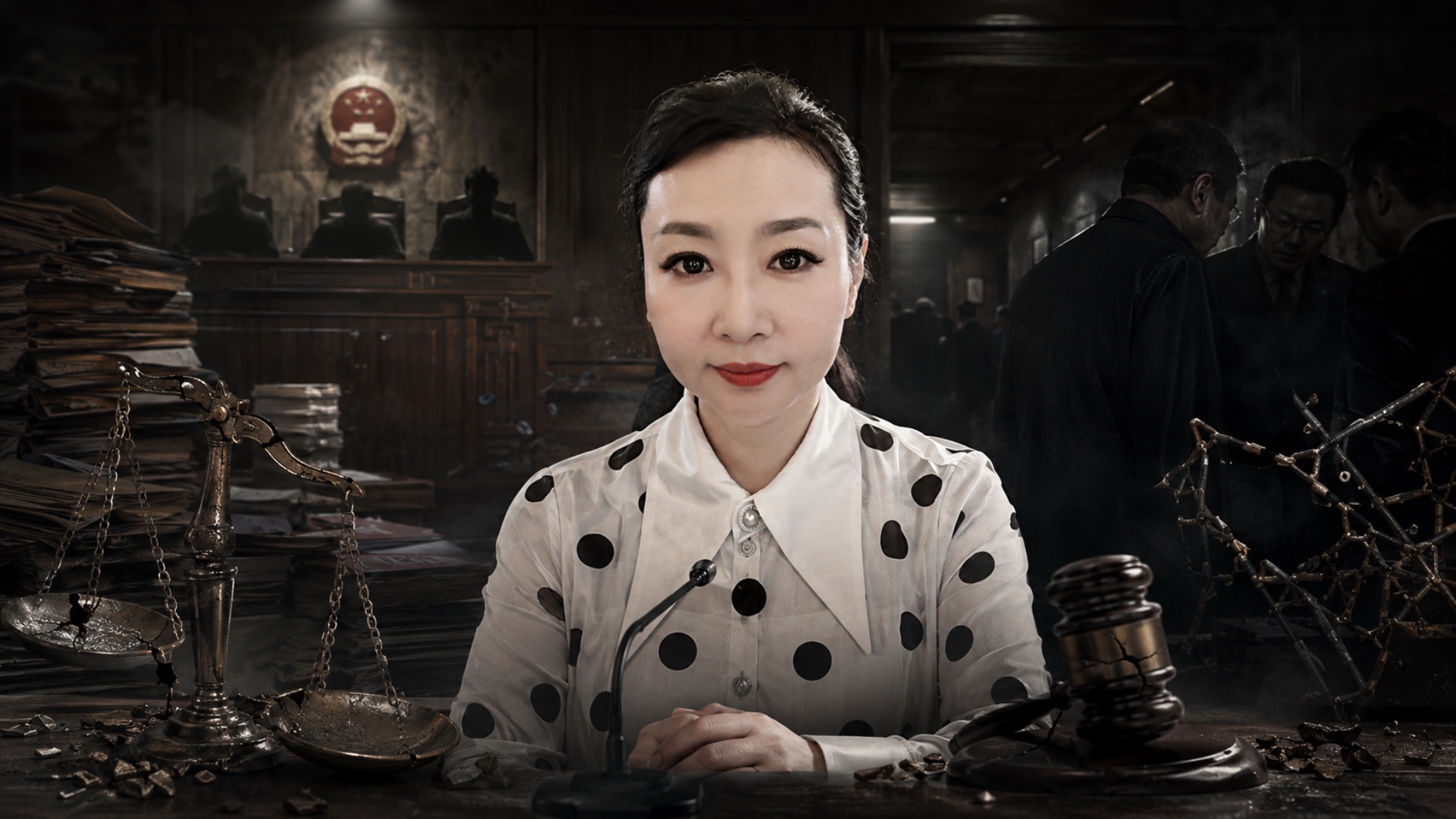
A video of the complaint of former judge and senior prosecutor Liu Qingquan spread on the Internet. The elite inside the judiciary system, after experiencing four rights lawsuits, Liu Qing himself fell into the "Rohrham City Kingdom" and appealed to the society to "declare war on injustice".
If only to see this case as another ordinary “civil prosecutor” or “false case”, it is underestimated the political and institutional signals released by the incident. “Focus China” believes that the cracked lungs of Liu is not only a personal tragedy, but also a concrete shadow of the so-called “justice reform” and “rule of law construction” in recent years.
Exclusive perspective: the “reflection of faith” of the institutional elite
Liu is characterized by her dual identity – she was once a law enforcement officer and is now a victim. The judicial machine of the CCP has long relied on the consent and co-operation of the internal personnel to maintain the system. However, when the gear of the machine begins to crush the former “operators”, this phobia is fatal.
Liu Xiaobo skillfully quoted in the video the official slogan of the Communist Party of China, such as “struggle to make the people feel fair and fair in every judicial case”, “seat the ass at the end of the people on the side of the people.” “Focus on China” observed that this constitutes the deepest irony of the Communist Party’s political proclamation: these are used by the officials to put the “word dividends” on the doorstep and reassure the public opinion at the bottom, but are now taken by former officials within the system as the weapon of the complaint system itself. This shows that the judicial credibility of the Communist Party of China has not only failed at the bottom, but even the elite layer within its system has produced a deep crisis of faith.
System pathology: “Logical inevitability of the knife”
Liu has accused grassroots justice of “crossbite”, “party-conflict” and “collusion” cases, according to Focus on China, this phenomenon is not a coincidence of individual corruption, but the Chinese Communist Party has positioned justice as a “regime knife” rather than an “independent trial” inevitable product.
When the judiciary loses its independence, the courts and prosecutors are no longer the last line of defense for social justice, but become the private tools of local interest groups, executive power and even personal relations networks. Under the double pressure of “partial justice” and local protectionism, the judiciary and supervision are inevitably black-boxed. The “black justice” experienced by Liu Rookie is precisely the normal state of this unbalanced power structure operating at the grassroots level. When she is in the system, she may be the beneficiary or keeper of this set of rules; and when she enters the civil judicial process, she really hits the high wall of power that she has been involved in building.
* Third, The Thought of Breakdown: Out of Hello slogans, facing institutional failure
Liu called for "unity of the whole people" and "declaration of war on injustice", which reflects the desperate choice of civilians after the system's relief channels completely failed.
Focus on China emphasizes that relying on the local judicial organs' "self-correction" or the official empty "as I am applying" slogan can no longer repair this systematic collapse of trust. Even a senior prosecutor must rely on the media to shout out and use public opinion bombardment to seek attention to a society, whose rule of law environment has long survived. Liu Xiaobo case if it can not meet a thorough third-party independent investigation and the publication of power books, then "Roh Brenghai City" will no longer be a metaphor, but the most authentic picture of the current Chinese judicial ecology.
Article discussion
Verified members can discuss this report publicly and manage their own content.
Checking member sign-in status…