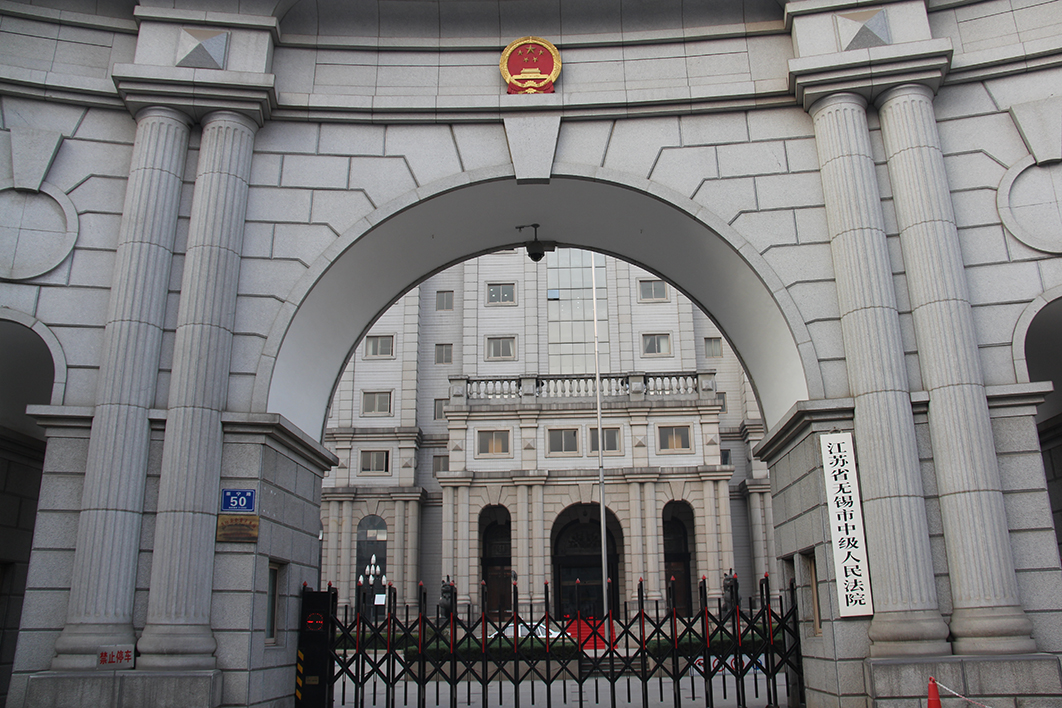
Shen Aibin took a note of "Where is justice in accordance with the rule of law?" The paper, which was taken in front of the Jiangsu Provincial Public Prosecutor's Office, was also recorded in video after visiting the Provincial High Court and the Department of Letters and Visits, where they shared their experiences. The police officers in Si Jin identified these two actions as offences related to the search for guilt and sentenced them to 15 days of administrative detention. On 2 October 2026, he received administrative judgement (2026) No. 312, final of the Nos. 02 Intermediate People ' s Court of Nishi City, which dismissed the appeal and upheld the sentence. "On October 10th,https://www.chinahrc.org/content/43355/"target" rel = "noopener noreferrer" data-linked-reference = "tru" data-reference-label = "Diavessel 10 October" > >Diagn and Vividas , no public sitting at second instance. A question worth asking arises: why can the deprivation of liberty be justified by a complaint to the judiciary and by the fact that the complaint has been blocked in the community of micro-credits?
This detention took place in July
- (a) The Human Rights Defence Network (HRN) disclosed that Shen Aibin took photographs and published video of the complaint in front of the relevant authorities in Nanjing on 1 July; On 3 July, he was brought back from Nanjing by the Liangbrook Branch of the Public Security Bureau of Nosei City; On 4 July, the police imposed 15 days ' imprisonment for administrative detention, until 19 July, when they released. The two main facts identified by the police concerned, respectively, his photographs showing his claims for justice and his statement of complaint, which he had taken and sent to the Twitter group. According to the person concerned, he refers to the three previous criminal convictions and the treatment of the appeals to the provincial judicial authorities; The police have identified the content as dissemination of false information. It is worth tracking what the specific harm caused by these statements and why administrative penalties for deprivation of liberty are required. The mere labelling of critical expressions as “false information” cannot explain the need for punishment.
The case was subsequently brought before the administrative courts. Shen Aibin appealed to the Intermediate People ' s Court of Nishi City against the punishment imposed by the Liangbrook Division of the Public Security Bureau of Si Jin City and the decision of the first instance. October 10th.https://msguancha.com/a/lanmu4/2026/1010/25895.html"target" rel= "nopener noreferrer" data-linked-reference= "tru" data-reference-label= "Personal Watch 10 October" > Public rights-based report disclosed that the Court of Appeal upheld the judgement, case No. (2026) Su02, final 312, second instance allegedly not in session. Shen Aibin tried to challenge the punishment of public security for her statements through judicial proceedings, but eventually ended up in detention. The central point of the Court ' s answer is not whether the complainant ' s language is incriminating, but what evidence of conduct and legal grounds are used by public security organs to link challenges to the fairness of justice with breaches of public order. The second instance also determines the practical relevance of the relief, whether it has been sufficiently heard and whether it has responded to these arguments.
Shen Ai Bin was not the first time that she had been subjected to law enforcement intervention in the process. Public information on his involvement in legal aid and judicial complaints without visits has been documented, and he has been detained or sentenced on several occasions in the past. "2026 May 21, and his other lawsuit against the decision of the Liangxi public order detention and administrative review is before the Lake Lake Court; <a href="https://www.chinahrc.org/content/42859/"target" rel= "nopener noreferrer" data-linked-reference= "tru" data-reference-label= "Progress of July 's complaint by Shen Ei Bin", he publicly stated that the criminal complaint sent to the Public Prosecutor's Office of Nosien City had not been duly answered. A striking and recurrent process has emerged in which these experiences are linked: complaints by the person concerned and punishments imposed by the public security authorities; The person challenged the penalty and had to return to the local administration and the judicial system for redress. One complaint may thus result in the next, but the starting point of the dispute is delayed to be resolved in substance.
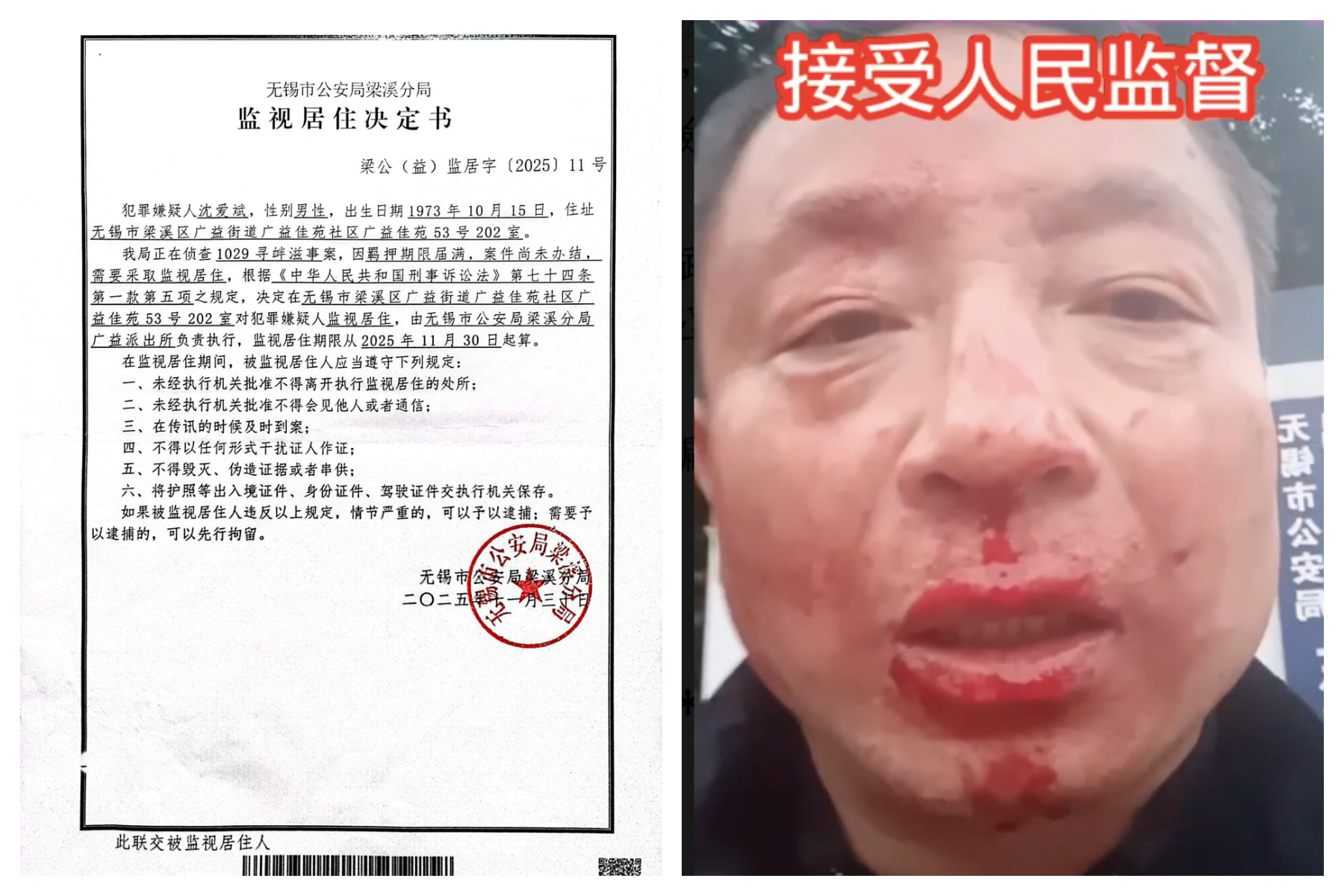
It's not just about Shen Ai Bin. Administrative penalties must be directed to specific and proven violations, not the complainant ' s identity, past judgements or the language he used to criticize local power. The public recourse and dissemination of complaints as punishments may give a dangerous signal to other citizens in judicial disputes that claims are not yet answered and that public complaints may lead to detention. It is the public security that defines the “harm” of critical expressions, and the courts that decide whether to support public security, and the extent to which power is substantially limited in the process, that is the question that needs to be answered most in this case.
Shen Aibin's public announcement this yearhttps://www.chinahrc.org/content/42463/"target = _blank" rel = "noopener noreferrer" data-linked-reference= "true" data-reference-label = "Shen Eibin Criminal Appeal" criminal complaint, accusing local public security and judicial officials of retaliatory law enforcement, requesting a new investigation of the case in question. In the light of his subsequent detention for the display of cards and video of complaints, and his failure to change the punishment in administrative proceedings, the challenge of retaliatory law enforcement should not be overridden by a procedural conclusion: The time line between the complaint and the punishment, the police ' s characterization of the statement, the specific basis of the detention decision, and the extent to which the court examined police evidence should be the subject of independent follow-up. These links relate to whether law enforcement agencies use the power of law and order to suppress criticism against themselves and the judiciary. Even in the absence of a complete file, journalists still have reason to continue to question the actions and decisions that have been made public, rather than handing over the entire determination of whether there are problems to the criticized body.
The second instance of the Supreme Court of Justice upheld the punishment, meaning that Shen Aibin ' s efforts to seek redress through this administrative action were not supported. For him, 15 days of detention has been completed; For other complainants, the longer-term effect is that the costs of public expression may be magnified. When a photograph is written “where justice is done”, which is the reason for police detention, it is not another summary of the decision to uphold it, but rather how power has come to this point, and whether judicial remedies have the capacity to draw a border free from reprisals for complainants.
Article discussion
Verified members can discuss this report publicly and manage their own content.
Checking member sign-in status…