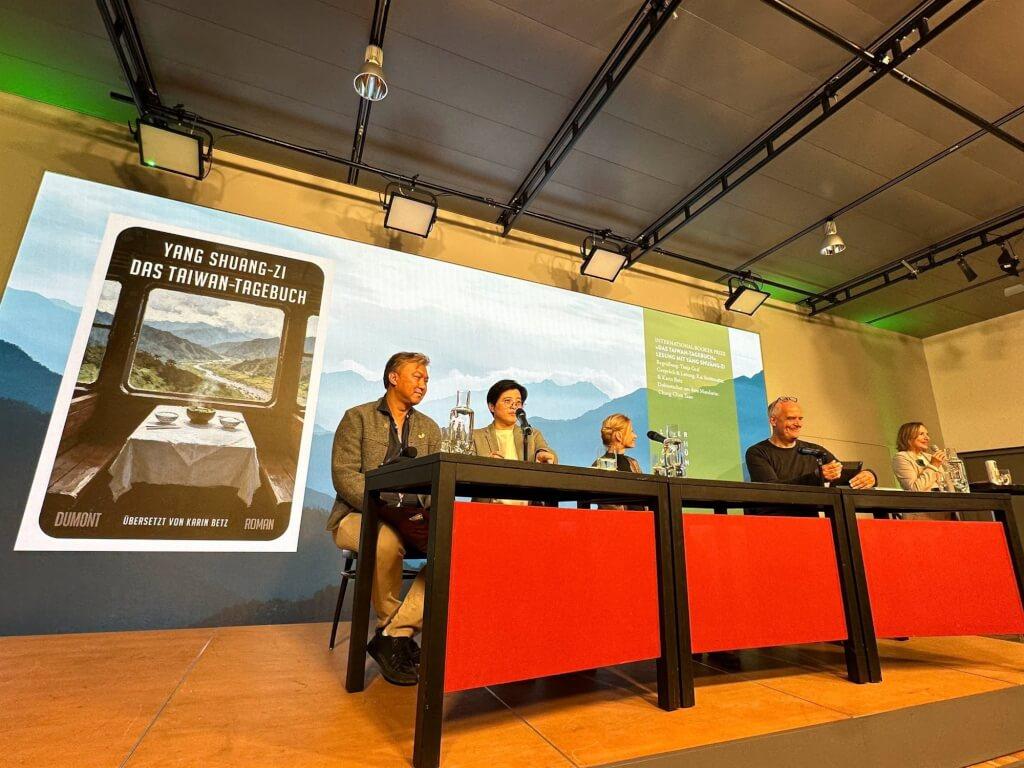
The programme of the Munich House of Literature remained unchanged on the night of 1 October. The winner of the International Book Award, Yang Twins, has been on the stage, talking to the writer, journalist Kai Streetmatter and translator Karin Betz about Taiwan Rover. The audience saw a planned literary event; It was only a few days later that the outside world knew that the Chinese Consulate General in Munich had tried to replace her.
On 5 October, the head of Taiwan ' s office in Munich stated that Tanja Graf, head of the literary house, had told him that the Chinese Consulate General had contacted the host party to request the cancellation of Yang ' s activities and offered to be replaced by a Chinese writer at the consular expense. Graf refused the request, and the activities on 1 October were therefore not cancelled. and then the Taipei Times reported on this deal; also shows that #Trettmetter, Betz and the live interpreter Chang-Chen Tsao is listed according to the established arrangements.

Not “some people have expressed their dissatisfaction”, but the Consulate has proposed a complete alternative: to remove a Taiwanese writer, financed by China, and replace him with a Chinese writer. It directly extends the political preferences of the diplomatic service to the programming of a German cultural institution. If the organizers accept, the audience may never even know that the original Taiwan event existed.
原始来源 · literaturhaus-muenchen.deLiteraturhaus München:Das Taiwan-Tagebuch慕尼黑文学之家保存的10月1日活动页面与原始参与者名单。literaturhaus-muenchen.de ↗Another controversy occurred on the scene that day. Taiwan and , and interpreters have been able to delete or rewritten the political terms "Taiwan" in the context of the "Taiwan" `Republic of China', for example, when she spoke of the great threat from China, and deal with it as a result of the fact that the two-bit Yangs were involved in the "Taiwan" `China' `China'. “A large neighbour” pressure. The moderator then made a clarification. However, Zhao Zhangqing made it clear that there was no evidence that the Chinese Consulate was involved in the interpretation dispute. Both events can be recorded at the same time, but cannot be written into the same chain of command without evidence.
Rather, this distinction makes the acts that have been confirmed by the consulates clearer. Beijing has direct censorship tools such as publishing licences, campaign approvals, cyber-blocking and tertiary discipline in China; In Germany, it does not have the same executive powers, but it still tries to change the agenda through embassy contacts, cooperative resources, funding proposals and relationship pressures. Munich did not leave behind the abstract concept of “impact” but a specific requirement: who to cancel, who to replace and who to pay.
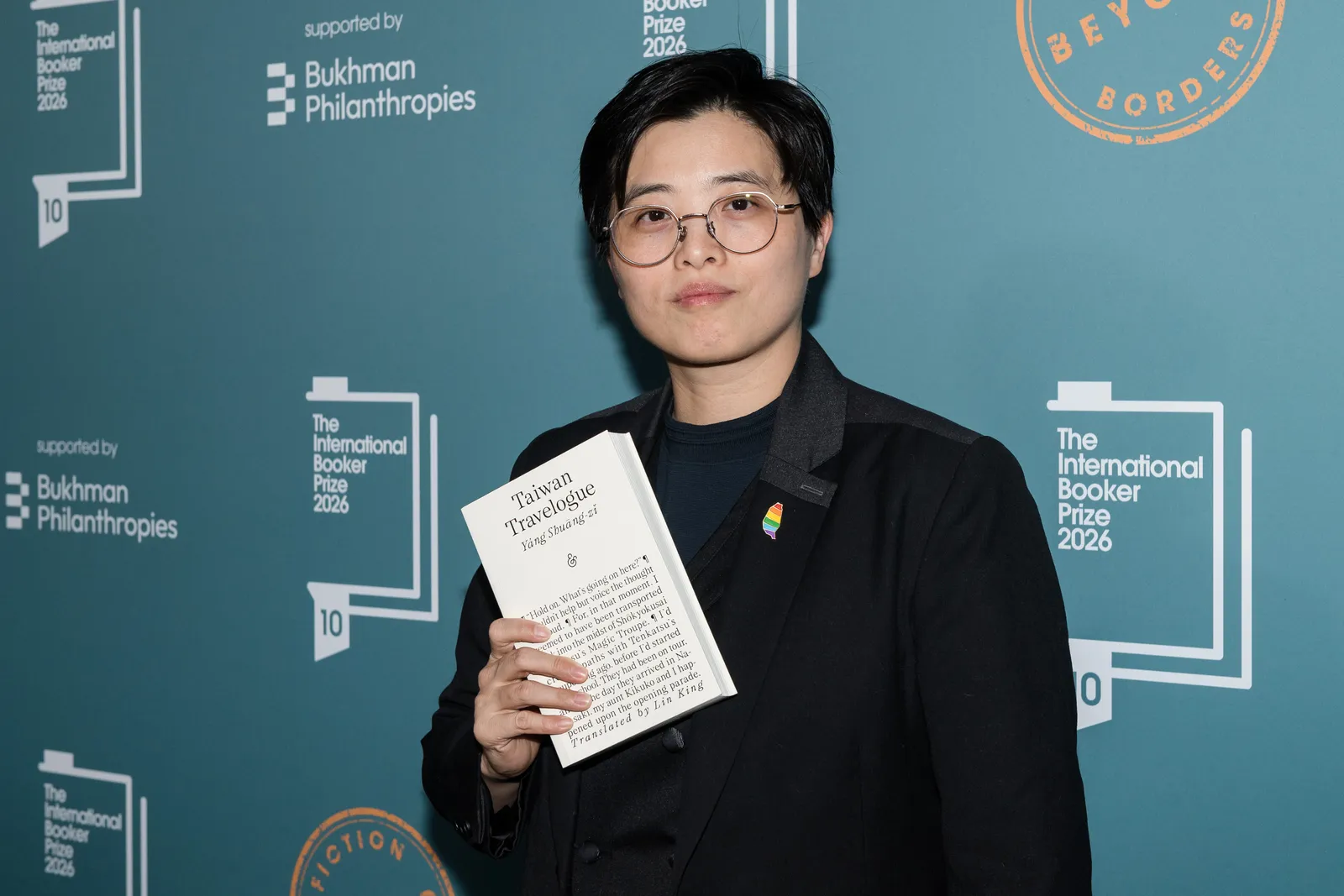
The Taiwan Rover also explains why such cultural events touch the political sensitivities of Beijing. The novels write about Taiwan society in the context of the 1938 Japanese rule of Taiwan, through food, travel, colonial experience and female relations; In recent years, Yang Tsiao has consistently emphasized the existence of Taiwan as a subject of its own history and culture on the international stage. As Beijing has long called for overseas institutions to accept their “one-size-fits-all” narratives on Taiwan issues, cultural, publishing and academic activities have often been at the forefront of diplomatic pressure.
The Munich Literary House has rejected this choice. The importance of this decision is not just to preserve an event, but to keep clear the question of “who decides on the programmes of German cultural institutions”: while it is possible to criticize, protest, and to hold competitive events, foreign governments should not seek the de facto veto power of programming through diplomatic agencies and financial proposals.
The real danger is not usually a matter of public failure, but of activities that are not recorded and that are self-cancelled by the sponsors to avoid trouble. Once the consular intervention was not recorded, it was only a “restructured programme”, and the outside world was unable to know who disappeared from the stage and why. The Munich incident thus provided a more practical answer than the slogan: transparency itself was a defence to cross-border scrutiny.
Article discussion
Verified members can discuss this report publicly and manage their own content.
Checking member sign-in status…