
On September 22, Tenzin Namgyal, a 20-year-old Tibetan youth activist, climbed a lantern on the Pennsylvania Avenue near the U.S. Congress and displayed banners with the words “Dictator Xi, Your Empire Will Fall! Free Tibet” and “Dictator Xi: You are not welcome”.
Phayul reports on the sceneNamgyal’s action was initiated by young activists from the background of Students for a Free Tibet. The banner did not use vague diplomatic language, but directly linked Xi Jinping’s individual with the rule of the Communist Party of China in Tibet, expressing opposition to political oppression and national control. For Beijing, this type of protest was the most reluctant to face was the personal responsibility to be publicly named: visiting the United States was not only diplomatic but also accompanied by the oppressed group to appeal to Xi Jinping himself as the center of power.
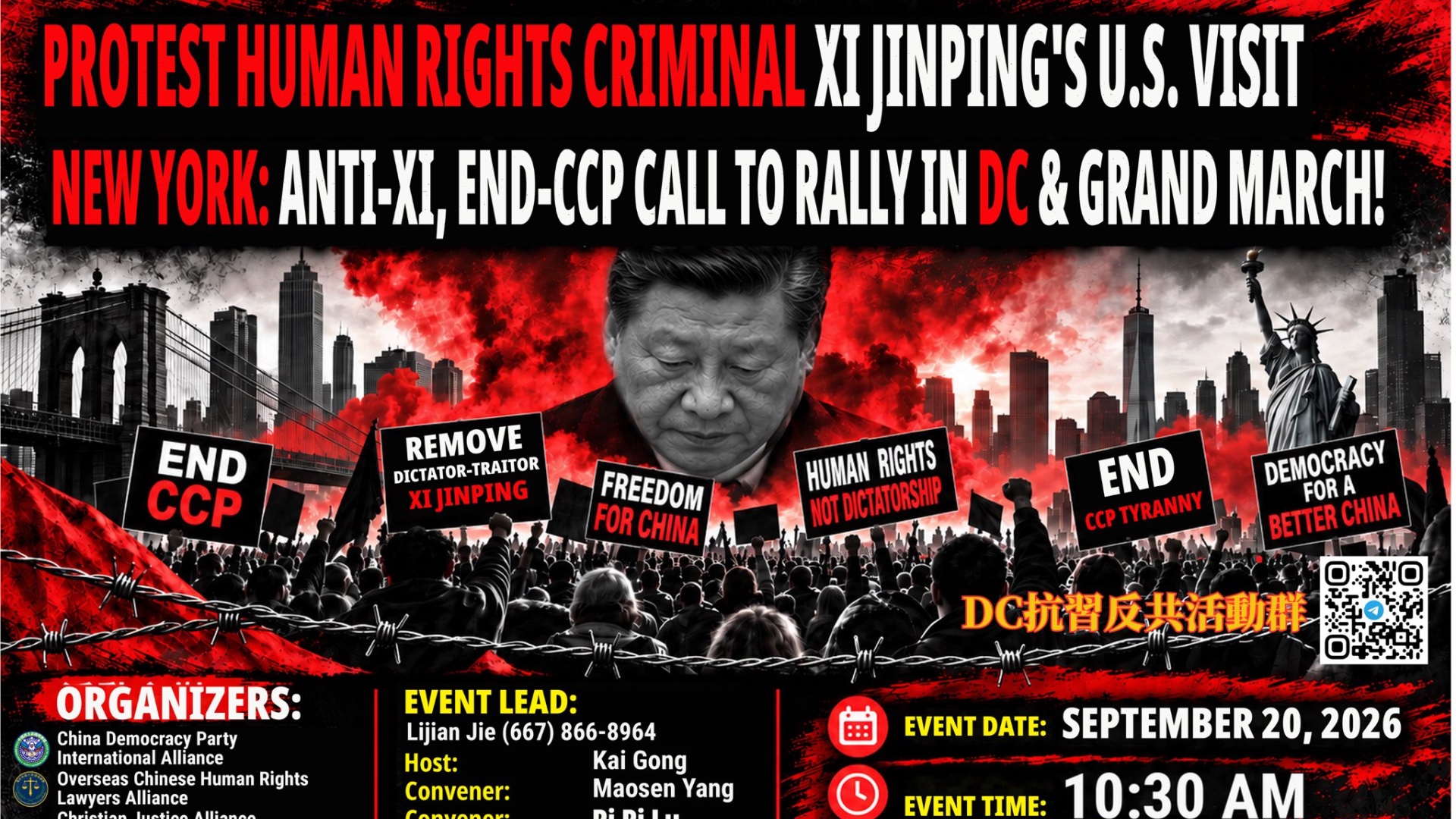
Meanwhile, on September 23, the protests in Washington did not stop at a Tibetan youth.Vision Times on September 23The International League of Chinese Democrats, Hong Kong, Tibetans, Uighurs, Falun Gong and other groups opposed to Chinese oppression are organizing continuous operations in Washington, and the White House, the Chinese Embassy, and the Xi Jinping Lodge nearby are listed as protest sites. For these groups, Xi Jinping’s visit to the United States is not a regular diplomatic visit, but an opportunity to bring the voice of oppression in China to the streets of the United States.
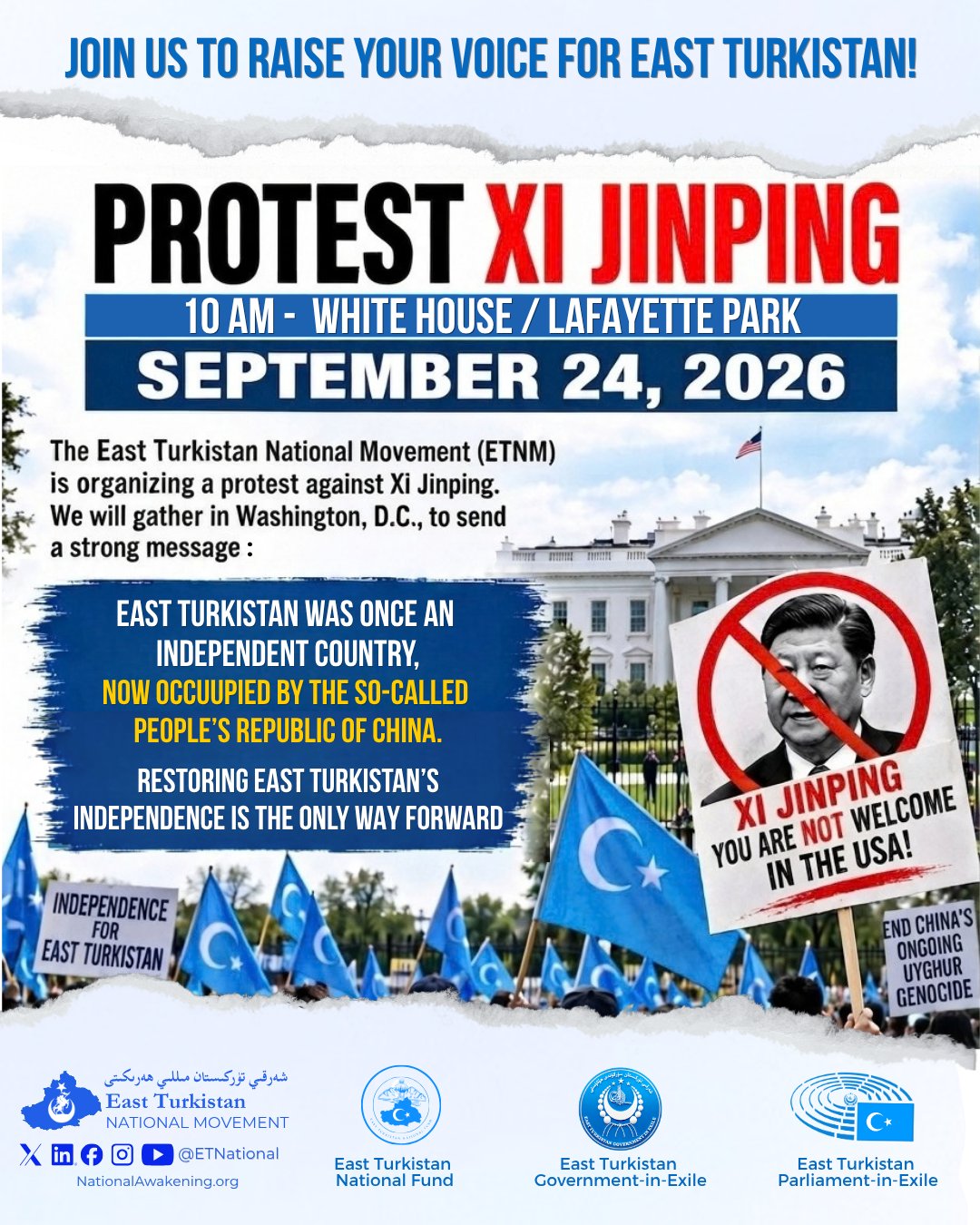
The hotel has a strong symbolism of being the target of the protest. The White House ceremony at the state visit emphasizes the captain’s service, while the protests near the venue deliberately break the diplomatic package, putting the issues of political prisoners, Tibet, Xinjiang, religious persecution, Hong Kong freedom and transnational repression before Xi Jinping himself. The logic of the protesters is clear: the CCP can control domestic streets, media and networks, but cannot bring the same set of censorship and dispersion mechanisms to Washington.
Some overseas activists have also said that they have recently experienced death threats, bomb threats and pressure on their families in China, and that the case has been to the FBI and New York police.The responsibility behind the scenes still needs to be determined by law enforcement agencies through communications, accounts, money flows and identity information, but this does not undermine another fact that has already occurred: when anti-CPC activists organized protests in the United States, security risks have extended from cyber shame to real-world threats and family pressure.
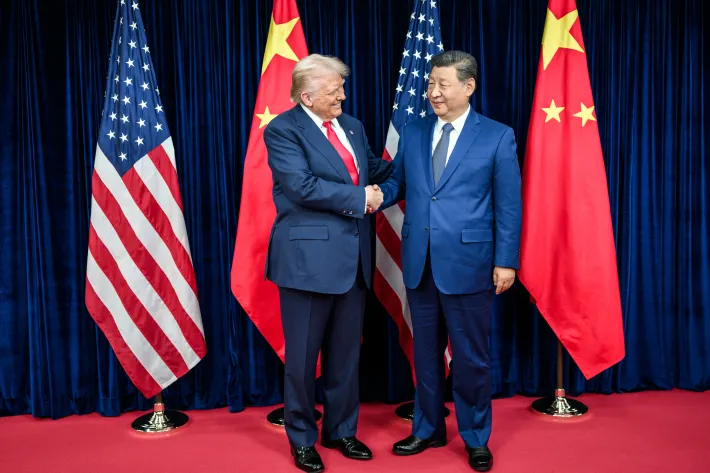
This also allowed Xi’s visit to the U.S. to show a contrast picture that Beijing could not fully control.On the one hand, the red carpet, military ceremonies, national banquet and chief diplomats; on the other hand, Tibetan youths highlighting “dictator Xi’s unpopularity” near Congress, and anti-Communist groups preparing to continue demonstrations outside the White House and Xi’s bedroom hotel. The CCP can define these voices as “hostile forces” at home, but on American streets, these voices enjoy space for public expression and assembly.
China under Xi’s rule uses the expansion of national security, anti-division, religious administration and social stability as a tool for comprehensive control of political expression. Tibet, Xinjiang, Hong Kong, family churches, dissidents and exile groups, although different backgrounds, gather in overseas protests to the same center of power responsibility: the highly centralized CCP system and Xi’s own.
For Washington, these venues simultaneously constitute a systemic counterpart. Xi Jinping can get the highest standard diplomatic reception in the United States, and those who oppose Xi Jinping can also publicly flag, protest, criticize, and even directly call him a dictator.
The next thing that really deserves to be tracked is the scale of the scene around the White House, Xi Jinping Lodge Hotel and related venues from September 23 to 25, the police deployment, the joint action of protest groups, and whether new conflict or cross-border harassment evidence has appeared.In addition to continuing to fill the screen with old topics, these street actions that are taking place on the same day are one of the most realistic human rights news that Xi Jinping has visited the United States.
文章讨论
已验证会员可围绕报道公开交流,并自行管理自己的内容。
正在检查会员登录状态…