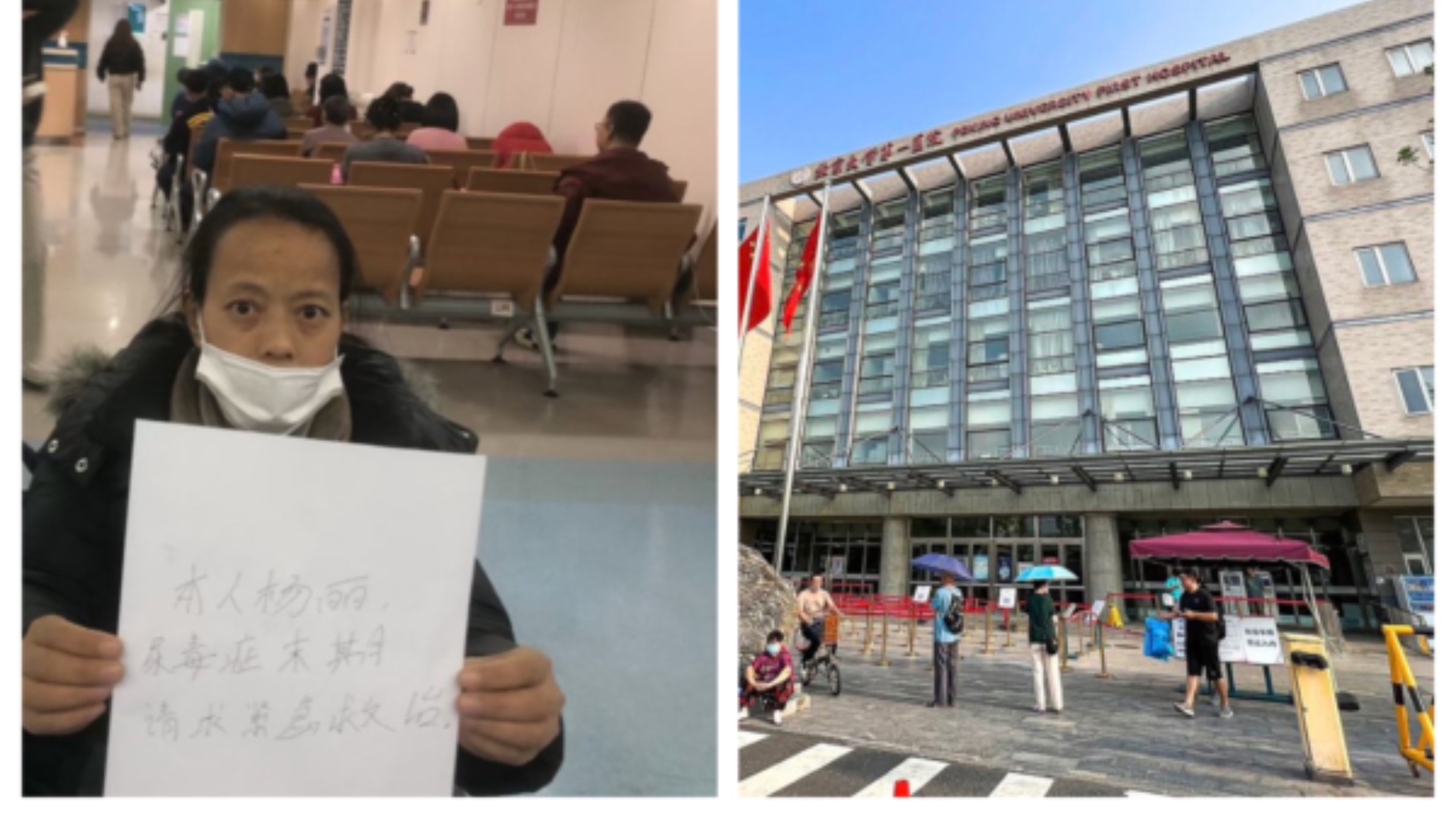
On 6 November, a nurse at the Kim Ten District People ' s Hospital in Jiangsu Changzhou called Yang Li ' s family and asked why the patient had not arrived at the hospital on time for blood dialysis. At that time, Yang Li was brought to the case centre by local security personnel. She went to the government of the Kimingong district that morning to ask for a solution to the long-obstructed access problem, but lost her liberty for almost 11 hours thereafter. She was not returned to her home until after 7 p.m. The family claims that she was unconscious and extremely weak and had missed dialysis treatment on the same day.
On 7 November, Human Life Watch disclosed the incident. Yang Li ' s sister Yang Chae-young publicly alleged that the Kim Teng Public Security had kept Yang Li in the centre for a long time, knowing that she needed regular dialysis to support her life, and refused to provide the necessary medical assistance.
原始来源 · msguancha.com民生观察11月7日:杨丽要求就医权遭金坛公安任意拘押msguancha.com ↗The help of a seriously ill person, why does it turn into a public security detention? Behind the incident were land claims disputes that had lasted for many years, and grass-roots security of rights interference in regular access to health care.
November 6: Took to the case centre after raising a card for help
On 6 November, at more than 8 a.m., Yang Li came to the government of the Golden Quarter with a card with the name “Come out and solve the problem of my medical problems”, hoping to see the Secretary of the District Council, Mr. Huay. She was taken away by security officers without waiting for the problem to be resolved.
The family disclosed that Chiang Yeh and Man-ja, members of the Kim Teng Public Security Directorate, were involved in the operation. Yang Li was taken to the case centre and forced to remain in the interrogation chair for several hours. She was not promptly taken to hospital, despite vomiting and unconsciousness during her detention.
According to the family, Chiang Yeh had told Yang Li that she would be sent for dialysis after the transcript. However, the transcript and the detention procedure did not allow for treatment, and Yang Li was kept in control from morning to night, during which time no food was received.
At over 7 p.m., two self-declared street staff and surveillance staff returned Yang Li. Faced with a weak and unconscious daughter, Yang Guelang, the father, requested contact with the person responsible for the decision to detain him, to deal with Yang Li ' s medical problems, but did not receive an effective response.
Presistence delay: public security dispositions in conflict with medical treatment
The danger was not lifted with Yang Li being sent home.
Early on 7 November, Yang Guelang again took her daughter to the people's hospital in Kim Ten District, requesting dialysis. On the same day, Yang Chae-young publicly stated that the hospital had been delayed in arranging treatment and that the medical staff had told Yang Li privately whether and when the dialysis was still pending official notification.
原始来源 · nitter.gq杨彩英社交账号:11月6日至7日当事人家属通报nitter.gq ↗This information reveals a more serious problem than a single detention: the ability of a terminal kidney patient to receive life-sustaining treatment on time may require an administrative decision outside the medical system.
Yang Li needs to undergo a blood dialysis three times a week. Regular dialysis is essential to the survival of terminal kidney patients, and delays in treatment can lead to an abnormal accumulation of toxins, moisture and electrolyte in the body, leading to serious complications. The public security organs have restricted the personal liberty of a dialysis patient, but have not ensured that he or she has access to treatment on time, which has already resulted in a general and steady disposition that has immediate life-threatening consequences.
This was not the first time that Yang Li had been subjected to public security interference for her right to health care.
Land disputes for over 10 years, defenders repeatedly restricted access to health care
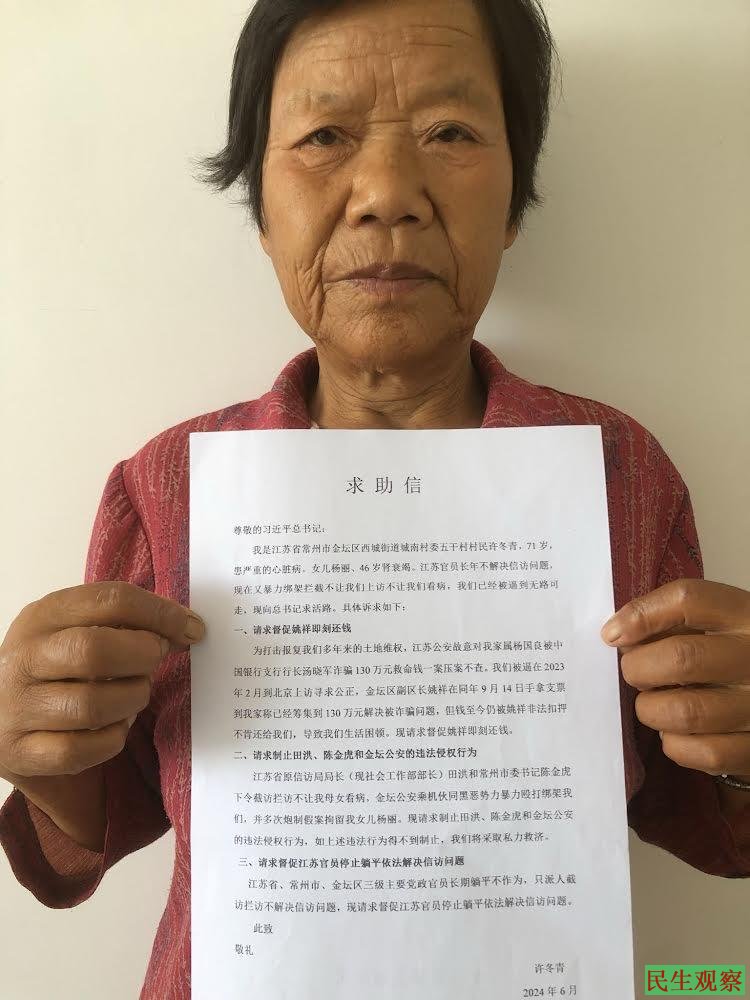
The Yang family dispute for rights began with the expropriation of land and the demolition of houses around
- Families alleged that local authorities had illegally expropriated land, violently evicted people and subsequently prevented them from holding them accountable through the public security and justice system. For more than a decade, Yang Li and her mother Hsiao Hoon-chung have been detained, prosecuted and restricted in movement on several occasions.
In 2025, Yang Li and his mother were sentenced to one year and three months and one year and two months, respectively. According to the family, Yang Li ' s kidney problems had deteriorated during her detention and had been unable to obtain adequate medical treatment for a long time. After her release from prison at the end of December 2025, she was stopped by the public security forces on several occasions while she was on her way to Beijing for medical assistance.
On 25 May this year, Yang Li ' s mother, Hsiao-qing, died of illness. The family considers that prolonged detention and medical treatment are important factors in their deterioration. After her mother ' s death, Yang Li continued to ask the Government of the Golden Quan district to allow her to go to hospital normally and was repeatedly stopped by the police.
原始来源 · epochtimes.com大纪元:杨丽持母亲骨灰到金坛区政府申诉就医权epochtimes.com ↗On 2 July this year, Yang Li travelled to the district government to request a visit to the police station and was subsequently taken to the crime centre. The family alleged that police officers were looking forward to the deliberate scratching of Yang Li ' s vascular fistula for blood dialysis during the treatment, resulting in swelling and the fracture of the wound. In October, Yang Li was again accused of being taken away by police officers in hospital.
原始来源 · msguancha.com民生观察:杨丽透析瘘口遭警察故意抓伤的家属指控msguancha.com ↗These incidents are a continuing pattern of treatment: Yang Li ' s complaint or request for medical treatment is followed by public security intervention to restrict his personal liberty; The medical problems she urgently needs to address have not been guaranteed stability.
On 29 January this year, the United Nations human rights special procedures sent an official communication to the Government of China regarding Yang Li ' s alleged arbitrary detention, obstruction of medical treatment and torture and ill-treatment. On 29 June, United Nations experts raised concerns about the medical treatment of Mother Yang Li. This means that the situation of the Yang family has long been under international human rights monitoring procedures.
原始来源 · spcommreports.ohchr.org联合国人权特别程序:CHN 1/2026相关文件spcommreports.ohchr.org ↗However, the detention on 6 November showed that the international community ' s concern did not end the restrictions on access to health care reflected by Yang Li.
Is the hospital waiting for a stabilization order?
It is even more worth pursuing how local public security authorities can intervene in normal hospital medical decisions.
In September this year, Yang Li ' s family disclosed that Chen Bin, Deputy Director of the Kim Teng-bai Lake Police Station, had informed Yang Li that the leadership had not allowed her to go to Beijing for medical treatment on the grounds that she would no longer be under local control. The family has also repeatedly stated that the arrangements for the use of medicine, transfer and treatment of Yang Li at the People ' s Hospital in the Kim Ten District require the consent of the authorities concerned.
原始来源 · chinahrc.org权利运动:杨家此前申诉材料及指控chinahrc.org ↗If the family's statements on these instructions are correct, Yang Li's experience goes beyond the general letter-and-mail reception and security management. The interference of administrative security powers in medical decisions means that the patient ' s life and health may be placed under the political objective of local government control of visitors.
The accountability of the Public Security, District Committees and hospitals
- Responsibility is directed first and foremost at the public security organs in KIMBIN. The Chinese Government has taken responsibility for the legal basis for the restriction of personal liberty, the use of interrogation chairs and the delay in emergency medical assistance. The head of the Public Security Division in Kim Qun has responsibility for law enforcement management and supervision.
As the main head of the local party committee, Yang Li, the Secretary of the Kimingi District Council, and the local governance system led by Huay, cannot avoid this long-standing dispute over the defence of rights. The district governments shall deal with land claims and medical assistance in accordance with the law, and public security organs shall not be used as a means of preventing citizens from expressing their claims.
- The People ' s Hospital in the Golden Quarter is also responsible for the events. The doctor is obliged to make a decision on the professional medical treatment of the patient based on his or her condition. If dialysis arrangements are indeed affected by administrative directives, the authorities need to indicate where they come from, who implements them and why external powers are allowed to intervene in the necessary treatment of patients.
The Yang Li case reveals a serious institutional weakness in the CCP ' s grass-roots security system: local governments have been unable to resolve land claims and judicial disputes for a long time, but have been able to use public security forces to restrict the personal freedom of complainants and even to affect their access to medical treatment.
In this way of power, the issues raised by the complainant have not been resolved and the act itself has become the subject of governance and control. The system of letters and visits, which should have been the right-help function, has been gradually replaced by local stabilization mechanisms.
The experience of Yang Li shows in particular that when the right to secure access to hospitals, political control is no longer limited to restrictions on expression and movement, and may also directly determine whether a person with a serious illness has access to life-sustaining treatment.
For a patient who needs dialysis three times a week, there is a real risk of delay in any treatment. On 6 November, the Kim Teng Public Security took control of Yang Li ' s personal freedom and on 7 November the family was still working on dialysis arrangements for her. The information publicly disclosed to date does not show what kind of treatment she eventually received that day.
The most serious institutional problem with this incident is that the grass-roots government places the restriction on defenders before the protection of the lives and health of citizens. The Xi Jinping regime has long emphasized the people as the centre of the problem, but in Yang Li case, the local public security was able to quickly control a person seeking help, while the medical institutions were accused of being unable to arrange for the treatment she needed.
The dialysis that Yang Li missed on 6 November, which was to protect life or to maintain local officials ' control over the complainant, has provided a very serious test of reality.
Article discussion
Verified members can discuss this report publicly and manage their own content.
Checking member sign-in status…