
On 5 November, a forced demolition of a village in the village of the village of the natural bridge in the town of Yu, Zhaohong, Yunnan Province, in response to the construction of a house by villagers, provoked a violent clash. The owner protested by jumping over the bridge, and angry villagers had been rounding up government agents involved in the demolition for long periods of time, demanding a statement.
The incident was revealed on November 6th on the independent protest website., and release the relevant live images.
The demolition, which was originally organized by local governments, eventually turned into a collective protest by villagers. When villagers would risk their lives to resist demolition, local administrative enforcement has lost the basic trust of the parties involved.
Villagers are being demolished and clashes on the ground escalated
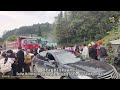
The incident was recorded in public yesterday at the village of the birth bridge in the town of Yushi County. The local authorities forcibly demolished a house being built by villagers, and the owner expressed his protest by jumping from the bridge. The surrounding villagers then gathered around the breakers for a long time.
The available public materials do not show the complete building approval documents, administrative sanctions or forced demolition documents, nor do they disclose the identity of the owner and the final injuries.
The process of events that has been disclosed is, however, sufficient to present a key fact: local governments have used administrative power to physically destroy residents ' homes, without effectively resolving the violent conflict over enforcement on the ground.
In rural areas, housing usually means that a family accumulates property over a number of years. The construction of houses involves land, home-based premises, planning and administrative approval, and indeed needs to be regulated by law. However, no administrative authority can, in carrying out the forced demolition, directly equate its administrative decision with the unlimited power to dispose of the property of the inhabitants.
Even if there are problems with illegal construction, the Government must follow the legal procedures to protect the physical security of the population when coercive measures are taken.
The fact that the owners protested by jumping over the bridge is precisely an indication that the administrative coercion has already given rise to serious personal danger.
Villagers surrounding the demolitionrs, a mistrust of executive power
Another particular matter of concern in this incident is that it was not only the owners of the demolished houses who participated in the protests.

Other local villagers joined the confrontation and rounded up the participants in the demolition to make their case.
This collective response reflects strong dissatisfaction among villagers with the manner in which the demolition operations were carried out and the consequences thereof. A single demolition of a house is no longer an administrative dispute between the Government and the individual household, but rather raises a common challenge to the way in which the grass-roots power is exercised.
In many rural construction disputes in China, the executive branch has many powers over land planning, construction identification and enforcement, while it is difficult for ordinary villagers to find relief in a short time that would prevent controversial demolitions.
Administrative proceedings may take months or even longer, but the excavator will take a short time to demolish the house.
This power gap in reality allows local governments to change the physical state of the house when the dispute has not been fully resolved, and residents may not be able to restore their living conditions even if they are given a favourable ruling in the future.
One of the reasons why the demolition is easily agitated by extreme protests is that the Government ' s coercive measures are immediately in force, while legal remedies for citizens are often far behind.
♪ Houses can be demolished and the power of the grass-roots government cannot be unfettered ♪
The incident also revealed a fundamental contradiction in local administration.
The Government should have resolved disputes and protected the social order through legal procedures. However, during the forced demolition process, the administration itself could become a party to the conflict.
For cadres at the grass-roots level, the performance of the tasks that are not in line with the tasks performed can be counted against the administrative performance. For those who lost their homes, the loss was direct and long-term. The costs of the two are not equal.
Such institutional arrangements, in the absence of independent and effective judicial constraints, encourage local administrations to prioritize implementation outcomes, while ignoring the rights of those who are actually affected.
In the village of Zhibashi, the owner used a bridge to protest against the demolition and other villagers collectively surrounded law enforcement personnel. The incident demonstrated that the local government ' s administrative actions had met with public resistance.
When the Government relies on the force of law to carry out its governance tasks without having the confidence of the population through a fair process, the contradictions of grass-roots society can shift from administrative disputes to direct resistance to State power.
The final injuries of the owner, the legal basis for the demolition of the house and the specific agencies involved in the operation still need to be followed up with follow-up materials. The power relationship that emerged from this incident is clear: one side has the means to carry out forced demolition, while the other side risks its life to keep the house.
In this highly unbalanced relationship, it is truly worth reflecting on why local governments have such a strong enforcement capacity without establishing equally effective civil rights protection mechanisms.
The conflict in the village of bridge, which was born, did not automatically end as the demolitionrs left the scene. Houses demolished, frightened families and villagers involved in the protests will continue to bear the consequences of the administrative conflict.
Local governments can demolish a house, but they cannot remove the villagers ' grievances about power by force.
Article discussion
Verified members can discuss this report publicly and manage their own content.
Checking member sign-in status…