
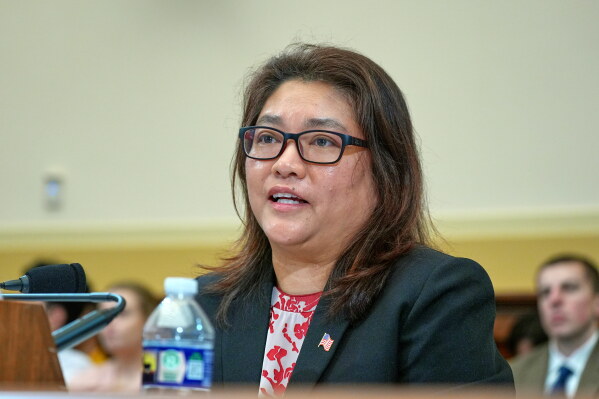
Min Zin, an American political scholar from Myanmar, was brought to Kunming for over 100 days by the Chinese national security agencies. CBS News disclosure </a" on 23 September, his wife Sylvia Zin claims that the husband has not been given a formal date for the prosecution, that lawyers are not able to meet and that family members are not able to speak directly and rely on monitored consular visits to obtain information. After entering China to participate in open academic activities, a foreign scholar has been permanently isolated from lawyers and family members by the national security system, and has moved the focus of the case from “whether or not there is a criminal suspicion” to how the State's compulsory powers operate.
Min Sin lost contact shortly after his arrival in Kunming from Thailand on 3 June. The Chinese Ministry of Foreign Affairs subsequently confirmed that he had been subjected to criminal coercive measures on suspicion of “spying, endangering China's national security”, but that the public information had so far failed to disclose specific acts, evidence or the progress of the case. For such serious offences, the long-standing existence of a label of charges without open evidence is itself preventing the outside world from examining the basis of the charges.

US State Department officially identified Min Xin as a United States citizen in August who was "misunder the custody of the United States. Beijing denied this finding, but denied that it did not alter several procedural facts that had been made public: lawyers were still unavailable, families were unable to communicate freely, there was no date for the public hearing of the case, and Min-shin was unable to provide an independent account of the detention and interrogation to the outside world.
原始来源 · ispmyanmar.comISP-Myanmar:Free Min Zinispmyanmar.com ↗CBS cited sources that stated that Min Sin was in the state of “designated residence surveillance” (RSDL). This system allows the State Security and Public Security organs to control suspects in places other than ordinary detention centres. For Min Sin, the real results are very concrete: isolation from society, lack of access for lawyers, controlled communications, and the facts of the case are almost exclusively and unilaterally controlled by the case-handling organs. The Minxim case, a long-standing criticism by United Nations human rights mechanisms and international human rights organizations of the risk of RSDL being held incommunicado, enforced disappearances and torture, demonstrates once again why this system continues to receive international attention.
United States officials were allowed approximately 30 minutes of visits per month, but the meetings were monitored. Family members were informed by consular staff that Min Xin suffered from loss of weight and knee pain; He also mentioned that he was interrogated for four to six hours, but was not free to tell the story. The extreme asymmetries in power that exist between the State security organs, which have access to persons, information and communication, and the lack of independent verification of family members and lawyers are the most important systemic problems in the case.
Min Sin is not a secret intelligence background. He is co-founder and executive director of ISP-Myanmar, who has long studied politics, conflict and China ' s influence in Myanmar, and has also worked at the University of California at Berkeley. over 100 United States and overseas scholars issued a joint statement at the end of August, emphasizing that their work was based on public information and academic research, and expressing concern that China would integrate normal academic activities into national security investigations.
Min Sin had entered China on several occasions, this time with a 10-year visa and being invited to academic activities, but was quickly taken over by the National Security Security Service upon arrival. The signal that the incident sent to researchers was clear: when the borders of “national security” were defined by the national security organs themselves, and when the process was conducted without lawyers and open judicial oversight, open information research, cross-border academic exchanges and analysis of China's policy could be re-described as security risks.
The Min Sin case really needs to be examined, not as a diplomatic term for who in Beijing and Washington is stronger, but as to whether China’s national security system allows a person accused of serious crimes to have prompt access to a lawyer, contact his family, obtain admissible evidence, and open procedures. If these most basic procedures are absent for a long time, then “lawful” cases are left with an official self-description, not a proven judicial fact from outside.
Article discussion
Verified members can discuss this report publicly and manage their own content.
Checking member sign-in status…