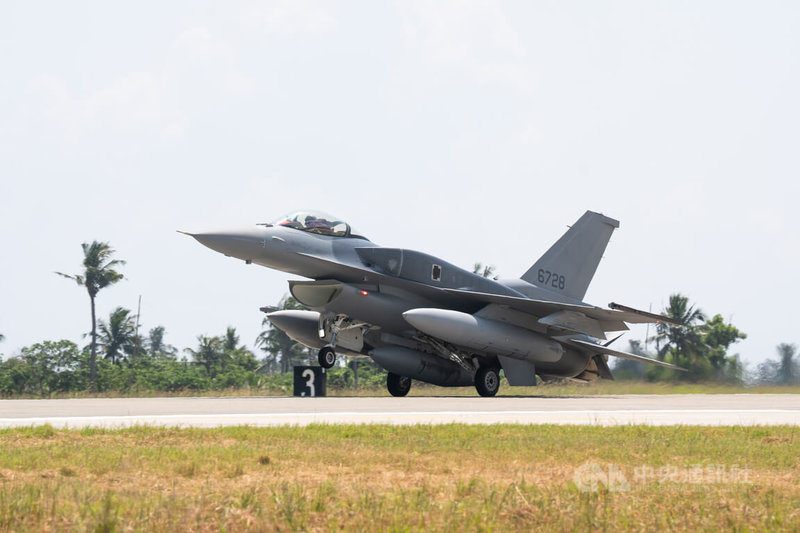
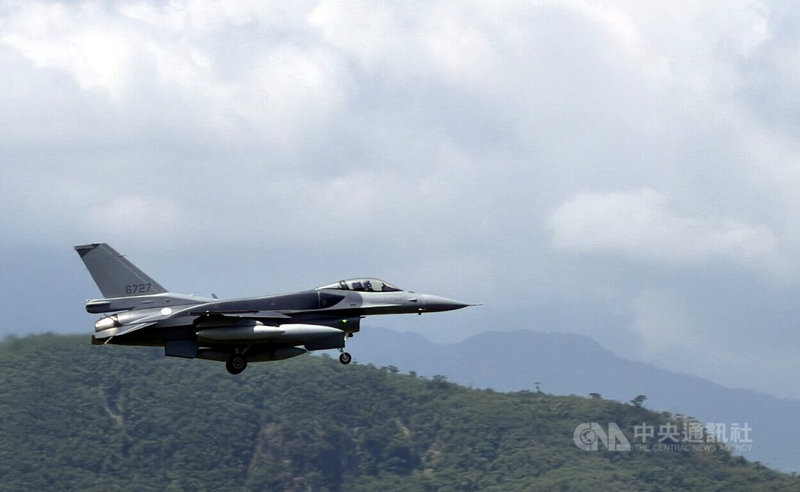
On 2 October, at noon, 66 new F-16V Block 70 aircraft, The first two (6727, 6728) arrived at Taidong Air Force Base and was met by both the United States and Thailand. According to Taiwan Air Force, 63 more are still in the United States of America or are entering the follow-up switch process. The first new landings meant that the military acquisitions, which had been launched in 2019 and totalling some $8 billion, had finally moved from years of delay to the actual delivery phase.
The arrival of these planes was particularly remarkable: eight days ago, On September 24, at the White House State Dinner, President Trump and President Xi Jinping of China also publicly emphasized the friendly and cooperative relationship between China and the United States. The Lutheran Church fully reproduced the message of the two national treatises on that day, and the diplomatic signal on the ground was that relations were stable, conflict avoided and cooperation continued.
原始来源 · ludepress.com路德社:特朗普与习近平白宫国宴祝酒词路德社9月24日转录中美元首白宫国宴致辞。ludepress.com ↗But Taiwan's security issues were not “freeze-freeze” with this high-profile visit. > US Ambassador Bondway to China on September 25, reiterating that the United States' established policy on Taiwan is “never change”, continues to support the Taiwan Relations Act, the three joint communiqués and the "six guarantees" and opposes any one or both. The situation has been changed by coercion. The transfer of the interview by Lutherans also mentioned that new security assistance and military sales issues remained pending within the United States Government.
</a" at the national holiday reception on September 30, and Xi Jinping again put the Taiwan issue on the public political agenda at the highest level of the Communist Party. He called for “a firm fight against the separatist forces of `Taiwan independence' and against outside interference” and proposed that “the cause of the reunification of the motherland be pursued”. The statement did not directly propose a “uniform” or declare specific military action, but it was a continuation of the long-standing policy framework in Beijing to combine unity objectives with opposition to external involvement.
Beijing still retains the formal legal option of using non-peaceful means. Article 8 of the Anti-Secession State Law provides that "non-peaceful means and other necessary measures" may be taken in cases where Beijing determines that there is a “separation” of Taiwan, a major event or a “total loss of the possibility of peaceful reunification” Zhu. Thus, the fact that Xi did not directly use the word “uniform” in his speech on the national day does not mean that the Communist Party has abandoned its military means; More precisely, military options have always existed within their legal and policy frameworks.
The first F-16V arrivals also cannot be interpreted as an additional military decision by the United States suddenly after Xi’s visit to the United States. The 66 aircraft were authorized and procured as early as 2019, after which delays were caused by software, production and supply chain problems. It is truly worth observing that, even after the completion of the State visit at the beginning of the Chinese dollar, the United States continues to implement the existing contract for the sale of military troops to Taiwan, without suspending delivery because of the improved diplomatic climate.
Reuters 2 October, F-16V Block 70 with modern radar, air power and weapons systems is one of the most recent production types of F-16. Taiwan ' s Minister of Defence, Lichon Kuo, has indicated that more new opportunities are expected to arrive this year. Taiwan has approximately 140 F-16A/B upgraded and, once the new fleet is fully acquired, the F-16 fleet will exceed 200 aircraft in size.
This created a picture that was different from the White House national dinner, but at the same time real: diplomatic, and the US-China leaders stressed stable relations; On the security front, Beijing continues to include unity as a political goal and to retain non-peaceful means, while the United States continues to assist Taiwan in expanding its air defence capabilities. The two tracks were not merged as a result of a summit.
This parallel state of affairs suggests that the so-called “deficient” of China and the United States is now closer to regulating part of trade and trade and diplomatic friction than to the end of safe competition in the Taiwan Strait. The United States has not recognized Beijing ' s claim to Taiwan and has not ceased to provide Taiwan with defensive equipment under United States domestic law; Beijing has likewise not withdrawn its position against the United States sales of the Taijun army, nor has it abandoned military pressure to support its unity objectives.
Thus, F-16V may be considered a clear policy signal, but it cannot by itself prove “the imminent war”. > American officials said to Reuters on October 1, that they now consider that China's full-scale invasion before the 2028 presidential election in Taiwan is less likely than some earlier judgements; Meanwhile, military preparations by Taiwan and the United States have continued to increase. The risk exists and is prepared to continue, and is not equal to the countdown of a war that has already entered a certain time.
What is truly worth noting is this long-standing security dilemma. The more Beijing emphasizes unity of purpose and military pressure, the more the United States and Taiwan are motivated to increase armaments and defence cooperation; Each new military sale is seen by Beijing as evidence of outside interference. Such mutual reinforcement does not require a public declaration of war by either party, but is also sufficient to keep the Taiwan Strait crisis management space down.
From the White House State Dinner on September 24 to Xi Jinping's speech on September 30 and until the F-16V landing on October 2, three scenarios in eight days have already shown that China and America can seek limited de-escalation in trade and trade and diplomacy, but that Taiwan's security issues remain governed by completely different logic. The key to Beijing, Washington and Taipei is not just how many F-16Vs are on board, but whether the parties can avoid pushing deterrence into an uncontrollable crisis in the context of a sustained military expansion and political confrontation.
Article discussion
Verified members can discuss this report publicly and manage their own content.
Checking member sign-in status…