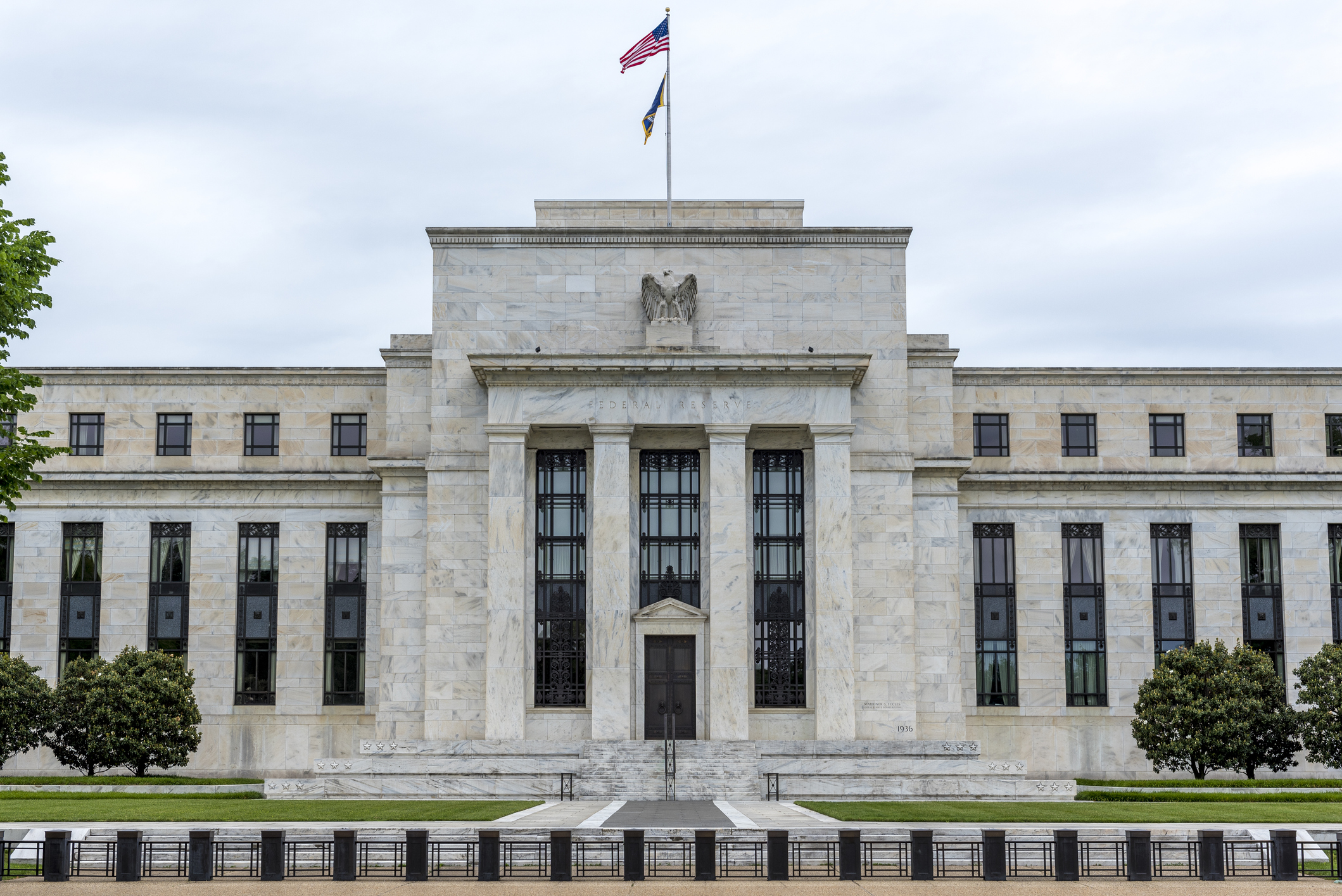
The case of John Harold Rogers, Senior Adviser to the former United States Federal Reserve Board, has recently been given renewed attention in connection with new investigative reports. On 1 October, Lutherans referred to relevant materials, focusing on the long-term contact of Rogers with Chinese intelligence and the details of the use of private relations. The United States Department of Justice and Federal Court records confirm that Rogers was convicted by a jury in February of this year of making false statements to government investigators, but not of conspiracy to commit economic espionage; On 15 July, he was sentenced to 38 months ' federal imprisonment and 12 months ' supervised release.
This decision has resulted in the necessary clear line drawn for reporting. The United States prosecution claimed that Rogers had provided restricted, non-public information to persons associated with the Chinese intelligence system, but the jury did not find that the prosecution had proved the crime of economic espionage under criteria that would have ruled out reasonable suspicion. The charge that has been established and resulted in a penalty was the false statement made by Rogers in 2020 when he was investigated by the Office of the Inspector General of the Federal Reserve.
原始来源 · justice.gov美国司法部:John Harold Rogers被判38个月联邦监禁justice.gov ↗From the Fed's international financial sector to China's “classroom”
According to the Justice Department ' s sentencing circular of July, Rogers served as a senior adviser to the Federal Reserve ' s international financial sector from 2010 to 2021 and had access to restricted information from the Monetary Policy and Federal Open Markets Commission. The prosecution states that he met Hummin Lee, who was identified by United States law enforcement agencies as a Chinese intelligence officer, at a meeting in China in 2017, and has since met Lee and his associates in hotel rooms in the name of Chinese lectures.
According to the Ministry of Justice ' s summary of the trial and case materials, Rogers had printed restricted documents and taken them to China, removed the classification tags on the materials and sent them to a private mailbox and transmitted sensitive information to a professor at the University of Joddan. The prosecution claims that Rogers knew Lee would write a report to the Chinese Government on the basis of that information.
The Ministry of Justice also stated that Rogers received jobs and economic benefits from Chinese universities. When the indictment was filed in 2025, the prosecution disclosed that he had received approximately $450,000 in compensation in 2023 as part-time professor at a Chinese university. Rogers was arrested after he was charged with two main charges of conspiracy and false statements against economic spies.
原始来源 · justice.gov美国司法部:John Harold Rogers 2025年起诉通报justice.gov ↗The jury did not convict him for espionage
The case entered the critical nodes in February
- After trial by the Federal Jury, it was not established that Rogers was an economic spy, but that he had made a false statement to the investigators of the Office of the Federal Reserve Inspector General. (a) The Ministry of Justice published the sentence results on 15 July: Dabney Friedrich, a Federal District judge, sentenced Rogers to 38 months ' imprisonment, 12 months ' supervision of his release; The prosecution has previously requested a sentence of 60 months.
It is therefore inaccurate to refer to Rogers directly as “punished Chinese spies”. (b) The alleged conspiracy of economic espionage by the prosecution but not convicted by the jury; The court actually sentenced the guilty person on the basis of false statements. At the same time, the Ministry of Justice, in its sentencing circular, stated that the trial evidence showed that Rogers had provided restricted Federal Reserve information to persons associated with the Chinese intelligence system and had concealed the relevant contact through false statements.
原始来源 · reuters.com路透社:前美联储顾问因中国关系调查中作虚假陈述被判刑reuters.com ↗This difference is not only a matter of legal drafting but also determines how the public understands the evidence in the case. The facts of the indictment in the criminal case, the evidence presented by the prosecution in the trial and the criminal facts finally confirmed by the jury are not the same level.
New reports bring personal relations and counterintelligence risks back to the public
The focus of Lutheran's attention this time came from the recent re-collating of case materials in the American media. The reports describe the long-standing professional, economic and personal relations between Rogers and the Chinese contacts, based on materials such as text messages, investigative recordings, court evidence, and reports of personal photographs that were subsequently subjected to cyber-extortion.
These details illustrate that counter-intelligence risks are not always reflected in a traditional secret document transaction. Career opportunities, academic exchanges, pecuniary relations and private life may intersect, leading to a relationship of dependency among people with sensitive information. However, in the Rogers case, where the criminal certification criteria for economic espionage were met, the jury has given a different answer from that given by the prosecution.
Why the Fed's information is being targeted
The non-public information available to the Fed directly relates to United States interest rate policy, economic forecasting and financial market judgement. According to the Department of Justice, China holds large United States Treasury debt and could have significant trade value if it had access to non-public information, such as interest rate decisions, in advance.
In 2025, the indictment charged Rogers with collecting sensitive material from the Federal Reserve and the Federal Open Market Commission at least from 2018 and preparing for a visit to China, including by means of private e-mail or printing of documents. The Office of the Federal Reserve Inspector General subsequently documented the case in a report to Congress, stating that it was investigating jointly with the FBI.
China, for its part, denied having any knowledge of the specific situation when the case was first made public and indicated that it would not interfere in the internal affairs of other countries. Since Rogers was not finally convicted of conspiracy as a economic spy, the precise description of the case should be accompanied by the preservation of the prosecution ' s evidentiary claims concerning Chinese intelligence links, the jury ' s acquittal and the fact that the false statement had been established.
The Rogers case is still subject to follow-up legal proceedings. The public file shows that he filed a notice of appeal against the final judgement at the end of July. The next stage of the case is thus no longer the prosecution ' s initial indictment narrative, but rather the Court of Appeal ' s handling of the false representation judgement and related legal disputes.
Article discussion
Verified members can discuss this report publicly and manage their own content.
Checking member sign-in status…