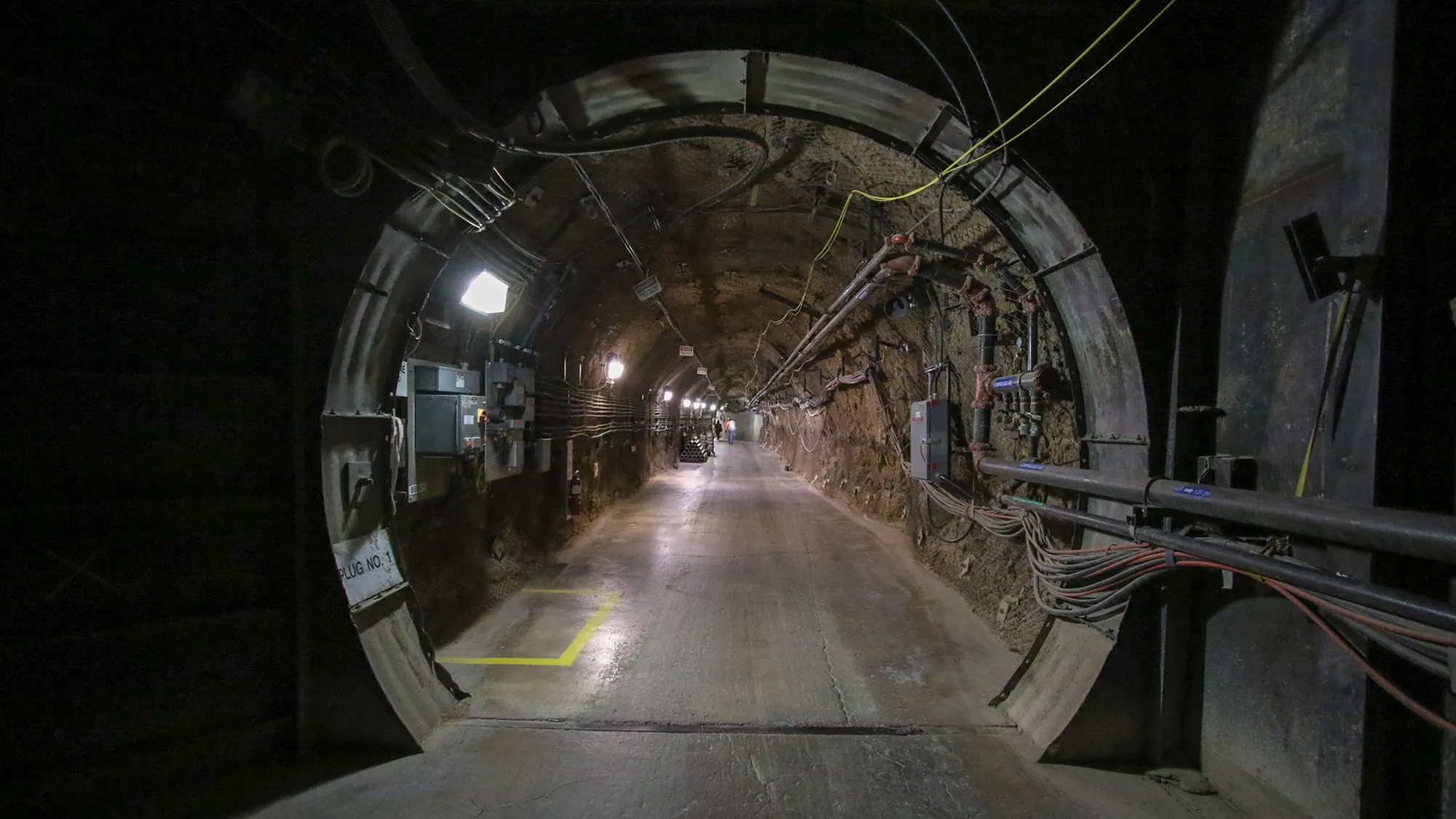
The United States National Nuclear Security Administration (NNSA) completed an underground non-nuclear high-energy explosive experiment at P Tunnel at Area 12, National Security Test Site, Nevada, on 30 September. NNSA states that the experiment used chemical high-energy explosives and radioactive tracers to improve detection and identification capabilities for low-yield nuclear explosions under the ground and directed one of its research priorities directly to what the United States Government claims to be a “de-coupling” explosion by China in Robber in June 2020.
This is not a nuclear-weapon-explosion test. NNSA clearly stated that the experiment did not produce a nuclear chain reaction and that its objective was to improve the ability to identify hidden underground nuclear explosions by means of underground chemical explosions under known conditions, calibrating monitoring means such as earthquakes, radionuclides and so forth. The distinction between the experiment itself and nuclear testing must be made clear, but it is equally worth asking why the United States has focused on the Chinese Robpoa event as a technical scene.
原始来源 · energy.govNNSA:在P Tunnel实施非核实验以支持核爆炸监测energy.gov ↗P Tunnel re-enactment, with the goal of seeing smaller, more hidden underground explosions
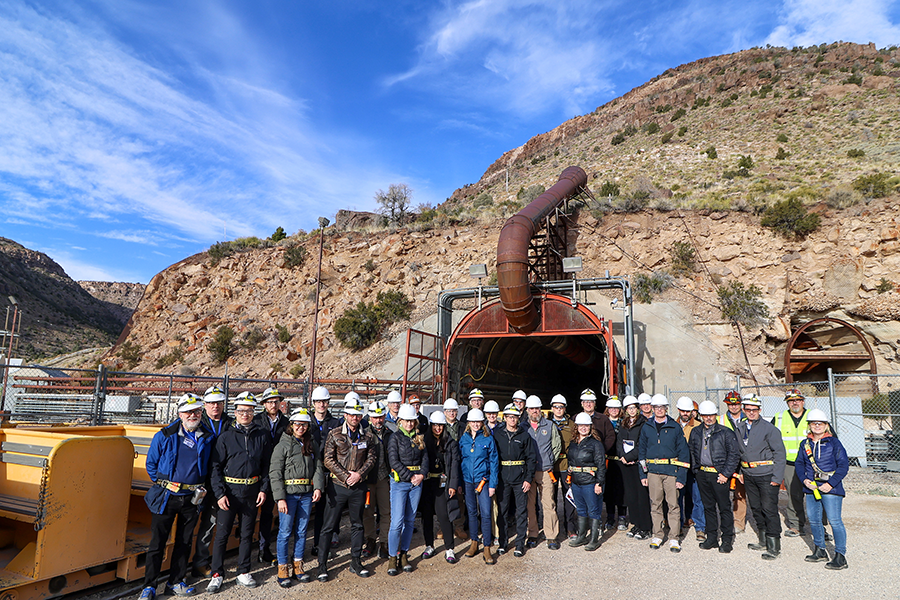
PTunnel is located at Area 12, National Security Test Site, Nevada. During the cold war, the United States conducted underground nuclear tests in the region; Following the total cessation of nuclear explosive tests, the relevant facilities were used for non-nuclear tests, nuclear explosive monitoring techniques and arms control verification research.
原始来源 · energy.govNNSA:P Tunnel设施与全面禁止核试验监测工作energy.gov ↗NNSA has placed high-energy chemical explosives in the underground environment and uses radioactive tracers to simulate some of the detectable features that a nuclear explosion might leave behind. Researchers will calibrate existing detection models in conjunction with seismic waves, underground media dissemination and radionuclide data.
One of the core technical problems facing such experiments is the “decoupling”: if the explosion occurs within a sufficiently large subsurface cavity, the efficiency of the explosive energy to be passed on to the surrounding rock formation may decrease, thus weakening the seismic signal. For a system that relies on a global seismic monitoring network to identify clandestine nuclear tests, this means that a low-yield underground explosion may be more difficult to judge accurately than an ordinary burial method.
原始来源 · armscontrol.orgArms Control Association:旧核试验场在核爆监测中的新角色armscontrol.org ↗Why is NNSA publicly calling for Robber?
The United States Department of Energy and NNSA have continued to include activities at the Robpoll Nuclear Test Site in China in recent years as a background for nuclear blast monitoring research. According to United States government officials, China conducted an experiment in June 2020 in Robpo on “de-coupling” technology, which led to research on how to identify underground explosions that were technically processed and whose seismic signals were weakened.
Beijing denied the allegations of the United States regarding China ' s clandestine nuclear test and stressed that China had abided by its moratorium on nuclear testing. The disclosure of seismic data can help to determine whether an abnormal vibration occurs in a given area, but a long-range seismic signal alone does not automatically prove that an underground activity is a nuclear explosion, nor does it independently confirm the full technical details of the Robber 2020 experiment described by the United States Government.
The most accurate factual level is therefore: the United States Government has publicly presented its judgement on the “go-to-de-coup” experiment in Robpo, China, and is improving detection capabilities for such scenarios with real underground chemical explosions; The Chinese Government denies the allegations of clandestine nuclear tests; There is no independent conclusion in the public domain issued by an international verification body that would be sufficient to bring all disputes to a definitive end.
Comment: What really deserves Beijing's answer is not a "denying" but transparency
Criticism of the nuclear policy of the Communist Party does not require that the United States intelligence judgement, which has not been independently confirmed, be written into established facts. More directly, while China ' s nuclear forces are expanding rapidly, outside access to information on test site activities, the size of nuclear warheads, nuclear materials and nuclear weapons strategies remains limited. The lack of transparency would allow any irregular construction, drilling, tunnel or seismic activity at Robber to quickly enter the military suspicion chain.
Beijing can deny the specific allegations of the United States, but denial cannot in itself substitute for verifiable information. If China believes that the United States is wrong about the Robpou 2020 “decoupling” experiment, it would be more convincing to provide material that can be technically tested and to expand international verification and arms control communication, rather than allowing the outside world to collage facts only between satellite imagery, seismic data and national intelligence assessments.
This information asymmetry is not without cost to China itself. This PTunnel experiment in the United States shows that Washington is investing real resources to improve its ability to identify low-yield and “decoupling” to deal with underground explosions. The less transparent nuclear activities are, the more powerful the opponent is to build a more sensitive detection network, develop new verification techniques and integrate the worst-case scenarios into military planning.
The danger of nuclear testing competition is not just "who first explodes a nuclear bomb"
In recent years, the United States, Russia and China have been maintaining or expanding their nuclear-test-related infrastructure. States could conduct large-scale experiments in high-energy explosives, hydrodynamics, subcritical and diagnostic technologies without conducting nuclear explosions. Such activities do not in themselves amount to a violation of the ban on nuclear testing, but rather enhance the technical capacity of States to resume testing, to verify weapons or to monitor their opponents, if necessary.
This is where the PTunnel experiment has political significance: it has not broken the US policy of placing a moratorium on nuclear explosions since 1992, but has pushed underground nuclear explosive detection capabilities further towards lower-yield, more complex geological conditions and more hidden technological scenarios.
For the CCP, continuing to combine the expansion of nuclear forces with a high degree of opacity would make it increasingly difficult to distinguish between “strategic ambiguity” and “risk-making”. The international community has no reason to assume that China has committed a clandestine nuclear explosion on the sole basis of US allegations, but it is equally justified to request more verifiable information from Beijing on the activities of the Robber site, nuclear power-building and arms control commitments.
The NNSA experiment was not just about an explosion in an underground tunnel, but about an increasingly serious test dilemma among the nuclear Powers: when mutual trust is reduced and transparency is inadequate, countries will use more monitoring technology to fill the information vacuum. Technology can improve the ability to detect unusual activities, but it cannot be a substitute for political transparency and verifiable commitments.
Article discussion
Verified members can discuss this report publicly and manage their own content.
Checking member sign-in status…