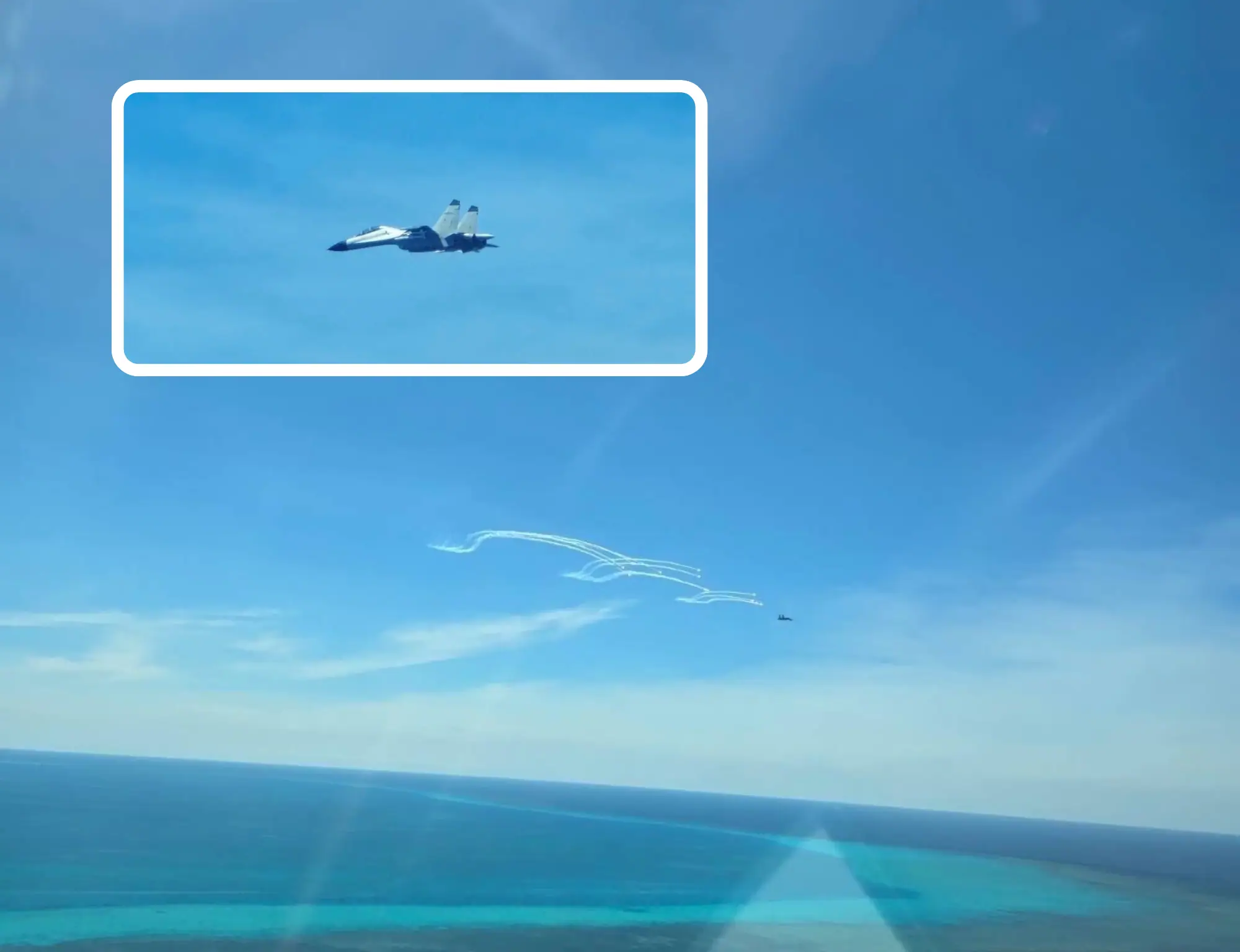
On 3 October, a Philippine military C-208 light patrol aircraft encountered two Chinese military aircraft while carrying out routine maritime patrols near Yellowstone Island. One of them was identified as a J-16 fighter. The Armed Forces of the Philippines claimed that J-16 had approached on several occasions, flying to the forward and surrounding C-208 and entering the tailings area of the light aircraft; The crew eventually completed its mission and returned safely.
Two days later, Beijing did not deny sending a military plane, but rather, "a href"https://www.channelnewsasia.com/east-asia/china-philippines-trade-accusations-over-south-china-sea-aircraft-encounter-6433456"target" rel = "nopener noreferrer" da-linked-reference = "true" data-reference-label = "CNA Report" defines operations publicly as "displacement" . The Chinese People's Liberation Army (PLA) in the southern war zone stated that Philippine aircraft had entered the so-called “Yadar Island airspace” without Chinese permission and that Chinese air and sea forces had followed, warned and removed them. Thus, a dangerous close contact has taken on more significance than flight safety disputes: Beijing is transforming its unilateral claim of sovereignty into a field control by military practice.
On the one hand, C-208 and on the other hand, J-16
The performance gap between the aircraft on both sides made this contact particularly asymmetric. C-208 is a single-voltage light aircraft that can carry out transport, liaison and maritime surveillance tasks; J-16 is a high-speed heavy fighter. The Philippine military noted in particular that Chinese warplanes entered the vicinity of C-208 tails and repeatedly infiltrated, posing an aviation safety risk.
The political function of this practice does not depend on the firing of fire. Whenever each patrol has to be faced with the close pressure of fighter jets, the weaker side is forced to pay higher risk and resource costs for normal operations. The pressure of the so-called “grey zone” is particularly direct in the air: Beijing does not need to officially declare a no-fly zone, but it can also create de facto deterrence with the speed, weight and strength of the weapons platform.
Beijing continues to extend the disputed maritime area to “air space”
The island is approximately 124 nautical miles from Luzon Island in the Philippines and is within the 200-mile exclusive economic zone of the Philippines. The 2016 South China Sea arbitral award denied China's legal basis for asserting historical rights over large areas of the South China Sea on the basis of the “nine-part line” and recognized issues such as the traditional fishing rights of the Swab Island. Beijing has long refused to accept the ruling.
What is alarming about the wording of this southern war zone is that China is not merely repeating the declaration of sovereignty over the islands, but is therefore advocating that Philippine aircraft need Beijing permission and actually deploy air and sea forces to carry out “displace”. This amounts to an attempt to shape a claim challenged by international law through continued law enforcement and military action to create daily rules.
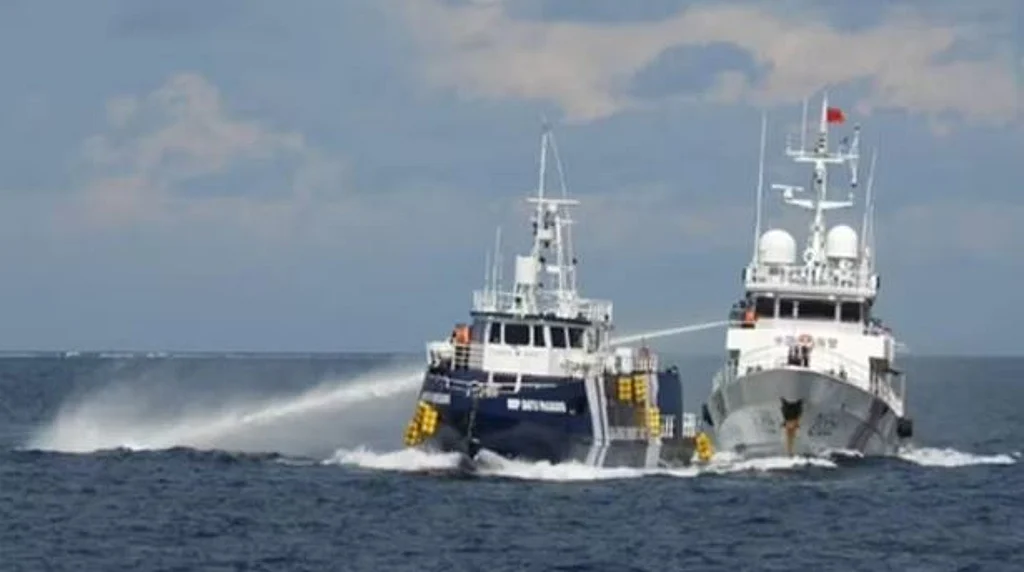
For its part, the Philippines has included incidents in China's continuous pattern of “dangerous and coercive acts” against its Government vessels and aircraft. Just on 4 October, the Philippine Coast Guard added that Chinese naval vessels had blocked the pursuit of foreign fishing vessels suspected of having fried fish near China Island, and that Chinese naval helicopters were circled over the same place. The sea blockage, which was approaching the air, took place two days in the vicinity, showing that the pressure tools in Beijing had crossed the maritime police, navy and air forces.
The real goal is to change who has the right to act normally here
The dispute over the South China Sea has long been described as a line of sovereignty on the map, but this air contact on the island of Yellowstone shows that the battle has come to the point where the exact people who can patrol, enforce the law and who must make way. The advantage of the Communist Party regime is that it can be used in concert with the maritime police, navy, air force and diplomatic narratives: first, to maximize claims, then to be repeated by the forces on the ground, and finally, to package coercion into a normal state of affairs in the language of “rights enforcement”.
The danger is also accumulating here. There is no need for an exchange of arms between J-16 and the low-speed C-208, and an accident may result from a miscalculation, tail flow disturbance or error in distance judgement. Beijing has pushed political claims to the distance between cockpits, in fact placing first-line pilots at risk of its expansionist maritime policy.
Article discussion
Verified members can discuss this report publicly and manage their own content.
Checking member sign-in status…