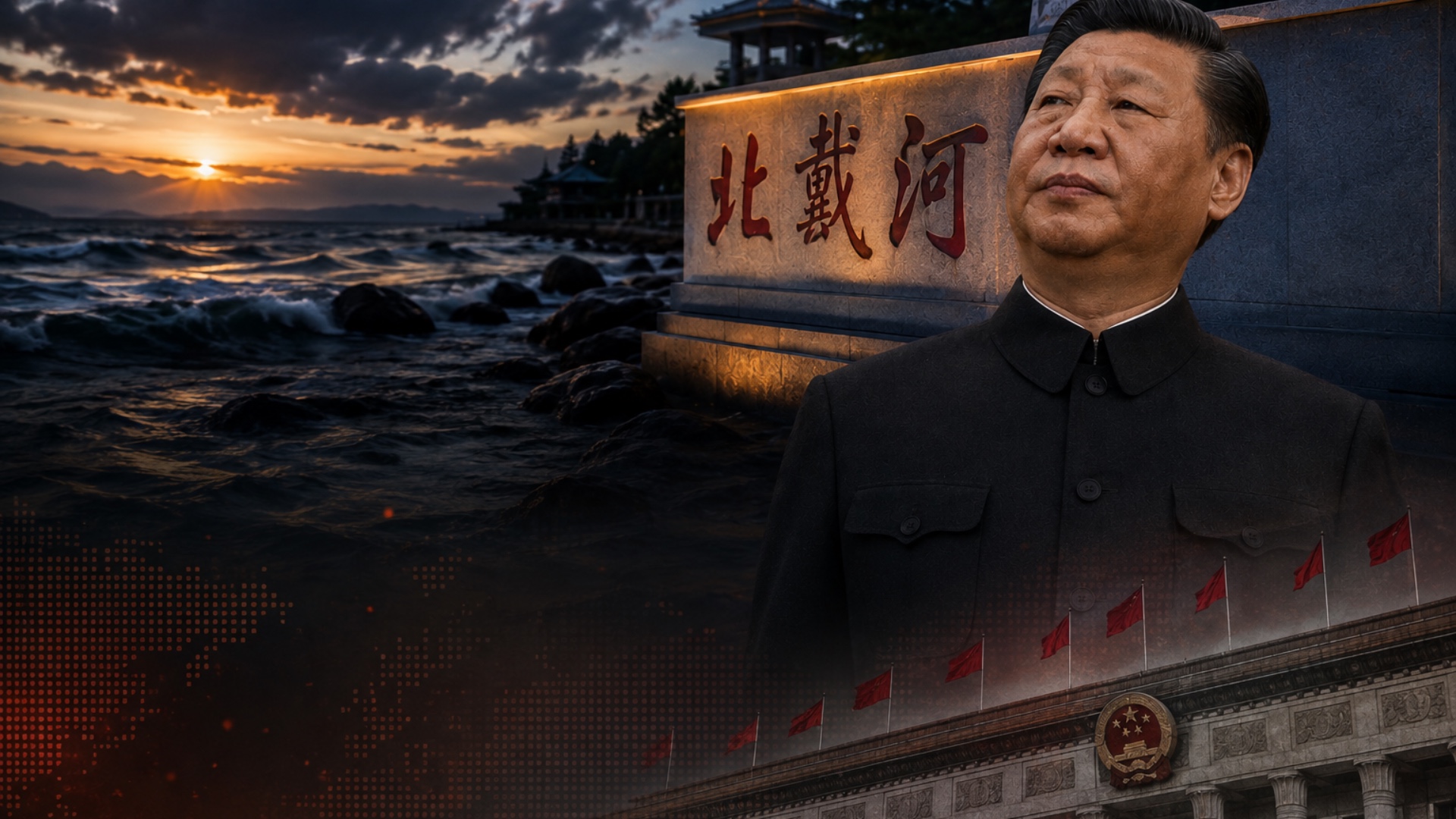
进入8月,中国最高政治层面的公开活动再次出现北戴河信号。
路透社8月3日报道,中共中央政治局常委、中央书记处书记蔡奇在北戴河看望暑期休假专家,被视为一年一度中共高层北戴河暑期活动启动的重要公开标志。与正式的中央全会、政治局会议不同,北戴河从来没有一份完整议程向中国公众公布,但它长期处在中共权力政治的重要节点上。
今年尤其值得关注,因为几个政治信号正在同一时间交汇。
第一个信号来自时间表。北戴河活动之后,中共将在10月举行一次重要党内会议,纪律整顿、干部管理以及下一阶段政治部署都可能成为议程。第二个信号来自此前连续发生的高层人事震荡。军队、金融监管系统以及地方高级干部今年接连出现撤职、调查和人大代表资格终止,中共精英政治远没有进入外界想象中的稳定期。
第三个信号更具有制度意义:北戴河本身正在发生变化。
在胡锦涛及更早时期,北戴河曾被外界视为现任领导人与退休元老进行非正式沟通甚至协调重大问题的重要场所。习近平掌权后,随着个人权力不断集中、退休领导人影响力下降,这种传统政治协调机制的实际作用明显削弱。路透社援引分析人士指出,在习近平高度集权之后,退休元老能够影响重大决策的空间已经远低于过去。
因此,今年观察北戴河,继续按照传统的“派系斗争”模式寻找谁挑战习近平,反而容易误判真正的政治变化。更值得追踪的是,原本存在于中共内部的一些非正式制衡机制,在习近平时代还剩下多少。
中共没有竞争性选举,没有独立议会监督,也没有公开的最高权力交接机制。在这样的政治制度中,北戴河之所以长期受到关注,正因为它曾经承担正式制度之外的协调功能。当正式制度缺乏公开竞争,而非正式协商机制又不断弱化,最高权力的运行便更加依赖习近平本人以及围绕中央办公厅、政治局和中央军委形成的垂直控制体系。
这种变化已经能够从干部政治中看到结果。官员升迁越来越强调政治忠诚,纪律检查不断深入高级干部和军队系统,重大人事变化往往先出现“消失”、缺席或职务调整,随后才由官方补充程序性说明。
北戴河因此仍然重要,但它的重要性已经不同于二十年前。
过去的问题是,各派力量将在这里达成什么妥协;今天的问题则是,当中共内部能够约束最高领导人的制度与非正式机制同时衰退后,还有谁能够对重大政策错误提出有效反对意见。
一个政权可以通过集中权力提高命令执行速度,却无法同时消除决策错误。真正危险的地方正在这里:当所有人都必须向一个权力中心负责时,错误的信息同样会沿着这个体系不断向上过滤。
北戴河海滨看起来依旧平静,中共真正发生变化的,却是隐藏在这片平静背后的权力结构。
Entering August, public activities at the highest political level in China have once again sent out Beidaihe signals.
Reuters reported on August 3 that Cai Qi, a member of the Standing Committee of the Political Bureau of the CCP Central Committee and Secretary of the Secretariat of the Central Committee, met with vacationing experts in Beidaihe, which is regarded as an important public sign of the launch of the annual summer activities of the CCP leadership. Unlike formal plenary sessions of the Central Committee or Politburo meetings, Beidaihe has never had a complete agenda published to the Chinese public, but it has long stood at a key node of CCP power politics.
This year is particularly noteworthy because several political signals are converging at the same time.
The first signal comes from the timetable. Following the Beidaihe activities, the CCP will hold an important party meeting in October, where disciplinary rectification, cadre management, and the next phase of political deployment are all likely to be on the agenda. The second signal comes from the successive high-level personnel shake-ups that occurred previously. This year, the military, financial regulatory systems, and senior local cadres have successively experienced dismissals, investigations, and terminations of their status as National People's Congress deputies. CCP elite politics is far from entering the period of stability imagined by the outside world.
The third signal is of greater institutional significance: Beidaihe itself is undergoing changes.
During the Hu Jintao era and earlier, Beidaihe was viewed by the outside world as an important venue for current leaders to engage in informal communication and even coordinate major issues with retired party elders. Since Xi Jinping took power, with the continuous concentration of personal power and the declining influence of retired leaders, the actual role of this traditional political coordination mechanism has significantly weakened. Reuters quoted analysts pointing out that after Xi Jinping's high degree of power centralization, the space for retired elders to influence major decisions is far lower than in the past.
Therefore, observing Beidaihe this year by continuing to look for who is challenging Xi Jinping under the traditional "factional struggle" model is prone to misjudging the real political changes. What is more worth tracking is how much of the informal checks and balances that originally existed within the CCP remain in the Xi Jinping era.
The CCP has no competitive elections, no independent parliamentary oversight, and no public mechanism for the transfer of supreme power. In such a political system, Beidaihe has long attracted attention precisely because it once assumed coordination functions outside the formal system. When the formal system lacks open competition and informal consultation mechanisms continue to weaken, the operation of supreme power relies more heavily on Xi Jinping himself and the vertical control system formed around the General Office of the Central Committee, the Politburo, and the Central Military Commission.
This change can already be seen in the results of cadre politics. Official promotions increasingly emphasize political loyalty, disciplinary inspections continue to penetrate deeply into senior cadres and the military system, and major personnel changes often first appear as "disappearances," absences, or job adjustments, with official procedural explanations only supplemented later.
Beidaihe therefore remains important, but its importance is different from twenty years ago.
The question in the past was what compromises the various factions would reach here; the question today is, when the formal institutions and informal mechanisms within the CCP that could constrain the top leader decline simultaneously, who is left to raise effective objections to major policy errors.
A regime can increase the speed of command execution by concentrating power, but it cannot simultaneously eliminate decision-making errors. This is where the real danger lies: when everyone must be accountable to a single center of power, erroneous information will likewise filter upward through this system.
The Beidaihe seaside still looks calm, but what is truly changing within the CCP is the power structure hidden behind this calm.
Met het aanbreken van augustus hebben de publieke activiteiten op het hoogste politieke niveau in China opnieuw signalen uit Beidaihe afgegeven.
Reuters meldde op 3 augustus dat Cai Qi, lid van het Permanent Comité van het Politbureau van de Centrale Commissie van de CCP en secretaris van het Secretariaat van de Centrale Commissie, vakantievierende experts in Beidaihe heeft bezocht. Dit wordt beschouwd als een belangrijk publiek teken van de start van de jaarlijkse zomeractiviteiten van de top van de CCP. In tegenstelling tot formele plenaire zittingen van het Centraal Comité of bijeenkomsten van het Politbureau, is er voor Beidaihe nooit een volledige agenda aan het Chinese publiek bekendgemaakt, maar het bevindt zich al lang op een cruciaal knooppunt van de machtspolitiek van de CCP.
Dit jaar is bijzonder opmerkelijk omdat verschillende politieke signalen op hetzelfde moment samenkomen.
Het eerste signaal komt van het tijdschema. Na de activiteiten in Beidaihe zal de CCP in oktober een belangrijke partijbijeenkomst houden, waarbij disciplinaire hervormingen, kaderbeheer en de volgende fase van de politieke planning waarschijnlijk op de agenda staan. Het tweede signaal komt van de opeenvolgende verschuivingen in de top van het personeelsbestand die eerder hebben plaatsgevonden. Dit jaar zijn er in het leger, de financiële toezichthouders en onder hoge lokale kaders achtereenvolgens ontslagen, onderzoeken en beëindigingen van het lidmaatschap van het Nationaal Volkscongres geweest. De elitepolitiek van de CCP is nog lang niet in de stabiele fase beland die de buitenwereld zich voorstelt.
Het derde signaal is van groter institutioneel belang: Beidaihe zelf ondergaat veranderingen.
Tijdens het tijdperk van Hu Jintao en daarvoor werd Beidaihe door de buitenwereld gezien als een belangrijke plaats voor informele communicatie en zelfs de coördinatie van grote vraagstukken tussen de huidige leiders en gepensioneerde partijveteranen. Sinds Xi Jinping aan de macht is gekomen, is met de voortdurende concentratie van persoonlijke macht en de afnemende invloed van gepensioneerde leiders de feitelijke rol van dit traditionele politieke coördinatiemechanisme aanzienlijk verzwakt. Reuters citeert analisten die erop wijzen dat na de sterke centralisatie van de macht door Xi Jinping, de ruimte voor gepensioneerde veteranen om belangrijke besluiten te beïnvloeden veel kleiner is dan in het verleden.
Daarom is het dit jaar bij het observeren van Beidaihe gemakkelijk om de werkelijke politieke veranderingen verkeerd in te schatten als men blijft zoeken naar wie Xi Jinping uitdaagt volgens het traditionele model van "factionele strijd". Wat meer het volgen waard is, is hoeveel er in het tijdperk van Xi Jinping nog over is van de informele mechanismen van checks-and-balances die oorspronkelijk binnen de CCP bestonden.
De CCP kent geen competitieve verkiezingen, geen onafhankelijk parlementair toezicht en geen openbaar mechanisme voor de overdracht van de hoogste macht. In een dergelijk politiek systeem heeft Beidaihe juist zo lang de aandacht getrokken omdat het ooit een coördinerende functie buiten het formele systeem vervulde. Wanneer het formele systeem openlijke competitie mist en de informele overlegmechanismen blijven verzwakken, wordt het functioneren van de hoogste macht sterker afhankelijk van Xi Jinping zelf en het verticale controlesysteem dat is gevormd rond het Algemeen Bureau van het Centraal Comité, het Politbureau en de Centrale Militaire Commissie.
Deze verandering is al zichtbaar in de resultaten van de kaderpolitiek. Bij de promotie van functionarissen wordt steeds meer de nadruk gelegd op politieke loyaliteit, disciplinaire inspecties dringen steeds dieper door in de rangen van hoge kaders en het leger, en grote personele wijzigingen uiten zich vaak eerst in "verdwijningen", afwezigheid of functiewijzigingen, waarna de officiële procedures pas achteraf door de autoriteiten worden toegelicht.
Beidaihe blijft daarom belangrijk, maar het belang ervan is anders dan twintig jaar geleden.
In het verleden was de vraag welke compromissen de verschillende facties hier zouden sluiten; de vraag van vandaag is: nu de formele instituties en informele mechanismen binnen de CCP die de hoogste leider konden beperken tegelijkertijd in verval zijn geraakt, wie is er dan nog over om effectief bezwaar te maken tegen grote beleidsfouten.
Een regime kan door machtsconcentratie de snelheid van de uitvoering van bevelen verhogen, maar het kan daarmee besluitvormingsfouten niet uitsluiten. Dit is waar het werkelijke gevaar schuilt: wanneer iedereen verantwoording moet afleggen aan één machtscentrum, zal foutieve informatie eveneens via dit systeem naar boven worden gefilterd.
De kust van Beidaihe oogt nog even kalm, maar wat werkelijk verandert binnen de CCP is de machtsstructuur die achter deze kalmte schuilgaat.

参与讨论Join the discussionNeem deel aan het gesprek
请围绕事实与观点理性交流。新评论会先进入编辑审核。Discuss facts and views constructively. New comments are reviewed before publication.Bespreek feiten en standpunten op een constructieve manier. Nieuwe reacties worden voor publicatie beoordeeld.
正在检查登录状态…