
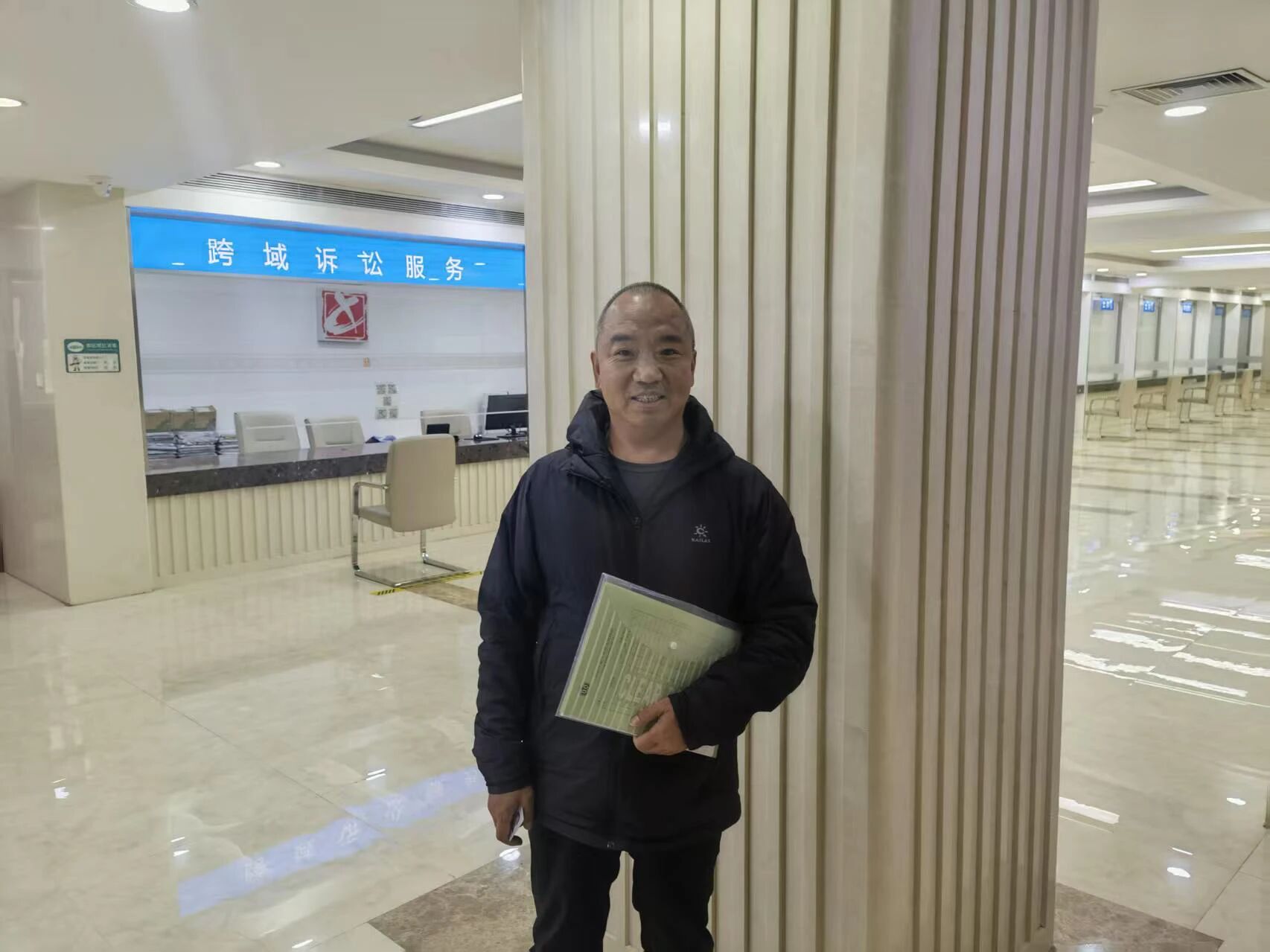
On 22 October 2026, I came to Beijing City's first Intermediate People's Court and filed an administrative indictment. The accused is the National Board of Letters and Visits.
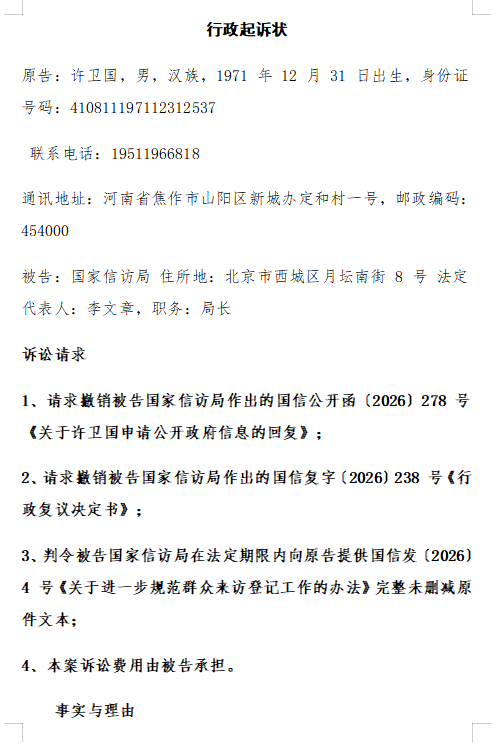
(a) The request for action is simple: the request for the annulment of the State letter published by the State Letter and Visiting Service (2026) 278 Reaction to the Application for Public Government Information by the Veterans and State Letter Reword (2026) 238 Decision on Administrative Review; The National Letter and Visiting Authority of the accused was ordered to provide me with the full text of the letter (2026)4 on the modalities for further regulating the registration of public visits within the statutory time limit.
This case, on the face of it, is just a dispute that I have requested to publish a document. But in my view, it is of vital interest to every visitor.
I. A document with a "reduced"
This is to be seen from a document issued by the National Board of Letters and Visits.
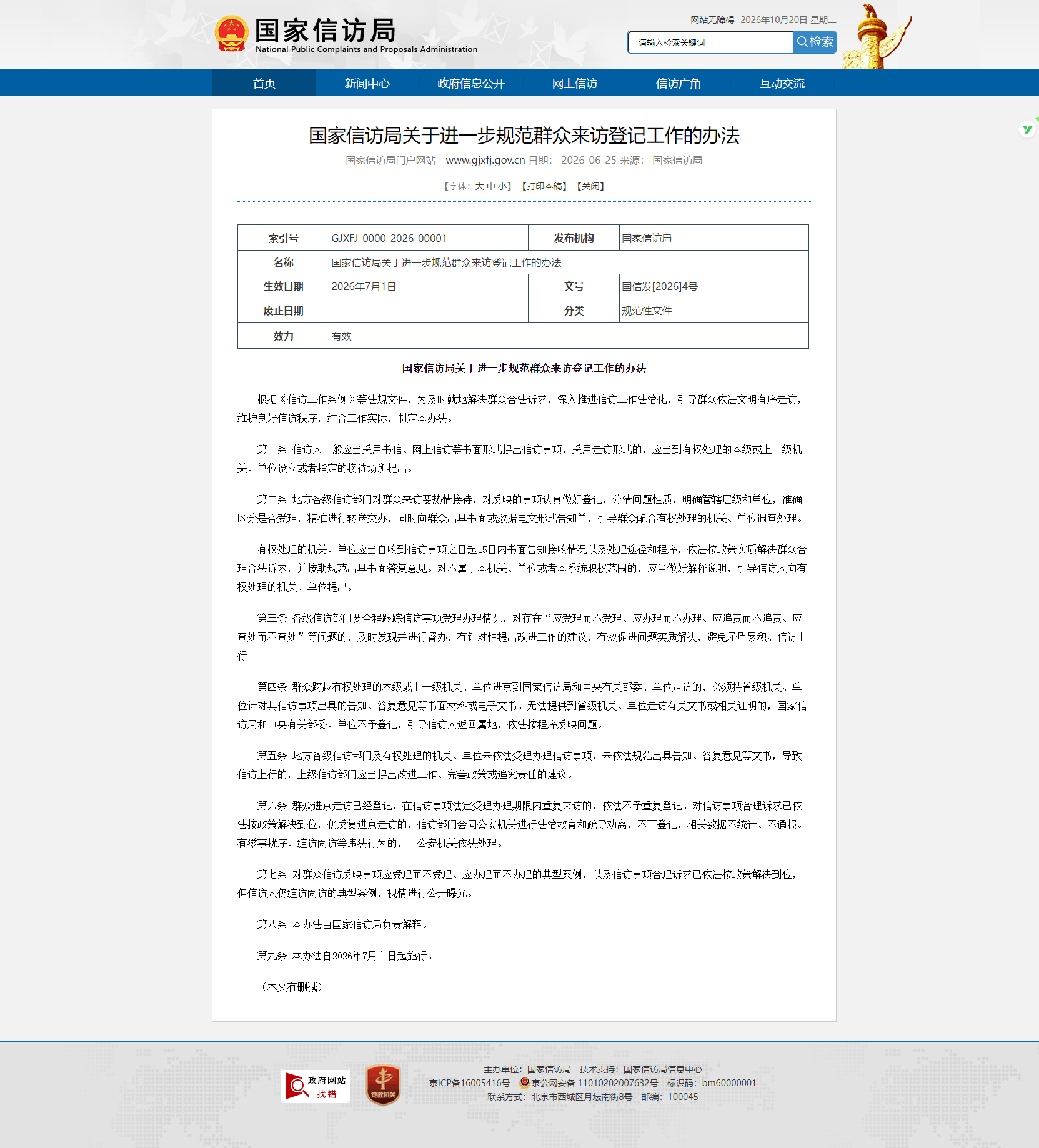
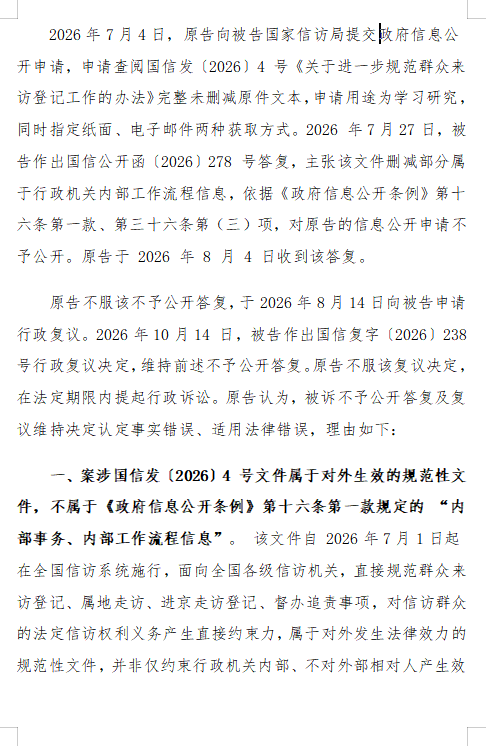
On 4 July 2026, I submitted to the State Mission Office an application for public access to government information, which was not deleted in its entirety from the original letter No. [2026] 4 on the modalities for further regulating the registration of public visits.
I saw a line at the end of the text posted on the National Network of Letters and Visits: "(Breath delete)"
This means that the text of the normative document, which is binding on all the people who visit it, is not complete and is available at all levels of the country. What's deleted? I don't know. However, this document, which covers such matters as visit registration, territorial visits, visit registrations and follow-up by the Ombudsman, is directly related to the right of each visitor to visit. I want to know what it was. Is that too much?
II. RESPONSE TO "INCOME"
On 27 July 2026, the State Office of Letters and Visits issued the open letter of the State (2026) 278 " Reply on the application of the State of Vigilance for the disclosure of government information ". The response concluded that the deletion of documents, which in part belonged to "information on the workflow within the executive branch", was not made public, in accordance with article 16 (1) and article 36 (3) of the Government's Public Information Ordinance.
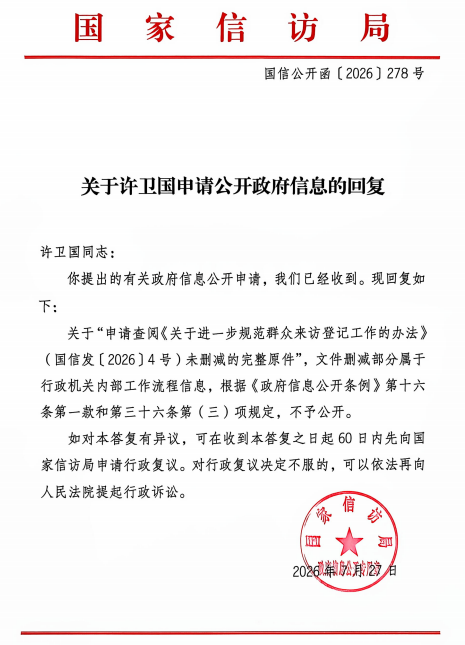
On 4 August 2026, I received this response. The reply informed that, if it is not contested, an administrative review can be requested from the National Board of Letters and Visits within 60 days of the date of receipt of the reply.
As indicated in my review of the application, the case-related documents are normative documents that are binding on all the people at all levels of the country and are in force throughout the country since 1 July
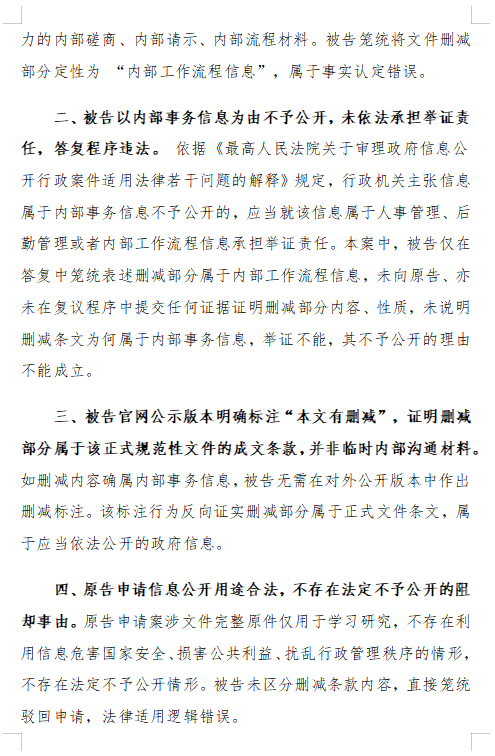
- The full texts are published on the official website of the National Office of Letters and Visits, and the documents themselves directly regulate the external administrative rules of mass visits, visits by the people themselves, visits to the Kyoto and to the Kyoto, and follow-up by the Ombudsman, which directly affect the legal right of the persons to be visited. The National Office of Letter and Visits only responded by stating in general terms that "information on the internal workflow of the executive body" did not provide any evidence that the deletions were indeed internal workflow information, nor did it specify the specific content and nature of the deletions.
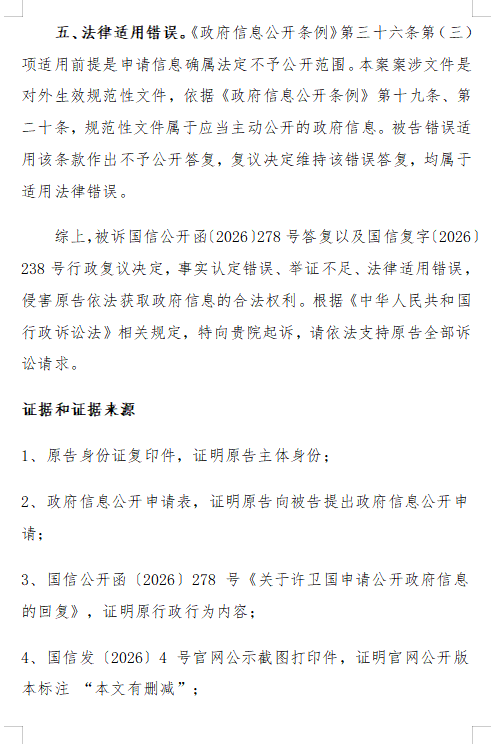
More crucially, the National Letter and Visits Bureau has taken the initiative to mark "the text with a deletion" at the end of the official website, which is sufficient to confirm that the original is a valid document in full, and that the deletion is a formal text and not a temporary working communication within the organ. If the deletion is indeed internal, it is perfectly possible not to suggest deletion in the public version. The act of descriptoring is a formal provision of the document and shall be made public in its entirety in accordance with the law.
III. A registered letter with long waiting
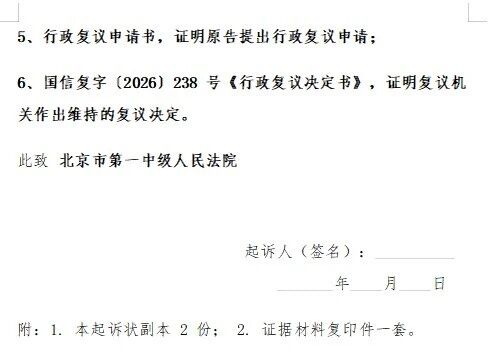
On 14 August 2026, I prepared an application for administrative review, which was sent by registered mail to the National Office of Letters and Visits. The request for reconsideration was to withdraw the above-mentioned in camera reply and to compel the State Office of Letters and Visits to provide the full text of the case-related documents without deleting the original.
The postal registered letter receipt indicated that the mail had been signed by the National Board of Letters and Visits on 16 August 2026.
(a) In accordance with articles 30 and 62 of the Law of the People ' s Republic of China on Administrative Review, the State Office of Letters and Visits, as the statutory administrative review body, shall examine the application within five days of its receipt; If the period for review has not expired and no decision on inadmissibility has been issued, it shall be considered admissible. The statutory time limit for hearing administrative review cases subject to ordinary proceedings is sixty days, and if an extension is required, the person concerned shall be informed in writing that the period of extension shall not exceed thirty days.
As of 20 October, I had not received any instruments. No decision of inadmissibility, no decision of reconsideration, no written notice of adjournment of the hearing
- nothing.
On 21 October, I decided to go to Beijing and submit an administrative indictment to the First Intermediate People ' s Court, continuing to request the National Board of Letters and Visits to publish the full text of the document.
On my way, I received a copy of the National Board of Letters and Visits ' decision, which remains closed.
So I kept going and went to Kyoto.
So today I come to the Beijing City First Intermediate People ' s Court.
IV. How many turnways have I taken?
Why am I so committed to the full text of a document?
Because I'm a messenger.
I was Deputy Director of the Ma Village Division of the Department of Territorial Resources of Giocho City, Henan Province. He was not a co-conspirator and was colluded with the Director of Public Prosecutions, falsely certified and falsely accused, and innocently imprisoned for 10 years. I have been complaining for the duration of my sentence and, after my release, I have continued to file a complaint in accordance with the procedure established by law, in the hope of defending my legitimate rights and interests through legal means.
Over the years, I have written letters and visited to inform all levels of the authorities of my problems. I also told my own story through my own media account. I know the hard way to a letter — a letter sent out, often with the sea sunk; One visit, many times, no way to find a way to go.
What the visitors need most is information being made public — knowing what the rules are, knowing where the rights are, knowing where the roads are.
The registration of mass visits is regulated by the State letter (2026)4. If not even this document is fully public, how do the visitors know where the right of access is? How do we know which procedures are safeguards and which are restrictions?
I am prosecuting the National Bureau of Letters and Visits, not just for this document. I would have preferred to have had an opportunity to face the leadership of the National Board of Letters and Visits in court through this case.
I want to tell them the pain of the visitors, the distress of the visitors. Behind each of the visitors is a story that is not understood. The visitor is not a "problemmaker" but a man who believes in the law and in the organization.
I hope that the leadership of the Bureau of Letters and Visits will give real importance to the work of the letters and not sit in their offices and look at the material, but rather walk the way the letters and listen to the questions of the letters and the questions in the letters and the interviews. Can policies be more pacified? Can the workflow be more transparent? Can the public's questions be resolved in a real way?
The system of mail visits was designed to listen to the voices of the people and to address their difficulties. We hope that this system will truly work, so that every visitor will feel fair and just.
V. BELIEVE THE LAW AND PROTECT THE LAW
The Government Information Disclosure Ordinance provides that government information that is relevant to the public interest and that requires wide public knowledge shall be made public on its own initiative. Normative documents should be made public on their own initiative. Why not be fully public, a document that affects the rights of millions of visitors?
I chose the legal solution because I believed in the law. I am convinced that, through a legal approach, the system can be advanced and that the work of the letters can be brought back to its proper purpose — to be a bridge between the masses and the Government.
Today I filed a complaint in Beijing City ' s first Intermediate People ' s Court. It's a long way to go, but I'm willing to go. Because I know that every person who defends his or her rights under the law deserves to be taken seriously.
Original source
- Original title
- 我为什么要起诉国家信访局
- Original author
- 卫国说说
- Source account / outlet
- 微信公众号“卫国说说”
- Originally published
- 2026-10-23 16:39
- Content treatment
- Republished
- Original article
- View original ↗
- Published by China Focus
- 会员发布
Article discussion
Verified members can discuss this report publicly and manage their own content.
Checking member sign-in status…