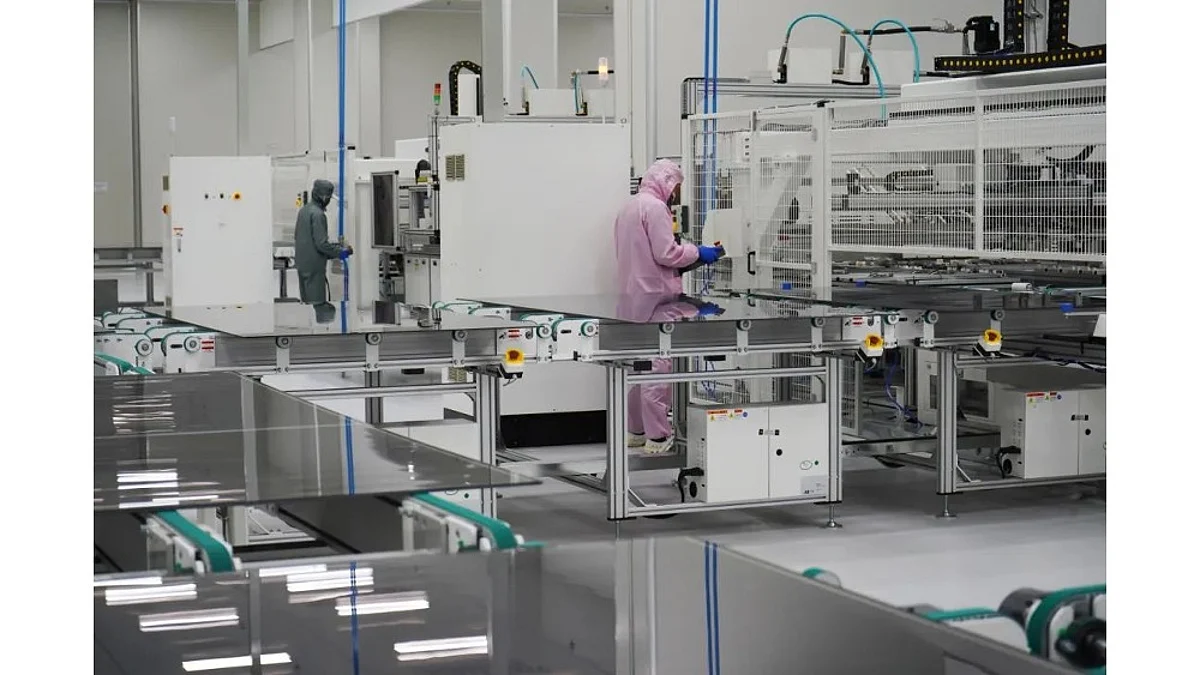
On 18 October, the Chinese commercial authorities proposed the inclusion of 12 photovoltaic technologies in the new list of export controls for technology. This is not another round of export restrictions on finished solar panels, but rather directly integrates the process, equipment know-how and manufacturing capacity for the production of these products into the national licensing framework. The most noteworthy lists include thin silica, thalmine and stacking batteries, fluidized bed polycrystalline silicon processes, and advanced battery routes such as TOPCON, HJT, XBC.Reuters revealed that day., for consultation until 15 November; Export restrictions do not amount to a total ban on exports, but the cross-border transfer of critical technologies by enterprises will face new approval borders.
China's Luxur Enterprises have been able to build global industrial advantage for over a decade, based on equipment manufacturing capacity, scale production, R & D personnel and fiercely up to almost brutal price competition. Now Beijing is trying to retain the technological leadership, but wants to decide which countries and which companies these advantages can go to. Plants can be located abroad, components can be exported globally, and the technology that really determines competitiveness remains in Beijing: this is the industrial significance of the policy adjustment.
From high-end battery manufacturing to national security, technology transfer, which was originally the responsibility of engineers and the board of directors of enterprises, was gradually placed in government-licensed political judgement. Officially, some photovoltaic technologies are emphasized for sensitive scenarios such as aerospace and defence, but luminum, thin chips and mass production processes also directly serve the civilian supply of electricity. The boundaries are set by the executive, and the enterprise must bear the costs of the approval cycle, uncertainty of transactions and the obstruction of cooperative projects.
Particularly noteworthy is the double pressure. China’s light-volts have already incurred costs in overcapacity, low-price competition and job losses, and markets would have required them to go out to find new orders, overseas factories and technical partners. The previous China Focus report reported the industrial pain of five bare-volt giants in scaling up their labour. This new policy is not a repetition of that report, but a change in policy direction: the State has begun to try to control the flow of knowledge from abroad in the industry. While workers depend on global orders for their livelihoods, the occupational mobility of skilled personnel may be re-lined by what is called strategic security.
Beijing certainly has the right to discuss core technology protection, and other countries have also established export licences. What really needs to be revealed, however, is how much autonomy is left in the business judgement of an industry that has long relied on exports to win markets when it is included in national strategic competition. Technical advantages are no longer just technical teams, but also a bargaining chip for the authorities to move external relations. Where, with whom and what knowledge can be shared, business expansion will increasingly be dominated by political objectives.
In the land of no tin.(b) The ability, efficiency and good rates of skilled workers on the mineral production line; In Beijing, policymakers face the leading power of technology and international bargaining chips. The difference between these two measures is precisely the most visible political fact of the new phase of China ' s light-volt industry.
Article discussion
Verified members can discuss this report publicly and manage their own content.
Checking member sign-in status…