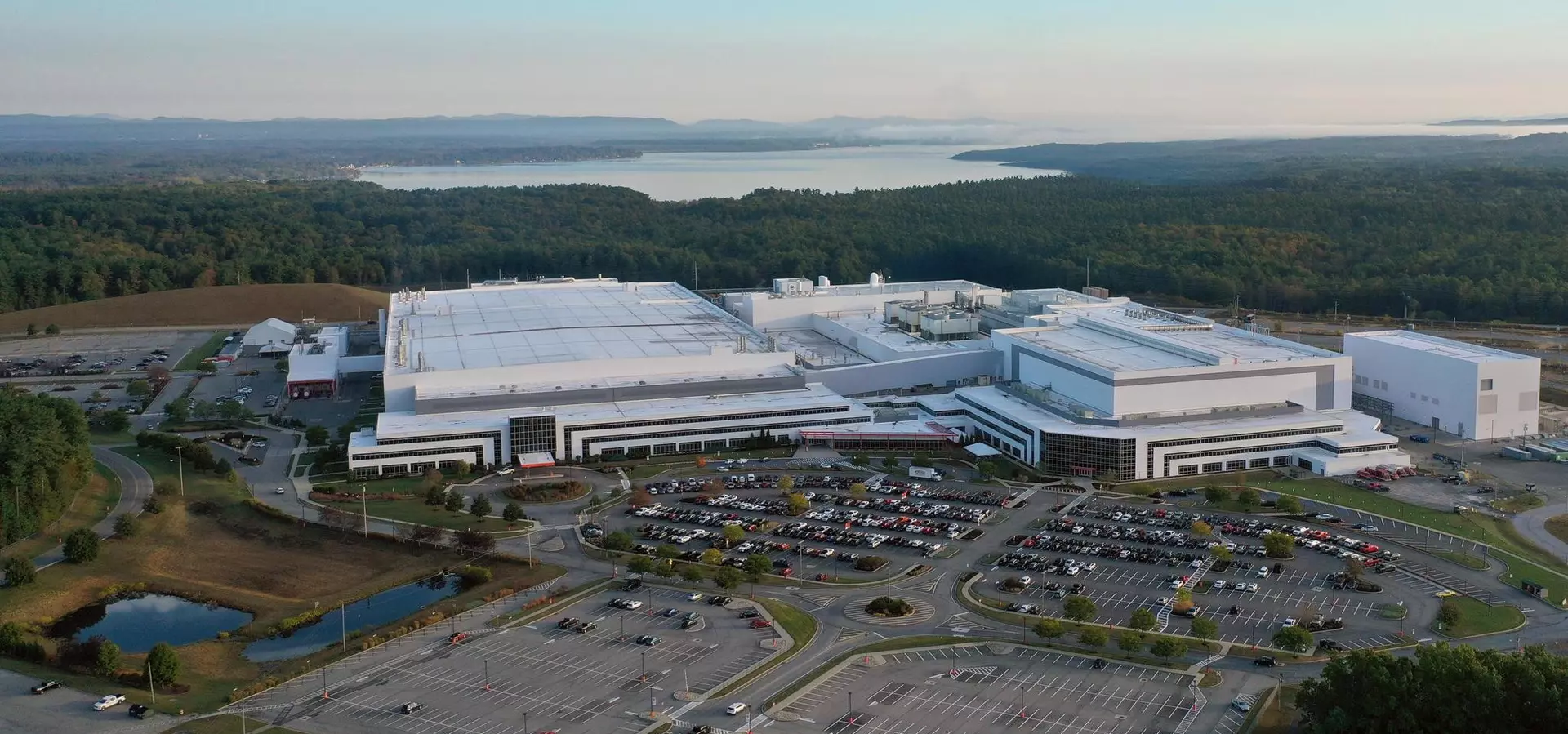
..Trumpt October 14th, in Truth. A series of capital letters written by Social announced that the United States had received an additional $21 billion in chips investment, with an investor in Japan, located in Malta, New York, and a new company operating from GlobalFoundries. On the same day, the United States Department of Commerce and GlobalFoundries issued a more detailed bulletin on the articles. Reading three messages together is not just an American plant news story: the money is provided by allies, technology and operations are the responsibility of the Crystal Industries, and the United States Government, through financial incentives and equity, begins to change national security who pays, who manages, and who shares the proceeds.
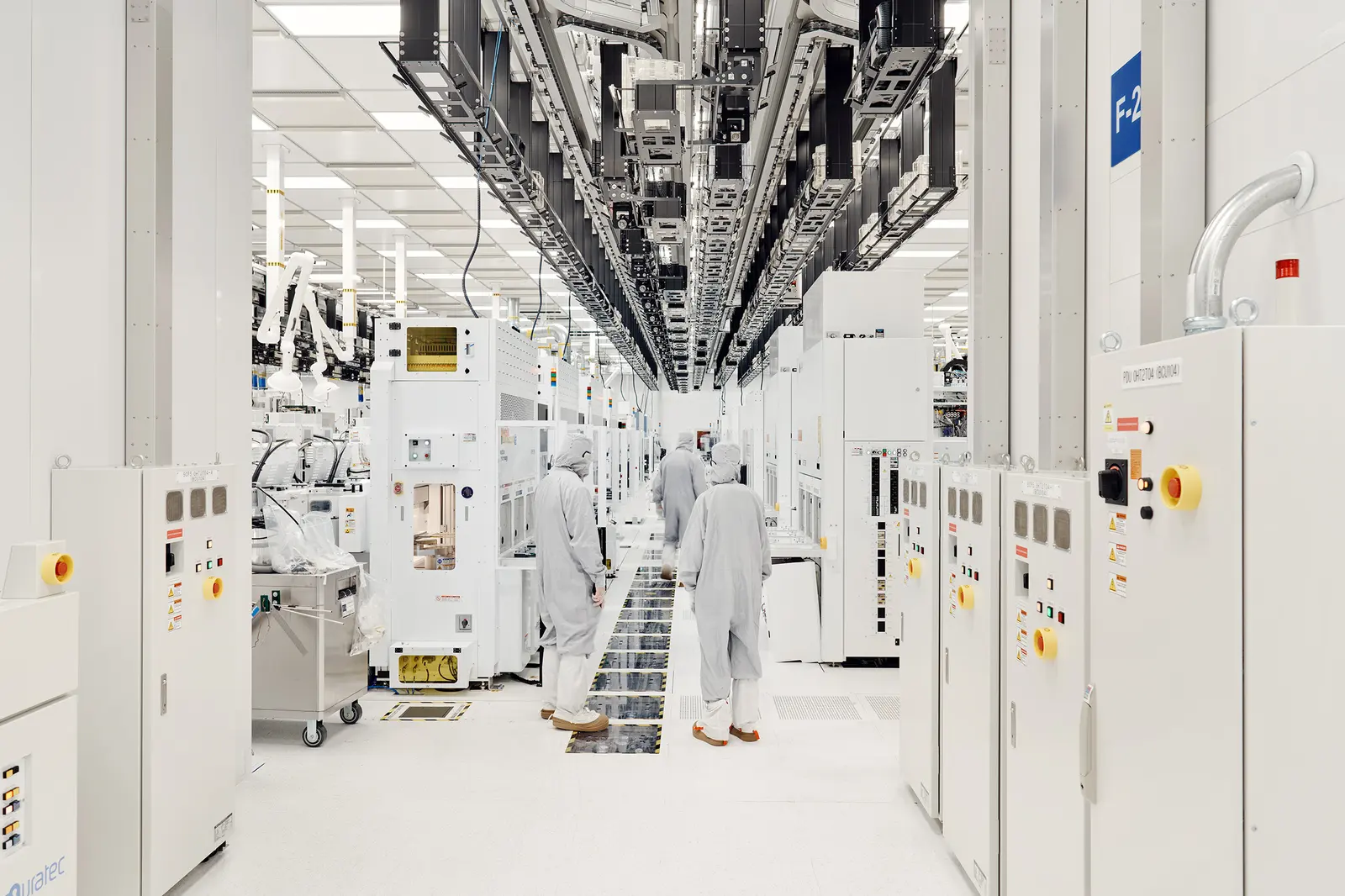
These two new crystal-turned plants are not the real capacity to start tomorrow and produce tomorrow. GlobalFoundries says with an initial of about $10 billion to be spent on a factory expected to start production in 2029, followed by an additional approximately $10 billion for the second. The first plant plans to increase its annual capacity by approximately 900,000 300 mm crystals after full delivery; The second also provides a similar increase. The crystal circle is not equivalent to a finished chip, nor is the expansion of production capacity meant that all chips are in the state-of-the-art logical process. The project aims at technologies related to automobiles, industrial equipment, communications infrastructure and specific data centres, requiring a long-term controlled supply chain.
The specific funding structure is the part of the Trumpite that is not sufficiently developed. Japan has converted part of its commitment to trade with the United States into plant capital in the United States, and GlobalFundries provides the capacity to operate processes, people and plants. > GF announced another separate agreement and the United States Department of Commerce will take approximately 4% of the company's share. The Government is not just giving the factory a bonus, but is beginning to take a direct risk of some share price and business returns; This means that the global semiconductor market has been further advanced to public capital participation through industrial policies that were taxed and subsidized.
There is also a large amount of money that can easily be mixed with $21 billion: $955 million. , which did not result in an increase in the total amount of incentives for the original chip bill for the GF, but rather in an adjustment of the internal use of the funds already allocated, with a shift of up to $955 million to Silicon and Silicon.
- Project related to advanced sealing to support upgrading of existing facilities in Malta and Vermont Burlington, New York; The company has accordingly committed to invest $5 billion in the facilities. If this amount is added to the Japanese investment as a new independent allocation, the report will be double-counted.
The United States has always emphasized corporate competition and market pricing, and this time has openly asked foreign allies to provide capital, to assign operational roles to domestic chip manufacturers and to involve United States taxpayers in future gains through government-owned shares. It appears to have a strong mark on the national industrial strategy, but it cannot be equated with the Beijing model. The Communist Party of China can use executive orders to mobilize State-owned banks, State-owned enterprises, land and local finance to form top-down supply chain mobilization; The United States and Japan have arranged projects subject to different constraints such as corporate announcements, securities market disclosures, government budgets and the two countries ' contracts. Both systems use State power, while ownership, regulation and loss-taking of capital differ.
The pressure on Xi to change the regime lies in the right to choose in the chain of industry. Beijing used to attract international suppliers by means of size, subsidies and market access, and to transfer manufacturing capacity into China. The United States now invests its allies ' capital in its own territory and leaves key processes in its jurisdiction, and even if not the most sophisticated global logical chip, automobiles, aviation and communications equipment may reduce reliance on a single overseas supply node. For the CCP regime, the supply chain strategic space has been narrowed not only in the context of the export control of advanced AI chips, but also in the context of where large numbers of base chips can be produced safely.
Political narratives, however, need to be tested against the plant schedule. > The first plant opening window published by the Reuters Japan Investment Clause in 2029, which means that final orders, employee training, equipment delivery, good rates, energy supply and funding will be forthcoming in the coming years. Tens of thousands of construction and supply chain jobs in the Trumpite are project forecasts and are not equivalent to workers already employed. Writing future investments in a single round produced today would deprive this truly interesting industrial strategy of precision.
Perhaps the most subtle part of the competition is US-Japan’s industrial policy, which is trying to limit political power with more open property rights and contractual mechanisms, using the same tool that the Communist Party of China has been doing in the past – pooling capital to support strategic industries. Success or failure will not be determined by a social platform of the President of the United States, nor will it be decided by the next round of Beijing ' s advocacy pass. The first new plant in Malta, New York, in 2029, was the test of whether the political announcement could really change the industrial map.
Article discussion
Verified members can discuss this report publicly and manage their own content.
Checking member sign-in status…