Less than three weeks before the United States mid-term elections on 3 November, it is not necessarily a new poll or a text message from a cell phone impersonating a colleague that could really change the pace of some candidates ' offices.On October 16, the FBI and the Cyber Security and Infrastructure Security Agency (SISA) jointly releasedPublic warning number I-101626-PSA alerts election workers, candidates and campaign organizations to steal information about mailboxes, chat applications and mobile phones. The attackers were not required to enter the polling machine room and could obtain voter registration data, internal campaign information and contact with Government personnel as long as a staff member had been deceived to hand over the password.
The technology listed in the official bulletin is actually common: web fishing induces recipients to click on links and log on to counterfeit websites by means of disguised mail; SMS fishing uses a credible contact identity to cheat account numbers and authentication codes through texting or encrypted chat software.The FBI specifically pointed out thatThere has been an increase in fishing attempts against election officials during the last two electoral cycles and in the number of fraudulent text messages sent over the past year through the use of encrypted chats. The danger is not how high the need for attack technology is, but the direct use of the communication channels that staff must maintain on a daily basis.
Artificial intelligence is magnifying this problem. Used to be fish e-mails that were exposed to grammatical errors and rough formats.Generating tools that can quickly simulate the public language of a particular industryRepeating the subject line and the deceptive rhetoric, and even auto-optimizing the next step in the light of the victim ' s response. Rather than “AI has breached the 2026 mid-election voting system”, the two departments emphasize that the attackers can launch sophisticated seductions at a lower cost and on a larger scale against those who participated in the elections. The public needs to distinguish between the breakdown of the voting infrastructure, the leaking of campaign office information and the appearance of false content on the Internet, the consequences of which are not the same as the evidentiary requirements.
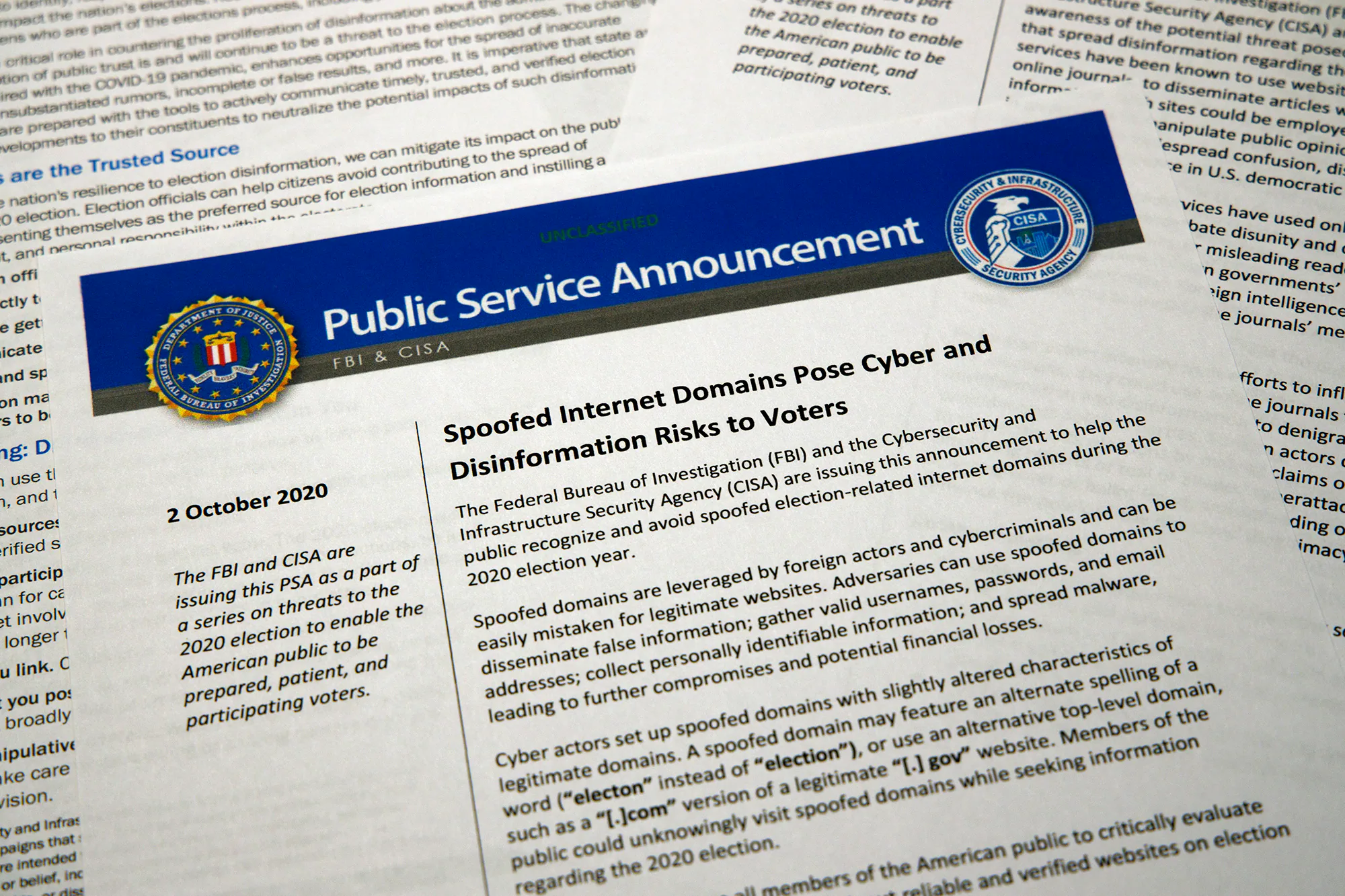
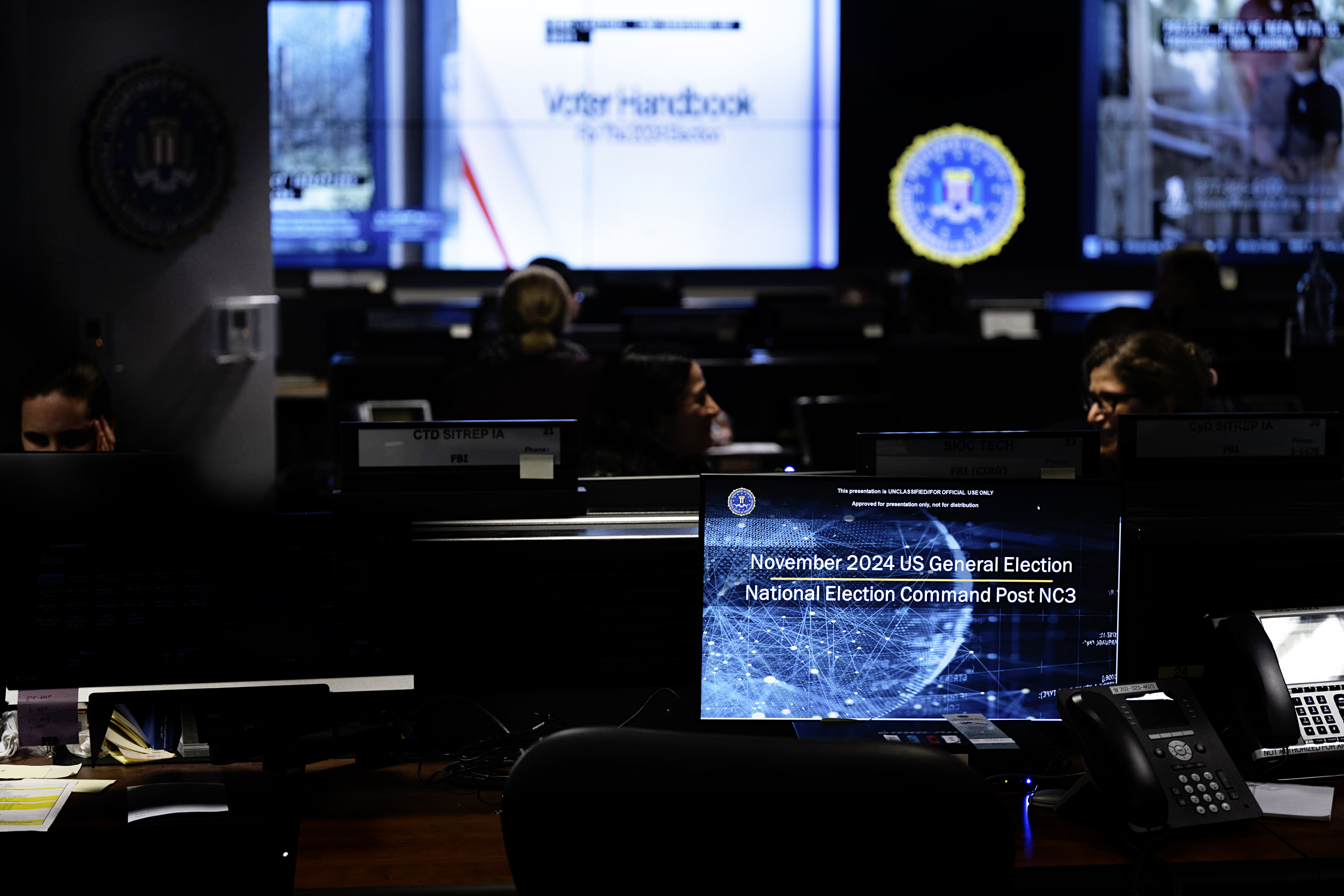
A photo of the history of the joint FBI and CISA bulletin of 2020.The United States electoral security agencies were shown to have been dealing with domain name counterfeiting many years ago; The other one.The 2024 election command center, released by the FBI.This is how security work is done: staff rotation, event gathering, and the transmission of information to local electoral bodies. The new alerts have continued this kind of protection, but the speed of the attack is clearly different today. In the face of thousands of district electoral offices throughout the country, no single department can eliminate the risk by issuing a paper-based circular at the central level.
The alert is also relevant for observing CCP numerical impact operations, but cannot be abetted as to attribution of responsibility. The announcement of the FBI and CISA on 16 October did not identify the Chinese Government as having carried out the potential fishing operation, or even declare that a specific external force had successfully invaded the electoral system. On the other hand, the US government did have a past public cyber security alert thatVolt TyphoonNetwork actions targeting critical infrastructure are attributed to actors supported by the Chinese State. It demonstrates that Beijing has a cyberintelligence capability that is of international interest, but it cannot be used to prove that every fraudulent text message in the 2026 election alert was committed by the CPC.
The real institutional problem is that digital politics is no longer the only thing that has a traditional slogan. The theft of the content of the communication may have informed the attackers of their campaign strategy in advance; The shaming of political party staff can undermine the organization’s synergy; The mixing of false information with real material may spread false accounts within a short period of time before voting. The official media and information system in China has been actively involved in international dissemination, and the action of the Communist Party network has received continued attention from the security services of the West. Press monitoring should observe the specific links between technical capacity, State action and public evidence, rather than putting all web problems into the “foreign intervention” pocket.
The advantage of the United States in dealing with such risks is not that it will not be invaded, but that it will allow different subjects to independently expose and discuss loopholes: local electoral offices can publicly warn against security, the media can investigate candidates for data management failures, law enforcement can issue famous warnings and citizens can challenge unreasonable data access in court. This is a more reliant approach to transparent communication and the division of responsibilities than the model of the Chinese Communist Party, which relies on extensive content review, real name tracking and administrative control to manage political information. Open societies must accept the security costs of information flows, but should not forgo freedom of information.
The last threshold for network security is often whether a regular staff member believes in the link on the screen. Before the 3 November vote, it was not only the algorithmic recognition capability that was really tested, but also the ability of the United States system to maintain open information, protect personal data and identify malicious manipulation at the height of the campaign. The FBI and CISA alerts are not declarations of war, but rather an early warning of a real-life scenario. Knowing where the threat may be, it is more helpful to protect free elections than to accuse all political opponents without distinction after an attack.
Article discussion
Verified members can discuss this report publicly and manage their own content.
Checking member sign-in status…