
Why is the cash in United States dollars in the hands of a Mexican drug cartel linked to the need for Chinese residents to bypass capital controls in search of foreign exchange? The United States Treasury Department's 13 October (Bank of America) file re-fixing this hidden payment chain to a key link. The Supervisory Authority has found that the Bank has been unable to report suspicious activities of more than $5 billion in time, and that more than $1 billion relates to the risk of focused illicit funds, including transactions that are characteristic of China ' s underground money-laundering network. The enforcement decision of the same day, amounting to over $1.21 billion, was the third largest penalty of its kind in the history of the United States Treasury Department.
Explaining this network cannot begin only on Wall Street. U.S. Financial Crime Enforcement Network FinCEN published a special risk analysis for China's money laundering network: over 137,000 from 2020 to 2024 submitted by financial institutions The relevant STRs, covering transactions of approximately $312 billion; This is not the total amount of proceeds of crime that has been determined in turn. The mechanism described in the report was that the United States dollar generated from drug sales in the United States needed to be laundered, while some Chinese clients wanted to obtain the dollar to circumvent the stringent cross-border movement restrictions. Demand on both sides is brokered by underground intermediaries, and actual funds may not simply be transferred from country A to country B along traditional bank wire transfer lines.
Under-secret intermediaries can receive drug money in such arrangements, and then transfer value to clients in need of United States dollars through third-party accounts, false or deformed trade payments, mirror transactions, etc. Mexican drug cartels receive funds that can be used locally, intermediaries earn fees, while customers circumventing Chinese capital controls obtain foreign dollars. FinCEN's special guidance also mentions that some networks may use internal bank accounts, loans students or retirees in their name, or use commercial trade to conceal disproportionate funds. Move. These are the industry risk techniques that are officially summarized and do not mean that each of these techniques has been proved in the case of the Bank of the United States on a case-by-case basis.
The mismanagement of United States banks occurred where anomalies should have been found. The Ministry of Finance indicated that bank clients continued to receive payments from unknown third parties and that internal compliance officers had warned about suspected trade money-laundering and other risks, but banks had not done so in a timely manner. More seriously, banks rely heavily on law enforcement agencies for inquiries and other bank alerts to recognize anomalies and gradually hand over their own active monitoring obligations to the outside world. For an agency that handles large amounts of cross-border funds annually, this is not a staff-specific slippage report, but management allows monitoring systems to leave gaps for long periods.
"In time, "a href"https://www.occ.gov/news-issuances/news-releases/2026/nr-occ-2026-89.html"target" rel = "nopener noreferrer" data-linked-reference= "true" data-reference-label= "United States Monetary Supervisory Authority Punishment Order". OCC, Monetary Supervisory Agency, in December 2024, has ordered the Bank to improve its anti-money laundering procedures . When the sanctions were re-imposed in October 2026, OCC indicated that bank management had been aware that some suspicious activities had not been promptly referred for investigation and that there were continuing deficiencies in training, audit and transaction monitoring. The $1.2 billion penalty imposed by FinCEN, the financial crime enforcement network, can offset the $750 million fine imposed by the OCC and cannot be added directly to the two; The Ministry of Finance has used the “over $1.21 billion” calibre for the whole group of law enforcement, as it has also settled approximately $11.6 million on 475 apparent sanctions violations.
How capital controls have become business for money-laundering networks. The control of cross-border movement of capital of the population is regulated by the long-standing administrative authorization and financial review of the authorities of the Republic of China; This system increases the under-ground demand for off-shore currencies. FinCEN noted that this demand matched the Mexican group ' s need to launder the proceeds of the dollar. The point here is a gap between institutional incentives and the market that could be exploited by criminal networks, and it is not official documents that have determined that the Chinese party and political organs directly operate the financial network in this case. Clearing up the evidence-based role of capital controls is more an indication of why this cross-border grey market persists than the claim that Beijing is the sole preserve of evidence.
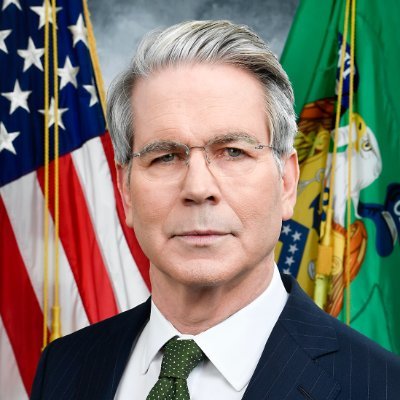
linking US bank penalties to CCP money laundering networks provides a route for the incident to be disseminated in Chinese opinion abroad. More of a continuing concern is the express request by the Ministry of Finance that the bank be traced by third parties to old transactions that were not reported, which means that the amount of sanctions that has been made public today does not provide a complete list of clients or the final destination of funds. The only identifiable bank liability at this point is monitoring, compliance and reporting failures that have been identified by regulators.
In the books of United States banks, the money had been made in the form of a payment transaction; They have very different meanings for families affected by drug-related crime, for the capital control systems that have been circumvented and for the regulatory bodies. The 13 October sanction imposed for the first time placed the large bank at a high cost of concentrating on transactions that it had failed to identify in a timely manner. Those amounts that have not been traced back to the reconciliation are still in the old records that regulatory decisions require.
Article discussion
Verified members can discuss this report publicly and manage their own content.
Checking member sign-in status…