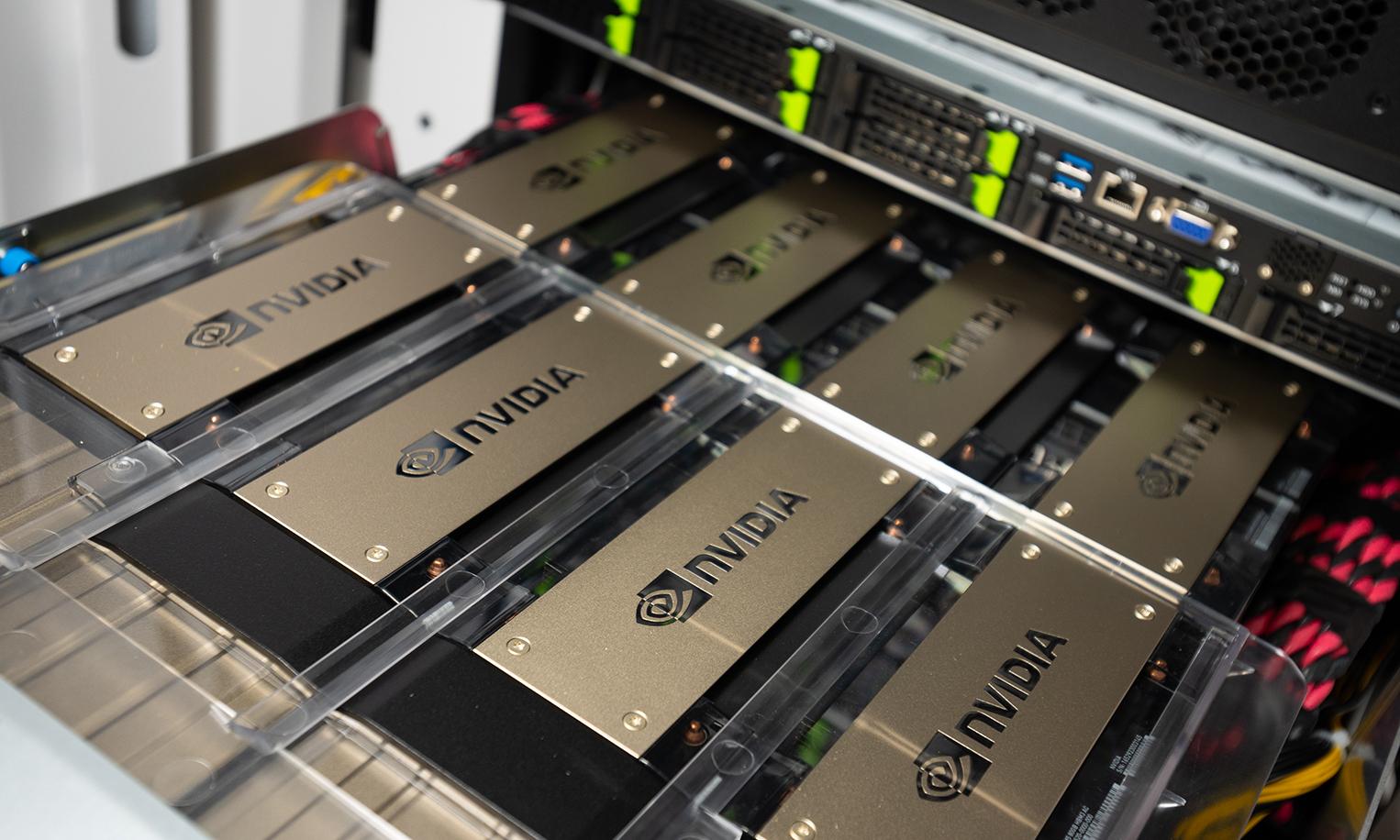
An indictment issued this week by the United States federal prosecution brought a high-end chain of computing equipment worth over $300 million to the forefront. Greg Lui, a 38-year-old businessman in San Guerbo, California, was arrested on 1 October. The United States Department of Justice has alleged that he purchased servers with high-end GPUs from the United States through his own control, Earthmade Company Inc., and used Malaysia, Singapore and others to conceal the final destination and transfer the equipment subject to export controls to China.
The case is still in the criminal indictment stage and the facts are pending before the court. However, the purchase orders, bank funds and trans-shipment mail disclosed in the indictment provide a rare set of specific records for observing China ' s access to restricted, advanced computing power. The United States Government has been tightening up some of its high performance GPU exports to China in recent years on the grounds that the relevant algorithms could be used for advanced artificial intelligence and military capabilities; The case shows that the real law enforcement dilemma has been extended from “is it possible to prohibit direct export” to “how to identify third-country transit and false end-users”.
27 servers: from Los Angeles to Kuala Lumpur, to Chinese buyers
According to the United States Department of Justice, Lui was accused of conspiracy to violate the Export Control Reform Act and the Export Regulation Regulations, smuggling abroad and conspiracy to launder money. The Federal Grand Jury issued three indictments on 29 September and law enforcement officers arrested him on 1 October.
The prosecution listed a transaction that demonstrated the specific way in which the operation was conducted. In January 2024, Lui allegedly mentioned in an e-mail that a Malaysian trans-shipment company wished to purchase 70 servers with GPUs with export restrictions. In the same month, he issued a bill to a United States manufacturer for 27 servers for approximately $7,614,000. The goods were subsequently shipped from Los Angeles to Kuala Lumpur; By March, an accomplice was allegedly confirmed in an e-mail to a Malaysian government official that the 27 servers had been transferred to a buyer in China.

The prosecution also alleged that Lui and his accomplices had submitted false documents to the United States manufacturer describing the equipment as being delivered to the end-user and destination that did not require an export licence to China. The equipment is transferred to China by freight forwarder arrangements upon arrival in Malaysia or Singapore. South China Morning Post cited case material and reported that another 92 controlled servers were flown from San Francisco to Kuala Lumpur in June 2024 and subsequently transferred to Hong Kong; The Chinese buyer was listed as the recipient of the transport documents.
$176 million in financial flows to translate “transit trade” into traceable evidence
This case did not rely solely on the cargo record. According to the Ministry of Justice, from January to October 2024, Earthmade received over $176 million from two transport enterprises located in Malaysia. By linking these funds to server procurement, false end-user documents and subsequent transfers, the prosecution tried to prove that third-country transactions did not happen to China after regular sales, but rather a pre-designed set of export-restriction arrangements.
The equipment involved included servers carrying Nvidia A100 and H100 GPU, as reported in Los Angeles Times. H100 is one of the high performance chips for large artificial intelligence training and reasoning. The United States Department of Commerce imposed export licensing requirements on some of the advanced computing chips and related equipment to China, and Washington stated that its policy aims included limiting the inflow of advanced computing technology that could significantly enhance China ' s military capabilities.
John A., Assistant Secretary of State for National Security, United States Department of Justice. Eisenberg states that the case involved the final destination of China, which concealed restricted technology through false documents and complex trans-shipments. Roman Rozhavsky, Assistant Director of the FBI Counterintelligence and Counterintelligence Unit, stated that the investigation found that Lui had sold hundreds of millions of dollars worth of advanced United States computing techniques to the “Government of China”. The above allegations are among the charges against the United States prosecution; The Ministry of Justice also stressed that the indictment was only an indictment and that the accused was presumed innocent according to law before being convicted by the courts.
Why Malaysia and Singapore are key nodes in the chain
The structural weakness of the export controls of advanced chips lies in the fact that hardware can cross multiple jurisdictions. The United States ' imposition of a permit threshold for Chinese destinations does not mean that the same equipment is subject to exactly the same restrictions for all third countries. The first leg of the transport may be successfully completed as long as the end-user documents obtained by the exporter indicate that the goods remain in the market where the licensing requirements are lower; The real decision about whether controls are effective is whether the regulator can identify subsequent re-exports.
The pattern disclosed in this case thus has a meaning beyond that of a single defendant: the procurement took place in the United States, the payment came from a South-East Asian enterprise, the first destination was Malaysia or Singapore, and the final buyer was located in China. Each link, taken alone, may appear to be an ordinary business transaction, and only by combining the procurement of mail, compliance documents, bank flow and international cargo records will the chain of circumvention as alleged by the prosecution.
This explains why United States law enforcement has in recent years focused increasingly on freight forwarders, server distributors and third-country data centres, rather than focusing solely on chip manufacturers. Export restrictions that control only first delivery by manufacturers without tracking re-exports and end-users of servers leave a gap that can be exploited by cross-border trading structures.
The battle for the money behind a crime #
While Washington views advanced GPUs as strategic technology of national security significance, Beijing has long opposed the imposition of United States-imposed restrictions on exports of science and technology on national security grounds, considering the measures to suppress Chinese enterprises and technological development. The competition between the two countries around semiconductors, artificial intelligence and advanced computing has been extended from chip design and manufacture to equipment flow, cloud computing and third-country trans-shipment.
The Greg Lui case concretized this macro-competitiveness into a network of transactions that could be tested by judicial proceedings: who would issue the order, who would pay, who would provide the end-user certificate, where the server would switch to, and who would eventually receive the goods. For export controls, the rule is not written in Washington, D.C., which means that equipment will stop at the border; The ability to track these transnational nodes determines how binding the restrictions are in real supply chains.
If the offence is finally established, the Ministry of Justice states that Lui faces up to 20 years ' imprisonment for the offences of complicity in export control and money-laundering, respectively, and up to 10 years ' imprisonment for the offence of smuggling abroad. The case was investigated jointly by the Export Enforcement Office of the Department of Industry and Security of the United States Department of Commerce, the Defence Criminal Investigation Department and the FBI.
Article discussion
Verified members can discuss this report publicly and manage their own content.
Checking member sign-in status…