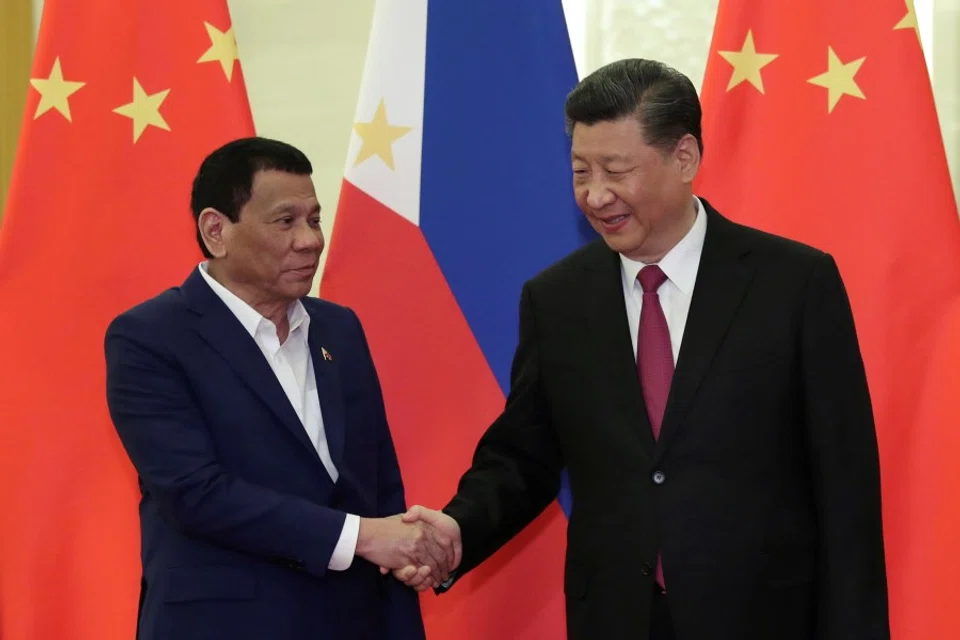
The impeachment trial of the Vice-President of the Philippines, Sarah Duttelt, is extending from domestic political struggle to a financial chain from China.
The head of the Philippine Anti-Money Laundering Commission (AMLC) disclosed in the Senate impeachment hearing that Cale88 Foods Corp., a company linked to Sara Duttelt's husband, Manasés Kapio, received approximately 319.3 million pesos in remittances from mainland China and Hong Kong. Of this amount, approximately 315.9 million pesos are from mainland China and about 3.3.9 million pesos are from Hong Kong.
The Philippine National Security Council subsequently indicated that it was studying whether the flow of funds had national security implications. Banks had previously classified some of their transactions as suspicious and reported to AMLA.
原始来源 · reuters.comPhilippine security council looking into China-linked remittances to Duterte family firmreuters.com ↗143 reports, pushing a food company onto the National Security Investigation Bureau
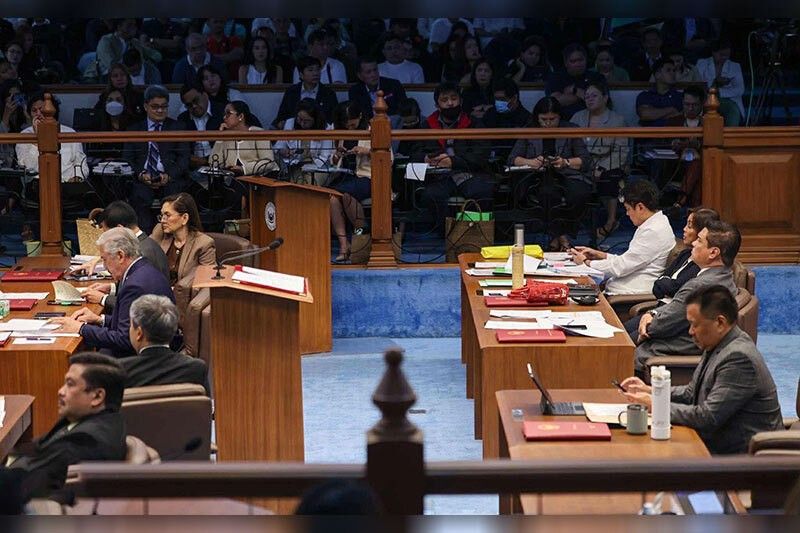
AMLC confirmed in court that the transfer involved 143 transaction reports, 141 of which were related to mainland China and two from Hong Kong. The prosecution claims that part of the remittances lacked a clear legal trade obligation or economic purpose and were therefore subject to the examination of suspicious transactions.
Cale88 was listed as one of its holding companies in his asset declaration of Sara Duttelt, with which her husband, Manasé Kapio, had a direct business relationship.
More sensitive information further surfaced on 7 October. Senator Lisa Huntiveros of the Philippines stated that her office had combed the money transfer side and found that at least Chinese state-owned enterprises and entities with links to the CCP external impact system were among them. This judgement, which is currently being investigated by the Huntiveros team, should be distinguished from the bank transaction records that AMLC has identified.
原始来源 · philstar.comChinese state firm among entities that sent P319 million to Duterte-linked companyphilstar.com ↗Why money comes into this company, more important than "money comes from China"

Remittances from Chinese firms to Filipino firms alone do not automatically prove political influence. The real way to bring this financial chain into the public security landscape is to add three things: the huge amount of money, the fact that some of the transactions are marked by banks as suspicious, and the fact that the collection business is directly related to the highest political family in the Philippines.
This requires an investigation of how much money went through from “who sent it” to what contract? Where's the cargo? Can invoices, customs declarations, logistics and tax records be mutually corroborated? Is the money going to politicians or political activities? What kind of equity and party organization exist between Chinese State enterprises and money remittance companies?
These questions must be answered by business papers and bank records, not by the diplomatic calibre of either party.
The relationship between China and China that was left by the Duttelt era is now subject to financial audit
Rodrigo Duttert's political distance from Beijing was evident during his reign, and he has repeatedly weakened his confrontations with China over the dispute over the South China Sea. Beijing, for its part, has strengthened its ties with the Duttel Government through investment, infrastructure, trade and diplomatic cooperation.
Today, when huge amounts of money from China appear in the accounts of the Duttelt family-related enterprises, Philippine society is faced with a debate that is no longer abstract “punishable or pro-American” but rather a question of a system that can check the flow of banks: whether foreign national capital can be brought closer to the political family through commercial relations, and whether the Philippine anti-money-laundering and national security mechanisms are capable of taking the chain to the bottom.
The most effective form of CCP external influence is often not public orders, but rather political relations, business opportunities, diaspora networks and capital flows. That is why the true news value of the 319 million pesos is not in itself the number, but for the first time it has turned a part of the political relations between the Central and the Philippines into a financial record that can be examined by the courts, banks and State security agencies.
Article discussion
Verified members can discuss this report publicly and manage their own content.
Checking member sign-in status…