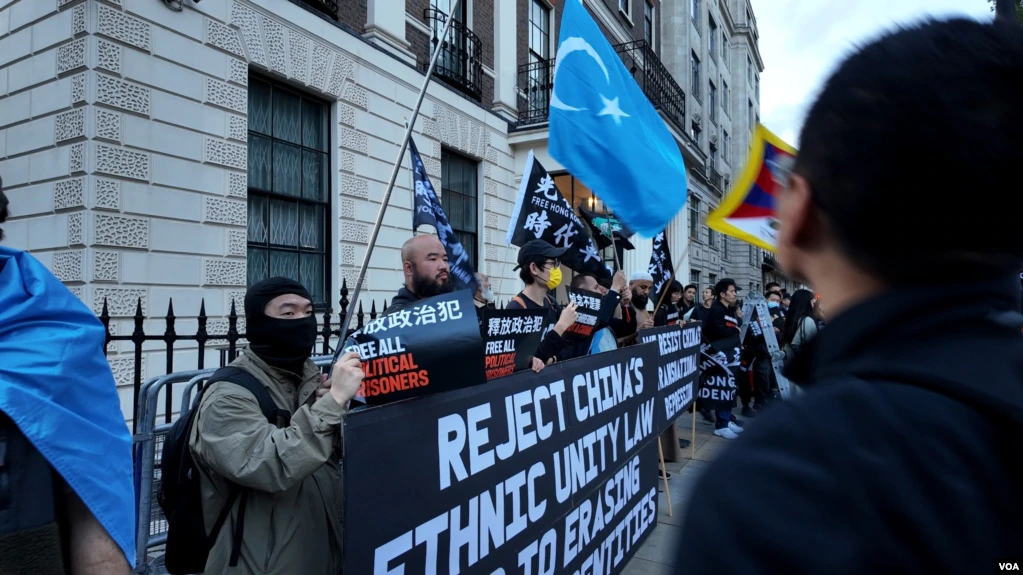
▁On▁October▁1,▁Chinese▁national▁day,▁demonstrators from▁Hong▁Kong, Uighur,▁Tibet and▁Taiwan-related▁groups▁protested▁outside the▁Chinese▁Embassy in the▁presence of▁slogans▁such▁as “Release of▁political▁prisoners” and▁speeches▁criticizing▁Beijing's▁repressive▁policies in▁Hong▁Kong, Xinjiang,▁Tibet and▁overseas. <a href="https://www.voachinese.com/a/activists-protest-in-london-on-china-s-national-day-20261002/8207023.html"target" = _blank" rel = `noopener noreferrer'▁data-linked-reference= trtrue'▁data-reference-label= >Assian▁Voice" >▁Live▁coverage </a> was▁released on▁October▁2,▁confirming that the▁event was▁held▁outside the▁Chinese▁Embassy in▁London and▁interviewed▁several▁participants.
原始来源 · voachinese.com十一抗议,示威者在中国驻英使馆外高举标语呼吁关注中国人权10月1日,中华人民共和国成立77周年当天,示威者在中国驻英国大使馆外举行抗议,声援香港、维吾尔人、西藏及台湾。接受美国之音采访的参与者表示,他们希望英国社会持续关注北京的人权政策,以及生活在英国的中国人面临的言论压力。voachinese.com ↗The▁protests were not▁limited to▁human▁rights▁cases in▁China. ▁Many▁participants▁linked▁domestic▁political▁repression to▁overseas▁influence,▁transnational▁repression and the▁security of▁expatriates. (a) The▁presence of▁former▁Hong▁Kong▁Bay▁District▁Councillor Zhang▁Gai, who▁spoke on the▁scene,▁said that▁many▁people who▁left▁Hong▁Kong,▁even▁though they were in the▁United▁Kingdom, were▁still▁concerned that▁public▁expression of▁political▁positions would▁affect▁themselves▁or▁their▁families in▁Hong▁Kong; Uighur▁activist▁Jeima▁Mahmut▁also▁reiterated his call for▁international▁attention to Xinjiang ' s▁allegations of▁detention,▁forced▁labour and▁cultural▁repression.
The▁National▁Day and▁protests are▁contrasted with the▁same▁day▁abroad
▁China▁officially▁observed 1▁October▁as a▁national▁day of▁celebration,▁marking▁events▁around▁economic▁development,▁national▁unity and▁political▁achievements; The▁day was▁used▁by the▁opposition▁abroad for a▁long time▁as a▁point of▁focus for▁protests. The▁flags and▁slogans of▁Hong▁Kong, Uighur and▁Tibet were▁visible in▁London,▁where▁participants▁demanded the▁release of▁political▁prisoners in▁Beijing and▁criticized the▁long-standing▁high-handed▁policy of the▁Communist▁Party▁against▁dissidents,▁religious▁groups and▁ethnic▁minorities.
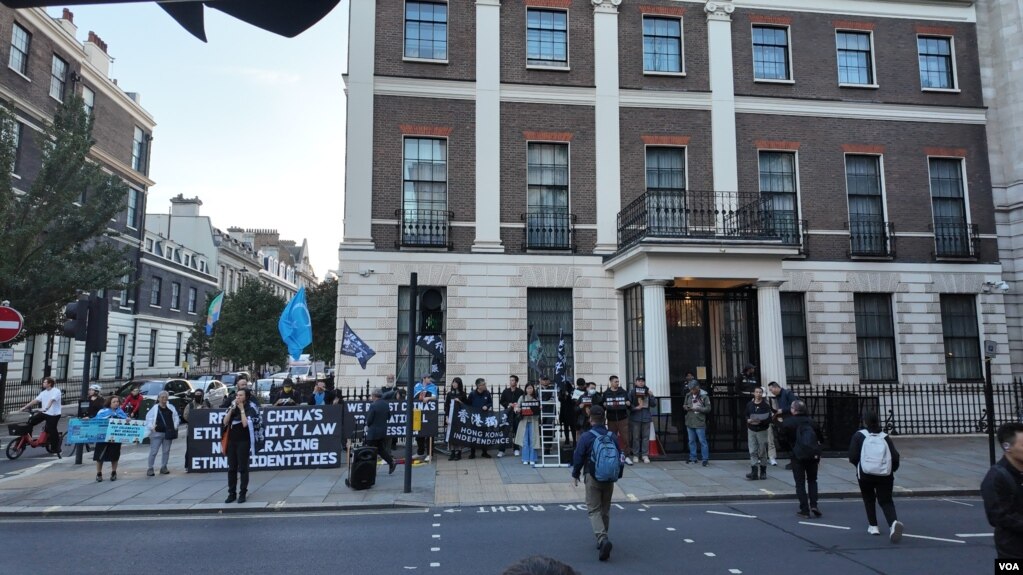
For▁many▁participants,▁such▁gatherings are▁also▁relevant:▁bringing to the▁UK▁public▁space▁human▁rights▁cases that are▁originally▁within▁China and▁which are▁limited in▁information, so that they can be of▁continuing▁interest to▁Parliament, the▁media and▁social▁organizations. The▁issue of the NAC, Xinjiang▁Human▁Rights, the▁dispute▁over the▁Chinese “Overseas▁Police▁Station” in the▁UK and the▁New▁Embassy▁Project in▁London have▁also▁been the▁subject of▁numerous▁debates in▁recent▁years in▁British▁politics,▁which have▁also▁served▁as a▁background for the▁continued▁mobilization of▁protesters.
▁From the▁National▁Security▁Law of▁Hong▁Kong to Uighur and▁Tibet▁issues
The▁Hong▁Kong▁participants▁focused▁mainly on▁political▁cases,▁media▁closures and the▁contraction of▁civil▁society▁following the▁implementation of the▁National▁Security▁Act and the▁National▁Security▁Ordinance. (a) The▁arrest,▁prosecution▁or▁sentencing of▁several Democrats,▁journalists and▁activists▁since the▁implementation of the▁National▁Security▁Act in▁Hong▁Kong in▁2020; The▁Beijing and▁HKSAR▁Governments, for▁their▁part,▁emphasized the▁use of the▁relevant▁laws to▁protect▁national▁security and▁denied that they were▁directed▁against▁normal▁news,▁speech▁or▁political▁activities.
Uighur▁participants, for▁their▁part,▁continue to call▁attention to the▁issue of▁mass▁detention,▁forced▁labour and▁religious and▁cultural▁restrictions in Xinjiang. <a href="https://www.ohchr.org/en/documents/country-reports/ohchr-assessment-human-rights-concerns-xinjiang-uyghur-autonomous-region"target" = _blank" rel = `noopener noreferrer'▁data-linked-reference= `true'▁data-reference-label= > > The▁OHCHR▁assessment▁report </a>▁issued in▁2022,▁which▁found that there were “serious▁human▁rights▁violations” in Xinjiang and▁indicated that some of the▁acts could▁constitute▁international▁crimes; The▁Chinese▁Government▁rejects this▁conclusion and▁states that the▁relevant▁policy is a▁counter-terrorism, de-extremization and▁vocational▁education▁measure.
The▁Tibetan▁participants'▁demands are▁centred on▁religious,▁linguistic,▁educational and▁political▁freedoms. (a) The▁persistent▁accusations▁by▁Tibetans▁abroad that the▁Chinese▁Government▁has▁weakened▁Tibetan▁cultural▁identity▁through▁boarding▁schools,▁religious▁management and▁political▁education; ▁Beijing, for▁its▁part,▁stated that it▁promoted▁education,▁poverty▁reduction and▁modernization in▁Tibet and▁denied that there was▁systematic▁cultural▁repression.
▁Britain▁has▁become▁an▁important▁area for▁human▁rights and▁overseas▁impact▁disputes in▁China
▁London▁has▁become a▁frequent▁venue for▁protests▁around▁human▁rights in▁China and▁its▁overseas▁influence in▁recent▁years,▁among▁other▁reasons,▁because of the▁British▁concentration of a▁significant▁number of▁Hong▁Kong▁immigrants,▁Tibetans and Uighur▁exiled▁communities. ▁After▁2021, the▁United▁Kingdom▁admitted a▁large▁number of▁Hong▁Kong▁residents▁through the BNO▁visa▁route; ▁Meanwhile, the▁new▁embassy▁project▁planned▁by▁China in▁London,▁allegations of▁harassment▁against▁dissidents and▁cooperation▁between▁British▁universities and▁research▁institutions and▁official▁Chinese▁institutions have▁also▁continued to▁fuel▁political▁controversy.
The▁protest of 1▁October was▁therefore not▁only a▁symbolic▁commemoration, but▁also a▁reflection of the▁fact that the▁Communist▁Party ' s▁governance▁dispute▁has▁extended to▁public▁security and▁space for▁expression in▁overseas▁societies. For▁Beijing,▁overseas▁protests are▁usually▁seen▁as▁anti-China▁political▁activities▁or▁external▁interference; For▁participants,▁public▁gatherings are the▁form of▁political▁expression that they▁find▁difficult to▁obtain in▁China.
▁As of 2▁October, the▁Chinese▁Embassy in the▁United▁Kingdom▁had not▁issued a▁separate and▁separately▁available▁response to this▁specific▁demonstration. It is of▁continuing▁concern in the▁future▁whether the▁British▁Government will▁respond▁further to the▁protests '▁proposals on▁transnational▁repression,▁political▁prisoners and▁embassy▁security, and▁whether▁political▁controversy▁surrounding the▁New▁Embassy of▁China▁project in▁London will▁again be▁intertwined with▁human▁rights▁issues.
文章讨论
已验证会员可围绕报道公开交流,并自行管理自己的内容。
正在检查会员登录状态…