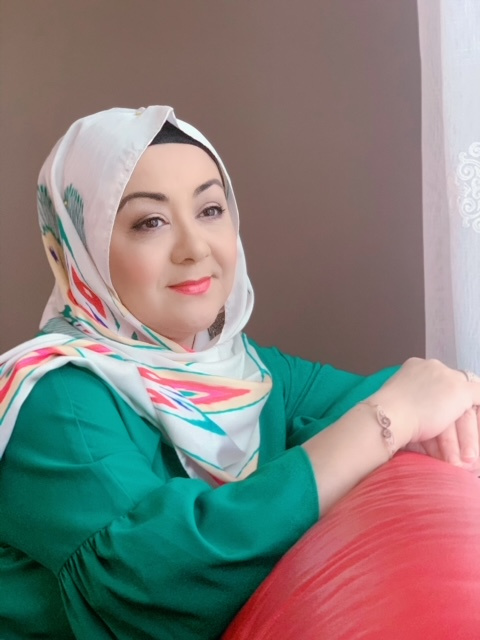
Guriechehge Hoga has a microphone in the United States, but she cannot be given a free ticket to leave the country. October 2026, Reporters Without Borders revisits the life of </a" Uighur journalist: she reported on the detention and political persecution in Xinjiang, but 25 relatives who remained in China were arrested the same night. After almost nine years, Hoga's most pressing wish remains to bring her mother to the United States.
While Hoga is in the United States, Chinese public security can influence her life through her relatives who remain in Xinjiang. Journalists under pressure live in places where public security in China cannot freely visit their homes, but the people she cares about most are in another judicial and administrative system. The movement of family members, telephone calls and exit documents are controlled by local authorities, and journalists abroad may be forced to consider whether family members will be subjected to new treatment as a result of each investigation. The threat does not have to be written in a letter of intimidation, and family relations themselves become a channel of pressure.
Hoga used to be the host of Xinjiang Television's children's programmes. In 2001, she was transferred to the Uighur group of Radio Free Asia, which has been reporting on Xinjiang for a long time in the United States. In 2017, 25 family members, including parents and siblings, were taken away at the same time. She informed RSF that the fate of some relatives was still unknown and that it was difficult for mothers to be allowed to leave China. While the press was supposed to be the responsibility of journalists individually, reprisals by the Chinese authorities extended to relatives who were not involved in the interviews, editing or publishing of the reports.
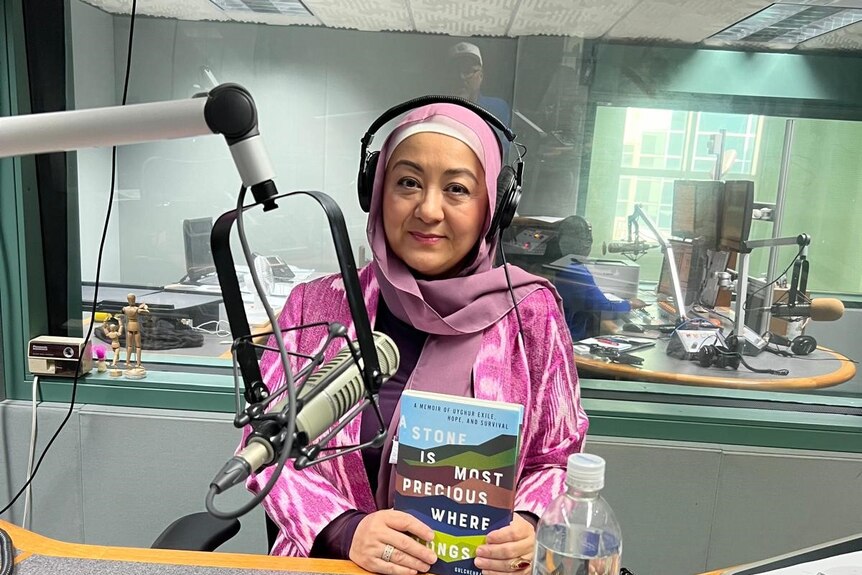
A photo from ABC, Australia, 2025 recorded the work environment in Hoga: , Hoga sat in the radio room with her headphones and her memoirs in her hand. The glass wall and microphone clearly marked the work she was doing, and contrasted with the freedom of movement of her relatives in China. This is a 2025 data photograph, not a 2017 arrest site.
> When he was interviewed by German Voice in Taipei in July 2026, Hoga had stated directly that the Chinese Government had taken her family because of her. She remembered that she had first come to information outside the CPC ' s propaganda instructions after leaving her home country and knew the price of that choice. She did not describe herself as a man who had completely broken up with her country. On the contrary, the more she wants to document what happened in her home town, the more difficult it is to get a chance to get along with her family.
The experience of Khojaly shows how cross-border repression is carried out through relatives in the country. The Chinese authorities could maintain fear through their families who remained in Xinjiang without having to detain him in the United States. Her deterrent also extends beyond herself: other Uighurs who study, work and speak abroad know that being abroad does not mean that their families are immune. This mechanism extends the State ' s administrative control over persons in its territory to indirect control of speech outside its territory.
On the other hand, the agencies on which journalists are based to disseminate information are under pressure. > has been cut since
- In 2026, Oka participated in the work of Reporters Without Borders. This means that an investigative journalist who is punished by his relatives in China must also respond to the reduction of reporting channels abroad. The reduction in the number of family members interviewed and the number of language programmes that can be disseminated will make it more difficult for public information in Xinjiang to leave the country.
To date, Hoga has not been able to obtain a decision to return those lost family years. Every name she says in the radio station belongs to a family. Beijing reminded her that freedom of the press, even if it crossed the border, did not necessarily free those within the family.
Article discussion
Verified members can discuss this report publicly and manage their own content.
Checking member sign-in status…