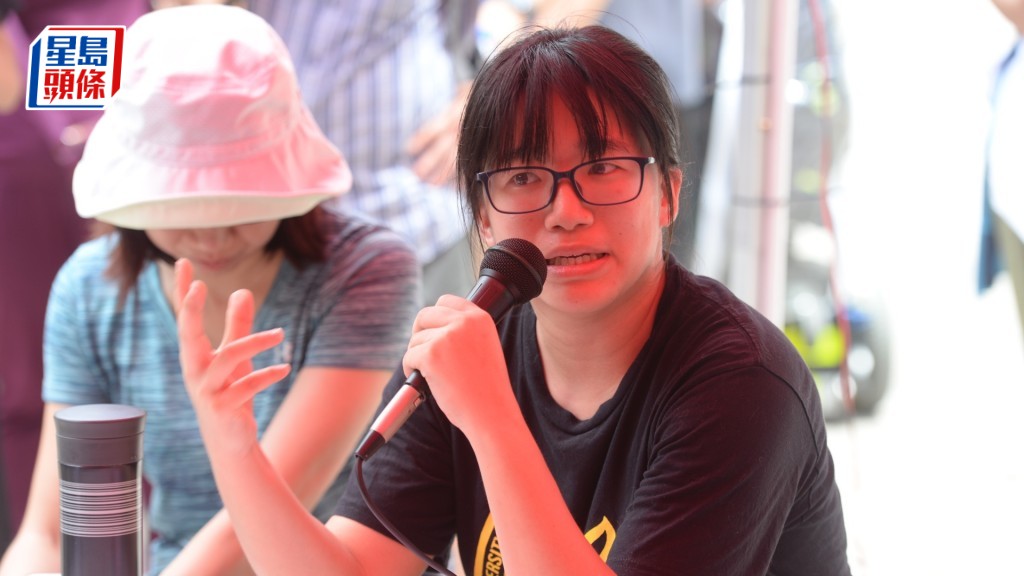
On 11 September, the High Court of Hong Kong sentenced the dissolved Hong Kong Citizens ' Union for the Patriotic Democratic Movement (HKCPD) and its former head: Xian Xian Xian was sentenced to seven years and three months in prison, seven years and five years and two months for the Lee Zhuong people; The Union is liable to a fine of HK$1.5 million. This is not a ruling about a violent act, but a national security case about the organization of the purpose, political advocacy and ongoing public activities.
Lucky Zhuang, a lawyer and vice-chairman of the Council, was detained since September
- She defends herself in trials and publicly articulates the understanding that the people have the power of the State, constitutional democracy and human rights guarantees. The Court found the guilty of incitement to overthrow the State power on 21 August, and Ho Joon-in, who had confessed his guilt earlier, guilty of incitement to overthrow the State. A Hong Kong civil society organization that has held six or four candles of remembrance has been legally identified as a threat to the existing State power structure.
The controversy is not limited to prison terms, but also at the border between the crime and political opinion. Following the judgement, the HKSAR Government stressed that the organization's long-standing advocacy for ending the Communist Party leadership and changing the fundamental system of the People's Republic of China, and that the activities in question constitute criminal offences; Chief Executive Li Ka Kua-Cha also publicly supported the sentence. The Government interpreted the case in the light of the constitutional order and national security, placing some of the political ideas that had long been in the public discourse in Hong Kong at risk of criminal liability.
The human rights organization Front Line Defenders, for its part, has criticized the criminalization of the case by linking it to the peaceful defence of the peace of the Sage, in memory of the 1989 Tiananmen repression. The key to the dispute between the two sides is not whether the Federation has expressed a desire to change the political system — which is not hidden — but whether the peaceful expression of political will can constitute a crime punishable by years of imprisonment. The interpretation of the constitutional order as political boundaries that cannot be openly challenged effectively reduces the space for opposition to public participation.
原始来源 · frontlinedefenders.orgFront Line Defenders:鄒幸彤判刑与维权记录frontlinedefenders.org ↗In the context of the Beijing-led national security framework, the Hong Kong courts have also redefined the political objectives of the Hong Kong civil society to remember and express their past. (a) The fact that the relationship between people and power was discussed in court and sentenced to more than seven years ' imprisonment; This contrast is more indicative of the real weight that the national security system imposes on expression and association than an abstract proclamation of the rule of law.
Article discussion
Verified members can discuss this report publicly and manage their own content.
Checking member sign-in status…