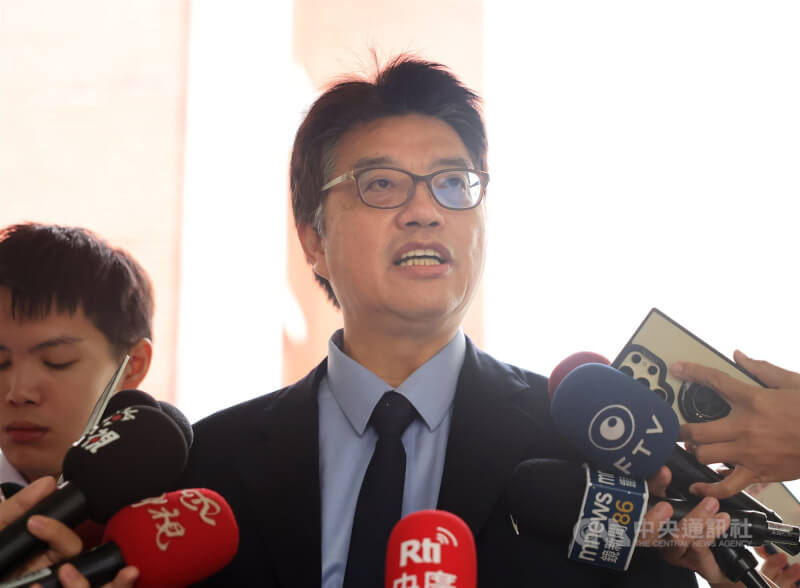
The case of Le Chind's family being followed in the United States is pushing Taiwan to move “cross-border repression” from diplomatic condemnation to domestic law. On October 6, Taiwan's Lord Council Qiu Zhu Zheng was very clear that The Government will actively amend laws such as the Anti-Infiltration Law and establish a popular call for help to inform those who encounter cross-border control, video or coercion how to preserve evidence, who to turn to, and who to intervene.
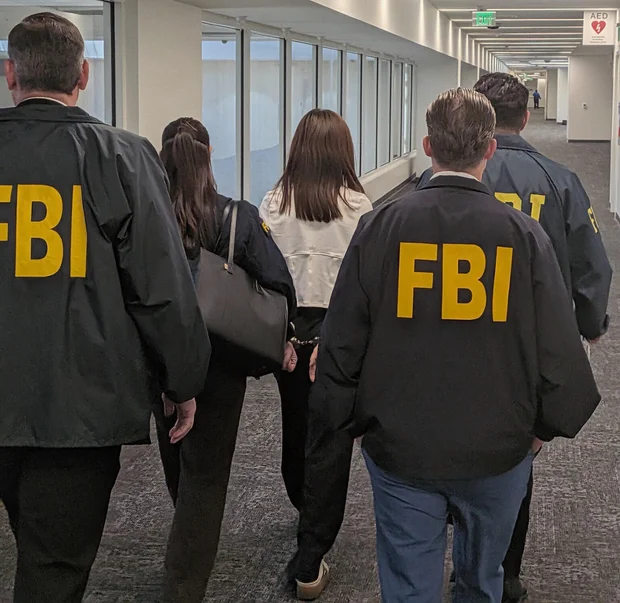
This policy change was directly related to the arrest of 34-year-old Zhang Wang (Wanying “Heather” Zhang) by the FBI at Los Angeles International Airport on 4 October. The United States criminal indictment, she was instructed by Chinese government agents to travel to Seattle in 2025 for the photograph of the son of Taiwan's President, Laitin, and his family's home, vehicle and license plate, and for the information to be returned through micro-letter. Zhang Wanjun is currently facing charges of “unregistered foreign government agents”, and cases remain to be tried by the United States court.
Same act, foreign agent law in the United States, Taiwan finds the law inadequate
Qiu Tsing Zheng opened a legal gap on October 6: If someone is instructed by the Chinese government to film and collect specific personal data in Taiwan, the United States can deal with it within the legal framework of foreign agents, counter-spying, etc., but the criminal liability and constituent elements of certain concerted acts remain incomplete under Taiwan ' s existing laws. The Commission is therefore prepared to promote the revision of the relevant legal provisions, such as the Anti-Infiltration Act.
This step is not to criminalize the general taking of photographs or information collection, but rather to prove “directed, commissioned or financed by hostile forces outside the country” and the purpose of the act. Laws that are too broad may erode general news, research and political activities; It is too narrow and allows a real proxy network to use its private identity to avoid responsibility. Taiwan must then clarify its command relationship, its price, the nature of its mandate and the risk of damage, not be criminalized by political labels alone.
The case shows that Beijing often requires private information that is not “confidential”, but that can create pressure
The details disclosed in the United States criminal indictment indicate that such missions are not necessarily aimed at stealing military secrets. The prosecution alleges that Zhang Wanjun and his companions were filming the house, the vehicle, the licence plate and the daily activities of family members. In his petition, FBI agents noted that this information could be used to “leverage” the Taiwan high-level in the Taiwan Strait crisis.
This logic is the part of the cross-border repression that is most easily left out by traditional criminal law: one single photograph, one follow-up or one address, not necessarily up to the threshold of espionage; But if these acts are continuously collected at the direction of foreign Governments and are aimed at threatening, controlling or gaining control over politicians, dissidents and their families, they go beyond ordinary privacy violations.
The President's Office had previously described the case as “typical cross-border repression”, and the Commission was now prepared to establish a popular guide to the Government's beginning to recognize that the victims were not only the President's family members. Overseas Thais, political activists, researchers, media workers and ordinary expatriates may face stalking, harassment, pressure from family members or cyber-threats whenever they enter Beijing ' s sphere of concern because of their political position, identity or relationship to a particular person.
The real rule of law test is to turn the national security law into a reviewable rule of evidence
The CCP's cross-border repression itself needs to be counter-restraint, but Taiwan must make the new rule of law more rule-bound than its opponents if it is to avoid replicating the unlimited expansion of power in Beijing under the name of “national security”. It is clear who can initiate an investigation, what evidence can prove that an offshore directive is being given, what extent of follow-up constitutes a crime, how the media and academic activity are being safeguarded, and how the accused can challenge government evidence.
The United States case in Zhang Wanjun provides an interesting reference: the prosecution must submit a affidavit to the Court stating the record of correspondence, the itinerary, the meeting and the mission relationship, before the Court decides whether or not the charge can be established; Zhang Wanjun also has the right to a defence and the presumption of innocence. If Taiwan were to amend the law, the focus should not be simply to make the punishment more serious, but to establish a chain of evidence that would also be open to scrutiny.
From the monitoring of Le Chind's family to the preparation of an additional amendment to the Anti-Infiltration Law, it is Taiwan's perception of the way Beijing is being pressured: the threat is not only from military aircraft and missiles, but may also be done by a legitimate, professional person. The law must now follow that model of representation, but it must also prove that a democratic system can protect national security without abandoning procedural justice.
Article discussion
Verified members can discuss this report publicly and manage their own content.
Checking member sign-in status…