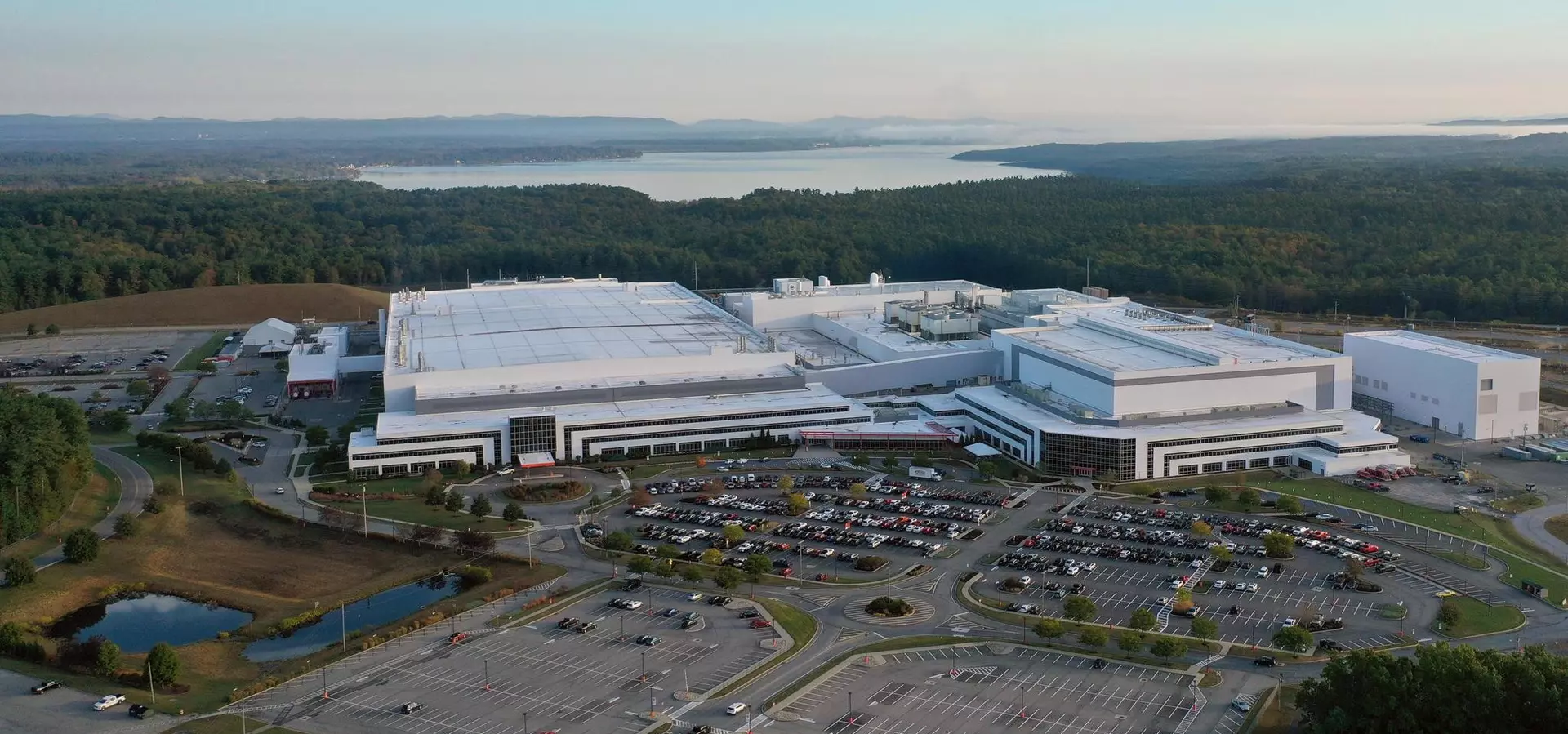
Trump’s string of capital letters on Truth Social on October 14 announced another $21 billion in investment in US chip manufacturing. The investor is Japan, the location is Malta in New York State, and GlobalFoundries will operate the new plants. That same day, the US Department of Commerce and GlobalFoundries issued announcements with more detailed terms. Read together, the three statements describe more than a factory-building project in the United States: an ally supplies the capital, a semiconductor foundry provides the technology and operations, and the US government enters the supply chain through financial incentives and an equity stake. National security is beginning to change who pays, who manages and who shares the returns.
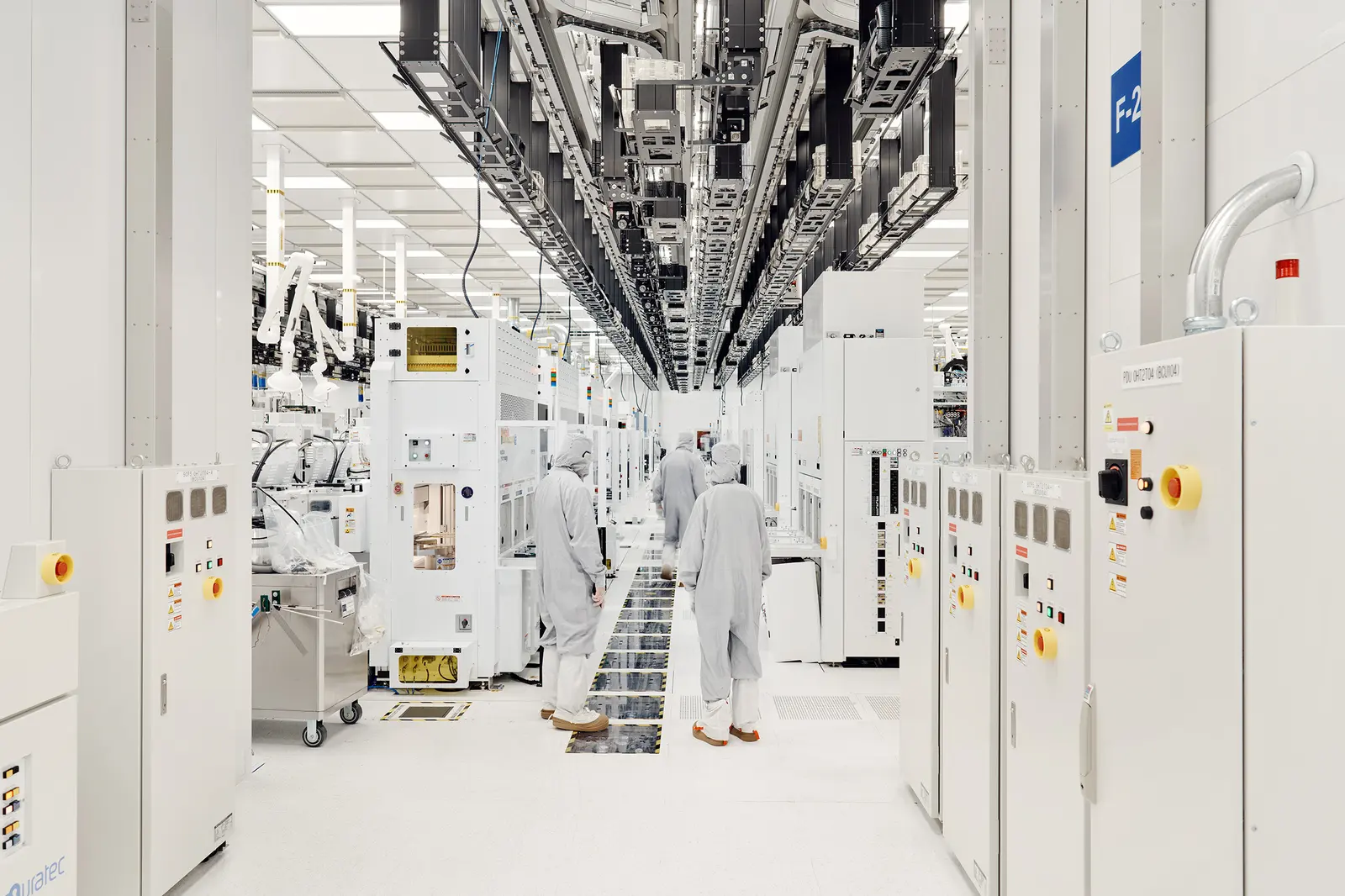
The two new semiconductor fabs do not represent capacity that can begin construction tomorrow and start production the day after. GlobalFoundries says an initial investment of about $10 billion will fund a plant expected to begin production in 2029, followed by roughly another $10 billion for a second plant. At full capacity, the first fab is designed to add annual production of approximately 900,000 300-millimeter wafers; the second would provide a similar increase. A wafer is not the same as a finished chip, and expanding capacity does not mean every chip will use the most advanced logic process. The project targets technologies for cars, industrial equipment, communications infrastructure and certain data-center applications, all of which require supply chains that can be kept under control over the long term.
The financing structure is the part Trump’s post leaves insufficiently explained. Japan is converting part of its trade-related investment commitments to the United States into capital for factories on US soil, while GlobalFoundries supplies the processes, workforce and plant-operating expertise. GF announced a separate agreement under which the US Department of Commerce will acquire an equity stake of approximately 4% in the company. The government is doing more than providing grants to factories: it is beginning to assume some of the risks associated with share prices and corporate returns. For the global semiconductor market, this marks a further shift from industrial policy based on tax incentives and subsidies toward direct participation by public capital.
Another figure could easily be confused with the $21 billion: $955 million. The US National Institute of Standards and Technology announced that the Commerce Department is not increasing the total amount of GF’s existing CHIPS Act award. Instead, it is reallocating existing funding, directing up to $955 million toward silicon photonics, silicon-germanium and advanced-packaging projects that support upgrades to existing facilities in Malta, New York, and Burlington, Vermont. The company has, in turn, committed to investing $5 billion in the relevant facilities. Treating this money as an entirely new grant and adding it to Japan’s investment would double-count the funding.
The United States has traditionally emphasized corporate competition and market pricing. This time, however, it is openly asking a foreign ally to supply capital, assigning a domestic chipmaker an operating role and giving US taxpayers a share in potential future returns through government equity ownership. The arrangement clearly bears the imprint of a national industrial strategy, but that does not make it equivalent to Beijing’s model. The Chinese Communist Party can use administrative orders to mobilize state-owned banks, state-enterprise orders, land and local public finances in a top-down supply-chain campaign. The US-Japan project, by contrast, is subject to different constraints, including corporate announcements, securities-market disclosures, government budgets and bilateral contracts. Both systems use state power, but capital ownership, regulation and responsibility for losses differ.
For Xi Jinping’s government, the pressure created by this change concerns the range of choices available within the supply chain. Beijing previously used scale, subsidies and market access to attract international suppliers and concentrate manufacturing capacity in China. The United States is now directing allied capital toward domestic production and keeping key processes in facilities within its jurisdiction. Even if those plants do not produce the world’s most advanced logic chips, cars, aircraft and communications equipment may become less dependent on a single overseas supply node. For the Chinese Communist Party’s government, the narrowing of its strategic room for maneuver is occurring not only through export controls on advanced AI chips, but also through decisions about where large volumes of basic chips can be manufactured securely.
Political narratives must nevertheless withstand scrutiny of factory schedules. GF’s announced production window for the first plant is 2029, meaning final orders, worker training, equipment deliveries, yields, energy supplies and the arrival of funding will still have to materialize over the coming years. The tens of thousands of construction and supply-chain jobs mentioned in Trump’s post are project forecasts, not workers who have already been hired. Describing all future investment as wafers being produced today would rob this significant industrial strategy of the precision it deserves.
Perhaps the most subtle aspect of this contest is that US and Japanese industrial policy is borrowing a tool the Chinese Communist Party has long used—concentrating capital in strategic industries—while trying to constrain political power through more transparent property rights and contractual arrangements. Its success will not be determined by a US president’s social-media post, or by Beijing’s next round of slogans. Whether the first new plant in Malta, New York, starts operating as scheduled in 2029 will be the test of whether this political announcement can truly change the industrial map.
Article discussion
Verified members can discuss this report publicly and manage their own content.
Checking member sign-in status…