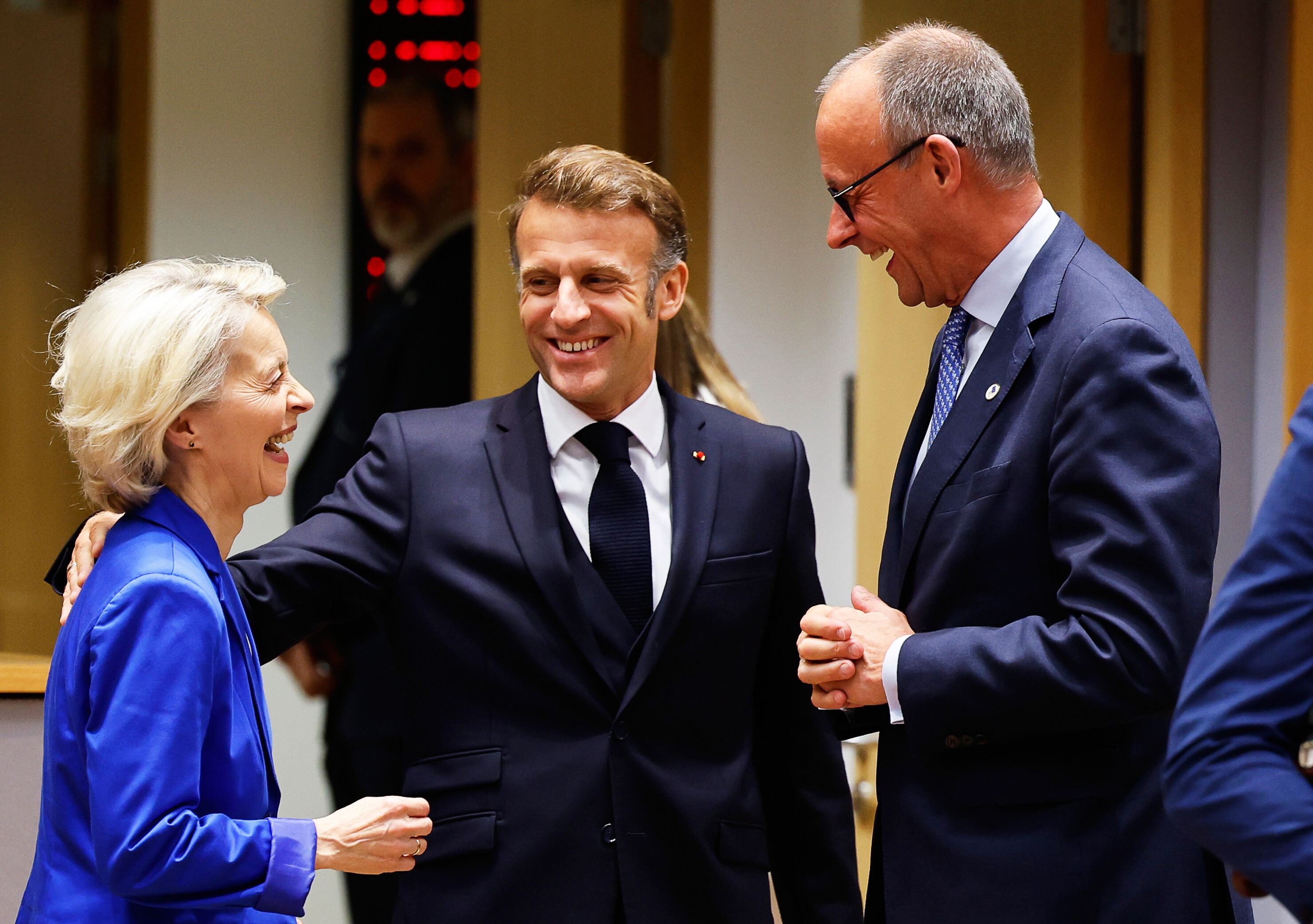
Germany was often seen as the least willing to engage in trade conflict with China within the EU. Automobile manufacturers need the Chinese market, mechanical enterprises rely on Chinese orders, and successive Governments have concerns about customs duties and retaliation and their own exports. In October 2026, however, German Chancellor Metz and French President Margaux began to join in calling on the EU to accelerate trade defence. This is not a change in diplomatic rhetoric, but a change in the structure of interests of German industry.
Reuters reported on 14 October that Germany and France jointly advocated for stronger trade protection instruments in advance of the EU summit. On 15 October, EU 27 leaders in Brussels discussed the surge in Chinese exports, energy prices and competitiveness of European industries. The EU deficit in trade in goods to China reached Euro360 billion in 2025, with a cumulative balance of about Euro200 billion in the first half of
- The European Commission has entered into preliminary arrangements with Beijing to restrict the import of mixed-powered cars in China, but this is only the beginning of a broader trade dispute.
Germany's turn is not a sudden awakening, but a change in economics
For decades, German enterprises have sold high-value-added products to China in technology and brand names, while large production and marketing networks have been established in China. The Chinese market has helped businesses like the public, BMW, Mercedes and others to maintain their size and profits. But as China’s electric cars and other manufacturing industries expand rapidly, European companies find themselves no longer facing consumer markets alone, but also competitors supported by national industrial policies, subsidies and local supply chains.
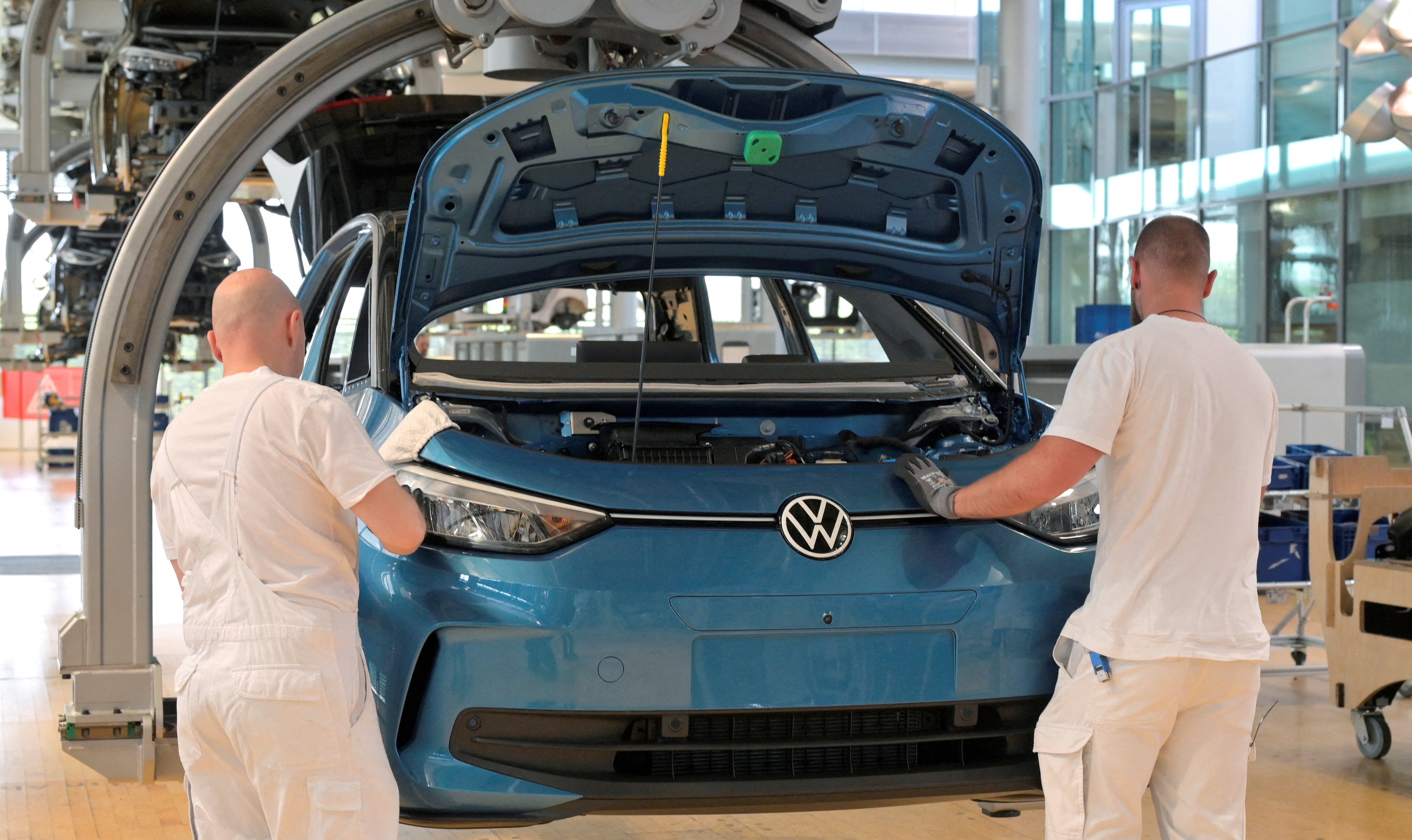
German mass groups are planning to reduce their jobs significantly in the coming years, and European industry is increasingly concerned about the impact of low-price imports on local production. It is certainly inaccurate to blame China for all German employment problems: energy costs, Europe’s own slow technological transformation, and management decisions are as important as changes in consumption. This does not eliminate international pressure on China to shift its domestic excess capacity to size expansion, subsidies support and low-cost exports.
On 5 October, French and German leaders presented the European Commission President von De Lehn with a rapid trade response tool, proposing enhanced measures against market distortions and reducing reliance on single-source key products. These proposals are not itemized for China, but are directly linked to the current debate in the EU over China’s industrial subsidies and trade deficit.
正在读取来源 · reuters.comreuters.com正在读取新闻标题与预览大图…Why the Chinese industrial strategy has triggered a rebound
The Chinese economy under Xi Jinping has long been closely aligned with the strategic objectives of the country with the upgrading of manufacturing, local recruitment and investment. For enterprises, expansion is not only a business option, but is also often tied to local government land, finance and industry support. Such a system could quickly build up large production capacity, but it could fail the price signal: when domestic consumption was not sufficient to absorb production, excess products would be more available on the international market.
While Beijing sees export competitiveness as a systemic achievement, European workers feel the cost of the fall in shifts, layoffs and out-of-industry migration. The EU could not guarantee the return of European manufacturing to competitiveness if it merely raised tariffs without improving local energy costs, technological innovation and the investment climate. But Beijing also cannot ask Europe to absorb the pressure on China’s industrial policy without restriction.
From market opening to political defense
The German-French common position does not imply that the EU has reached a comprehensive consensus on the Chinese trade war. (b) The interests of 27 member States in import prices, export markets and industrial structures remain different; Restrictions on imports could also raise consumer costs in Europe and trigger counter-measures in China. The EU must find a balance between protecting industrial capacity and avoiding excessive protectionism.
The real political transition is: Germany, which was worried about losing its Chinese market, is now increasingly worried about losing its own factory. When dependence on the Chinese economy is no longer considered a one-way growth opportunity but rather a risk to industry and employment, there will be a structural change in European attitudes towards the CCP economic model.
Beijing could continue to package export surpluses as national power, but international trade was not a one-sided victory contest. China ' s long-standing domestic consumption weakness, industrial investment imbalances and market competition distorted by political objectives will eventually be answered in front of other parliaments, trade unions and factories. At the heart of this European debate is not just how much taxes should be levied on Chinese goods, but who should bear the cost of a country-led growth model.
Article discussion
Verified members can discuss this report publicly and manage their own content.
Checking member sign-in status…