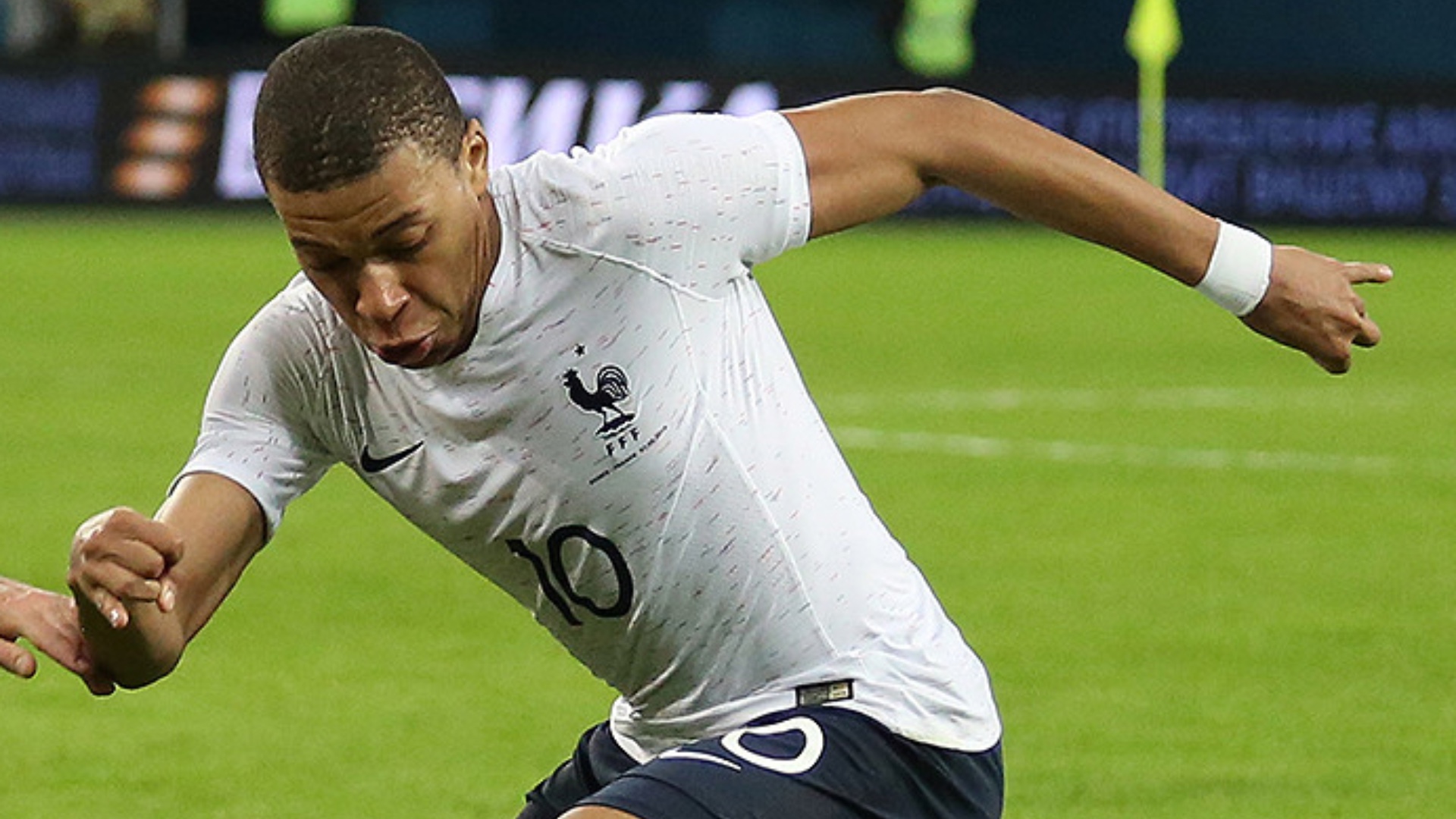
The French football giant Mbape was relieved of commercial cooperation by Chinese enterprises because of a joke about Mao, the Spanish football league was suspended by the official Chinese media, and the Royal Madrid Club and the Western Academia Alliance apologized to Beijing. As the political and business boom continues, the US House of Representatives Special Committee on China suddenly released a public historical video about Mao and China’s Great Famine, which had been confined to football disputes and had led directly to international public discussions on the historical responsibility of the Chinese Communist Party and freedom of expression.
In the afternoon of 29 October, Eastern United States time, Beijing time, early on 30 October, the Commission published video-tapes, through official account X, publicly accusing the Communist Party of manipulating Mao Zedong's historical narrative, concealing the fact that tens of millions of Chinese had died during his reign and highlighting that the catastrophic policies pursued by Mao had led to one of the worst famines in human history.
In its message, the Committee also directly named Javier Tebas, President of the Sierra, the Royal Madrid Club and the French star Kylian Mbappé, asking for video views, knowledge of the history and more people to share it.
This move is clearly realistic and relevant. In the previous days, Chinese official opinion had reacted strongly to the use of the term “dictator” in Mbape, with commercial sponsors quickly cutting off, sports organizations making successive apologies, and the United States Congress Commission turning the debate to what was Mao Zedong’s responsibility in China’s history.
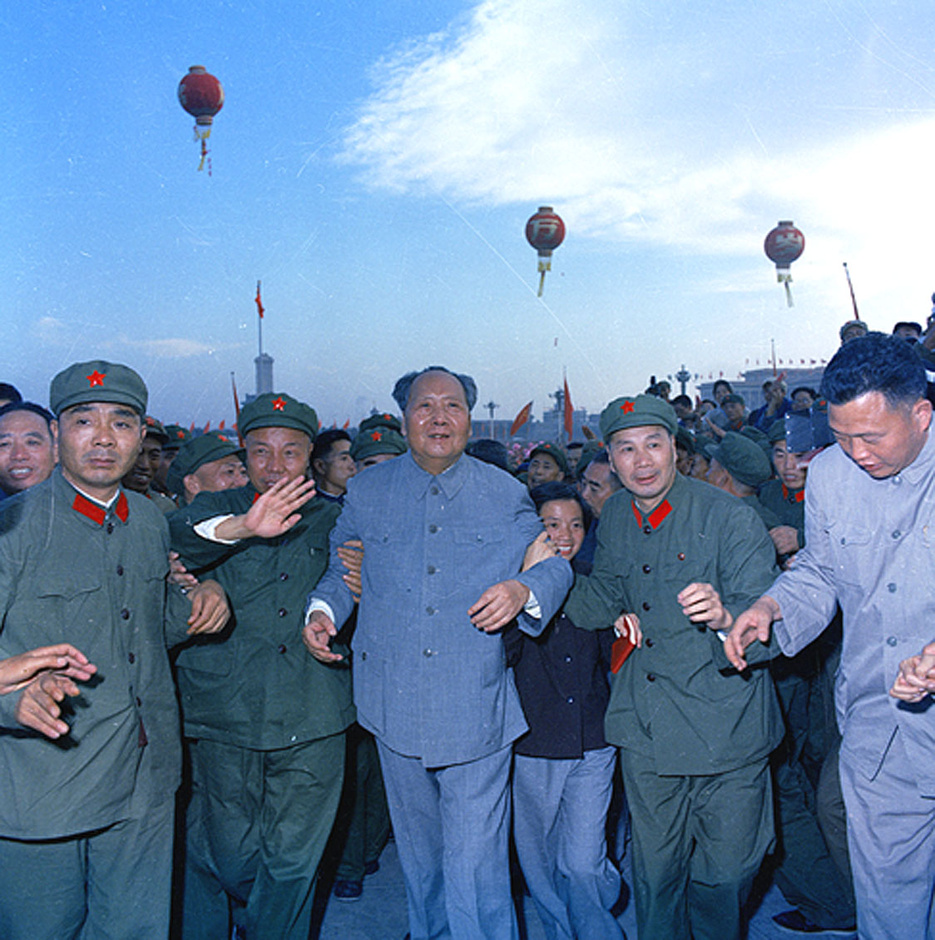
A football joke triggered a transnational political wave
The incident originated in a video interview on the French football programme The Bridge, which was retransmitted on 26 October.
In the show, Mbape was asked about one of her favorite face-on-the-line kits. He smiled and remembered that someone had synthesized his face into the image of a Chinese dictator, who found it very interesting and shared it with his friends.
The original statement did not contain a name for Mao, but the picture shows that the modified picture used was the image of Mao.
In the European football network culture, Mbape was once called a “despot” by some fans, mainly by sarcasm about his influence at the San German Club in Paris. The fans synthesized his face photos with different historical politicians, which were originally sarcasm in the culture of football entertainment.
原始来源 · reuters.com路透社:姆巴佩网络表情包争议及其背景reuters.com ↗However, once this joke entered the Chinese public sphere, it touched upon the long-held image of Mao Zedong in the political propaganda of the Communist Party.
On 27 October, the Chinese beverages companies Toung Peng, dairy companies Zong and Myka Lando announced the termination or suspension of commercial cooperation with Mbape. The Central Radio and Television General of China announced a moratorium on the transmission of events related to the Spanish football class 1 tournament, and the accounts of some of the Chinese social platforms in Mbape were restricted.
On that day, Mbape issued a statement of apology in the Chinese, English and French languages through social platforms, stating that the previous comments were not very careful, that they were not intended to hurt the feelings of the Chinese people, and that it expressed respect for the Chinese people and their history.
The apology did not immediately put an end to the dispute.
On 28 October, the Royal Madrid Club also formally expressed its apologies to the Chinese public. The President of the Western Academia Union, Tebas, met with the Chinese Ambassador to Spain, Yao Zheng, in an attempt to mitigate the damage caused by the incident to the West Aca Chinese market and to commercial cooperation.
In his regular press conference on 28 October, the spokesman for the Chinese Ministry of Foreign Affairs, Guo Jiakunji, said that China valued the apology made by Mbape.
In an interview, one player spoke of web images that eventually turned into the dissolution of transnational commercial contracts, the suspension of sports events, a public apology by European clubs and a statement by the diplomatic service. This wave shows the real pressure on international sports and business institutions that has been brought to bear by China ' s large market, combined with politically sensitive issues.
The United States House Committee is involved in a direct exposure to Mao Zedong's historical responsibility
原始来源 · aljazeera.com路透社经半岛电视台刊载:皇马道歉与西甲危机处理aljazeera.com ↗When the Royal Madrid and Western Jascha parties tried to calm the dispute, the United States House of Representatives Special Committee on China responded in a very different public way.
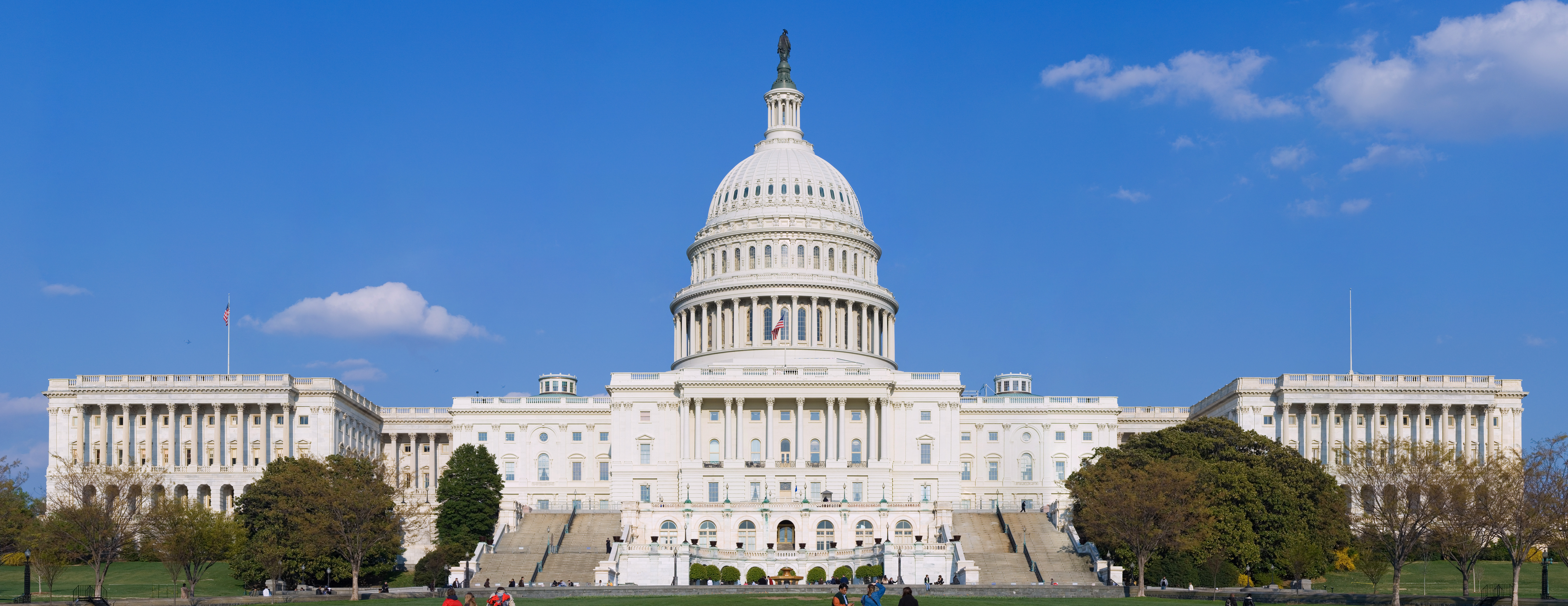
On 27 October, the Committee issued a statement in official account X, in which it considered that Mbape did not need to apologize for calling Mao Zedong a dictator and noted that the political movement, the Great Famine and other human rights catastrophes of the Mao Zedong era had resulted in the death of tens of millions of Chinese.
The Commission also publicly criticized the hastyness of some enterprises to apologize to Beijing for maintaining their commercial interests in the Chinese market.
The Commission then successively disseminated historical videos of the Cultural Revolution of 1966-1976, highlighting the persecution and catastrophe caused by the political movement launched by Mao Tse Tung.
By 29 October, Eastern United States time, the Committee had further shifted its focus to the “Big March” that began in 1958 and the subsequent Great Famine in China.
The text accompanying the newly released video clearly indicates that the Communist Party of China has been able to conceal the fact that tens of millions of Chinese died during their rule by controlling the history of Mao Zedong. The Committee asked the public to know how the political rule of Mao Tzetung and the erroneous policies had led to mass famine.
More than usual, the Committee has taken the initiative to refer to the Presidents of Mbape, Royal Madrid and Western Sahara in its text.
Such public naming goes beyond general historical remembrance or archival propaganda. The United States Congress committee effectively translated a European sports business dispute into a political response to the historical narratives of the Communist Party and the pressures of overseas speech.
原始来源 · voachinese.com美国之音:姆巴佩道歉及美国国会委员会回应voachinese.com ↗Voice of America previously reported that the Commission, chaired by Republican Deputy John Moolenaar, worked on strategic competition between the United States and China, national security and the impact of the Communist Party of China on human rights and the international community.
Of course, the Committee's publication is part of its public political stance and dissemination activities and does not amount to the adoption by the entire United States Congress of a new law or resolution on Mao. However, its direct involvement in the dispute, as a specialized agency formally established by the United States Congress, has brought Mao ' s historical evaluation back into international political discourse.
Big leap behind 36 million deaths and food requisition
The new issue raised by the United States Commission in this video is not new to the historical research field.
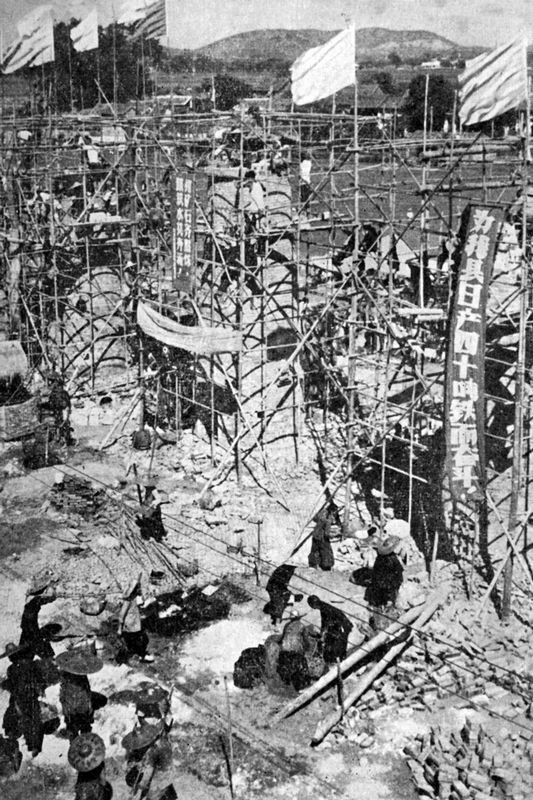
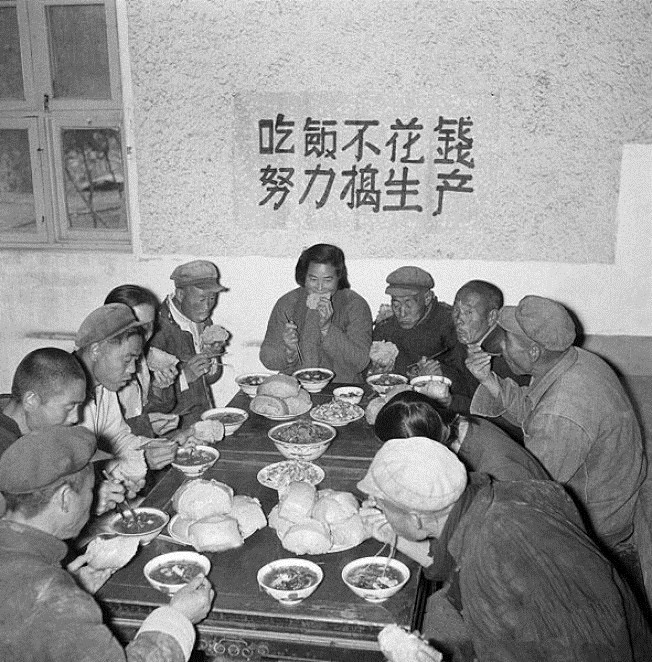
In 1958, Mao launched a “big leap” in an attempt to rapidly change the Chinese economic structure through radical industrialization and agricultural collectivization policies. Local governments competed for exaggerated food production, the people ' s communes were established on a large scale and the system of rural collective labour and public canteens was expanding.
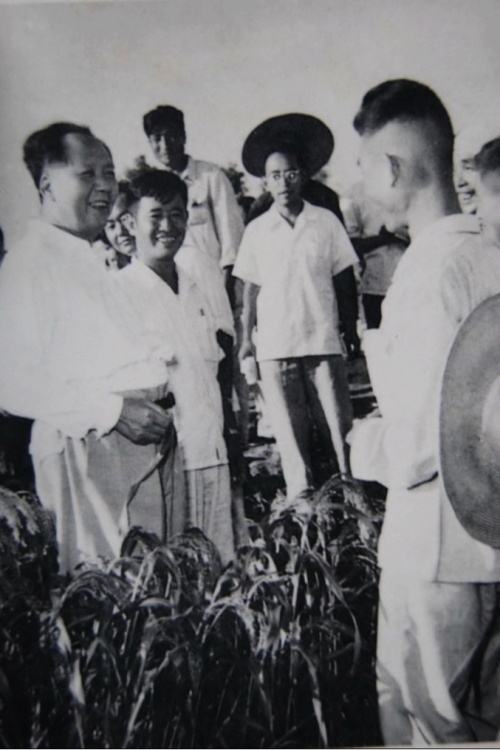
Under a highly centralized political system, local cadres consider the completion of production indicators to be an important expression of political loyalty. The exaggerated production figures continue to be used to set up food requisitioning missions, resulting in large amounts of food still to be handed over to the Government in some rural areas, despite actual harvest shortfalls.
The reality facing farmers has changed radically as a result. Food is in the hands of Governments and collective organizations, and the autonomy of farmers to sustain their families and cope with famine has been reduced. When food shortages widen, it is difficult for the population to promote corrective policies through independent media, free association and public criticism.
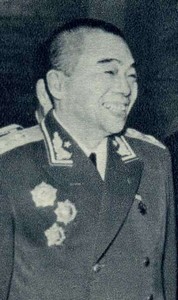
In July 1959, then Minister of Defence PendeWai criticized the issue of “the Great March” during the Tsingshan Conference, and was subsequently subjected to political criticism by Mao. The Communist Party began a massive right-wing struggle and the policy bias that had already emerged was interrupted.
It is noteworthy that the Resolution on Certain Historical Issues of the Party since the Establishment of the State, adopted by the Central Party of the Communist Party in 1981, has acknowledged Mao Zedong's erroneous criticism of Pendevey as a right-wing struggle that undermines democracy within the Party and prolongs the wrong economic policy.
This document, which has long been considered as the basis for the official historical assessment of the Communist Party, does not publicly list the extent of the abnormal deaths of the population caused by the Holodomor, nor does it systematically disclose a complete file of local food purchases, famine deaths and official responsibility.
In the case of the deaths of the Great Famine, the Chinese history researchers have produced different estimates after long-term surveys.
The former Xinhua journalist Yang Ji rope, in the Cemetery: The Great Famine of the 1960s in China, estimated that famine had caused the abnormal death of some 36 million people, based on demographic data, local archives, official records and personal testimony.
The history scholar Frank Dikötter, in “The Holodomor of Mao Zedong”, has estimated the irregular death of at least 45 million people. While there are differences in statistical coverage, population models, time horizons and definitions of abnormal deaths, the results of tens of millions of deaths are already sufficient to illustrate the scale of the disaster.
On October 29, Eastern United States Time, the International Human Rights Watch organization also published an article that criticized the official Chinese response to the Mbape incident, citing Yang Jiblin ' s study on the death of at least 36 million people, and linked the wave to the issue of the concessions made by sports institutions to political pressure.
Tens of millions of deaths mean that countless families lose their parents, children and loved ones in times of peace. Policy decisions, food collection and political pressure that have caused this disaster cannot be reduced to natural disasters or abstract economic difficulties in historical narratives.
Mao's political responsibility, as the main initiator of the “Big March” and then the highest leader of the CPC, lies at the heart of the entire policy chain. At the same time, the Government and party organizations have the same historical responsibility at their respective levels, from central decision-making and provincial commissions to district and sub-district food procurement.
Who has the right to decide how Mao Zedong can be evaluated
The most noteworthy part of this incident occurred in China during the dissemination and handling of Mbape ' s speech.
Many international media have found that some official media and commercial agencies in China, while criticizing Mbape, have emphasized that their statements hurt the Chinese people’s feelings, without presenting in full what he specifically said, or showing the controversial Mao Zedong face bag to the audience.
原始来源 · commons.wikimedia.org历史影音档案:1958年美国中央情报局关于大跃进的影像(与委员会2026年视频不同)commons.wikimedia.org ↗A enchanting phenomenon has emerged: the public can see the company's announcement of its removal, the apology of football organizations and the web-based criticism, but it is not always able to get a direct view of the initial content of the entire dispute.
When the public is unable to read the controversial language freely, political propaganda has the great advantage of determining how events are understood.
Mao Zedong has died for 50 years. His historical assessment covered a series of major events, including land reform, counter-insurgency, anti-right, big leaps, three years of famine and the Cultural Revolution. These issues are linked to the lives, property and the fate of tens of millions of Chinese people and are inescapable elements of Chinese history research and public discourse.
However, Mao has a special status in the political narrative of the Communist Party.
The 1981 historic resolution, while acknowledging the gross error of Mao, upheld his overall political assessment and regarded adherence to the leadership of the Communist Party as a fundamental political principle. The preservation of Mao ' s historical status by successive Chinese leaders since then is also closely linked to the Chinese Communist Party ' s own legitimacy in governing.
This means that the assessment of Mao Tsedang can easily rise from historical to real-life issues.
When the image of a historical figure is incorporated into the political identity of the country, criticism of his personal rule may be interpreted as an affront to the State and nation. This has led to mutually reinforcing pressures on Governments, official media and commercial institutions, which can even affect sports stars and multinational enterprises outside China.
原始来源 · cn.theorychina.org.cn1981年中共《关于建国以来党的若干历史问题的决议》全文cn.theorychina.org.cn ↗The Chinese Communist Party has different political and historical identities with the Chinese people. Criticism of Mao, the recrimination of the Communist Party policy and the commemoration of the victims of the Great Famine are public discussions that can be conducted independently and should not automatically be equated with an insult to the Chinese people.
From the commercial interests of football to the international competition for historical speech
The Mampé incident has so far gone beyond whether or not it should be personally apologized.
The Royal Madrid, the Western Aca Alliance and the sponsoring enterprises need to assess the economic benefits of the Chinese market. The Chinese Government and the official media have included statements about Mao Zedong in the political and public sentiment agenda. The United States House of Representatives Committee has chosen to respond through historical video and to place freedom of expression and the responsibility of the Communist Party for history at the centre of public discussions.
Different interests and positions were expressed in the same incident.
This is also reminiscent of the incident in 2019 when Chinese television was shut down and commercial cooperation disputes were disputed by the US Professional Basketball League NBA, in response to statements in support of Hong Kong ' s protests by the Houston Rockets ' executive Daryl Morey. When sports institutions face Chinese market and political disputes, conflicts between business interests and expressions of expression are not the first to arise.
原始来源 · hrw.org人权观察2026年10月29日专题:姆巴佩、毛泽东与西甲hrw.org ↗But this time, the controversy was directed at Mao himself.
The political significance of the American Commission ' s response with the Holodomor video is to re-transmit the discussion from the player ' s joke to the historical event: What policies did Mao initiate? What have been the consequences of these policies for the Chinese people? Why did the Government of that year not stop the disaster in time? Can today’s public be free to study and evaluate this history?
These issues are based on historical archives, population studies, government documents and survivors ' testimonies. While the body with different political positions can evaluate history, the basic facts of historical research should not be determined by commercial contracts, diplomatic pressure or cyberreview.
Videos from the United States House of Representatives Committee may continue to be controversial and commercial relations between Western Jasjia and the Chinese market may gradually be restored. However, the contradiction surrounding Mao's historical evaluation would not disappear as a result of an apology from a player.
This international wave, which took place from 1958 to 2026, is a truly cross-cutting issue: how political power affects the disclosure of facts, wrong correction and the right of the public to freely discuss history.
原始来源 · aljazeera.com半岛电视台:姆巴佩言论、商业解约与中国媒体报道aljazeera.com ↗When tens of millions of deaths can be the subject of a historical study, but it is still difficult to get a full discussion in Chinese public space, the suffering of those who have been killed and their families will still require more independent reporting, archival research and public commemoration to preserve them.
Focus China will continue to follow the public disclosure of the archives of the major historical events of the Mao Zedong period, contemporary political narratives and their impact on freedom of expression.
Information extracts and trace points
“When the public is unable to read the controversial words freely, political propaganda has the great advantage of determining how events are understood. This is also the relationship between the historical discourse and the pressures of overseas business, which are of concern to this report.
- International opinion: Historical video and subsequent statement by the United States House of Representatives Special Committee on China. - Business Impact: China ' s Re-brand De-Market, Sports Relay Adjustment and Royal Madrid and Western Acabre Response. -History Responsibility: “Big Step Forward” 1958, Food Purchase, Tsingshan Conference and study of the Holodomor Population.
- Public information: Yang Jiblin, Cemetery, 1981 Historical Resolution and Report of the International Human Rights Body.
Article discussion
Verified members can discuss this report publicly and manage their own content.
Checking member sign-in status…