
Senior cadres pick up a telephone call for confidential communications, which may at the same time be another set of internal reports. In his recent publication of the Red Wall in Taiwan, the American scholar Xiaonoon, on 3 November, on a special visit to Radio Free Asia, spoke of a system of Chinese power operations that the outside world had difficulty seeing on the organizational chart: confidential telephones, office numbers and close protection, both for service and for surveillance of those in power.
Shun Xiaonoon served as research unit of the Standing Committee of the National People ' s Congress and as the China Institute for Economic Reform Reform. His new book, published in Taiwan on 27 October, was drawn from five locations in the South China Sea, the People ' s Hall, Yuspring Mountain, the fishing platform and the Kingxi Hotel, documenting internal work experience and explaining high-level power relations. The interview was not an official disclosure of the new system, but rather a narrative of personal perceptions and the functioning of the system by individuals within the former system.
原始来源 · rfa.org程晓农谈红墙内幕 高官警卫也是监视者程晓农的新书《红色高墙》在台湾出版。曾任职中国全国人大常委会研究室及赵紫阳建立的中国经济体制改革研究所的他,在接受自由亚洲专访时,结合自身体制内经历,讲述中共高层的内部运作,包括保密通信、贴身警卫及领导人活动场所背后的的权力关系。rfa.org ↗Dual-use of a “confidential telephone”
Xiaomun Chong recalled that he had used “red machines” for internal communications equipment for senior cadres. According to him, automatic recording could be triggered when the telephone was connected and the machine-to-communication services could organize the content for reporting. Thus, a confidential communications link does not necessarily mean that the interlocutors have privacy.
He also spoke of the central authority office phone, which began with “39”. Other cadres noticed his place of work on the basis of the number he had filled in when they attended an economic seminar. He thus realized that the number itself was not just a means of communication but also a label identifying the location of persons in the authority. In closed bureaucratic systems, who is entitled to use a communication network is often more able to transmit identity information than in formal presentations.
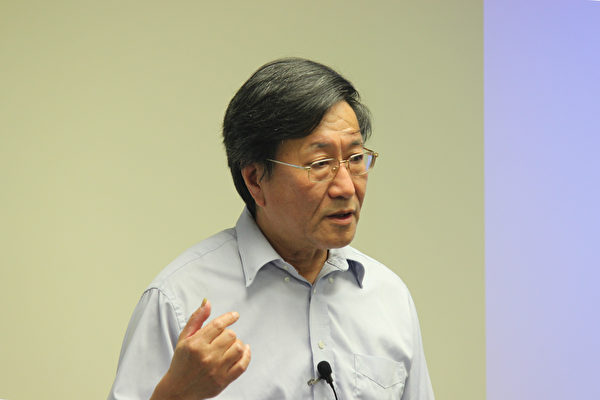
Protects the leaders and may report their whereabouts
What is more political than a confidential telephone is the description of the security system by Cheng Xiaonon. He argues that the close protection of officials of the Political Directorate, while living with protected persons at dawn, does not amount to direct command of protected persons. The guards act under their chain of command, and may report to their superiors where the leader has been, who he has met, and on his daily activities.
In this narrative, political authority is not only expressed as who has the right to vote at the conference, but also as who controls the communications records, the vital files and the security system. Even with a prominent title, a senior official may not necessarily have access to security personnel and information flow around him. Shun Xiaonon also refutes the reports of the network of alleged crossfire between the central guards and the Military Commission guards, arguing that the security forces in question did not have the alleged two independent opposing forces.
The Central South China Sea does not mean that all decisions are made in the Central South China Sea
Xiaonon Shang also noted that the leaders may be handling their affairs at their residence, and that the People ' s Hall and other high-level venues each have office, residential, reception or meeting functions; It cannot be inferred from one place of public meetings alone that decision-making actually takes place. The public position and the establishment of the organ are indicative of the surface of the system, but not sufficient to indicate to whom the information is going on a daily basis.
These judgements, which are currently mainly from the memories and analyses of Xiaomun, should not be misinterpreted as official, published, live listening requirements. Specific issues that merit continued investigation include: the custody of audio-phonic recordings of telephones, the chain of physical reporting by security personnel, who can trace the cadres and whether these materials can be used in power struggles. For a highly centralized political system, the power of those who control internal information is in itself an important entry point to understanding its political functioning.
Article discussion
Verified members can discuss this report publicly and manage their own content.
Checking member sign-in status…