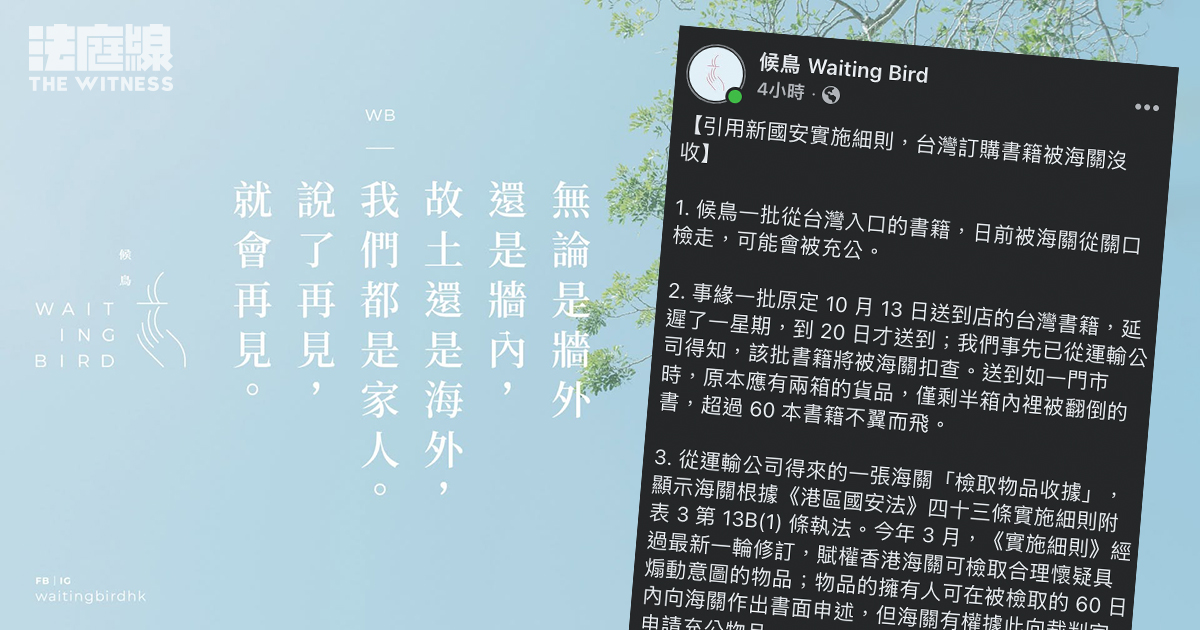
Two boxes of books sent from Taiwan to Hong Kong were only half of the cases. The Hong Kong organization “Hoosebirds” which is concerned about prisoners and their families has revealed that more than 60 books are being checked by customs during transport. On 3 November, Deutsche Voice reported that the debarment cited the implementing regulations for section 43 of the Port State Security Act, as amended in March this year, and that Hong Kong Customs had not yet specified to the organization which book was problematic.
The delivery of the goods to the “E-One” gate, which was scheduled for 13 October for the “Homebirds”, was eventually postponed until 20 days. (b) The migratory bird stated that the transport company had informed the cargo that it had been seized; The boxes opened and it was discovered that only half the original two boxes were left, and the remaining books were turned over. The transporter then provides the Customs Receipt for the Taking of Items, which shows the basis for enforcement of article 13B(1) of Schedule III of the Rules.
Same book, used to sell. Why was it arrested?
The matter was made public on 2 November, noting that the seized books were not imported for the first time and that some of the books were still being sold in other independent bookstores. The organization received a brief response on 29 October, in writing and by telephone, but it is not clear whether the customs decision is taken in relation to specific catalogues, import agencies or other factors. The names of the books seized and the authors are not yet available.
The Court Line reported that the Customs Department does not comment on the case and emphasizes that if an object with a inflammatory intent is found, it will be taken in accordance with the law and referred to the National Security Service of the Police, as appropriate. This answer explains the general enforcement position of the customs, but does not answer the central question in the present case: why the book was found to be worth checking.
正在读取来源 · thewitnesshk.comthewitnesshk.com正在读取新闻标题与预览大图…According to the relevant implementing regulations, as amended in March this year, customs officers may first inspect an item when they have designated a local executive function, provided that there is reasonable suspicion that the item has an intention to incite; The owner of the goods may submit a written statement to the Customs Director within 60 days, and the Customs Director may apply to the Magistrate for forfeiture, as regulated by the Central Agency Act of 3 November. This means that books may be withheld by administrative power before the court decides to confiscate them.
There is no public ban list, and the booksellers take the risk themselves
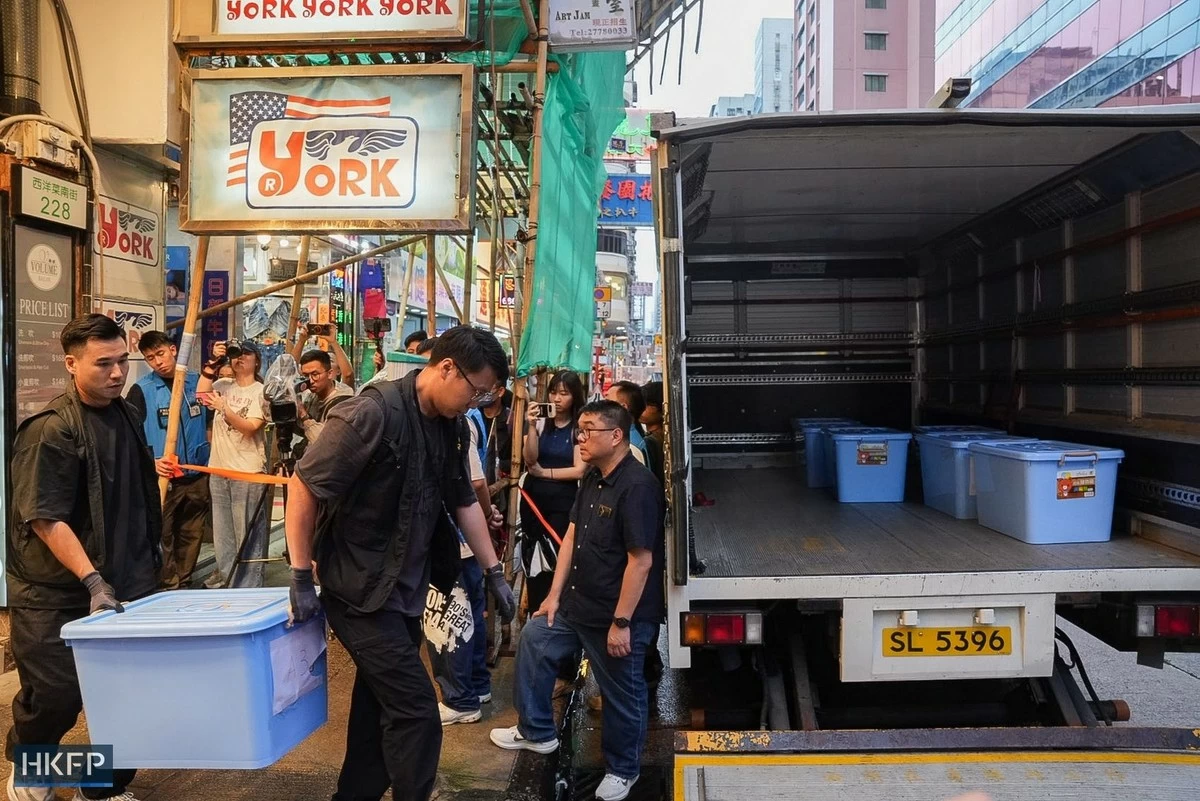
Between March and July this year, several independent bookstores in Hong Kong were searched by the National Security Service. In July, Director General Deng Bingqiang stated that the Government had not established a ban list but asked the bookseller to ensure that the books sold were not illegal. The risk now extends to the import transport chain: even if a book had previously entered and boarded normally, it did not mean that the next batch would necessarily receive the same treatment.
The pressure on freedom of the press is not necessarily a mere explicit ban. When the specific reasons for the seizure are not known and the law enforcement borders are difficult to predict, transporters, bookstores and readers may themselves avoid sensitive publications. The subject of specific inquiry in each case is the Hong Kong Customs Service, which makes the decision to inspect and holds the relevant receipts, and the HKSAR Government, which sets and implements the relevant implementing regulations for national security.
The birds asked the authorities to explain how the books were endangering the national security and wanted to retrieve the seized books. The list of these books, the reasons for their examination, the statement and the decision to process them are the key records of what has happened in Hong Kong in the area of cross-border publishing.
Article discussion
Verified members can discuss this report publicly and manage their own content.
Checking member sign-in status…