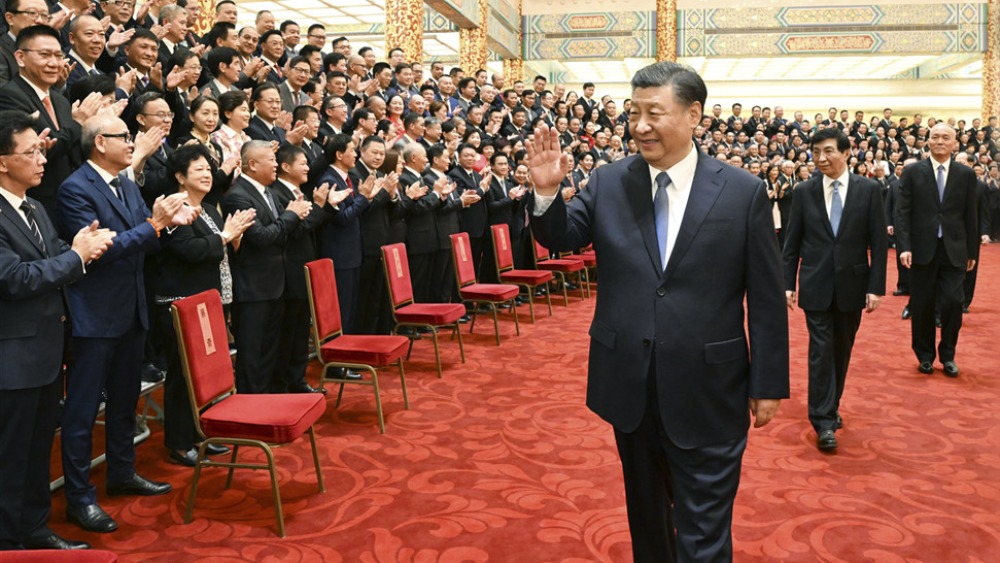
The political control of the Chinese society abroad by the Communist Party of China is expanding from covert overseas police stations to institutionalized and organized transnational surveillance networks. The latest report of the international human rights organization Safeguard Defenders on 6 November revealed that Chinese party political institutions have at least 1,447 officially designated overseas contact points in at least 91 countries around the world, and that the All China Returning Chinese Homes Federation (CAF) and its associated organizations have become important hubs for the network. The survey revealed that Xi is trying to extend the gridding social control mechanisms in China and that the political expression, social interaction and opposition to the activities of the Chinese overseas are at risk of transnational surveillance and intervention.
The study, entitled " The Formula for Repression: A Global Community Control Grid in China ", tracks organizational links between the General War System, the public security organs, the judiciary and the Chinese community abroad, based on policy papers, institutional information and public records issued by the Chinese party political organs. The new report reveals a wider range of agencies and more hidden forms of organization than the overseas police stations that were exposed in 2022.
原始来源 · safeguarddefenders.com保护卫士:A Formula for Repression 原始调查报告safeguarddefenders.com ↗From overseas police stations to the Global Chinese Control Network
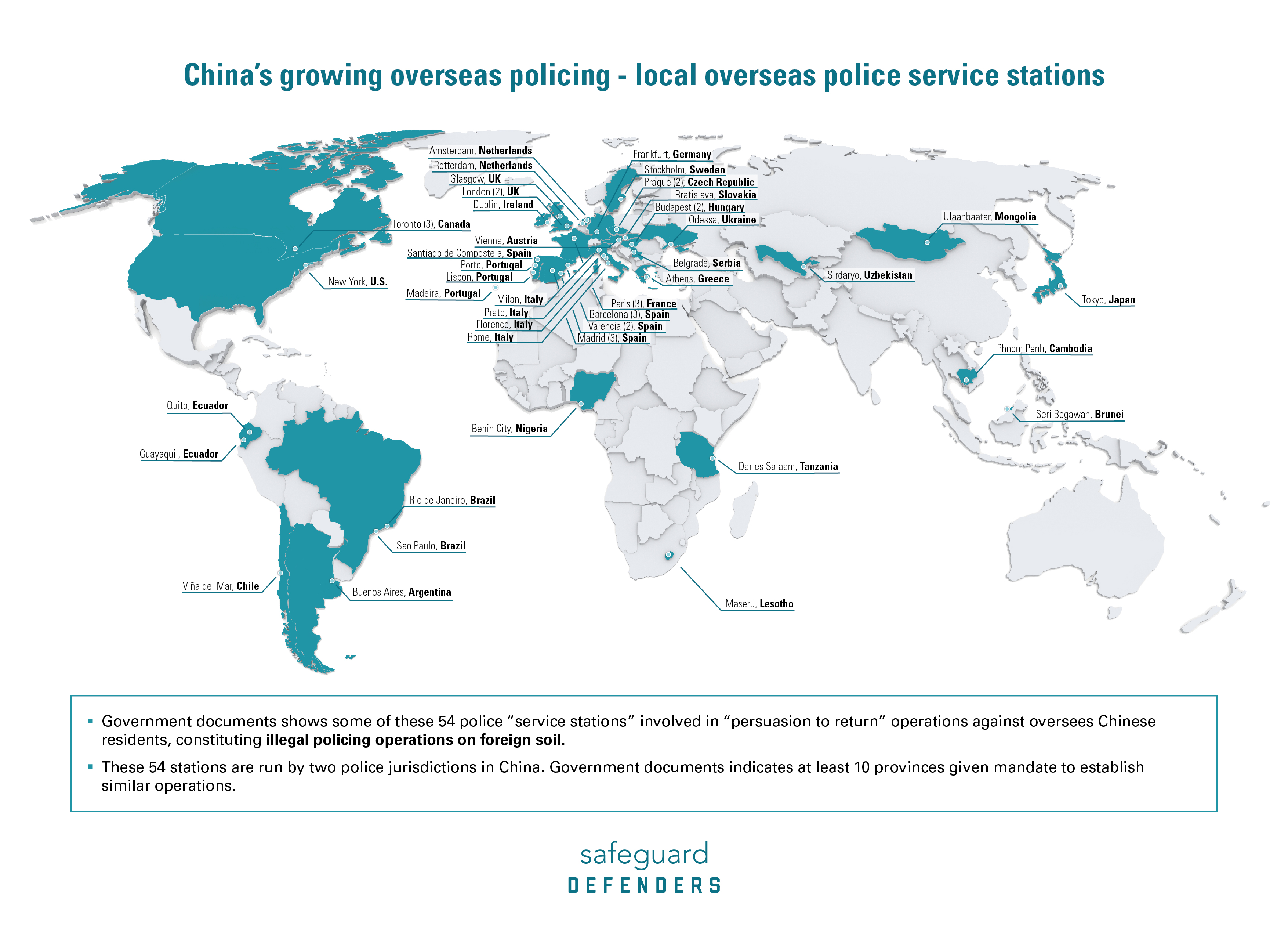
In 2022, the Protector of Guards exposed over 100 overseas police stations established in more than 50 countries, triggering a multinational European and North American survey. In the face of international pressure, Beijing claims that the site has been closed.
However, a four-year survey revealed that the network of organizations on which police activities abroad depend did not end with the loss of police station markings. The links between local public security authorities and the diaspora, chambers of commerce, so-called so-called so-called " so-called " " associations and associations of diasporas are developing a broader system of intersectoral collaboration.
The 1247 points of contact disclosed in the report do not mean that each has been proven to be engaged in illegal surveillance. It is truly alarming that these official overseas nodes, designated by China, can provide the Chinese with an organized basis for contacts, identification and influence with the Chinese outside China.
Once the head of the diaspora group is also charged with political tasks in the hands of the Chinese party and political institutions, the social organizations that were intended to reach out to the rural communities and assist the diaspora could become a tool for gathering personal information, exerting political pressure and following up dissidents.
Led by the General War Office, the public security and justice system extended overseas
The institutional roots of the network can be traced back to the gridded social governance system in China.
In China, the grass-roots networker collects information on the population and the data and social dynamics are integrated into the local system of integrated governance. The public security, courts, prosecutors ' offices and judicial administration are involved in social governance and security through different mechanisms.
Today, similar organizational thinking is used in the Chinese diaspora.
The report cites the official Chinese policy statement on strengthening “coordination between the courts, the public prosecutor's office, public security, the judicial administration and the work of expatriates”, which shows that foreign nationals' affairs have been integrated into broader political and legal work arrangements.
In September 2025, a NUEF Vice-President at a meeting in Fujian Fuku County suggested that the work of the diaspora should be coordinated and integrated into a holistic configuration. Such policy formulations reflect the fact that work in the diaspora goes beyond general cultural exchanges and diaspora services and is entrusted with the political function of coordinating State agencies and overseas organizations.

Since Xi took office, the CCP has continued to strengthen its leadership of the Oliy Majlis, national security and social governance. The Chinese diaspora is also included in this vision of governance. The institutional logic is to extend political influence through party organizations and peripheral institutions, so that organizations abroad are connected to the domestic power system.
The United States, French judicial cases reveal another aspect of the organization abroad
Offshore surveillance is not only an organizational risk, but some cases are already in judicial proceedings.
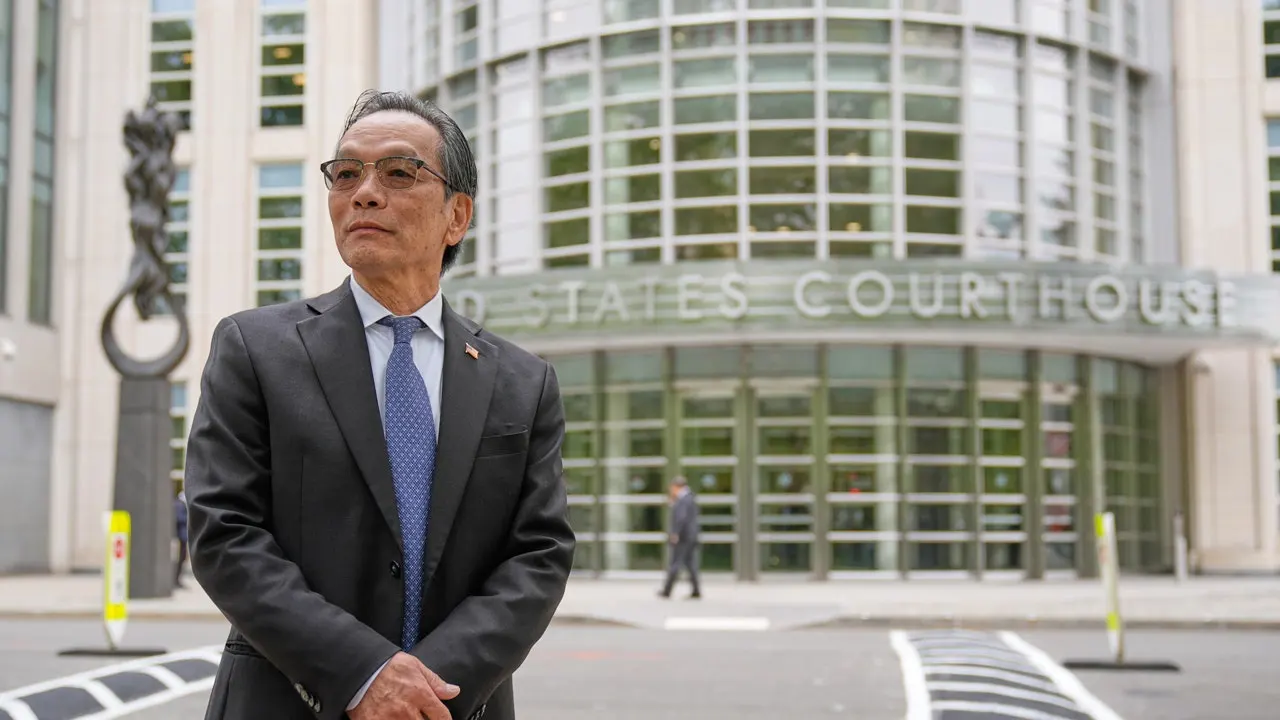
On 13 May 2026, the jury of the United States Federal Court of the Eastern District of New York found that the Chinese community member Lu Jianwang had been guilty of illegal acts as a representative of the Chinese Government and obstruction of justice for his participation in the opening and operation of an undeclared overseas police station in Manhattan for the Ministry of Public Security.
- The United States Department of Justice has disclosed that Lu Jianwang was instructed by Chinese security officials to assist in the search for Chinese democracy activists who fled to the United States. The case shows that some of the overseas organizations, which are based on community service, have in fact assumed the tasks of the Chinese public security organs.
- Similar cases have occurred in France. On 9 June 2026, the French Conseil d'Etat, in a decision concerning the expulsion order of Chinese citizens, stated that an association of traders in Paris, Fujian, had hosted the secret “Overseas Service of the Fukuzhou Police for Expatriate Affairs”, which provided a channel of communication for the activities of the relevant bodies of the Communist Party and the Chinese Ministry of Public Security in France. The Court found that the activities in question were of a nature to the detriment of the sovereignty and fundamental interests of France.
Two judicial cases, concerning the United States and France, reflect common problems: The activities of the Chinese public security organs through associations outside the country that are not authorized by the host country have resulted in a breach of the border between the organizations of ordinary nationals and the State security agencies.
The power expansion of Xi Jinping's regime is touching on the sovereignty of other countries
The Chinese Government has the right to consular protection in accordance with the law and to provide the necessary services to citizens abroad, provided that such power does not translate into a basis for the covert policing of foreign territory, monitoring of political dissent or interference in the speech of citizens.
Here is a fundamental institutional conflict.
Under the Chinese Party system, political collaboration between the general war department, the public security organs and the diaspora organizations exists under the leadership of the Communist Party of China. Local party bodies can integrate overseas Chinese contacts into political missions and implement them through different social organizations.
However, in a democratic State governed by the rule of law, citizens ' associations have an independent status and no foreign Government can exercise its police powers or force residents to comply with its political demands through such organizations without authorization.
Xi’s drive to extend the domestic system of governance beyond its borders reveals a deep feature of the Communist Party’s political control model: it seeks to perpetuate political relations between individuals and the power of the Chinese Party after leaving China.
This cross-border control is particularly dangerous for exiles, dissidents and human rights activists who leave China as a result of political persecution. They may have acquired residence, asylum or nationality in the host country, but may still be subjected to pressure from the Chinese authorities because of relatives, business relations and contacts with overseas associations.
Institutional responsibility for transnational repression must be traced back to Beijing
On 6 November, during the events related to the Transnational Parliamentary Union for Policy against China, held in The Hague, the Netherlands, 54 legislators from 26 countries called for urgent measures to counter the extraterritorial intervention and transnational repression of CCP. They called for the establishment of a mechanism for the registration of foreign agents, for greater transparency in the organization associated with the OCC and for the provision of channels for reporting and protection to threatened overseas communities.
原始来源 · voachinese.com美国之音:11月7日海外监控网络调查报道voachinese.com ↗These measures are not only targeted at individual secret police stations, but rather at a system of transnational political influence, led by political parties, involving State bodies and assisted by overseas associations.
Focus China believes that the fundamental responsibility for the expansion of the overseas surveillance network must be traced back to the Chinese Communist Party (CCP) war and the national security system under Xi Jinping. When diaspora, police and political control are integrated into the objectives of a unified governing security, the Chinese community abroad may be considered a political target requiring continued management.
The choice of Chinese citizens to emigrate does not mean that they must continue to be subject to the political jurisdiction of the Communist Party. Chinese abroad should not be threatened for participating in democratic activities, criticizing the Chinese Government or refusing to cooperate with the general war mission.
The real danger revealed by the 1,247 points of contact is that a political control model centred on party power is crossing national borders. It infringes not only on the freedom and security of Chinese overseas, but also on the legal order and national sovereignty of the host country.
The core of this transnational repression controversy points to a clear institutional question: whether Xi Jinping’s regime can be effectively restricted within China’s legal jurisdiction.
Article discussion
Verified members can discuss this report publicly and manage their own content.
Checking member sign-in status…