
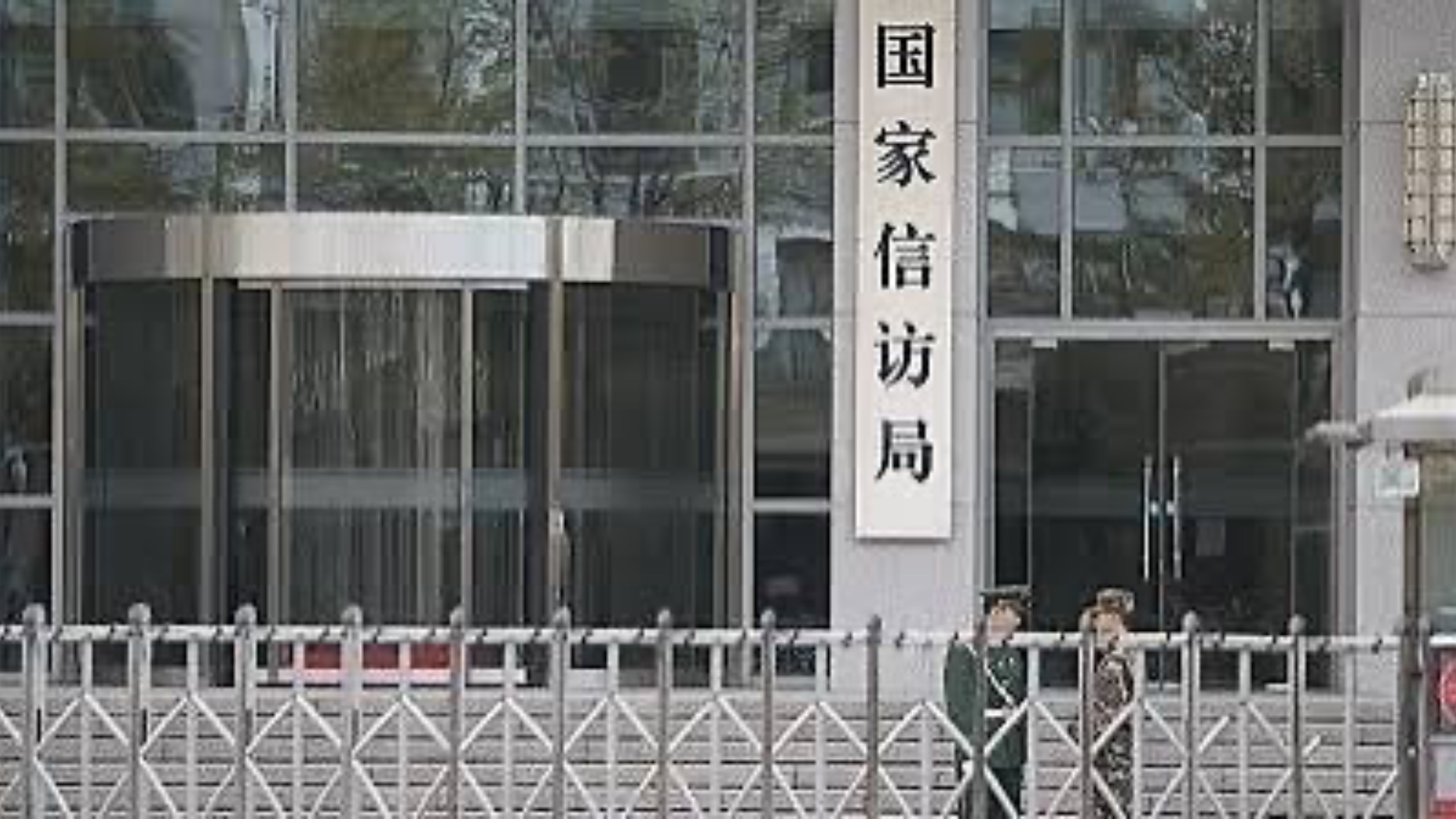
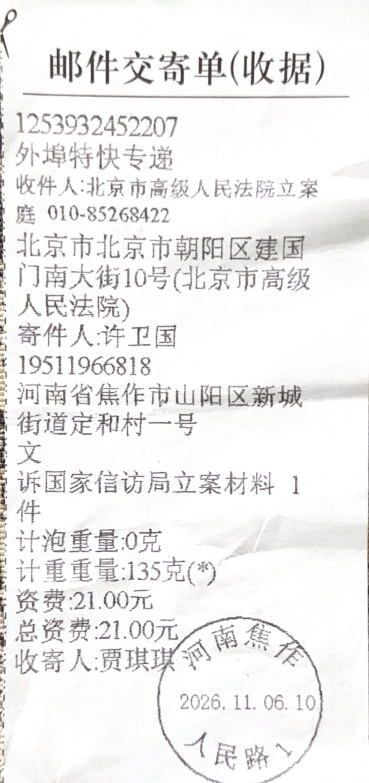
On the morning of 6 November 2026, I brought the prosecution materials that had been prepared the previous day to the post office and sent them to the Beijing City High People ' s Court by mail. This is an administrative indictment, and the accused is the State Bureau of Letters and Visits. And the reason why I moved this material from the Beijing Municipal Intermediate People's Court to the High People's Court was the silence of the Beijing Municipal Intermediate People's Court for 15 days after it had received my case file — neither a case was opened nor a decision to leave it open.
01
How did this happen?
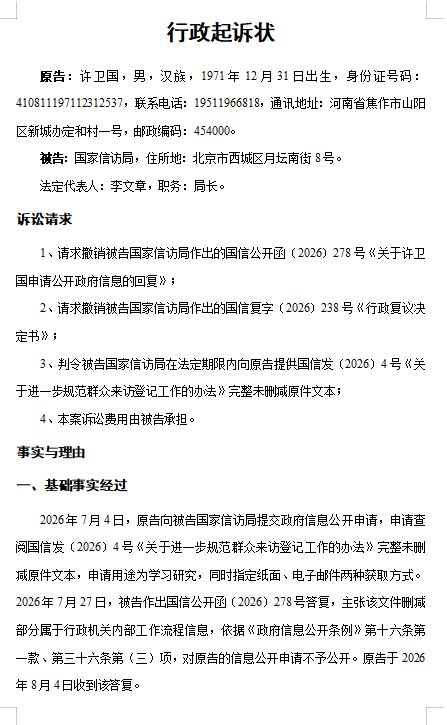
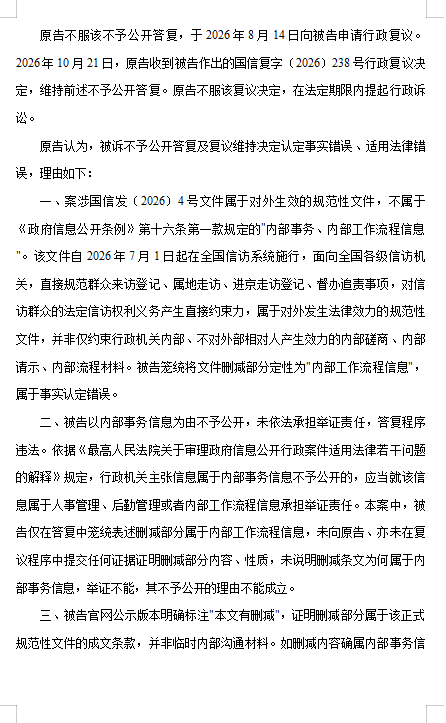
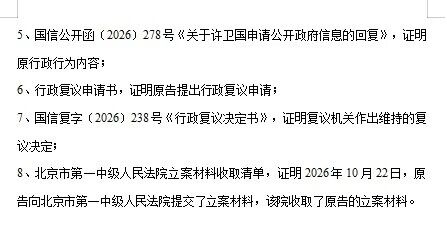
On 4 July 2026, I submitted to the State Mission Office a public request for government information, requesting access to the original, unreduced version of State letter [2026] 4 on the modalities for further regulating the registration of public visits, for study purposes. This system, which directly regulates the registration of public visits, is clearly marked in the official website version by the words “the present document has been deleted”. I wonder: why the whole text of a document that is directed at the nation and that restricts the right of every visitor to act is precisely the one whose organs are least prepared to show to the public.
On 27 July 2026, the State Office of Communications and Information sent a reply No. 228 (2026) to the public letter, in which it argued that the deletions were part of the “information on the internal workflow of the executive branch” and that the application was not made public. On 14 August, I applied for administrative review in accordance with the law. On 21 October, I received a copy of decision No. 208 (2026) on administrative review, which upheld the reply, which was not made public.
So far, from a refusal to make a public response to a decision to review the refusal, the self-correction within the administrative system has completely closed down. I have only one way to go — administrative litigation, according to the law. It is no longer just a dispute over the text of a document, but a path through which ordinary citizens can seek to obtain the “right to be deleted” of a State organ through the administration of justice.
02
Seven days. It's a legal procedure that's not going to pass.
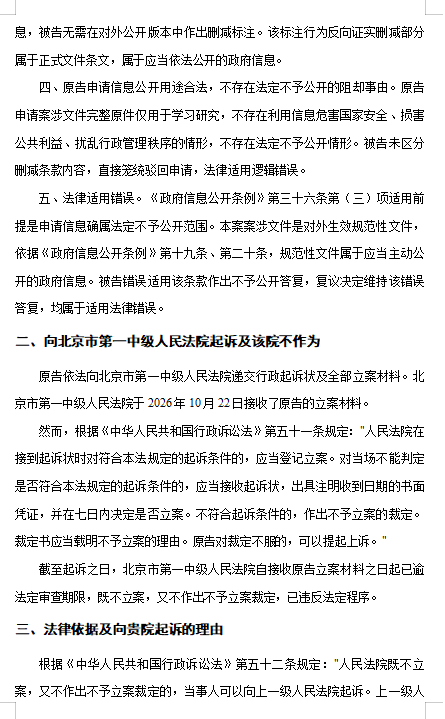
Article 51 of the Administrative Procedure Law of the People ' s Republic of China makes it clear that people ' s courts are charged and that cases should be registered if they meet the conditions for filing a complaint; If this is not possible in the field, the indictment shall be received, a written certificate indicating the date of receipt shall be produced and a decision shall be taken to open the case within seven days; If the conditions for prosecution are not met, the decision is not to open the case.
On 22 October 2026, the Beijing Municipal Intermediate People ' s Court received my case file. From that day on, the law gave it seven days, and it began to count down.
As of 5 November, 15 days had passed (and more than seven days worked). I have not received notice of the case being opened or a ruling not to open it for the past 15 days. The registration system has been in place for many years, and “the need to have a case and to have a case” is a commitment to be written into law and the most eloquent slogan of judicial reform. But for a party like me, who handed over the material and then waited, “receiving” was a blank without any response.
03
Silence is more difficult than a single verdict.
I'd rather get a ruling not to open a case. The ruling, even if it refutes my indictment, will at least set out the grounds for my appeal, and there will be an opportunity to put the reasoning on the table. But now, nothing. The absence of a case or decision would mean that the parties' right to sue would be suspended — either on the record or off the table.
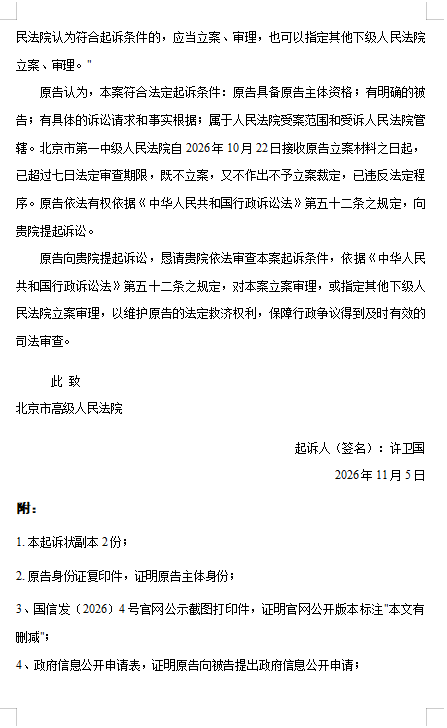
This is precisely the problem to be addressed by article 52 of the Code of Administrative Procedure. This article provides that if the People ' s Court does not file a case and does not make a decision not to open a case, the person concerned may bring the case before a higher People ' s Court; If the higher people ' s court finds that the conditions for prosecution are met, it shall open, hear and may appoint other lower people ' s courts to open and hear cases. This article is the last door left for a party who is blocked by “silence”.
04
I sent the material to the Beijing High People's Court.
I've re-prepared the entire prosecution file.
On the morning of 6 November, I came to the post office and sent the material to the Beijing City High People ' s Court. I made it clear in the indictment that the case had the right plaintiff, the clear defendant, the specific claim and the factual basis, which fell within the scope of the People ' s Court and the jurisdiction of the court against which the case was brought, and was in full compliance with the requirements of the statutory prosecution. The Beijing Municipal Intermediate People ' s Court, which has been overdue and has not yet decided, has violated the procedure established by law.
I have asked the Beijing High People ' s Court to open a case under article 52 or to appoint other lower people ' s courts to open a case. What I want is never special care, but a normal, regular judicial review.
05
My appeal.
I wrote this to make three pleas of implorence.
I wrote this down to make a three-point appeal.
- Call the Beijing High People ' s Court to see this material and see the rule of law. Article 52 is either a paper-based arrangement, which has meaning or, when the lower court is silent, the higher court reopens the proceedings. Please file a case by law or by law, and leave the “no case open and no decision” pending.
- I earnestly request that the court implement the registration system in a contradictory manner. The case registration system is a retrograde "review system" with its soul that lowers the threshold and guarantees the right to sue. If the material is collected and the sea is sunk, then the commitment to reform will remain at the last kilometre. A party who does not wait seven days to respond, is not only a person's right but is confident that a case will be “useful”.
- I would also like to say that a regular audience has been able to turn the circle of open information, administrative review, two-tier prosecutions in order to see the full text of a document that should have been made public and to get a chance to go to judicial proceedings. If even the court door requires the person to bow down on “up-level prosecution”, the weight of justice as the last line of defence for social justice will be reduced in silence.
I have always believed in the law and, indeed, in the law, only once — this time at the post office — to send the material to the Beijing City High People's Court. I am asking, but only for an opportunity to be taken seriously: to put the law to the ground, to stop the filing of cases and to make it unnecessary for every person who is legally defending to wait in silence for an answer without even a reason.
The material has been sent out. I await the response of the Beijing High People's Court.
Original source
- Original title
- 沉默,比一纸裁定更难面对——我为什么向北京市高级人民法院起诉
- Original author
- 卫国说说
- Source account / outlet
- 微信公众号“卫国说说”
- Originally published
- 2026-11-08 00:00
- Content treatment
- Republished
- Original article
- View original ↗
- Published by China Focus
- 会员发布
Article discussion
Verified members can discuss this report publicly and manage their own content.
Checking member sign-in status…