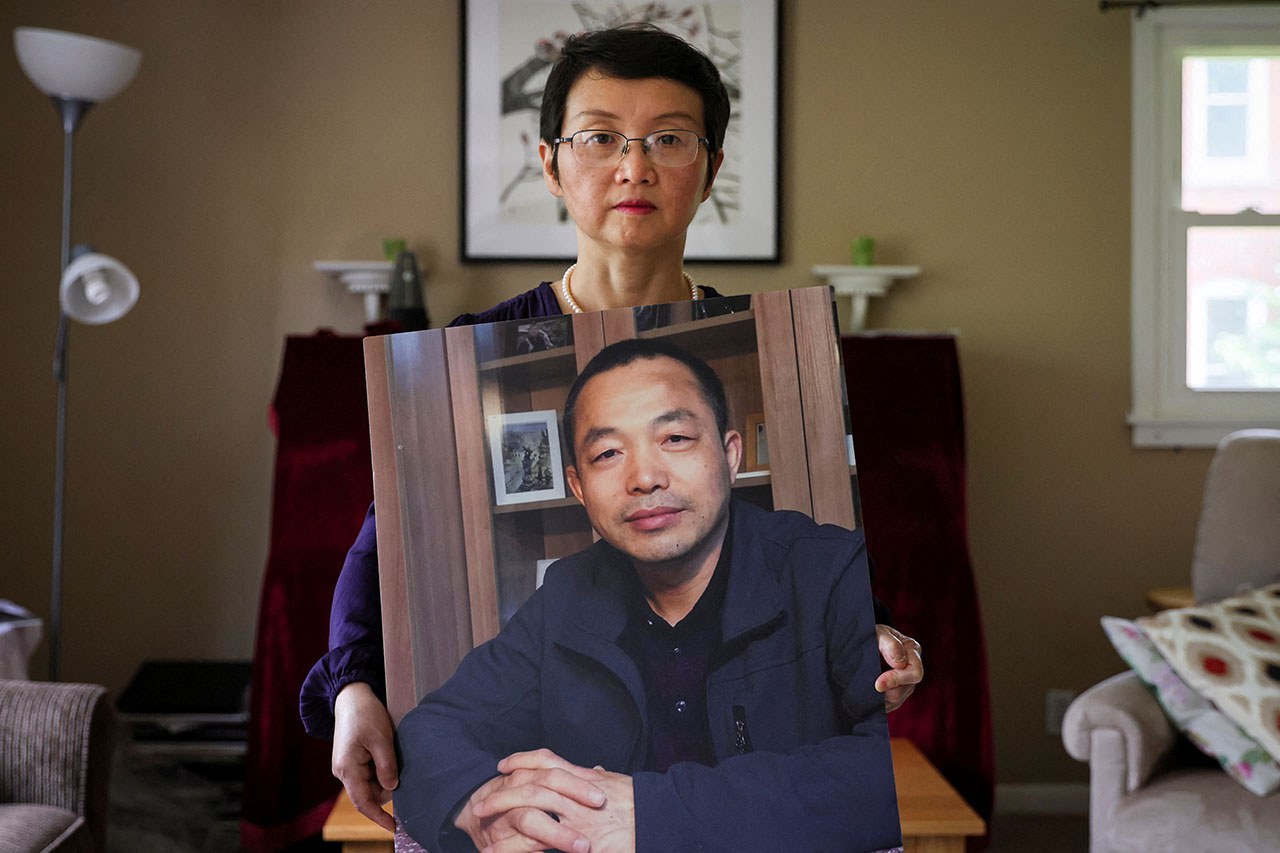
The 36th letter, written by Rosheng Chun to his husband, the family, failed to reach the cell in its entirety. > > Disclosure of 14 October > reveals that after many contacts with the Gangpei Prison Department, staff members admitted to having withheld letters for reasons related to “national security” “prison security” and “impairment of rehabilitation, but did not state Which sentence is in violation of which provision is made, and it does not provide an effective channel of challenge. For a person in prison, the family book is not an abstract right to communication, but one of the only links in daily life between him and his wife.
> The public account of Ro Sheng Chun also gave details of the seized letters. As previously disclosed, in her letter, Tanya Ting received only four pages of the chess content, and the private letter to him was not delivered to him. Rosheng stressed repeatedly on social platforms that the prison experience of not allowing intimate telephone calls and removing Bibles and chants had persisted, and that she was particularly unable to accept that the words of emotion between the spouses were being intercepted as a whole. Her anger does not come from legal concepts, but from the waiting times and again that she cannot confirm what the husband has read.
Ding Jia-hee is not a stranger to ordinary criminal cases. He has long been involved in the new civic movement and has been sentenced for political activities for the offence of subversion of the State power. For many years, wife Roh Seung-chun has maintained contact within and outside the prison walls by writing letters, publicizing communications and liaising with human rights organizations. 2024, Radio Free Asia has published a photo of Rochun's family photo and she has published her first letter in prison from her husband; Now she's stopped by a letter from her husband. Two separate time records show that communication barriers are not sporadic.

The call also included a key fact: Roxing Chun asked not only for letters but also for guarantees of freedom, purchase of books, reading of the Bible and personal telephones. According to her, the prison's response to these matters depends on the “reform needs” of the Dinh family, who have no right to make different claims. Thus, the reading of letters, the availability of books, the accessibility of religious texts and the telephone call are included in the same set of management decisions.
Prisons certainly have statutory authority, but this power is not without borders. The refusal to specify specific content by means of a general interpretation of “national security” means that families cannot judge whether the detention is in terms of the language that touches the explicit restriction or the private expression that the administrators are unwilling to allow the sentenced person to read. In cases of political prisoners, administrative discretion, when it lacks testable standards, may shift from a regulatory order to a tool for depriving families of their ties.
Imprisonment deprives the person of liberty and should not allow every word between the husband and wife to become a feeling that exists after the prison has allowed it. Ro Sheng Chun was not asking the family to get his sentence off, but to read his wife ' s letter. This book, No. 36, is parked in prison, leaving a specific and identifiable way of extending power to private life in political cases involving the Communist Party.
Article discussion
Verified members can discuss this report publicly and manage their own content.
Checking member sign-in status…