An elderly man, nearly 80 years old, who had been looking for environmental services, town governments, administrative litigation and traveled to Beijing to report on the dam noise that had been going on in front of his home for many years. Nine years later, the noise dispute affecting family life has not been resolved. Today, she and her son have lost contact in Beijing at the same time.
The elderly, Kang Kai-bai, is a resident of the new three villages of Huebao Town, Chongqing and the New Zone. Her son, Chiang Lin Hsing, used the name Jiang Zou Sung.
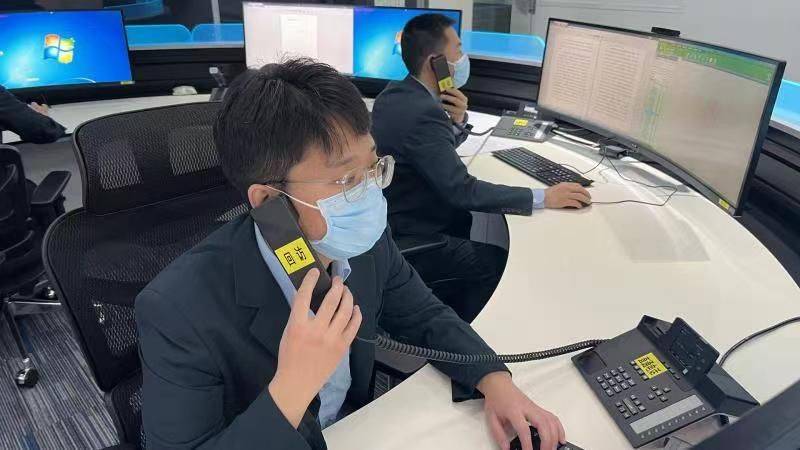
On 27 October, Kang Kai-bai and Chiang Lin-hoon lost contact in Beijing. The family called Beijing 110 several times to call the police and requested information on the whereabouts of the two men, but for several days no definitive response was received.
原始来源 · msguancha.com10月30日姜开碧母子在京失联报道msguancha.com ↗On 28 October, the family formally filed a complaint with the Beijing City Public Security Bureau and Command Centre 110, requesting that the physical security and whereabouts of the two persons be verified and that the police be informed of the search after taking the police.
As of the late evening of 30 October, there was still no confirmation of the whereabouts of the mother and son as of the time of the public report.
The incident was particularly marked by the fact that Kang Kai-bai and her son had been repeatedly prevented by local authorities for their rights. In September, the elderly went to the town government to respond to the problems, were dragged by staff and then went to the hospital for emergency treatment. In March, she was also accused of being controlled by Chongqing's personnel in Beijing when she responded to her claims.
These earlier events gave the Beijing failure a distinctly different context from that of the common family.
Why did a civil dispute that had originally involved environmental noise management last for many years and eventually resulted in the loss of contact between senior citizens and their sons in the capital?
A modulation dam that keeps a family in a long, rights-based life #
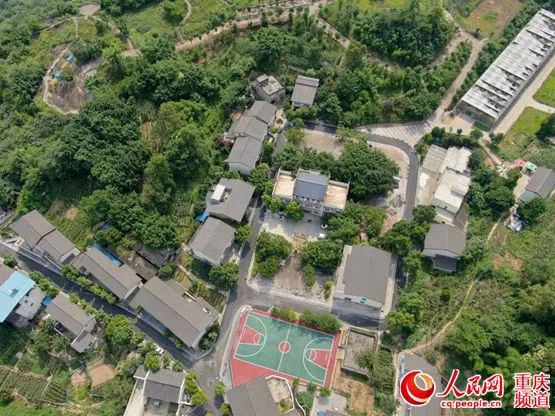
The Kang Kaibai family lives in the new three villages of Chongqing Po Town, near the river-side ecological control dam.
The continued noise from the water flow differentials has seriously affected the lives of the nearby population when the water facility was completed and operational. Chiang Lin Tung has indicated that the home is only 10 metres from the regulating dam and that the noise is even more pronounced when the currents increase during the rainy season.
He measured and recorded night noise, reaching 57-58 dBs at some point, or even higher.
For the general population, continued noise can cause sleep interruptions, mental fatigue and a deterioration in the quality of daily life; For the aged Kang Kaibai, the long-term lack of quiet breaks is a heavy burden.
Mothers and children initially wanted to address this issue through the environmental sector.
Since around 2018, Chiang Lin Tung has complained to the authorities on several occasions to detect, identify and manage the dam noise. However, disputes arise between the executive branch over management responsibilities.
Chiang Lin Tung has taken administrative proceedings to require the competent environmental authorities to perform their duties. He states that at first instance, the authorities concerned explained it on the grounds that the sound of the dam and the natural flow of water did not fall within their management.
However, he had previously been consulted by the Government and had received responses that should be dealt with by the environmental protection authorities.
The exact department responsible for the noise management of water works in a normal household living near a dam should have been clarified by the division of administrative duties and professional testing.
In reality, however, mother and son are constantly seeking explanations between different government departments, while the real noise that affects life persists.
The dispute also had an earlier background in administrative litigation.
According to the public sentencing documents, in 2015, Jiang Zou-Sheng requested that government information be made publicly available on the commencement of construction of the ecological management dam at the riverside. Since the relevant regulatory bodies indicated that they had not produced the specific approval documents they had requested, the dispute was subject to administrative review and administrative proceedings.
The People ' s Court of the Su northern district of Chongqing city, in its judgement of 21 April 2016, rejected his application for compensation.
Although the decision did not involve the entity ' s finding of subsequent noise pollution, it proved that Jiang Zou-Sheng ' s administrative dispute relating to the river ' s ecological management dam had been in judicial proceedings since at least 2015.
The dispute between a common family and local public works lasted for more than a decade, indicating that their advocacy experience was not a temporary political protest but a long-standing and real conflict of interest.
Visiting from 19 citizens to drag the old people to town government staff
On 24 February 2021, 19 human rights defenders from Chongqing visited Kang Kaibai ' s home.
原始来源 · epochtimes.com2021年御临河噪声维权历史采访epochtimes.com ↗The visitors hoped to promote governance measures by learning the impact of dam noise on the lives of mothers and children in the field.
One of the visitors indicated that the relevant environmental protection authorities had previously conducted noise measurements and that there had been problems with the standards. However, the lack of complete public text of official testing reports has prevented the outside world from independently determining the specific data and applicable criteria for all measurement periods.
At that time, Chiang Lin Tung described the insomnia, headaches, ear ringing and other physical disorders caused by the prolonged noise of her mother.
The visits of citizens indicate that the matter has gone beyond individual intra-family disputes and has become a public environmental issue of concern to local defenders.
However, several years later, the dispute has not been resolved.
On 9 September 2026, Kang Kei-bai went again to the town government of Poo to find the town leader to negotiate noise management.
原始来源 · msguancha.com9月姜开碧遭拖拽受伤新闻报道msguancha.com ↗According to the information previously publicly released by the client, the elderly were prevented from reaching the town government by the Director of the Office of Security, Chen Wang, and the staff, Hu Jing, Lee Chun Feng and others.
Instead of giving her access to the office area, the staff members dragged, controlled and raised her on the ground. It is alleged that Chen Wang has also described the behaviour of the elderly as “scathing”.
This is no longer an ordinary administrative reception dispute.
Kang Kei-bai is an elderly person of nearly 80 years of age who has been addressing the Government for many years on environmental issues. She did not automatically grant any staff member the power to restrain her movement by violence.
Even where there is a need for office order management, on-site measures taken by staff members must meet legitimate, appropriate and necessary requirements.
The elderly went to the Red Cross Hospital in Chongqing City, i.e. the People ' s Hospital in Jiangbei District, for emergency care.
The medical records cited in the public report indicated that she had suffered multiple pains throughout her body and that the pain was evident in the right shoulder neck, and the doctor recommended further follow-up to remove the hidden fracture of the right shoulder.
It is important to emphasize here that hospital records are for post-injury physical condition and cannot be a separate substitute for a specific investigation of the behaviour of each staff member on the site.
However, the physical drag and subsequent injuries of the elderly and medical attention were sufficient to put the handling of the town of Po into serious question.
The use of administrative resources in ways that do not address dam noise but that have the capacity to organize multiple people to block senior complainants exposes serious imbalances in governance at the grass-roots level.
Go to Kyoto to reflect the demands, why does it increase the risk to the person?
The risks that Kang Kai-bai was exposed in Beijing did not begin in October this year.
On 4 March 2026, on the eve of the two national meetings, Kang Kai-bai and two other Zhongqing defenders Liu Guangfeng and Zhao Weiqi were reportedly forcibly taken away by Chongqing ' s personnel in Beijing during their activities in the Beijing House Mountain.
According to information from the source at the time, the three men were subsequently transferred to a building in the South Shogun Street in the Tondai district of Beijing, where freedom of movement was restricted.
Liu Guangven has sought help from the outside world, requesting the person concerned to call the police and help them out of control.
This experience at least shows that Kang Kei-bai had previously faced serious allegations in Beijing of cross-regional control by local agents.
Local governments, which have established a liaison in Beijing, should have assumed normal administrative coordination responsibilities. But if the persons concerned use such institutions and their resources to track, control or forcibly remove citizens from the territory to which they have come to complain, so-called territorial administration may become a restriction on the normal movement of citizens.
In September, she was again dragged into the town of Hue Po.
By 27 October, Kang Kai-bai and his son Chiang Lin-ho had lost contact in Beijing.
The three incidents, which occurred at different times and in different locations, do not allow for a direct conclusion that the failure was linked to the local Chongqing population.
But by putting them together, it is already clear that Kang Kei-bai has faced a real situation for rights protection over the years: every time she tries to bring the issue of noise to a higher level, she may face new administrative resistance and personal risks.
This defence cost is clearly beyond the scope of ordinary administrative disputes for a family that would have wished to have a quiet living environment.
Beijing 110 has been called, why is there no news of the mother and child?
After the loss of the Kang Kai-bai child on 27 October, the family first sought out two persons by calling the police.
The Beijing public security organs, as the police, have the responsibility to verify the relevant leads, coordinate police resources in different jurisdictions and conduct the necessary investigations.
However, families have not been given a clear statement after they have been repeatedly called to the police.
On 28 October, the family filed a complaint with the Beijing City Public Security Bureau and Command Centre 110, requesting that the whereabouts of Kang Kai-bai and Chiang Lin-hoon be traced and their physical safety verified.
The complaint no longer merely requested the police to look for lost relatives, but also reflected the dissatisfaction of the family with the post-call treatment.
Beijing has intensive public transport, registration of accommodation and security management resources. For the police, the search for an elderly adult and his adult son should be conducted at least around the last place where the two men appeared, the people who accompanied them, traffic records and other legally accessible leads.
If both persons are subject to coercive measures in administrative or criminal proceedings, the relevant authorities shall comply with the legal formalities in accordance with the applicable law.
If the two persons are not officially controlled, the police also need to take appropriate search-and-search action in the light of the police.
The key contradiction here is clear.
One family reported to the public security authorities that they had lost contact and asked for information about the basic security of their loved ones, but after many days it was not possible to confirm their whereabouts. This has caused families already under stress for long periods of time to fall back into anxiety that they cannot manage the situation of their loved ones.
As at 31 October, the public information retrieved from this report had not been able to confirm the latest whereabouts of the Kang Kai-bai children, nor had it been sufficient to establish the official legal instrument by which authority the two were taken.
This information gap is in itself one of the most serious practical problems of the current events.
From noise complaints to citizen failure, what is exposed to Xi Jinping's grass roots under the regime?
The experience of Kang Kai-bai and her son reveals a long-standing contradiction in grass-roots governance in China.
When the population is affected by the effects of public works on its livelihood, the Government should assume responsibility for detection, coordination, governance and rights relief.
When residents decide not to accept an administrative decision, they may apply for administrative review, initiate proceedings and submit questions to the relevant authorities.
But the experience of Kang Chai-bai and her son over the years has taken a different direction.
Environmental problems are not resolved by them; Administrative proceedings and complaints last for many years; (b) Old people are prevented from re-entering the town government; The visit to Kyoto reflected allegations of physical control over the claim.
In such an environment of power, the person who raised the question was increasingly the subject of management and restriction, without the original environmental dispute being resolved in substance.
The Communist Party has long placed social stability at the top of its administrative hierarchy. Since Xi took power, emphasis has been placed on strengthening grass-roots governance, risk-based risk mapping and territorial responsibility.
However, when the maintenance of stability is understood by local staff as preventing complainants from entering government institutions and defenders from appealing across regions, the grass-roots administration may be divorced from the original purpose of resolving public problems.
The story of Kang Kai-bai gave this power the specific face.
They do not ask the Government to implement unimaginable public works, but rather to address the long noise caused by a dam.
They have also tried to seek redress through the courts and government departments.
However, years of complaints have not led to a peaceful life, leaving behind the old wounded, cross-regional disputes over physical control and the fact that the mother and son are now lost in Beijing.
The most worrying aspect of such an incident is not the inefficiency of a sector, but rather the ability of an ordinary family to maintain basic personal freedom after a dispute with the local government and to be effectively protected by the public security organs.
The dam remains there, and long-standing disputes remain unresolved. Now, the families of Kang Kai-bai and Chiang Lin-ho cannot confirm their whereabouts.
The incident has evolved from an environmental noise dispute to a public event involving citizens ' freedom of movement and security of person.
The cost of long-term advocacy should not be that an elderly person and his son lost contact in Beijing, let alone that family members are unable to know about the safety of their loved ones after they have called the police.
China will continue to follow up on the whereabouts of Kang Kai-bai and Chiang Lin-hoon and the follow-up of this loss by the Beijing public security organs and the relevant departments of Chongqing.
Article discussion
Verified members can discuss this report publicly and manage their own content.
Checking member sign-in status…