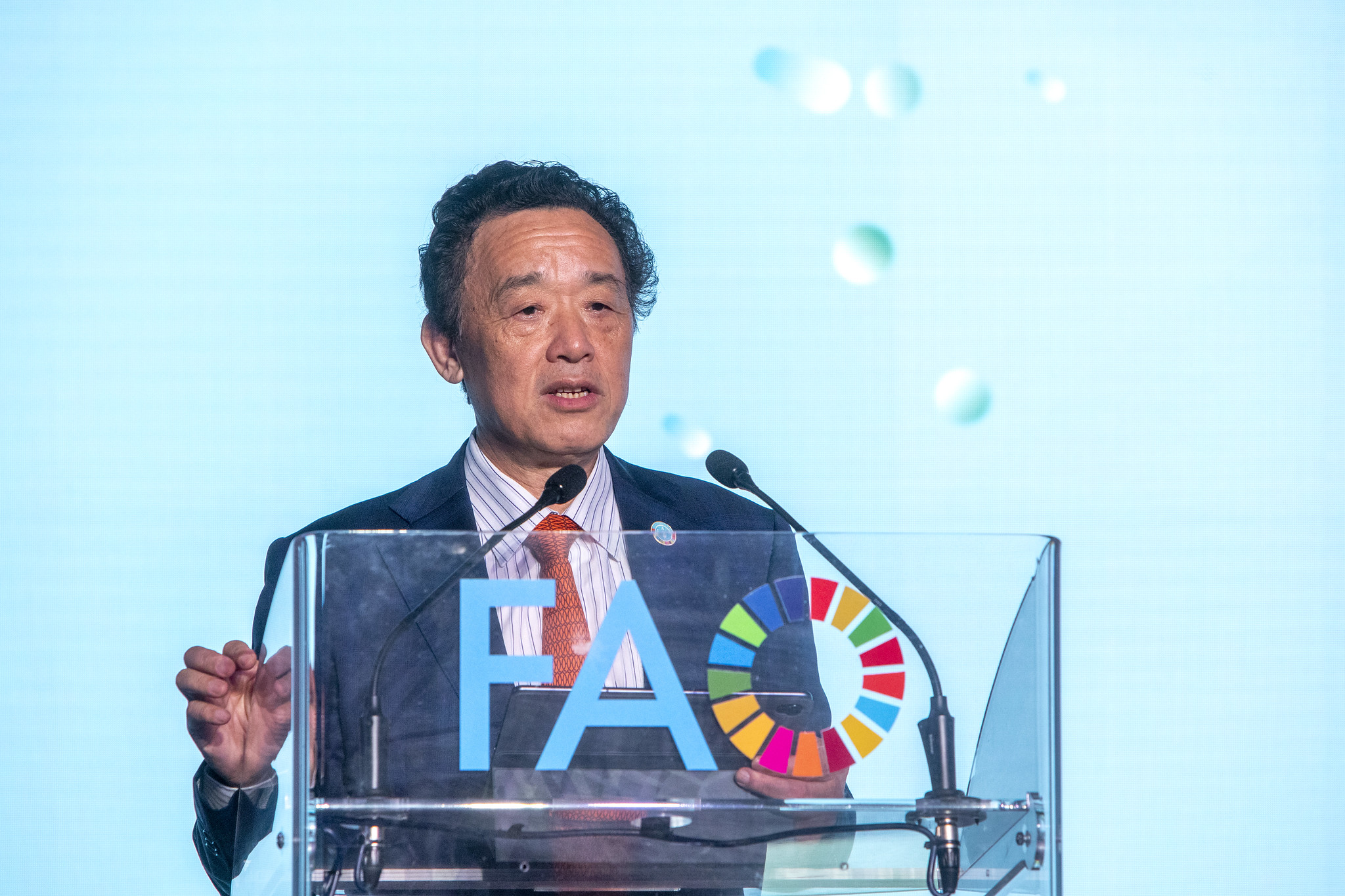
On 30 September, Benjamin Davis completed his 26-year career at the headquarters of the Food and Agriculture Organization of the United Nations (FAO) in Rome. Two days later, the senior official, who had served as Director of the Rural Transformation and Gender Equality Division, formally filed an internal complaint against non-renewal of the contract, stating that the decision related to his ongoing concern about the famine in Gaza, his participation in the silence and the promotion of human rights-related research. <a href="https://www.reuters.com/world/china/ex-un-director-who-protested-gaza-famine-challenges-his-dismissal-2026-10-02/"target" = _blank" rel = `noopener noreferrer' da-linked-reference= `true' data-reference-label= "Reuters" > Reuters reported on 2 October that the decision was made at the request of Director General of FAO.
原始来源 · reuters.comReuters:前FAO高级官员就不续约提出申诉路透社10月2日报道Benjamin Davis申诉案及屈冬玉相关公开言论。reuters.com ↗The dispute did not suddenly arise from the day of separation. Davis stated that his team had conducted technical studies on food access in Gaza since 2025 and had tried to discuss the impact of international humanitarian law and human rights; Some of the materials were subsequently withdrawn by the FAO legal department. On 1 July this year, he received official notice that the contract would be extended only until 30 September and would not be renewed. According to Davis, the reasons given by management relate to the “impartiality” and leadership standards that senior managers should follow.
What really pushes internal disputes to the open is the "A href"https://www.fao.org/director-general/news/680615420/en"target" rel = "nopener noreferrer" data-linked-reference = "tru" data-reference-label = "FAO Cowthorne Open Page" </a> on 30 September at a forest theme event. Videos obtained by various media indicate that FAO does not allow officials to “play human rights”, that those who wish to talk about human rights may go to Geneva and that employees who violate the rules should be “dismissed”, regardless of their position. FAO has not provided a complete and public explanation of Davis ' allegations and of this statement to date.
Davis, for his part, argued that this statement touched upon the most fundamental value conflicts of United Nations agencies. <a href="https://www.thenewhumanitarian.org/interview/2026/10/01/senior-fao-official-price-he-paid-speaking-out-gaza"target" = _blank" rel = `noopener noreferrer' data-linked-reference = `tru' data-reference-label = `new humanitarian' >, he said in his interview with New Humanitarian >, that food, agriculture and famine could not be completely cut off from human rights; If even human rights discussions are seen as crossing borders, then “a United Nations body that does not let anyone go” loses part of its raison d'être. He also stated that he had not organized the related memorial but had participated and believed that it was a statement by United Nations staff based on professional and ethical positions.
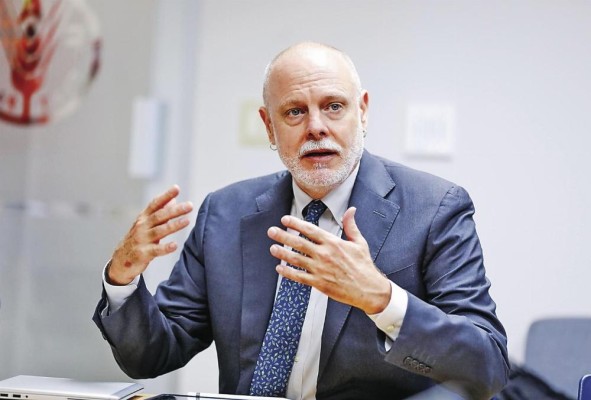
From the time line, the dispute has moved from “non-renewal of the contract” to “procedural responsibility”. Davis now challenges not only whether individuals should remain in office, but whether FAO management has used “impartiality” to suppress human rights and humanitarian issues that should fall within the purview of professional discussions, and whether the entire decision process provides adequate procedural safeguards. Reuters stated that the case had entered into FAO internal judicial proceedings and that it might subsequently enter the United Nations Administrative Tribunal system.
Kuo Dongyu became Director General of FAO in 2019, after a long career in the Chinese agricultural system and as Vice-Minister of Agriculture and Rural Affairs of China. As head of the United Nations specialized agencies, his public duty was not to implement the policies of the Chinese Government, but to manage FAO in accordance with the rules of the United Nations system. But that is why his words about the “human rights game” have given rise to greater controversy: the public portrayal of human rights issues by a head of a United Nations agency as “plays” that need to be excluded from the work of the agency, and the apparent tension between human rights, dignity and the principle of “no one leaves behind” that has long been emphasized by the United Nations system.
This also led to events going beyond Davis's personal presence. The question then becomes: does the internal political culture, understanding of dissent and human rights issues in United Nations agencies, when they are at the helm of senior officials from the power system, affect the way in which international institutions are managed? There is no evidence that the case of Davis was handled under the CPC directive, nor should the background of Chinese officials be equated with undue interference. There is, however, reason to be concerned whether his open attitude towards the concept of “human rights” is being translated into a perceived management of the boundaries within the organization.
New Humanitarian Report also cited sources close to FAO that some staff members were disturbed by Davis ' personal encounter and statements made in Winterfell. Davis himself stated that, in his view, the real question was not whether every employee had to make a public statement, but whether the organization allowed professionals to discuss famine, human rights and international humanitarian law within their sphere of responsibility without fear of professional consequences.
FAO management also has its institutional rationale. As an international organization of member States, FAO has long emphasized technology neutrality and the need to maintain a working space between conflicting governmental positions. Those who support management may believe that staff should not turn institutional positions into platforms for political initiatives. But the controversy is that when famine, food access and humanitarian law are discussed, it is difficult to fully cut the so-called “technical” and “political” issues.
This wave has revealed not only a personnel dispute within the United Nations, but rather how international institutions define “neutral” under political pressure. If “neutral” means avoiding partisan positions, it can protect the functioning of institutions; But if “neutrality” becomes further a bar for staff members to discuss human rights consequences directly related to their profession, it may also evolve into a silence mechanism.
The responsibility for the dispute was already very specific for him: he needed to explain why Davis was not renewed, what acts had been found to violate the standards of impartiality, whether the relevant standards were consistent and applicable to all senior managers, and why the term “human rights game” was used openly. For FAO, a more basic question needs to be answered: whether human rights are an external political issue or an inescapable part of the understanding of famine, exclusion and resource allocation in a United Nations body with a central mission to eradicate hunger.
As at 2 October, Davis ' complaint was still in internal proceedings and FAO had not yet published the final outcome of the processing. Of greatest concern was whether internal reviews were making key documents public, whether management decisions were explained and whether the dispute would lead FAO to redefine the boundaries within which staff expressed their views on professional issues.
Article discussion
Verified members can discuss this report publicly and manage their own content.
Checking member sign-in status…