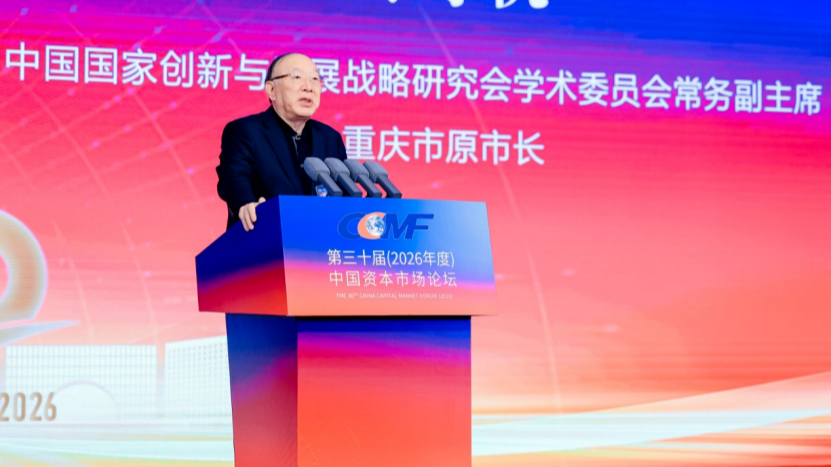
The evening of October 13th,The National Monitoring Board of the Central Disciplinary Commission announced it in less than 100 words.The former Deputy Secretary of the Chongqing City Council, former Mayor Huang Chi-sa, is under disciplinary review and inspection on suspicion of “serious disciplinary offences”. The briefing did not include any specific matters or indicate which stage of the investigation was to be undertaken. An official who had been discussing macroeconomics more frequently in the 15 years of his reign and after retirement had thus entered a closed disciplinary process from the public policy podium.
Huang Chi Fan's political weight is not limited to the mayor's title. He entered local economic decision-making from the time of Shanghai ' s development and was transferred to Chungking in 2001, where he was a member of the municipal council of Bo Hee-lai and Sun Qiang. He stayed in office after the crime had struck the Chongqing. After his investigation, Sun Qing left his local post. Long-term traverse political cycles, which have led to the labeling of him as a “no-defunct” person.Radio Free Asia, in her curriculum vitae, stressed thatIt is this rare continuity that has made the survey more visible than the general retirement officials.
Only two facts can be confirmed at this stage: the Central Disciplinary Commission has initiated disciplinary review and inspection investigations; Specific allegations have not yet been made public. The “serious breaches of discipline” cannot be automatically criminalized as passive bribery, nor can they be presumed to be cases based on past political events. Criminal responsibility, if established, must still be referred to the prosecution service, prosecuted and decided by the court.
However, procedural restraint does not amount to political silence. Huang Qi-tao has long been involved in land, finance, State finance and large-scale project decisions, areas that have a significant impact on urban development, but which rarely have a complete public disclosure of the basis for decision-making, conflicts of interest and accountability chains. When the investigative bodies give only a credence of conclusions, society cannot judge where the problem is, nor can it distinguish between individual violations, policy failures and factional liquidation.
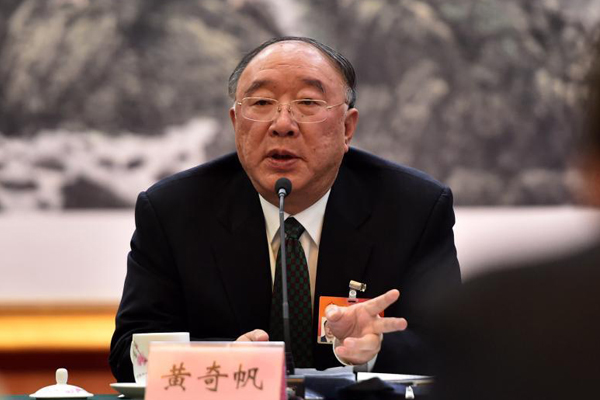
This is also a long-standing contradiction in the CCP anti-corruption narrative: investigations can be initiated suddenly, but information is controlled by the case-handling authorities in a one-way fashion. The respondents were unable to respond publicly, and the local assembly and the audit body were not obliged to synchronize their statements; The public saw only one familiar name disappear from the news and then waited for the next standardized bulletin. The more centralized the power, the more easily the case is packaged into organizational self-cleaning rather than a system of accountability that can be tested by society.
Huang Ki-shang was known for his good work in explaining complex economic policies. It is now the turn of the authorities to explain his case, leaving the word “inquiries” to the public. The real need to be documented is not just the loss of another high-ranking official, but why is a person with enormous public resources able to move forward in the long term in a system that lacks external oversight and why the public remains outside the door when the system decides to take responsibility?
Article discussion
Verified members can discuss this report publicly and manage their own content.
Checking member sign-in status…