
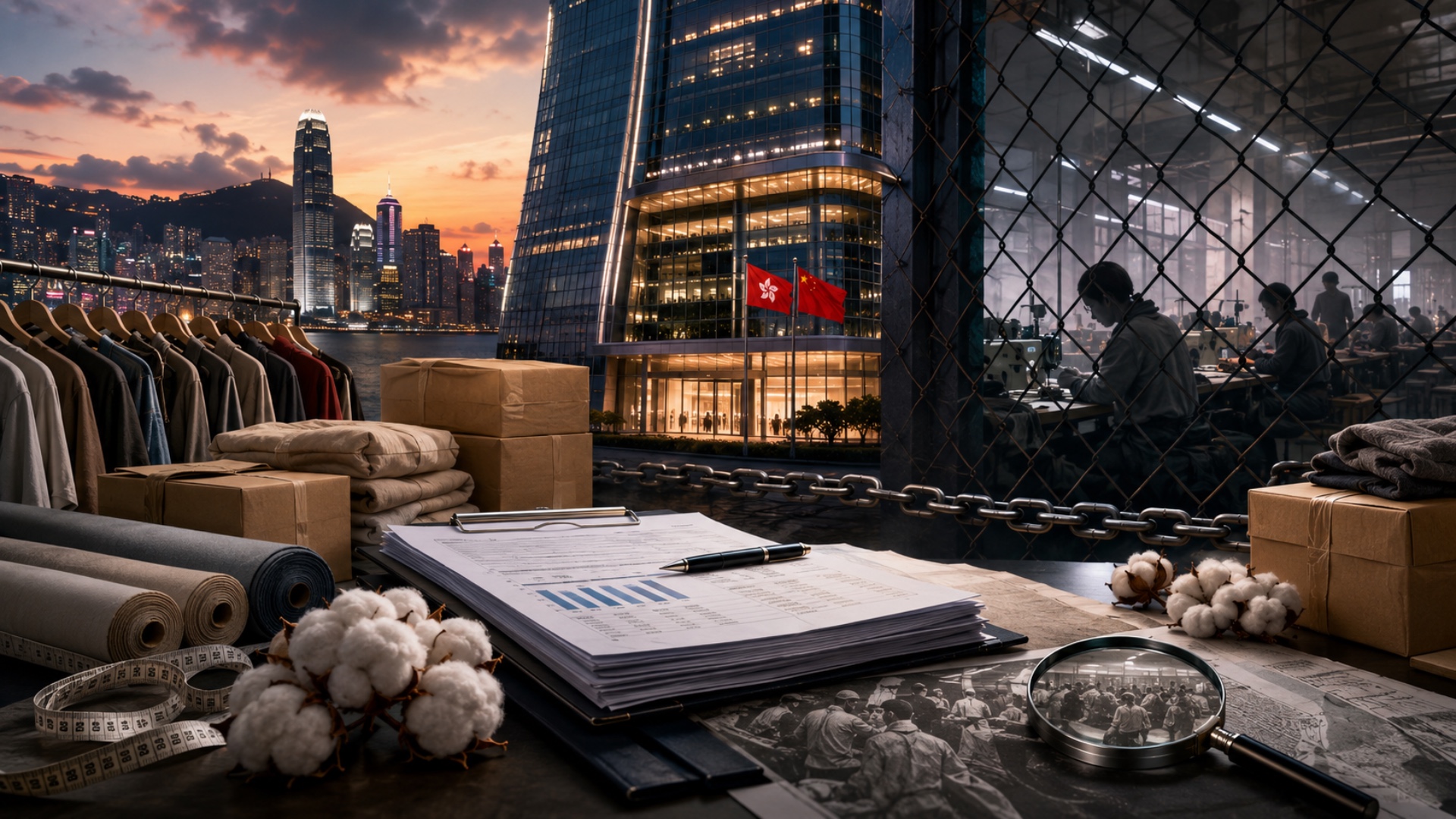
Shein, a fast fashion company founded in China and currently headquartered in Singapore, was once again challenged by Xinjiang’s supply chain and forced labor risk disclosure after filing its first public offering in Hong Kong. Reuters’ review of listing documents revealed that although shein listed supply chain, reputation and regulatory risks, she did not specify the Xinjiang cotton dispute and did not respond positively to the US and human rights organizations’ forced labor allegations against its supply chain over the years.
Shein has previously sought to be listed in New York and London, but its supply chain transparency, labor standards and issues related to Xinjiang’s cotton origin continue to be regulatory and political barriers.
The tender documents do not specifically respond to Xinjiang cotton problem
Shein’s latest Hong Kong listing documents outlined its business model, technology system, supplier network and general reputation risks, but did not specifically mention Xinjiang, nor did it specify whether its products contain cotton from Xinjiang.
This omission is concerned because the Xinjiang supply chain has been the core issue of external censorship when Shein previously pushed the marketplace in the U.S. and UK. U.S. lawmakers and human rights organizations have asked the company to prove that its products do not involve forced labor, and to explain whether the raw materials can be traced back to the specific place of origin.
Shein has long denied the existence of forced labor in the supply chain, and said the company carried out audits and compliance management on suppliers, while Beijing denied forced labor in Xinjiang, saying the allegations were political manipulation.
But the key to the dispute is not just whether the company has denied it, but whether its listing documents provide investors with sufficient specific information to assess the risks involved, including cotton origin, raw material tracking mechanisms, where suppliers are located, the scope of third-party audits and the outcomes of processing after breaches are discovered.
Transfer from New York, London to Hong Kong
Shein was founded in China in 2012 and then moved its headquarters to Singapore, but most of its products are still produced by thousands of third-party suppliers in China. Since the company’s supply chain and main operating system are still heavily dependent on China, its overseas listing plans are also bound by China’s securities regulation.
Shein initially sought to be listed in New York, but was under strict scrutiny in the United States over supply chain, data security, and compulsory labor issues in Xinjiang. The company then moved to London, where financial regulators in the UK approved the application, but the listing plan was still delayed due to Chinese regulatory approval, political pressure and opposition from human rights groups.
The British human rights group “Stop Uighur Genocide” has previously launched a legal action requiring the Financial Conduct Authority to reject Shein’s listing on the grounds that its supply chain could involve the risk of forced labor in Xinjiang.
In July 2026, the China Securities Regulatory Commission approved Shein's promotion of Hong Kong listing, and the Hong Kong Stock Exchange Listing Commission subsequently released it for its IPO. Market news shows that the company's valuation is looking for about $40 billion to $50 billion, significantly below the valuation of about $100 billion at the time of financing in 2022.
Decreased profits along with regulatory pressure
Shein’s disclosed financial data showed that the company’s revenue grew to about $418 billion in 2025, but the net profit fell by 39 percent, to about $206 billion. In the first quarter of 2026, the company recorded a net loss of about $99 million, compared to a profit of about $395 billion in the same period last year.
The company attributes some of the operating pressure to the U.S. abolition of the low-value package tariff exemption, changes in the trade environment and one-off accounting factors, while Shein is still facing investigations in the U.S. and Europe regarding platform operations, commodity compliance and consumer protection.
According to the Wall Street Journal, Shein also disclosed in Hong Kong listed documents that the U.S. Federal Trade Commission is investigating its U.S. business. The company has not publicly investigated the specific scope of the investigation, but said it was cooperating and warned that the investigation could lead to significant fines or settlement costs.
These factors mean that Shein’s listing in Hong Kong is not just a financing operation, but will also test whether the Hong Kong market will impose equally strict disclosure requirements on a company facing multiple regulatory disputes in Europe and the United States.
Why Xinjiang's Forced Labor Disputes Become a Capital Market Risk
The U.S. passed the Uighur Forced Labour Prevention Act in 2021 and was officially implemented in 2022.The law presupposes forced labour on goods originating in Xinjiang in whole or in part, and importing companies must provide sufficient evidence that the products do not involve forced labour in order to enter the U.S. market.
Xinjiang is an important cotton production region in the world.Because of the complex layer of the clothing supply chain, cotton can be woven, fabricated, painted and clothing processed in several stages, if enterprises cannot establish a complete raw material tracking system, it is difficult to prove that the final product is completely unrelated to the Xinjiang supply chain.
Shein’s business model relies on a large number of decentralized suppliers and fast production systems. While this model can shorten the time from product design to sale, it also increases the difficulty for enterprises to monitor the source of raw materials, working conditions and subcontracts.
As a result, investors need to assess not only the company’s revenue and profits, but also the risks of customs detentions, sanctions, consumer resistance or litigation for insufficient disclosure.
Is Hong Kong becoming a channel to avoid strict censorship?
Shein’s shift from New York to London and ultimately the choice of Hong Kong appeared to be a more feasible place for companies to find financing, reflecting the regulatory differences between the European and American capital markets and China’s political system on human rights issues in the supply chain.
In the United States and the United Kingdom, Xinjiang forced labor has become an important part of company listing audits, parliamentary supervision and civil lawsuits.
This does not prove that forced labor must exist in Shein’s supply chain, but shows whether the Hong Kong listing system requires enterprises to fully disclose major human rights risks is facing real-life testing.
Hong Kong originally attracted global capital with its common law system, market transparency and international financial centre status, but after Beijing's comprehensive strengthening of political control, whether Hong Kong regulators can independently handle corporate risks involving sensitive policies of the Communist Party of China has become an unavoidable question for international investors.
If can reduce specific disclosures about Xinjiang, human rights and supply chain disputes by turning to Hong Kong, then Hong Kong could gradually become an alternative channel for to bypass EU-US human rights censorship from a financial platform that connects China with international capital.
Corporate responsibility cannot be replaced by political narrative.
The Communist Party of China has long qualified Xinjiang's compulsory labor accusations as Western "anti-China" actions, and demanded that enterprises should not openly cooperate with relevant sanctions.
Shein’s use of Xinjiang cotton should be judged on the basis of complete, independent and verifiable supply chain data, rather than relying solely on corporate denial or Beijing’s political statements.
Companies should disclose the method of tracking raw materials, third-party audit standards, the extent to which the list of suppliers is covered, and the outcome of processing after breaches are discovered.The Hong Kong regulators should also explain why an enterprise that has been rigorously reviewed in the EU and the US due to Xinjiang issue may not specifically disclose the risk in listing documents.
The situation of Xinjiang Uyghurs cannot disappear from the perspective of investors because a company changes its place of listing. Capital markets finance not only the company’s technical and sales capabilities, but may also include labor relationships that cannot be independently supervised in its supply chain.
Observation of Trends*
If the Hong Kong listing is successfully completed, it could encourage more Chinese affiliates facing human rights, data security or geopolitical censorship in Europe and the United States to move to Hong Kong for financing.
This trend will raise a fundamental question for Hong Kong: is Hong Kong still a financial center where companies are required to fully disclose risks according to international standards, or is it becoming a capital market where the scale of disclosure is determined by Beijing’s political boundaries.
Shein’s ability to prove that its supply chain does not involve forced labor, whether Hong Kong regulators require it to supplement Xinjiang-related information, and whether new conclusions are drawn from U.S. and European investigations will be the three most concerned issues following this large IPO.
Article discussion
Verified members can discuss this report publicly and manage their own content.
Checking member sign-in status…