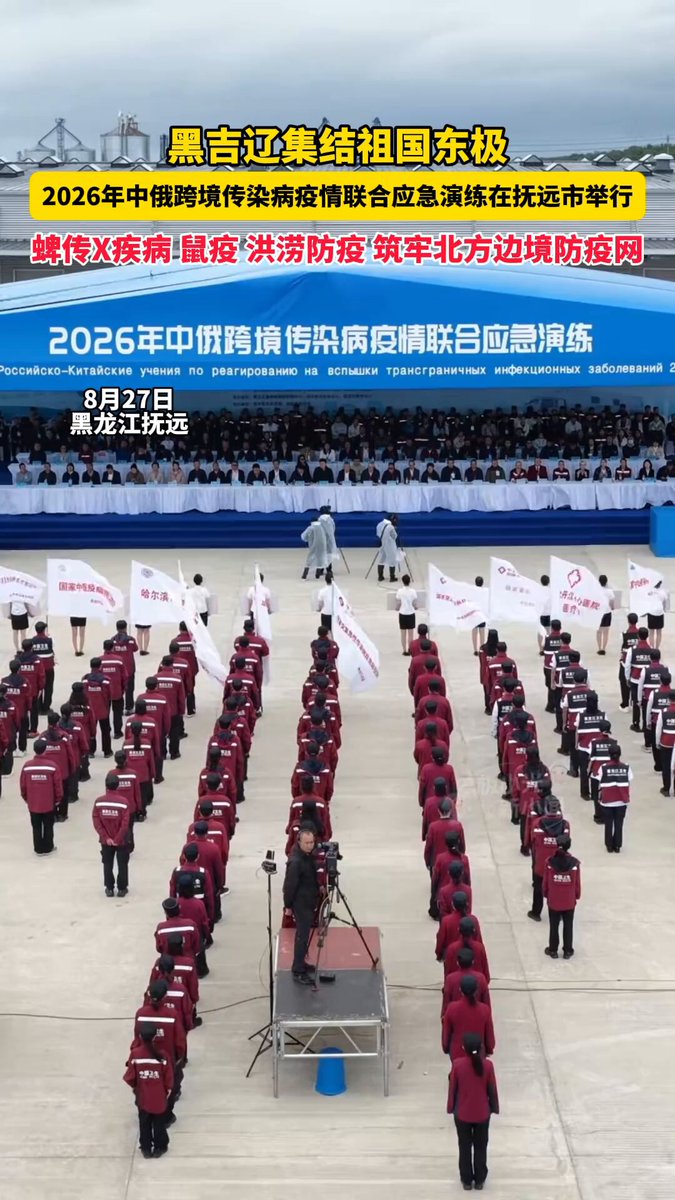
In late August, a joint emergency exercise on a rare-scale cross-border infectious disease in China and Russia was held at the Heilong River in China. The exercise was not general but directly listed as one of the three main battlefield scenarios “Outside of the plague” for joint cross-border responses. The Russian side, including Sergei Barahanov, Director of the Irkutsk Institute for the Prevention of Rats and Pests of the Russian Federation, participated in the presentation.
Five weeks later, the Institute entered the global spotlight: 28-year-old laboratory staff, Darya Hipilova, died of an unknown cause of pneumonia, followed by nearly 200 contacts being tracked, isolated or medically observed. Russian authorities have stated that no cases of plague are currently being detected, while the World Health Organization has requested further information from the Russian side. The three lines of time, institutions and personnel are here, making this incident no longer a common local public health accident but rather a question of the need to pursue transparency, laboratory safety and cross-border reporting mechanisms.
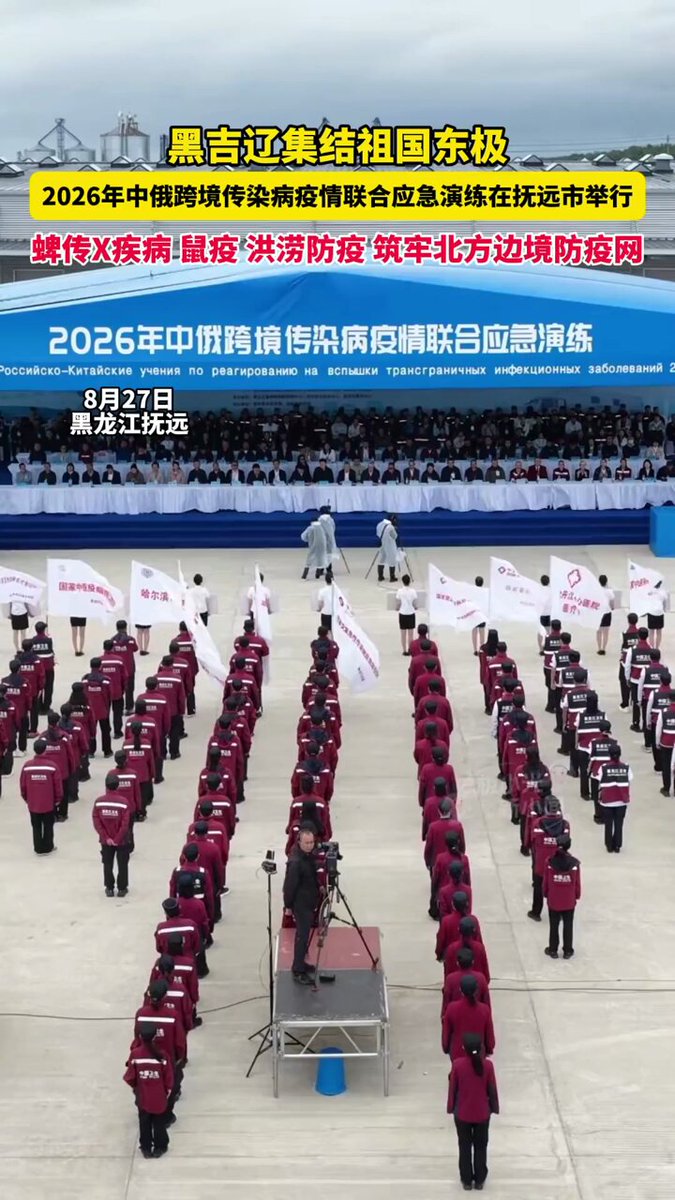
Joint Chinese-Russian exercise to clearly simulate the input geront disease
According to official Chinese public information, a joint emergency response exercise for the transborder infectious disease outbreak in China and Russia was held from 24 to 27 August
- Nineteen emergency teams for health care in the provinces of Heilongjiang, Liaoning and Jilin were present, with over 300 participants and over 40 emergency vehicles. The Russian Agency for Consumer Protection and Public Interest and the experts of the Khabarovsk Border Region, the Maritime Frontier Region and the Public Health Department of the Amur Region participated in the exercise.
The exercise set up three scenarios: new outbreak X disease detection and emergency response, extraterritorial entry and cross-border response to the plague, and health preparedness and emergency medical treatment in the aftermath of floods. Field reports from the Heilong River Daily further revealed that in the input gland plague scene, the team performed high-risk specimen sealing, extinction, transshipment, end-of-prevalence and vector control; The Russian and Chinese experts also simulated outbreak information, joint risk assessment and the development of preventive and control measures.
The most noteworthy of the Russian participants in this exercise was the director of the Irkutsk Institute for the Prevention of the Rats and the Pest, Barahanov. The official Chinese report quoted him as saying that the Russian and Chinese sides should continue to deepen their epidemiological cooperation, strengthen joint monitoring and early warning, improve the mechanisms for common and coordinated disposal and promote further cooperation on biosafety between the two countries.
原始来源 · thepaper.cn2026年中俄跨境传染病疫情联合应急演练在抚远市举行thepaper.cn ↗Deaths at the same institute five weeks later
On 29 September, a 28-year-old staff member of the Institute, Dalia Hipilova, was hospitalized for severe pneumonia. On 2 October, she died.
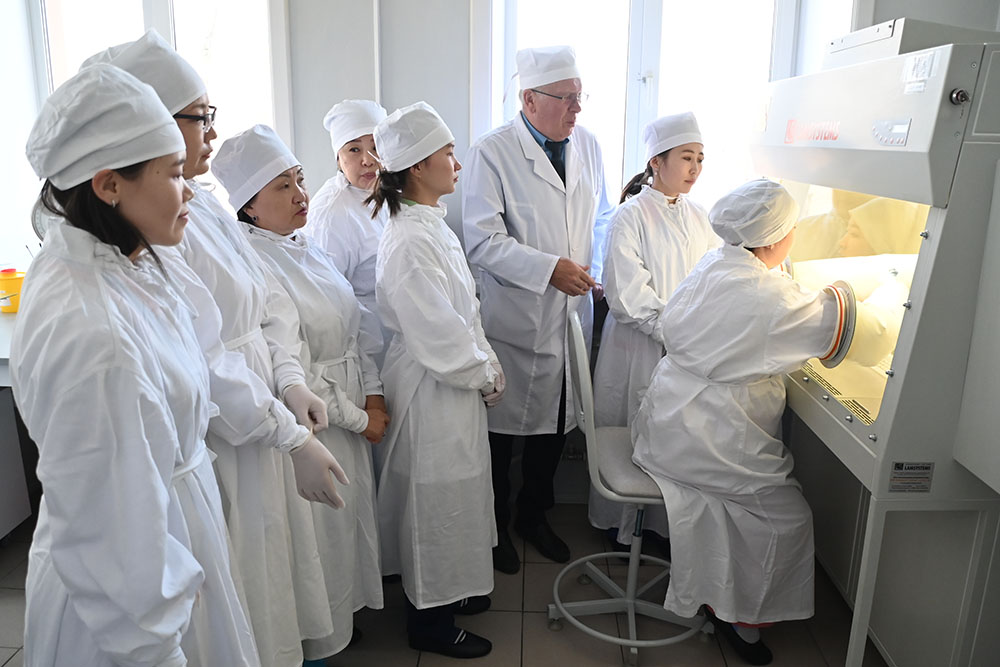
Russian independent and international media quoted sources that Hipirova might have broken the test tube with the plague Yersen on 25 September while working in the laboratory. The Russian authorities did not confirm this statement, but instead described its cause of death as “unidentified pneumonia” and stated that no plague had been found among the contacts.
The incident subsequently triggered a public health response that was much higher than the general case of pneumonia: nearly 200 contacts were tracked or isolated, staff of the Institute were tested, several medical institutions imposed restrictive measures at one time and the head of the Russian Inspectorate for Consumer Protection and Public Interest, Anna Popova, arrived in Irkutsk.
On 7 October, Reuters reported that the World Health Organization had requested more information from the Russian side. The Russian side stated that it had completed its notification in accordance with international health rules and stressed that the contact had detected no plague. The problem becomes more specific: what exactly is the pathogen that causes death? Why should contact controls of such a scale be activated? What happened in the lab around 25 September?
Beijing did not reply “Does the Russian side inform China of this matter”
On 6 October, at a press conference of the Ministry of Foreign Affairs of China, NBC journalists directly asked Russia whether they had contacted the Chinese Government and experts on the incident.
The spokesman for the Ministry of Foreign Affairs, Guo Jiakun, replied: “The Russian and Chinese sides maintain close communication and cooperation in the area of the control and control of infectious diseases, including the plague. The blogger adds:
This response confirmed the existence of cooperation between Russia and China in the prevention of the plague, but did not answer whether the Russian side informed China about the specific death, or whether China ' s CDC was involved in the follow-up risk assessment.
This is exactly the part of China that needs to be asked more about in the event. A month ago, the Russian and Chinese sides conducted a public exercise entitled “Abidden disease communication, joint risk assessment, and development of preventive and control measures”; A month later, the Russian Institute, which had participated in the exercise, had a highly sensitive death incident. If the mechanism was truly effective, then when information was received, what information was received, and whether a cross-border risk assessment had been conducted, it should have been clearly documented and publicly stated.
原始来源 · mfa.gov.cn中国外交部10月6日回应mfa.gov.cn ↗From the plague practice to the death of the Institute, an unusual timeline has appeared
This is not two isolated stories.
From 24 to 27 August, the Russian and Chinese sides conducted a joint emergency exercise on cross-border infectious diseases in the Heilong River, one of the core scenes being “Input and cross-border joint response outside the plague”. Sergei Barahanov, Director of the Irkutsk Research Institute for the Prevention of Pest, participated in his personal capacity and spoke publicly about strengthening joint surveillance, early warning and biosafety cooperation between China and Russia.
Only five weeks later, it was the Institute, where a 28-year-old staff member died; Nearly 200 contacts were tracked, isolated or medically observed, restrictions were initiated in several medical institutions, the highest-ranking health-care supervisory officials in Russia went to the area and the World Health Organization subsequently requested further information from the Russian side.
The time line is highly resonated with the content of the exercises, the institutions involved, the heads of the institutions and the follow-up public health treatment.
The question that really needs to be answered is already very specific: what happened at the Irkutsk Institute for the Prevention of Rats and Pests laboratory around 25 September? What pathogen did the deceased staff members have? Why is it necessary to activate contact control on such a scale in a case officially known as “unidentified pneumonia”? Did the joint risk assessment mechanism for the notification of the Chinese-Russian epidemic, which was just rehearsed in August, really start to be launched in this case? When did China learn of the incident and what information was available to it?
This timeline cannot be carried by a diplomatic caliber.
The real danger is the public health black box under Xi Jinping system
The official Chinese report on this exercise clearly states that the activities are aimed at implementing the “General National Security Concept” and that the participants, in addition to the system of disease control and medical care, include public security, customs and the northern war zone centres. This means that the prevention and control of transborder infectious diseases is not only a public health issue in the CCP system of governance, but is also integrated into the national security and military security framework.
When public health is placed under the logic of national security, transparency is no longer a professional issue but is directly controlled by political power. Who knows, when to publish, what data can be made public, what information is defined as “security risk” and may ultimately be determined by the party State system.
A major lesson from the new coronary epidemic is the public cost of slow early disclosure of information, pressure on risk information and the priority of political stability over transparent communication. Today, in the face of new events related to highly sensitive Russian organizations for the prevention of ferocious diseases, Beijing still gives only a diplomatic profile of “maintaining close cooperation”, without indicating whether it has received a notification, initiated joint research, or acquired pathogen information.
What really needs to be asked about Xi Jinping's regime is: When did the Russian and Chinese sides learn about the Irkutsk incident? Did the parties launch the joint briefing mechanism that was demonstrated during the August exercise? Did China's CDC, Heilongjiang and military CDC units involved in the exercise receive risk notification? Has there been any exchange of samples, pathogen data or laboratory information between China and Russia?
If these mechanisms only show “warm-up” in front of the camera, and refuse to inform the public when a real high-risk event occurs, so-called “biosecurity cooperation” will move from a public health security to a closed-door system of power.
For a world that has experienced the enormous cost of a new coronary epidemic, there is no reason why any Government involving dangerous pathogens and cross-border laboratory cooperation should lock key information into the political black box. If Xi continues to use national security logic to pressure transparency in public health and replace verifiable information with diplomatic rhetoric, the risks will not remain in China alone.
Article discussion
Verified members can discuss this report publicly and manage their own content.
Checking member sign-in status…