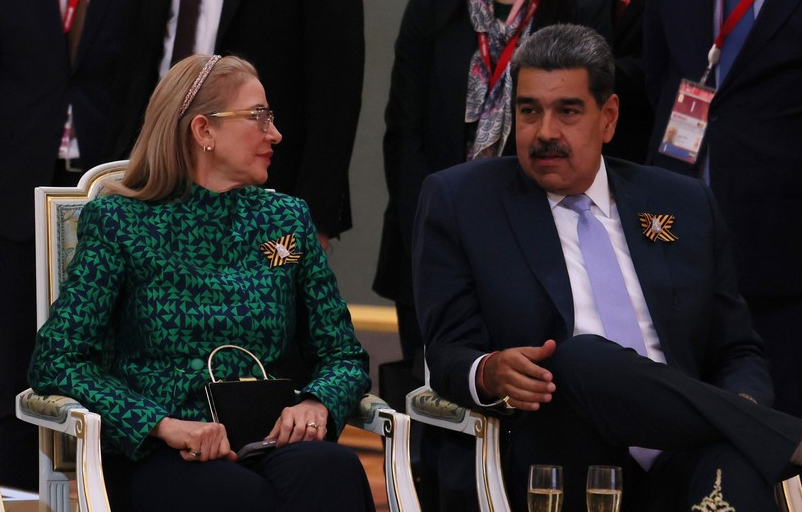
Additional indictment issued by the United States Federal Prosecution Service for the Southern District of New York on 8 October involving former President Nicholas Maduro of Venezuela and his wife, Celia Flores, in a new allegation of conspiracy to torture. In addition to the water sentences, electric shocks and forced injections of detainees, the indictment also refers to three persons who have not yet been named, using CC-1, CC-2, CC-3 as their symbols, describing the manner in which they participated in persecution at different levels.
These codes are directed at a chain of suspected orders from the political high and security agencies to the actual place of detention. The Ministry of Justice ' s publicly available materials show that the prosecution is not only pursuing the direct perpetrator, but also trying to explain who made the decision, who authorized the torture and who personally participated in the execution.
How do you get an order to the detention site
The prosecution claims that CC-1 had requested that certain detainees be tortured or even killed; (b) CC-2 participation in the approval or organization of methods of torture; CC-3 is suspected of being directly involved in the abuse of detainees. The roles of the three are not the same: the first involves instructions directed against a person, the second concerns organization or authorization, and the third occurs at the place of detention and interrogation. The identity remains anonymous, and the Ministry of Justice has not described these allegations as having been handed down by a court.
The ill-treatment referred to in the prosecution materials included water sentences simulated by drowning, electroshocks on the genitals, asphyxiation, forced nudity, forced injection and prolonged solitary confinement. The victims of persecution included Venezuelan political opponents, military personnel and some United States citizens. For the victims, torture is not just a violent incident during interrogation; The authorities that decide who is detained, whether or not they have access to treatment and when they are released also affect the extent to which they continue to suffer harm.
How the authorities get involved
During the Maduro regime, the Venezuelan army, police, intelligence agencies and the judiciary were implicated in serious charges against political opponents. This United States indictment links the functioning of the security apparatus to the individual criminal responsibility of the former President and the wife, requiring the court to face a specific issue: what is the link between the person suspected of giving the order and the actual perpetrator?
This is not the case with a single president accused of “behaviorizing violence”. The functions described by the prosecution as CC-1, CC-2, CC-3 are an attempt to give high-level orders how to be implemented through different persons as specific acts in custody. If such transmission relationships are established, responsibility may extend beyond the police officers who directly commit violence to officials who design and approve these means.
The case included charges of drug terrorism conspiracy, cocaine import conspiracy and two weapons offences. The new allegations of complicity in torture further address criminal prosecution in terms of the treatment of political opponents and detainees by the Government. (a) The fact that several types of offences appear in the case at the same time does not mean that any of them has been found by a court; There are still independent evidentiary requirements for each allegation.
Three anonymous people left behind by an indictment
The public material has not yet given the names of three code names, but the alleged acts have been distinguished as orders, authorizations and execution. The scope of criminal responsibility is thus no longer limited to whether the Maduros were present at the hearing. For those who have been arbitrarily detained and ill-treated, it is as important to pursue the source of the order as to prosecute the direct perpetrator.
The Maduros and Maduros have been controlled by the United States side, and the political power pattern in Venezuela has changed, but security and detention facilities suspected of committing violations do not automatically disappear as leaders fail. The identity and organizational relationship behind the three anonymous persons is related to the accountability of officials who may still remain in the system, as well as to the access of detainees to official judicial records.
Article discussion
Verified members can discuss this report publicly and manage their own content.
Checking member sign-in status…