
Beijing, New York, Dallas and New Delhi have completely different political definitions of the same thing.
The Chinese government describes the National Unity and Progress Promotion Act as a law that strengthens national unity, community awareness and national unity. Tibetan exile communities see it as an institutional tool to further compress Tibetan language, religion, culture and ethnic identity space.
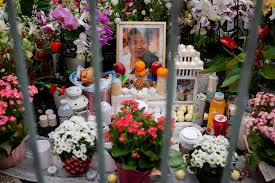
New York police confirmed that a man was seriously burned in the afternoon near the United Nations headquarters and was later killed at the Belviou Hospital. The exile Tibetan organization confirmed the deaths to be Tibetan activist Loga Zhenzhan. He was carrying a Tibetan flag before the operation and expressed political appeals via online live broadcasting.
A month later, the incident did not sink.
After the 8th of August, Tibetan communities in Delhi and other parts of India continued to hold commemoration and protests, and in the United States and Germany and other places there have been similar memories.The protesters linked Loga's death directly with the National Unity and Progress Promotion Act implemented by China on July 1, believing that Beijing is promoting stronger cultural and political integration in the name of national unity and national community.
Beijing insists that Tibet is part of China's territory and interprets relevant laws and national policies as safeguarding national unity, social stability and the common development of all nations.The Chinese government also opposes any form of "Tibetan independence" and regards some Tibetan organizations abroad as a separatist force.
This forms three positions that the international community needs to face: Beijing emphasizes sovereignty and unity, Tibetan activists emphasize culture, survival and political identity, and the United Nations and governments must judge between the principles of national sovereignty and international human rights standards which issues belong to "internal affairs" and which issues already involve transnational human rights responsibilities.
Logan has opted for self-immolation and cannot automatically justify any political argument or replace normal political discussion, but his death has become an inevitable international event, as the event took place outside the United Nations headquarters and the protest was directed at a newly enforced national policy law in China.
The more sensitive part of the incident is that the new law is also interpreted as having cross-border effects by Tibetan groups abroad.The exile agency warned that Beijing’s definition of ethnic identity and “split” behavior could further extend to overseas Tibetan communities, linking ethnic governance in China with transnational surveillance, diplomatic pressure and overseas political activities.

The ongoing commemorative action on August 8 shows that at least part of what Logan wanted to promote has happened: the issue of Tibet has once again entered the international public debate.
What the international community really needs to answer is not how to evaluate a person’s life for protesting, but why a long-standing national, human rights and political conflict will make protesters believe that only by lighting themselves up in front of the United Nations will the world be seen again.
Article discussion
Verified members can discuss this report publicly and manage their own content.
Checking member sign-in status…